
The Current Electoral Landscape: California’s Dominant Share
The [Electoral College] system, a unique feature of American presidential elections, allocates electoral votes to each state based primarily on its population. This system ensures that states, regardless of their geographical size, have a voice proportional to their populace. [California], with its immense population, consistently holds the largest number of electoral votes among all 50 states. This significant allocation underscores its critical role in shaping the outcome of national elections and highlights its status as a demographic and economic titan.
Understanding the Electoral College and Reapportionment
To fully grasp why [California]’s electoral vote count is so substantial, it’s essential to understand the underlying mechanisms. The [Electoral College] is a system where each state is assigned a number of electors equal to its total number of representatives in Congress (House of Representatives members plus two senators). This number is fluid, as it is recalculated every ten years following the nationwide census conducted by the [United States Census Bureau]. This process is known as reapportionment.
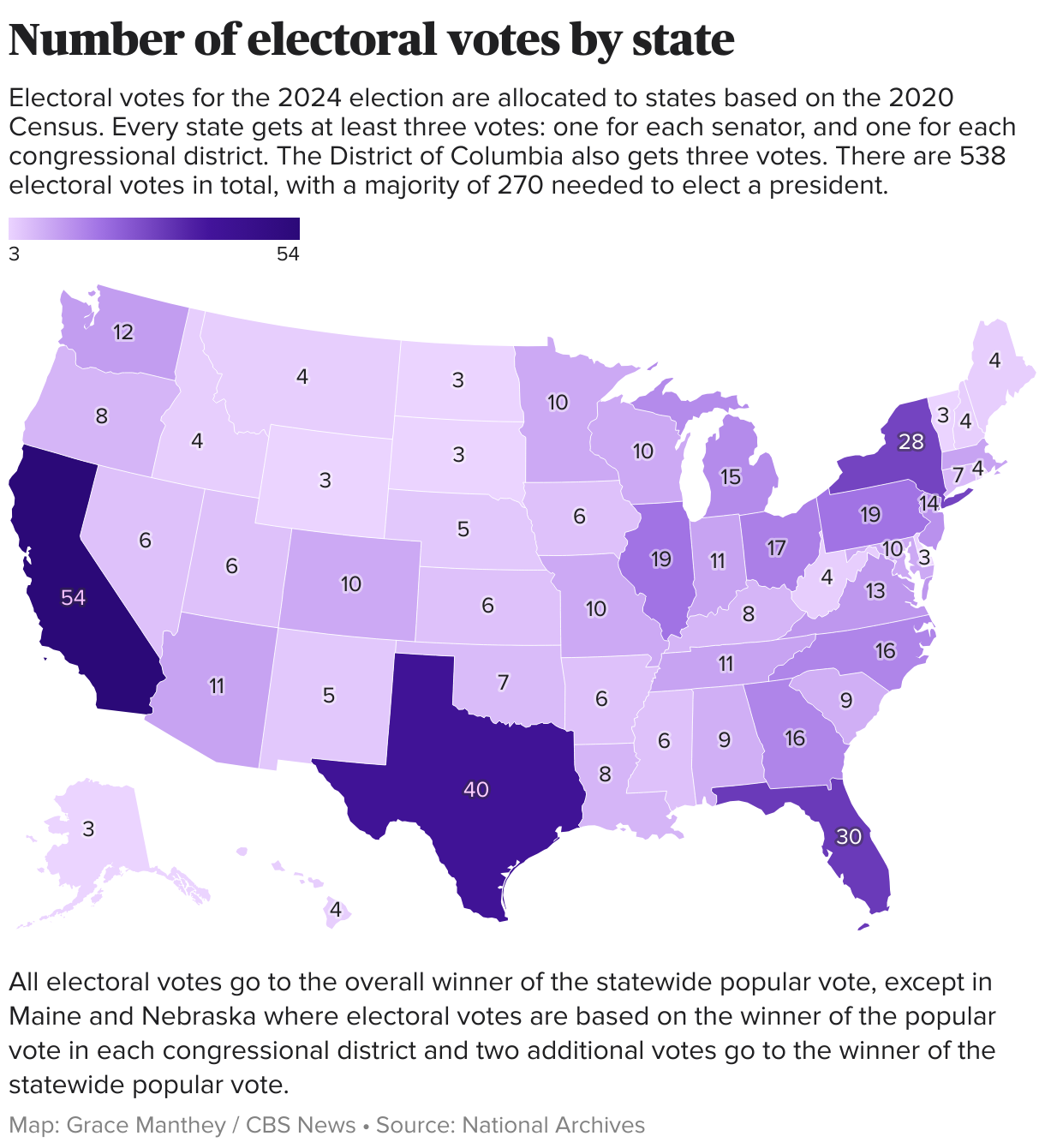
Reapportionment dictates how the 435 seats in the House of Representatives are distributed among the states based on population changes. If a state’s population grows significantly relative to others, it may gain House seats and, consequently, electoral votes. Conversely, states experiencing slower growth or population decline might lose seats. This decennial recalibration is a high-stakes event, as it directly impacts a state’s political clout for the next decade. For example, after the 2020 Census, several states saw shifts. [Texas] gained two electoral votes, [Florida] gained one, while states like [New York], [Pennsylvania], [Illinois], [Michigan], [Ohio], and [West Virginia] each lost one. [California], despite its growth, experienced a rare instance of losing one electoral vote due to other states growing at an even faster pace, particularly in the Sun Belt.
California’s Specific Count: A Look at the Numbers
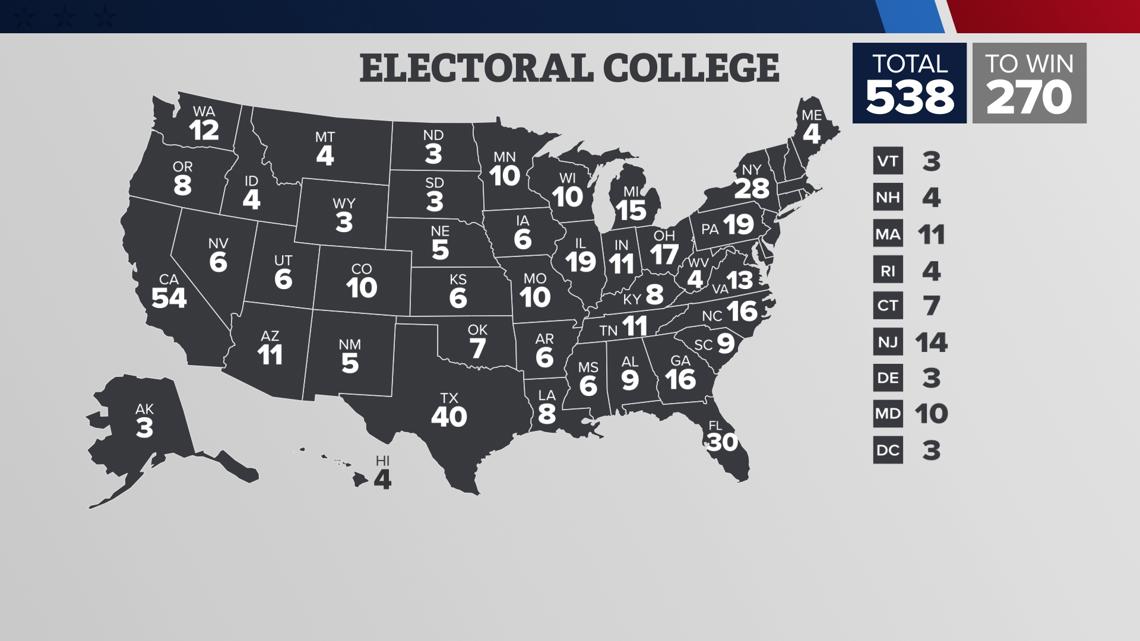
Following the 2020 Census, and for the 2024 and 2028 presidential elections, [California] holds 54 electoral votes. This number represents 52 members of the House of Representatives plus its two senators. While this was a reduction of one vote from the 55 it held between the 2012 and 2020 elections, it still firmly entrenches [California]’s position as the state with the most electoral power. To put this in perspective, the state with the next highest number of electoral votes is [Texas] with 40, followed by [Florida] with 30, and [New York] with 28. [California]’s 54 votes alone represent approximately 20% of the 270 electoral votes needed to win the presidency, making it an indispensable part of any national campaign strategy.
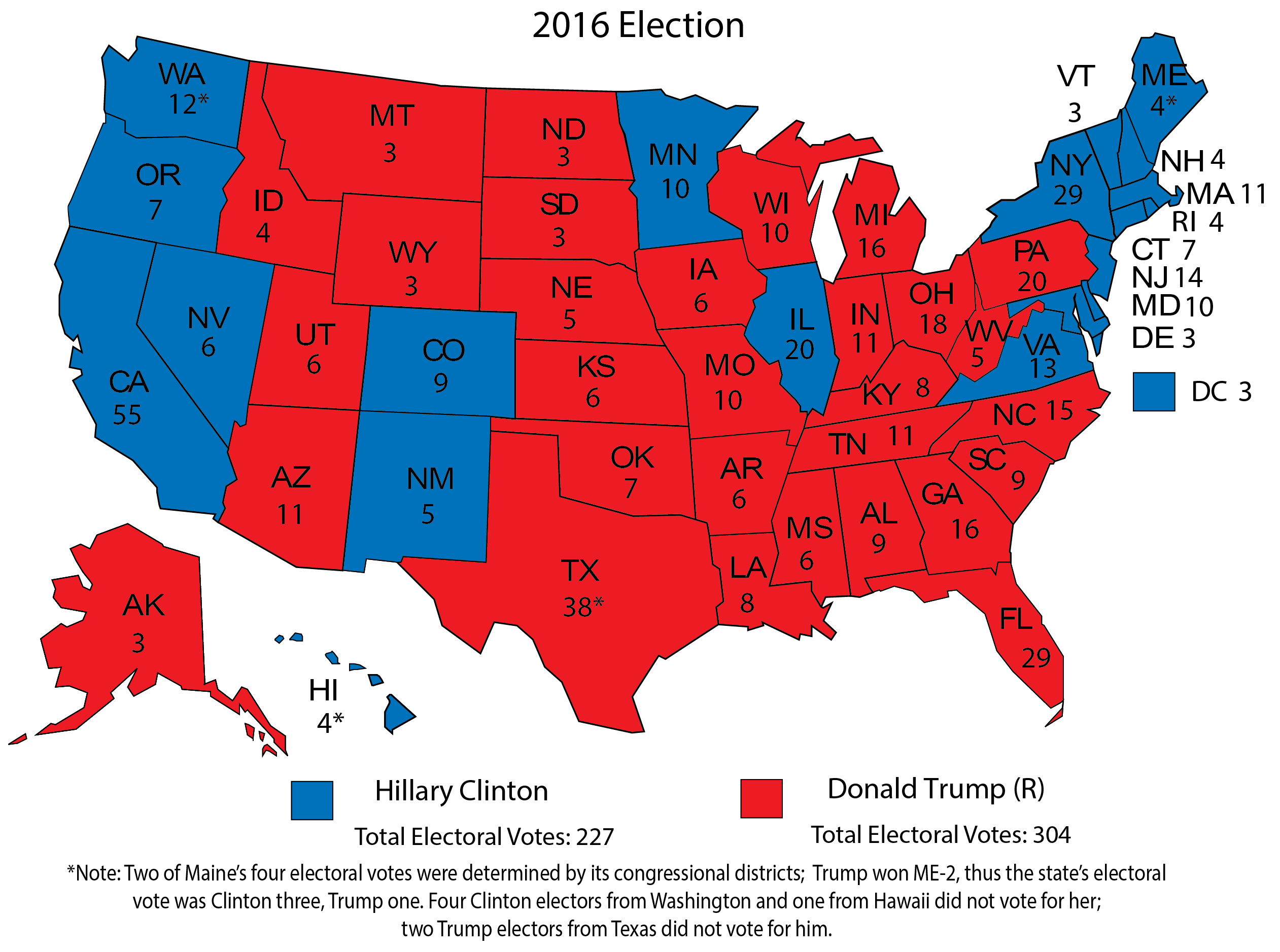
Historically, [California]’s electoral vote count has steadily climbed throughout the 20th century, reflecting its rapid population growth driven by economic opportunity, favorable climate, and a vibrant cultural landscape. From a mere 22 electoral votes in 1948, it soared to 40 in 1964, then to 47 in 1984, and peaked at 55 for the 2000s and 2010s. This consistent upward trend, only slightly interrupted by the 2020 reapportionment, showcases the state’s incredible expansion and its enduring appeal as a place to live, work, and visit.
Beyond the Ballot Box: California’s Economic and Cultural Footprint
The immense population that grants [California] its electoral might also fuels its dynamic economy, shapes its diverse culture, and makes it a global hub for travel, tourism, and lifestyle experiences. The very reasons people flock to [California] to establish a life are intertwined with its political influence.
A Magnet for Millions: Population Dynamics and Growth
[California]’s population success is no accident. It has historically been a magnet for dreamers, innovators, and those seeking a better life. From the [Gold Rush] of the 19th century to the tech boom of [Silicon Valley] in the 21st, the state has consistently offered opportunities that attract people from across the [United States] and the world. This continuous influx of residents has directly translated into its electoral dominance.The state’s diverse economy plays a significant role. It is home to global giants in technology, entertainment, agriculture, aerospace, and renewable energy. These industries create millions of jobs, drawing skilled workers and their families, who then contribute to the state’s population count. For instance, the tech hubs in the [San Francisco Bay Area] like [San Jose], [Palo Alto], and [Mountain View] attract an international workforce, leading to densely populated urban centers. Similarly, [Los Angeles] thrives on its entertainment industry, drawing aspiring artists and professionals worldwide, further adding to the population of [Southern California]. This economic vitality not only supports a large resident base but also draws countless business travelers, reinforcing the need for diverse accommodation options, from luxury suites in [Beverly Hills] to practical apartments in [Santa Clara].
Regional Diversity: From Bustling Metropolises to Serene Landscapes
[California]’s population isn’t uniformly distributed; it’s concentrated in key regions, each offering unique attractions and lifestyles that are core to its appeal. This regional diversity is a cornerstone of its tourism industry and contributes significantly to the state’s overall demographic power.The sprawling urban landscape of [Southern California], anchored by [Los Angeles] and [San Diego], is a prime example. [Los Angeles] county alone is the most populous county in the [United States], a vibrant mosaic of cultures and communities. Tourists flock here to experience the glamour of [Hollywood], relax on the beaches of [Santa Monica], explore the family-friendly fun of [Disneyland] in [Anaheim], or immerse themselves in the cinematic magic of [Universal Studios Hollywood]. The demand for hotels in [Los Angeles] ranges from iconic luxury stays like The [Beverly Wilshire, A Four Seasons Hotel] to trendy boutique hotels in [West Hollywood] and more budget-friendly options for family trips. The extensive network of resorts and diverse accommodation in [Orange County] caters to various travel styles, from romantic getaways to extended family vacations.
Further north, the [San Francisco Bay Area] is a hub of innovation and iconic landmarks. The dense population around [San Francisco], [Oakland], and [San Jose] contributes significantly to the state’s electoral count. Visitors here are drawn to the architectural marvel of the [Golden Gate Bridge], the historic mystique of [Alcatraz Island], and the vibrant cultural scene. The region also offers unique lifestyle experiences, from the sophisticated wine tours in nearby [Napa Valley] and [Sonoma County] to outdoor adventures around [Lake Tahoe]. Boutique hotels in [San Francisco] often boast breathtaking views, while long-term stay apartments cater to the booming business travel sector in [Silicon Valley].
Beyond the urban centers, [California]’s vast [Central Valley] is an agricultural powerhouse, home to cities like [Fresno] and [Sacramento] (the state capital). While not as densely populated as the coastal areas, this region’s significant rural and suburban communities contribute substantially to the statewide tally. Even the less populated, yet stunning, natural landscapes like [Yosemite National Park], [Sequoia National Park], and [Death Valley National Park] indirectly contribute by drawing millions of tourists annually, supporting a vast tourism infrastructure, and showcasing the state’s incredible natural diversity. These areas offer different types of accommodation, from rustic cabins to luxurious national park lodges, attracting adventure seekers and nature enthusiasts alike.
The Influence of the Golden State on National Politics and Lifestyle
[California]’s large electoral vote count means it is more than just another state on the map; it is a critical force that shapes national discourse, influences policy, and serves as a trendsetter in various aspects of American life, including travel and lifestyle.A Political Powerhouse: Impact on Presidential Elections
While [California]’s immense number of electoral votes makes it incredibly valuable, it is also reliably “blue,” meaning it consistently votes for the Democratic presidential candidate. This predictability often means that presidential candidates spend less time campaigning physically in [California] than in swing states like [Pennsylvania] or [Arizona]. However, its influence is far from diminished.
Instead, [California] serves as a crucial fundraising hub for both parties, particularly the Democrats. Candidates frequently visit the state for high-dollar fundraisers in [Los Angeles], [San Francisco], and [Silicon Valley], tapping into the wealth generated by its booming industries. Furthermore, [California]’s progressive policies on environmental protection, technology regulation, and social issues often set national precedents or influence policy debates across the country. Its sheer economic weight and population size mean that what happens in [California] often doesn’t stay in [California]; it reverberates nationally. This influence extends beyond presidential elections, impacting legislative priorities and the overall direction of the country.
A Lifestyle Destination: How Population Density Fuels Tourism
The same factors that contribute to [California]’s massive population and electoral power also make it an unparalleled lifestyle and travel destination. The state’s diverse geography, from pristine beaches to majestic mountains and deserts, combined with its cultural richness, creates an infinite array of experiences for residents and visitors alike.
The high population density in metropolitan areas supports a vibrant food scene, with Michelin-starred restaurants in [San Francisco] and [Napa] to diverse ethnic eateries across [Los Angeles]. These culinary experiences are a significant draw for tourism, offering local culture through taste. The lifestyle choices range from luxury travel experiences in [Malibu] or [Carmel-by-the-Sea], with their high-end resorts and exclusive villas, to budget-friendly backpacking adventures in its numerous national parks. Family trips often revolve around theme parks and beaches, while business stays are concentrated in tech and financial hubs, requiring efficient and well-equipped hotels.
The concentration of people and wealth also fuels a robust infrastructure for tourism, including world-class airports, an extensive network of hotels and resorts, and a wide array of attractions. Whether it’s the allure of a [Hollywood] celebrity sighting, the architectural beauty of [San Francisco], the natural wonders of [Yosemite], or the laid-back surf culture of [San Diego], [California]’s diverse offerings cater to every kind of traveler. This blend of economic dynamism, cultural diversity, and natural beauty ensures that [California] will remain a pivotal state, not just in the [Electoral College] but also as a premier global destination for tourism and lifestyle. Its 54 electoral votes are a testament to its scale, but the myriad experiences it offers are what truly define the [Golden State]’s enduring allure.
LifeOutOfTheBox is a participant in the Amazon Services LLC Associates Program, an affiliate advertising program designed to provide a means for sites to earn advertising fees by advertising and linking to Amazon.com. Amazon, the Amazon logo, AmazonSupply, and the AmazonSupply logo are trademarks of Amazon.com, Inc. or its affiliates. As an Amazon Associate we earn affiliate commissions from qualifying purchases.