
The sheer number of higher education institutions within New York State is a testament to its rich academic heritage and its role as a global center for learning and innovation. For prospective students, visiting scholars, and even curious tourists, understanding the landscape of colleges and universities is crucial. These institutions aren’t just places of study; they are often vibrant hubs of culture, research, and economic activity, contributing significantly to the local character of cities and towns across the state. Whether you’re planning an educational tour, researching academic opportunities, or simply interested in the intellectual fabric of New York, delving into the count and diversity of its colleges offers a fascinating glimpse into a key aspect of the state’s identity.

The Vast Educational Ecosystem
New York State boasts an impressive and diverse array of higher education institutions, ranging from world-renowned research universities to specialized art schools and community colleges. The exact number can fluctuate slightly due to new accreditations, mergers, or closures, but the general consensus places the total number of degree-granting institutions at well over 200. This number encompasses public universities, private colleges, community colleges, and professional schools.
Public University Systems
The backbone of New York’s public higher education is the State University of New York (SUNY) system and the City University of New York (CUNY) system.
State University of New York (SUNY)
The SUNY system is one of the largest comprehensive university systems in the United States. It comprises 64 campuses, offering a wide spectrum of educational programs. This includes 13 university centers, four health science centers, 13 community colleges, and several specialized institutions. Campuses like Binghamton University, University at Buffalo, and Stony Brook University are prominent research institutions, while others, such as SUNY Cortland or SUNY Oneonta, focus on undergraduate education and liberal arts. The community colleges within the SUNY network, like Nassau Community College or Erie Community College, provide accessible and affordable pathways to higher education and workforce training for local communities.
City University of New York (CUNY)
The CUNY system is the nation’s largest urban public university system, serving the diverse population of New York City. It comprises 25 institutions, including 11 community colleges, seven senior colleges, a graduate school and university center, a law school, and a school of professional studies. Prestigious senior colleges like City College of New York, Hunter College, and Queens College are landmarks in their respective boroughs, attracting students from all walks of life. CUNY plays a pivotal role in social mobility and economic development for New York City.
Private Institutions
Beyond the public systems, New York State is home to a multitude of esteemed private colleges and universities. These institutions often boast smaller class sizes, unique academic programs, and significant endowment funds.
Ivy League Universities
New York is proud to host two of the eight Ivy League universities: Cornell University in Ithaca and Columbia University in New York City. Cornell, established in 1865, is unique in that it is both a private land-grant university and a statutory college of the state’s public university system, SUNY. Its sprawling campus in the picturesque Finger Lakes region offers a distinct academic and living experience. Columbia, a more urban institution located in Manhattan, is renowned for its graduate programs and its deep integration into the cultural and intellectual life of the city.
Other Renowned Private Universities
Numerous other private universities shape the educational landscape. These include institutions like New York University (NYU) in New York City, which is a global research university with a vast network of campuses and study abroad centers; Rochester Institute of Technology (RIT), known for its programs in technology, design, and the arts; and Syracuse University, famous for its schools of communications, architecture, and business.
Liberal Arts Colleges and Specialized Institutions
New York also excels in liberal arts education with institutions like Vassar College, Hamilton College, and Skidmore College, all offering rigorous undergraduate curricula. Furthermore, the state is home to numerous specialized schools, such as the Fashion Institute of Technology (FIT) and the Juilliard School for performing arts, further diversifying the educational opportunities.
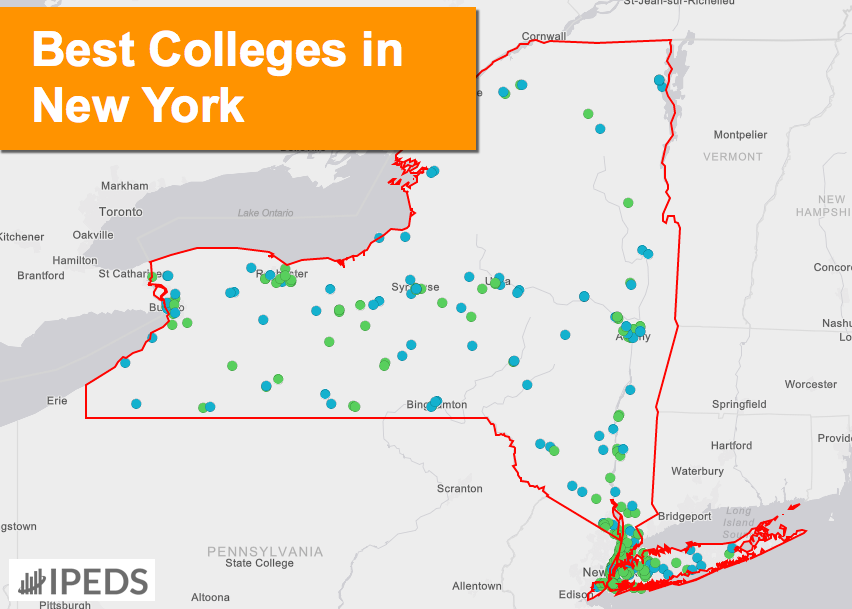
Exploring the Academic Geography
The distribution of these institutions across New York State is as varied as their offerings. From the bustling metropolis of New York City to the rolling hills of the Finger Lakes and the historic towns of the Hudson Valley, each region presents a unique academic environment.
Metropolitan Hubs
New York City is an unparalleled concentration of higher education, with both CUNY and numerous private institutions weaving into the urban fabric. The presence of Columbia University, New York University (NYU), and the extensive network of CUNY colleges makes the city a global academic magnet. Beyond the five boroughs, metropolitan areas like Buffalo, Rochester, Syracuse, and Albany also host multiple significant university campuses, contributing to their local economies and cultural landscapes.
Upstate and Rural Campuses
Upstate New York offers a different, often more traditional, college town experience. Institutions like Cornell University in Ithaca, Syracuse University in Syracuse, and various SUNY campuses are integral to their communities. These locations often provide a more focused academic atmosphere, with campuses that are destinations in themselves, surrounded by natural beauty and offering unique recreational opportunities.
The Impact on Tourism and Culture
The presence of so many colleges and universities transforms them into significant attractions, drawing visitors for a variety of reasons beyond pure academics. Prospective students and their families undertake extensive college tours, exploring campuses, understanding local amenities, and getting a feel for the student life. This often involves stays at local hotels and experiencing regional dining.
Academic Tourism
This form of tourism is a substantial segment of the educational landscape. Families travel from across the country and around the globe to visit institutions like Harvard University (although not in NY, this is an example of a major draw) or Yale University. In New York, campuses like Cornell University with its stunning architecture and natural setting, or Columbia University in the heart of New York City, offer unique visitor experiences. The tours themselves can be guided explorations of historical buildings, scientific facilities, and vibrant student centers, often revealing hidden architectural gems or significant historical markers.
Cultural Enrichment and Events
Universities are also cultural powerhouses. Their theaters, museums, art galleries, and performance spaces are often open to the public, hosting world-class exhibitions and performances. New York University’s Tisch School of the Arts often has public screenings, while Columbia University frequently hosts lectures and symposia that draw broad audiences. Sporting events, from college football games to basketball championships, are also major draws, filling stadiums and creating a lively atmosphere in college towns. Many of these events are significant tourist attractions in their own right, contributing to local economies through increased hotel bookings and restaurant patronage. The energy and intellectual vibrancy of these academic centers enrich the overall travel experience in New York State.
Beyond the Degree: Colleges as Destinations
The sheer number of colleges and universities in New York State makes them destinations in their own right, offering unique experiences for travelers interested in education, culture, and architecture.
Architectural Marvels and Historic Sites
Many older universities are home to stunning architectural gems and historic landmarks. Columbia University’s Morningside Heights campus, for example, features buildings designed by renowned architects like McKim, Mead & White, creating a cohesive and grand academic environment. Cornell University boasts iconic structures like the McGraw Tower and the beautiful Herbert F. Johnson Museum of Art, set against the backdrop of the Finger Lakes. Walking tours of these campuses often highlight not just the academic significance but also the historical context and aesthetic beauty of the grounds.

Campus Life as an Experience
For those visiting a new city or region within New York, exploring a university campus can provide an intimate look into local culture. The energy of students, the unique shops and cafes that cater to academic communities, and the public spaces like libraries and quads all contribute to a distinct atmosphere. Even without attending a specific event, a stroll through campuses like Syracuse University or The New School in Greenwich Village offers a glimpse into the intellectual heartbeat of the state. This immersive experience can be a fulfilling part of any itinerary, revealing the diverse character of New York beyond its more famous tourist attractions. The presence of these institutions underscores New York’s commitment to knowledge, culture, and continuous growth, making them essential points of interest for any visitor.
LifeOutOfTheBox is a participant in the Amazon Services LLC Associates Program, an affiliate advertising program designed to provide a means for sites to earn advertising fees by advertising and linking to Amazon.com. Amazon, the Amazon logo, AmazonSupply, and the AmazonSupply logo are trademarks of Amazon.com, Inc. or its affiliates. As an Amazon Associate we earn affiliate commissions from qualifying purchases.