
Navigating the nuances of obtaining a driver’s license in California is a rite of passage for many, and a significant hurdle is the behind-the-wheel driving test. While the ultimate goal is a flawless performance, the reality of real-world driving, especially under the pressure of an examiner, means that minor mistakes can happen. The crucial question for aspiring drivers is: how many errors are permissible before failing the California driving test? Understanding the grading system and the types of mistakes that lead to failure is key to preparation and success.

The Department of Motor Vehicles (DMV) in California employs a specific scoring system designed to assess a driver’s ability to operate a vehicle safely and competently. This system categorizes errors into different types, each carrying a varying degree of severity. It’s not simply a matter of counting every slip-up; rather, it’s about demonstrating consistent safe driving habits and avoiding critical errors.
Understanding the California Driving Test Scoring System
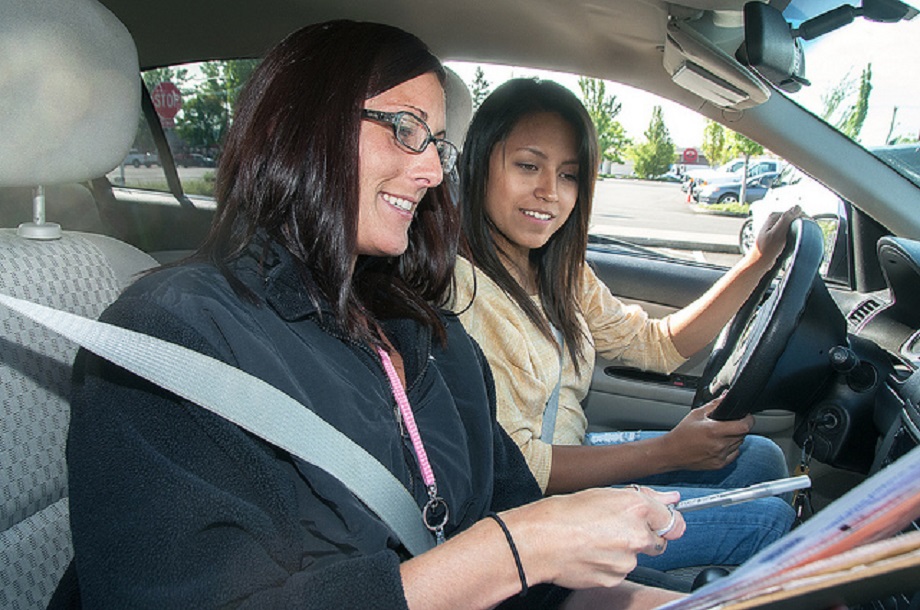
The California DMV’s behind-the-wheel test is designed to evaluate a driver’s ability to perform a variety of maneuvers and demonstrate safe driving practices in typical traffic conditions. The examiner observes the applicant throughout the entire test, taking notes on their performance. Errors are generally classified into three categories:
- Minor Errors: These are typically small mistakes that do not immediately jeopardize safety but indicate a need for improvement. For example, a slight hesitation at an intersection where it’s not strictly necessary, or a minor lane position adjustment.
- Serious Errors: These are mistakes that have the potential to create a hazardous situation, even if they don’t result in an accident. Examples include not checking mirrors adequately before changing lanes, or a minor speed adjustment that is slightly inconsistent with traffic flow.
- Critical Errors: These are errors that are immediately dangerous and would likely lead to an accident if the examiner did not intervene. These are the most serious and will almost always result in an automatic failure.
The number of errors allowed on the California driving test is not a fixed number for minor or serious errors. Instead, the outcome depends on a combination of the types of errors made and whether any critical errors are committed.
How Minor and Serious Errors Accumulate
While there isn’t a strict “X number of minor errors equals failure” rule, the accumulation of minor and serious errors can certainly contribute to a failing grade. The DMV’s aim is to see a driver who is generally in control and aware of their surroundings. If an examiner notes a pattern of minor errors, it suggests a lack of consistent attentiveness or skill, which could lead to a failure even without a single critical mistake.
For instance, a driver might make several minor errors, such as not signaling a turn precisely when starting the maneuver, or being slightly too slow to react to a traffic signal. Individually, these might be overlooked. However, if these minor mistakes occur repeatedly, or if they are compounded by other minor observational lapses, the examiner might deem the driver not yet ready for independent driving.
Serious errors are more impactful. An examiner will be particularly vigilant about behaviors that compromise safety. If a driver consistently fails to check their blind spots before changing lanes, or if their speed control is erratic in ways that disrupt traffic flow, these serious errors will be noted. The DMV generally allows a limited number of serious errors before a failure is recorded. However, the exact threshold can be at the examiner’s discretion, based on the overall context of the driving performance. The key takeaway is that while a few minor slips might be forgiven, a pattern of serious errors will likely lead to a failed test.
The Critical Error: An Automatic Failure
The most straightforward aspect of the California driving test grading is the concept of a critical error. These are universally recognized as actions that pose an immediate danger to the driver, passengers, or other road users. There is absolutely no room for critical errors on the driving test.
Examples of critical errors include:
- Running a red light or stop sign: This is a fundamental violation of traffic law and an immediate safety hazard.
- Causing a collision: Even a minor fender-bender during the test will result in failure.
- Driving on the wrong side of the road: Unless it’s an unavoidable situation dictated by road conditions and handled safely.
- Failing to yield the right-of-way when it is essential: This can include pulling out in front of oncoming traffic or not yielding to pedestrians in a crosswalk.
- Excessive speed or unsafe speed: Driving significantly faster or slower than the surrounding traffic in a way that creates a hazard.
- Disobeying traffic signals or signs: Beyond just red lights and stop signs, this could include ignoring lane control signals or pedestrian crossing signals.
- Unsafe lane changes: Changing lanes without checking blind spots or signaling properly, especially if it forces another vehicle to brake suddenly.
- Not wearing a seatbelt: The driver and any passengers must be buckled up at all times.
- Improper use of mirrors and blind spots: A consistent failure to check mirrors and blind spots before maneuvers.
If any of these critical errors occur, the driving test is immediately terminated, and the applicant fails. The examiner’s priority is safety, and any action that directly compromises it will result in disqualification.
What Constitutes a Failing Grade?
So, to directly answer the question of “How many errors are allowed on the driving test California?”, the most accurate answer is:
- Zero critical errors. This is non-negotiable.
- A limited number of serious errors. The California DMV does not publish an exact number of serious errors that will lead to failure. However, examiners are trained to assess the overall safety of the driver. If they observe more than a very small number of serious errors, or a pattern of them, it will likely result in a failed test.
- A pattern of minor errors. While minor errors are less impactful individually, a driver who consistently makes minor mistakes, even if they aren’t critical, may still fail. This is because it indicates a lack of polish and consistent safe practice. The examiner is looking for a driver who demonstrates competence and awareness, not one who is constantly on the verge of making a more significant mistake.
Essentially, a driver must demonstrate that they can operate a vehicle safely, follow traffic laws, and maintain awareness of their surroundings without posing a risk to themselves or others. The test is designed to gauge this proficiency, and while perfect execution isn’t always expected, a performance that consistently highlights safety lapses will not pass.
Preparing for the Driving Test: Beyond Just Knowing the Rules
Successfully passing the California driving test involves more than just memorizing the rules of the road. It requires practical experience and a solid understanding of how to apply those rules in real-time driving scenarios.
Practice Makes Perfect: Key Maneuvers and Situations
To minimize the chances of making errors, extensive practice is essential. This includes practicing all the maneuvers that are commonly tested, such as:
- Lane changes: Practicing smooth and safe lane changes, ensuring proper signaling, mirror checks, and blind spot observation.
- Turning: Executing turns at intersections, from different lanes, and in various traffic conditions, ensuring correct speed and positioning.
- Parking: Mastering parallel parking, and potentially other parking maneuvers like backing into a parking space.
- U-turns: Performing safe U-turns where permitted.
- Traffic signal observation: Reacting appropriately to traffic lights and signs, including stopping behind the limit line or pedestrian crosswalk when required.
- Observation and scanning: Developing the habit of constantly scanning the environment, checking mirrors, and being aware of other vehicles, pedestrians, and cyclists.
Beyond specific maneuvers, practicing in diverse traffic conditions is also crucial. Driving in busy city streets, on highways, and in residential areas will expose drivers to a wider range of scenarios and help them build confidence and competence. Familiarity with the specific routes used by local DMVs can also be beneficial, although the test is designed to assess general driving ability, not knowledge of a particular route.
The Importance of Examiner Communication and Demeanor
While the focus is on driving skill, a driver’s demeanor and interaction with the examiner can also play a subtle role. Appearing nervous is understandable, but it’s important to remain calm and focused. If the examiner gives instructions, listen carefully and ask for clarification if needed. Demonstrating attentiveness and politeness can create a more positive impression.
However, it’s important to remember that the examiner’s primary concern is safety. They are not looking for personality traits but for evidence of safe driving habits. Therefore, while politeness is appreciated, it cannot compensate for serious driving deficiencies.
Conclusion: Aiming for Safe and Confident Driving
Ultimately, the question of “How many errors are allowed on the driving test California?” is best answered by focusing on the overarching goal: to become a safe and responsible driver. The DMV’s grading system is designed to identify individuals who have reached a competent level of skill and awareness to operate a vehicle independently.
By understanding the distinction between minor, serious, and critical errors, and by dedicating ample time to practice, aspiring drivers can significantly increase their chances of success. The ultimate aim should not be to find the “limit” of allowable errors, but to drive in a way that is consistently safe, observant, and compliant with traffic laws. This approach not only ensures a pass on the driving test but, more importantly, sets the foundation for a lifetime of safe driving on the roads of California and beyond.
LifeOutOfTheBox is a participant in the Amazon Services LLC Associates Program, an affiliate advertising program designed to provide a means for sites to earn advertising fees by advertising and linking to Amazon.com. Amazon, the Amazon logo, AmazonSupply, and the AmazonSupply logo are trademarks of Amazon.com, Inc. or its affiliates. As an Amazon Associate we earn affiliate commissions from qualifying purchases.