
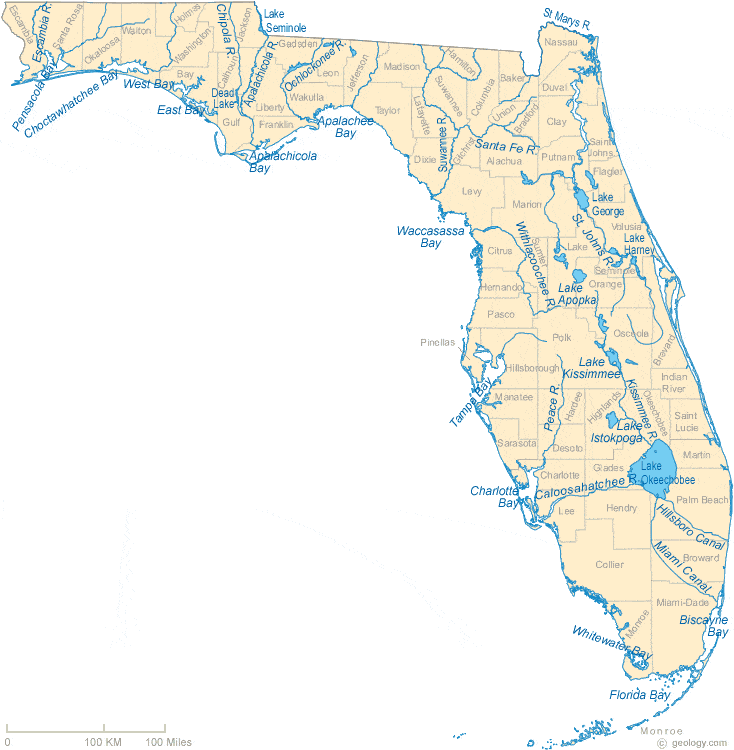
Florida, often celebrated for its sun-drenched beaches and vibrant coastal cities, holds a lesser-known but equally impressive natural distinction: it is a veritable mosaic of freshwater bodies. The sheer abundance of lakes across the Sunshine State profoundly shapes its geography, ecology, and identity, rendering many of these aquatic expanses significant natural landmarks. To answer the fundamental question: Florida is home to an astonishingly high number of lakes, with estimates generally ranging from over 7,800 to more than 12,000 named lakes, depending on the minimum size criteria used for classification. If one includes all freshwater ponds, both named and unnamed, that are larger than a mere acre, the number easily swells into the tens of thousands. This makes Florida one of the most lake-rich states in the United States, a characteristic that defines much of its interior landscape and offers a unique counterpoint to its famous coastline.
Defining Florida’s Aquatic Tapestry
The variation in the reported number of lakes stems primarily from how a “lake” is defined. Scientists and government agencies often use different thresholds for size, depth, and permanence. Typically, a body of water must be at least one acre in surface area to be considered a named lake, though some classifications might require a larger minimum. Furthermore, distinguishing between a lake, a pond, or even a wide section of a river can sometimes be ambiguous in Florida’s flat, water-saturated landscape. What is clear, however, is that regardless of the exact count, these thousands of freshwater systems form an intricate network crucial to the state’s natural heritage. They are not merely bodies of water but dynamic ecosystems and geological features that serve as critical landmarks.
Geological Genesis of Florida’s Lakes
Florida’s geology plays a pivotal role in the proliferation of its lakes. Much of the state sits atop a porous limestone bedrock, which leads to the formation of numerous sinkholes. When the overlying sediment collapses into voids in the limestone, these depressions often fill with water, creating what are known as solution lakes or sinkhole lakes. This process is particularly prevalent in Central Florida, contributing to the high density of lakes in regions like the Ocala National Forest and the chain of lakes around Winter Haven. Other lakes are ancient lagoons or river channels cut off from their original flow, while some are depressions formed by geological faulting or simple erosion in areas with high water tables. This diverse geological origin results in lakes of varying depths, sizes, and chemical compositions, each offering a unique natural landmark.
Geographical Distribution
While lakes are scattered throughout the state, their distribution is not uniform. Central Florida is undeniably the heart of Florida’s lake country, boasting thousands of lakes, including many of the largest and most well-known. Cities like Orlando and Gainesville are surrounded by numerous freshwater bodies. Even the relatively dry Panhandle region and the deep south around the Everglades contain significant lacustrine systems, albeit often shallower and more interconnected with marshlands. This pervasive presence means that whether one is in the capital city of Tallahassee or visiting the theme parks of Orlando, the influence of Florida’s lakes is rarely far from sight or impact.
Ecological Significance and Biodiversity Hotspots
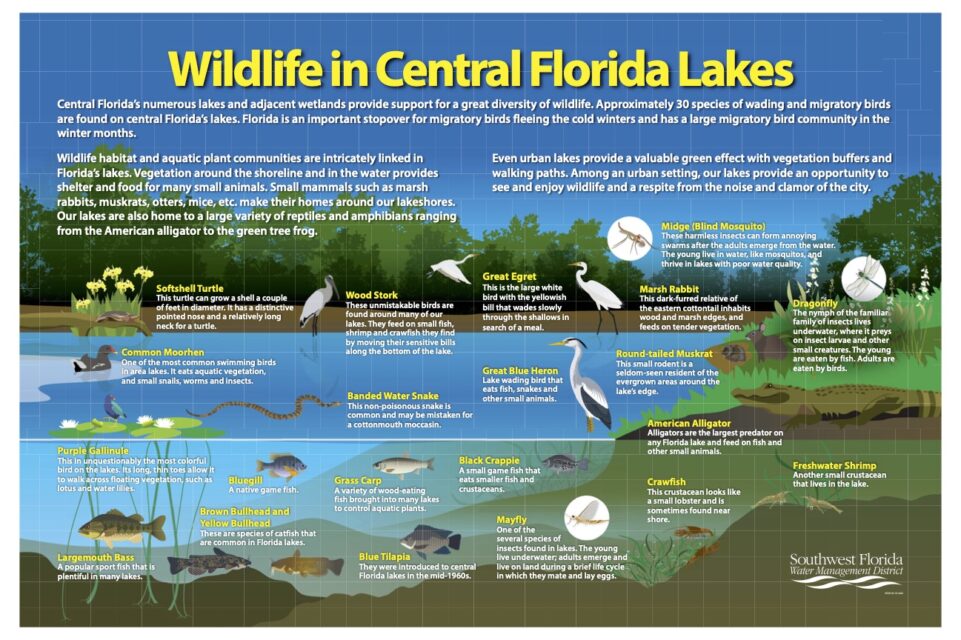
Beyond their sheer numbers and geological fascination, Florida’s lakes are vital ecological landmarks. They are critical habitats for a vast array of wildlife, supporting biodiversity that is unique to the region. These freshwater ecosystems are home to alligators, manatees, otters, and a multitude of bird species, including bald eagles, ospreys, and various wading birds. The lakes are also teeming with diverse fish populations, making them renowned destinations for freshwater fishing enthusiasts.
Aquatic Flora and Fauna
The health of Florida’s lakes is intimately tied to the survival of countless species. Submerged and emergent vegetation, such as lily pads, cattails, and hydrilla, provide food and shelter for fish, invertebrates, and reptiles. The water quality of these lakes directly impacts the health of entire food webs. They serve as nurseries for juvenile fish, breeding grounds for amphibians, and crucial resting and feeding stops for migratory birds. As natural landmarks, their ecological integrity is a testament to the importance of conservation efforts across the state.
Iconic Lakes: Natural Landmarks of Florida
Among the thousands of lakes, several stand out as prominent natural landmarks, not just for their size but also for their historical, ecological, and recreational significance.
Lake Okeechobee: The Liquid Heart
Lake Okeechobee, often referred to as “Florida’s Inland Sea” or the “Liquid Heart of Florida,” is the largest freshwater lake in the state and the second-largest purely freshwater lake in the United States (after Lake Michigan within the US borders). Covering approximately 730 square miles, its vast expanse is a dominant feature of south-central Florida. Historically, it was a central component of the flow of water south into the Everglades. Today, it is an essential resource for water management, flood control, and agriculture, but also a vital ecological landmark, particularly famous for bass fishing and birdwatching. Its sheer size and critical role in the state’s hydrological system make it an undeniable natural landmark of immense importance.
The St. Johns River Chain
While primarily a river, the St. Johns River, Florida’s longest river, incorporates several large, lake-like expansions as it flows north. Lake George is the second-largest lake in Florida and a key part of the St. Johns River system. Its brackish waters, influenced by tidal flows and proximity to the coast, create unique ecosystems. Other significant lakes along this riverine system include Lake Monroe and Lake Harney. These interconnected bodies of water serve as crucial navigational routes and provide habitats for diverse aquatic life, including manatees, making them significant natural landmarks integral to the state’s geography.
The Kissimmee Chain of Lakes
The Kissimmee Chain of Lakes, including Lake Tohopekaliga (often called Lake Toho), Lake Kissimmee, and Lake Cypress, form another critical series of natural landmarks. These lakes are the headwaters of the Kissimmee River, which historically flowed into Lake Okeechobee. Famous worldwide for trophy bass fishing, these lakes are also vital for flood control, water supply, and wildlife conservation. The restoration efforts along the Kissimmee River have highlighted the ecological significance of this chain, underscoring their status as celebrated natural features.
Other Notable Lake Landmarks
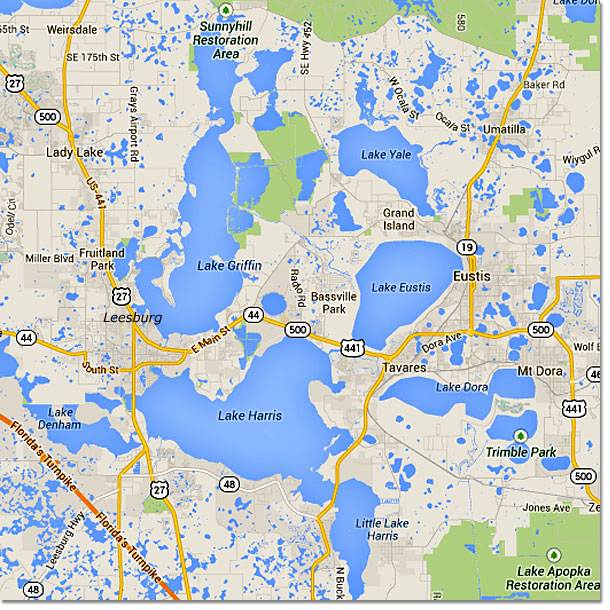
- The Harris Chain of Lakes: Located northwest of Orlando, this chain includes Lake Harris, Lake Griffin, and Lake Eustis. These interconnected lakes are popular for boating, fishing, and host various water sports events. They are significant landmarks in Lake County, a region appropriately named for its abundant freshwater bodies.
- Lake Apopka: Once severely polluted, Lake Apopka southwest of Orlando is a testament to large-scale environmental restoration. As Florida’s fourth-largest lake, its ongoing recovery makes it an important ecological landmark, symbolizing hope for environmental renewal.
- Lake Weir: Situated in Marion County, Lake Weir is one of the largest spring-fed lakes in Florida. Its clear waters and sandy bottom offer excellent recreational opportunities and a stunning natural setting, drawing visitors to its shores as a quintessential Florida lake landmark.
Preserving Florida’s Lacustrine Heritage
The sheer number of lakes in Florida is not just a statistic; it’s a profound statement about the state’s natural character. These bodies of water are more than just geographical features; they are living, breathing ecosystems that contribute immensely to the state’s biodiversity, economy, and unique appeal. As natural landmarks, they tell stories of geological time, indigenous cultures (many lakes hold names derived from Seminole Indians or other native tribes), and ongoing conservation efforts.
Protecting these vital resources is a continuous endeavor, facing challenges from development, pollution, and climate change. Organizations like the Florida Fish and Wildlife Conservation Commission work tirelessly to monitor water quality, manage fish and wildlife populations, and promote responsible recreational use. Ensuring the health and vitality of Florida’s thousands of lakes is crucial for preserving not just these individual natural landmarks, but the ecological balance of the entire state. From the sprawling expanse of Lake Okeechobee to the countless smaller, hidden gems, Florida’s lakes remain among its most defining and cherished natural treasures.
LifeOutOfTheBox is a participant in the Amazon Services LLC Associates Program, an affiliate advertising program designed to provide a means for sites to earn advertising fees by advertising and linking to Amazon.com. Amazon, the Amazon logo, AmazonSupply, and the AmazonSupply logo are trademarks of Amazon.com, Inc. or its affiliates. As an Amazon Associate we earn affiliate commissions from qualifying purchases.