
Spanning the vast breadth of North America, the journey from the golden shores of California to the towering skyscrapers of New York is more than just a trip across the United States; it is a rite of passage. Whether you are a business traveler looking to bridge the gap between two global financial hubs or an adventurer seeking the ultimate cross-country road trip, understanding the distance is the first step in your planning. The question of how many miles lie between Los Angeles and New York City depends entirely on your mode of transport and the path you choose to take.

Decoding the Distance: Air vs. Ground
When measuring the distance between these two iconic metropolises, we must distinguish between “as the crow flies” and the actual path carved out by highways and railway tracks. The geography of the United States is diverse, featuring everything from the Rocky Mountains to the vast plains of the Midwest, all of which influence the route taken.
The Flight Path: 2,450 Miles Above the Clouds
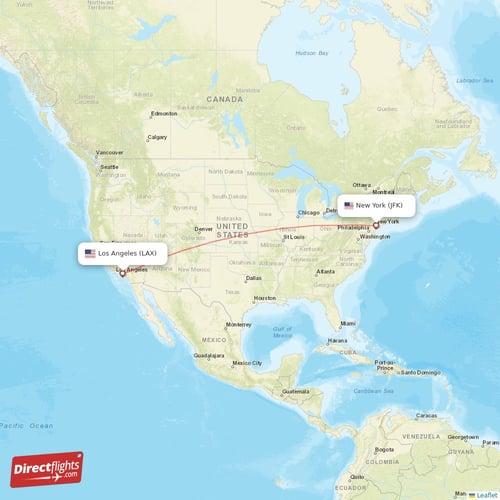
For most travelers, the most efficient way to bridge the gap is by air. The “great circle” distance—the shortest distance between two points on a sphere—is approximately 2,446 miles. When you board a plane at LAX and head toward JFK International Airport, you are essentially cutting a direct line across the heart of the country.
This aerial journey typically takes between five and six hours, depending on the wind speeds and the specific flight corridor. Jet streams, the high-altitude air currents, often favor eastbound travel, meaning your flight to the Atlantic Ocean might be slightly faster than the return leg toward the Pacific Ocean. As you look out the window, you will see the transition from the arid deserts of the Southwest to the patchwork quilts of Midwestern farmland, eventually culminating in the dense urban sprawl of the East Coast.
The Road Odyssey: 2,800 Miles of Asphalt
If you choose to keep your wheels on the ground, the mileage increases significantly. The most direct driving route using the Interstate Highway System covers roughly 2,800 miles. Driving non-stop would take about 41 hours, but for those treating this as a true travel experience, the journey usually spans five to seven days.
The increase in mileage on the ground is due to the constraints of geography and the layout of the American highway system. Roads must navigate around mountain ranges, rivers like the Mississippi River, and established urban centers. While the extra 350+ miles compared to flying might seem daunting, they represent the opportunity to witness the changing face of American culture, architecture, and landscape in a way that 35,000 feet of altitude simply cannot provide.
Navigating the Great American Road Trip Routes
Choosing how to get from Los Angeles to New York City by car involves selecting a route that aligns with your interests. There is no single “best” way to cross the country; rather, there are several distinct paths, each offering a unique perspective on the American experience.
The Southern Route: Sunshine and Deserts
One of the most popular ways to traverse the country, especially during the winter months, is the Southern Route. This path primarily utilizes Interstate 10 and Interstate 40, taking travelers through the heart of the American Southwest. Starting in California, you will quickly enter Arizona, where the landscape transforms into striking red rocks and towering cacti.
Following this path allows for stops in cities like Phoenix and Albuquerque. As you move further east, the terrain flattens through Texas and Oklahoma. This route is generally favored for its reliable weather, avoiding the heavy snows that can plague more northern latitudes. It offers a glimpse into the frontier history of the country, passing through lands that were once the edge of the known world for early explorers.
The Historic Heart: Following the Spirit of Route 66
While the original Route 66 was officially decommissioned in favor of the Interstates, much of its spirit remains along the path from Los Angeles to Chicago. Travelers can follow the general path of “The Mother Road” before cutting east toward New York.
This route is a favorite for those interested in Americana and kitsch. It takes you through Nevada, the corner of New Mexico, and into Missouri. The mileage on this route can vary depending on how many historical detours you take, but it typically totals around 2,900 miles. It is a journey through the evolution of American travel, featuring vintage diners, neon signs, and the iconic roadside attractions that defined 20th-century tourism.
The Northern Path: Through the Plains and the Great Lakes
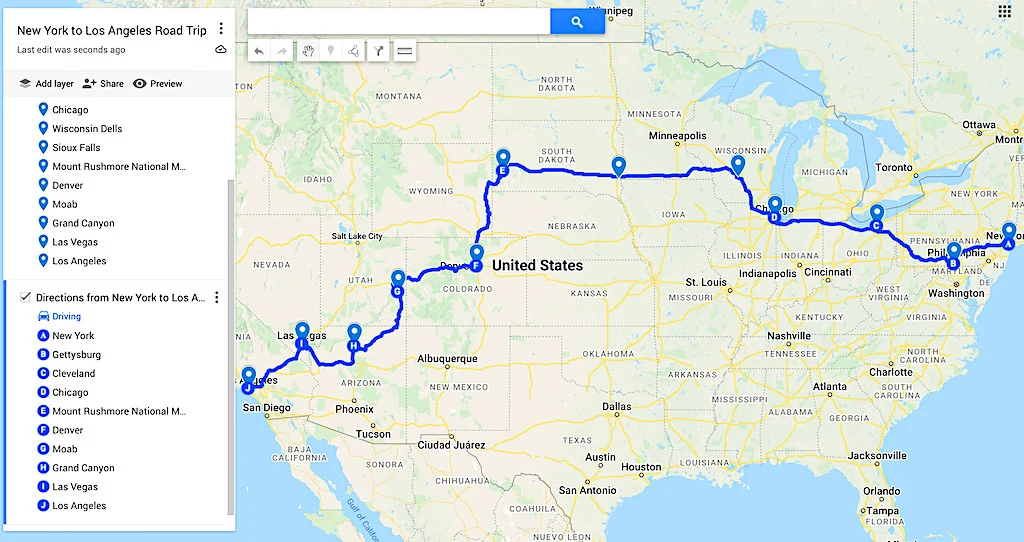
For those who prefer cooler climates and the sight of rolling hills and forests, the Northern Route via Interstate 80 is an excellent choice. This route passes through Utah, Wyoming, and Nebraska, offering a more rugged and mountainous start to the trip.
As you progress, you will drive through the “Breadbasket of America,” passing through Iowa and Illinois. A stop in Chicago provides a mid-point urban fix before the final stretch through Indiana, Ohio, and Pennsylvania. This route is approximately 2,800 miles and is known for its vast horizons and the impressive industrial history of the Rust Belt.
Essential Landmarks and Stops Along the Way
The distance between Los Angeles and New York is punctuated by some of the most famous landmarks in the world. Integrating these into your travel itinerary transforms the miles into memories.
Natural Wonders of the American West
Before you leave the Western half of the country, several detours are essential. The Grand Canyon in Arizona is perhaps the most famous stop, located just a few hours north of the main I-40 route. Its immense scale provides a profound perspective on the distance you are covering.
Further north, the Rocky Mountain National Park in Colorado offers alpine scenery that contrasts sharply with the coastal vibes of Santa Monica Pier where many cross-country journeys begin. Even if you stay on the main highways, the changing geology—from the Mojave Desert to the Great Plains—is a landmark in its own right.
Iconic Cities and Cultural Hubs
Crossing the country allows you to experience the diverse “flavors” of American cities. Las Vegas offers a neon-soaked oasis in the desert, while St Louis serves as the “Gateway to the West,” marked by the soaring Gateway Arch.
As you approach the East Coast, the density of landmarks increases. You might pass through Philadelphia to see the Liberty Bell before finally reaching the outskirts of New Jersey. The moment the skyline of Manhattan appears on the horizon, with the Empire State Building piercing the clouds, you realize the true scale of the 2,800-mile journey you have completed.
Travel Logistics: Time, Costs, and Planning
Whether you are covering the miles in six hours or six days, logistics are the backbone of a successful transcontinental trip. The transition from the lifestyle of California to that of New York requires careful preparation.
Comparing Travel Times: Hours vs. Days
The time commitment is the most significant factor for most travelers. A flight from Los Angeles to New York City is a one-day affair, including airport security and transit. If you are on a tight schedule, this is the only viable option.
However, if you choose the Amtrak rail service, such as the Southwest Chief, the journey takes approximately 67 hours. This is a “slow travel” experience that allows you to enjoy the scenery without the stress of driving. For road trippers, the “sweet spot” is often 500 miles per day, which translates to a five-to-six-day trip. This pace allows for adequate rest and time to enjoy local food and culture along the way.
Choosing the Right Season for Your Journey
The climate across the United States varies wildly, and your timing can drastically affect the “felt” distance of the trip. Traveling in the summer means long daylight hours, perfect for sightseeing at the Statue of Liberty or hiking in the Rockies. However, it also means dealing with extreme heat in the deserts and peak tourist crowds at sites like Times Square.
Winter travel between Los Angeles and New York requires caution. While the start of your trip might be sunny, the Midwest and the Northeast often face blizzards and icy roads. If you are driving, the Southern Route is almost mandatory during the colder months to avoid being stranded by mountain passes. Spring and autumn are widely considered the best times for this journey, offering temperate weather and the stunning fall foliage of Pennsylvania and upstate New York.
In conclusion, the distance from Los Angeles to New York is approximately 2,450 miles by air and 2,800 miles by road. Regardless of how you choose to cover these miles, the trip remains one of the world’s most iconic travel experiences. From the Hollywood Sign to Central Park, every mile tells a story of the vast, varied, and vibrant landscape that defines the American spirit.
LifeOutOfTheBox is a participant in the Amazon Services LLC Associates Program, an affiliate advertising program designed to provide a means for sites to earn advertising fees by advertising and linking to Amazon.com. Amazon, the Amazon logo, AmazonSupply, and the AmazonSupply logo are trademarks of Amazon.com, Inc. or its affiliates. As an Amazon Associate we earn affiliate commissions from qualifying purchases.