
Embarking on a journey from Los Angeles to New York is more than just a logistical transition between two coastal powerhouses; it is a rite of passage that spans the breadth of the United States. Whether you are soaring over the Great Plains at thirty thousand feet or navigating the vast ribbon of asphalt that connects the Pacific Ocean to the Atlantic Ocean, understanding the distance is the first step in planning an unforgettable American adventure. This distance represents the ultimate contrast between the laid-back, sun-drenched culture of California and the high-octane, historic energy of the East Coast.

Understanding the Transcontinental Distance: Air vs. Road
When calculating how many miles lie between Los Angeles and New York City, the answer depends entirely on your mode of transport. The geographical “as the crow flies” distance is significantly shorter than the actual mileage covered by a vehicle on the ground.
Measuring the Great Circle Route by Air
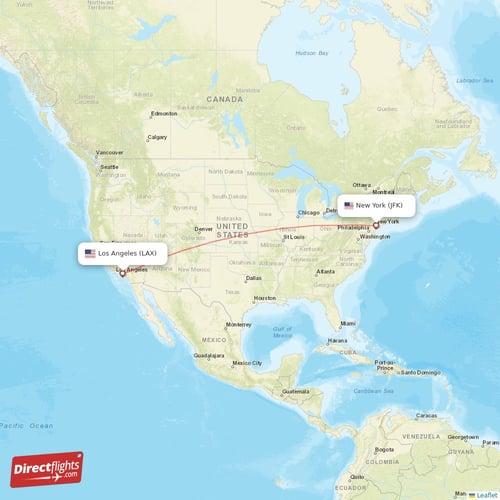
In the world of aviation, the shortest distance between two points on a sphere is known as a Great Circle Route. For travelers flying from Los Angeles International Airport to John F Kennedy International Airport, the distance is approximately 2,450 miles. Most direct commercial flights take between five and six hours, depending on the prevailing jet streams. While flying is the most efficient way to bridge the gap between these two metropolises, it bypasses the incredible topographical diversity of the North American continent.
The Reality of Road Mileage
For those who choose the open road, the mileage increases substantially. The most direct driving route typically covers roughly 2,800 miles. This journey usually utilizes Interstate 40 or Interstate 80, depending on the desired scenery and weather conditions. A non-stop drive would take approximately 41 to 45 hours, but for the average traveler, this is a multi-day odyssey. Driving across the country allows you to witness the gradual transition from the Mojave Desert to the Rocky Mountains, through the agricultural heartland of the Midwest, and finally into the dense urban corridors of the Northeast.
The Classic Road Trip: Driving Across the Heart of America
To truly appreciate the 2,800 miles, one must look at the various routes that define the American travel experience. Each path offers a unique perspective on the country’s geography and cultural heritage.
The Southern Route via the Southwest
Choosing the southern path often involves starting in Los Angeles and heading toward Arizona and New Mexico. This route is favored during the winter months to avoid the heavy snows of the north. You will pass through Phoenix and Albuquerque, experiencing the red rock majesty of the desert. As you move into Texas, the landscape flattens into the vast prairies of the Panhandle before reaching Oklahoma City. This path captures the essence of the “Old West” and provides a window into the spiritual and artistic traditions of the indigenous peoples of the Southwest.
The Historic Route 66 Experience
While the original Route 66 was officially decommissioned decades ago, much of its spirit remains accessible. Starting at the Santa Monica Pier and ending conceptually in Chicago before merging toward New York, this route is for the nostalgic traveler. It emphasizes small-town America, neon signs, and quirky roadside attractions. Following this path adds a few hundred miles to the journey but enriches the travel experience with a sense of history that modern interstates often lack. It is a journey through the “Mother Road” that helped shape the identity of the United States in the 20th century.
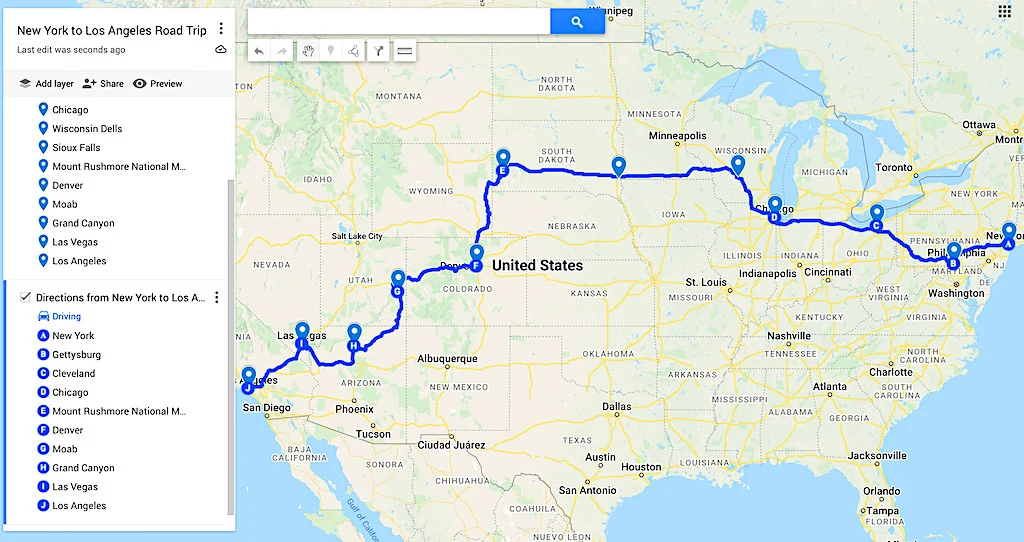
Iconic Landmarks and Scenic Detours Along the Way
Spanning the distance from California to New York offers the opportunity to visit some of the world’s most famous attractions. While these detours may add miles, they transform a simple relocation into a comprehensive tour of North America.
Natural Wonders of the West
Shortly after leaving the City of Angels, travelers can detour toward Grand Canyon National Park. The scale of the canyon is a perfect metaphor for the scale of the cross-country trip itself. Further north, the Rocky Mountain National Park in Colorado offers high-altitude vistas and pristine alpine lakes. These natural landmarks serve as a stark contrast to the urban environments that bookend the journey.
Cultural Hubs of the Midwest and East
As the miles accumulate and you move into the Midwest, stopping in Chicago is almost essential. Situated on the shores of Lake Michigan, the city offers a blend of world-class architecture and culinary innovation. Continuing east, the route passes through Ohio and Pennsylvania, where the landscape becomes more forested and hilly. A stop at Philadelphia allows travelers to visit the Liberty Bell and Independence Hall before the final leg into the Empire State. These stops provide a historical context to the modern vibrancy of Manhattan.
Strategic Planning for Your Cross-Country Expedition
Covering nearly 3,000 miles requires meticulous planning to ensure safety and enjoyment. The transition across several time zones and varying climates means that preparation is key to a successful transcontinental trip.
Considering the Climate and Seasons
The time of year you choose for your journey from Los Angeles to New York will drastically alter your experience. Summer trips offer long daylight hours but come with intense heat in states like Nevada and Kansas. Conversely, winter travel via the northern routes can be perilous due to snowstorms in the Appalachian Mountains or the Midwest. Spring and autumn are widely considered the best times to travel, offering temperate weather and the beauty of changing foliage, particularly as you approach the Hudson Valley.
Managing Logistics and Travel Fatigue
Whether you are driving or taking the Amtrak (which offers a scenic rail journey through the California Zephyr and Lake Shore Limited lines), pacing is vital. For drivers, the “3-3-3 rule” is often recommended: drive no more than 300 miles a day, stop by 3:00 PM, and stay for at least three nights in locations you truly want to explore. This prevents the “miles-to-go” fatigue and allows the traveler to actually experience the destinations rather than just seeing them through a windshield.
The Arrival in the Big Apple
As you cross the George Washington Bridge or emerge from the Lincoln Tunnel, the skyline of New York City serves as the ultimate reward. From the glitz of Times Square to the greenery of Central Park, the destination is a world away from the palm trees of Beverly Hills. You have crossed the Great Divide, traversed the Mississippi River, and witnessed the vastness of the American landscape.
The journey from Los Angeles to New York is a testament to the sheer scale of the United States. Whether measured in the 2,450 miles of a flight path or the 2,800 miles of a highway, the distance is filled with the stories, landscapes, and people that define the nation. It is a trip that every traveler should undertake at least once, proving that sometimes, the journey itself is just as significant as the destination. From the Empire State Building to the Hollywood Sign, these two iconic cities are connected by a vast and beautiful country waiting to be discovered.
LifeOutOfTheBox is a participant in the Amazon Services LLC Associates Program, an affiliate advertising program designed to provide a means for sites to earn advertising fees by advertising and linking to Amazon.com. Amazon, the Amazon logo, AmazonSupply, and the AmazonSupply logo are trademarks of Amazon.com, Inc. or its affiliates. As an Amazon Associate we earn affiliate commissions from qualifying purchases.