
California, a state renowned globally for its innovation, vibrant culture, and breathtaking natural landscapes, also holds a profound and often overlooked significance as a cornerstone of national defense for the United States. Beyond its glittering cities like Los Angeles and San Francisco or its iconic natural landmarks, the state is home to a substantial number of military installations. These bases are not merely functional facilities; they are crucial historical landmarks, architectural testaments, and integral parts of the state’s socio-economic and environmental fabric, each telling a unique story of strategic importance and national service.
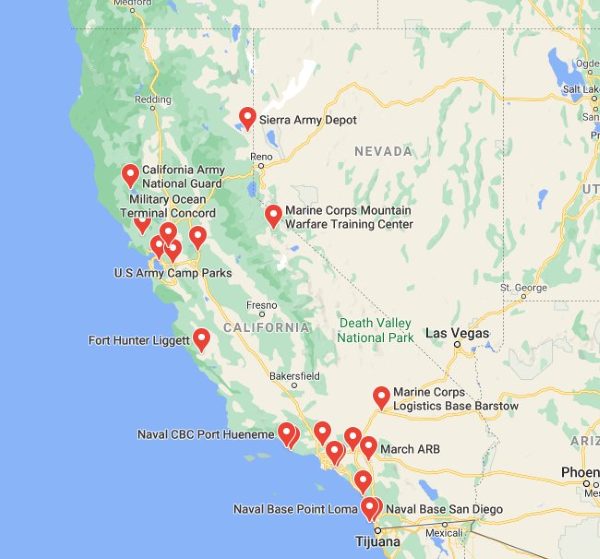
The exact count of active military bases in California can vary slightly depending on how one defines “base” (e.g., major installation versus smaller training ranges or reserves). However, the state hosts dozens of primary installations across all branches of the armed forces: the Army, Navy, Marine Corps, Air Force, and Space Force. These range from vast desert training centers and sprawling naval ports to critical airfields and advanced research facilities. Their presence reflects a rich history intertwined with geopolitical shifts, technological advancements, and the defense of the nation’s interests, particularly across the Pacific Ocean. Exploring these sites as landmarks offers a deep dive into California’s strategic past and present.
A Rich Military Heritage: California’s Strategic Importance
California’s military significance is deeply rooted in its geography and its pivotal role in national expansion and global defense. Its extensive coastline, vast deserts, and proximity to the Pacific Ocean have made it an indispensable location for military operations, training, and technological development throughout history.
From Gold Rush to Global Power: Early Military Presence
The military’s presence in California predates its statehood, with early forts established to secure new territories during the Mexican-American War and to protect settlers during the Gold Rush era. The subsequent establishment of facilities like the Presidio of San Francisco in 1776 (initially Spanish, then Mexican, then American) showcased the long-term strategic value of the region. These early outposts, often characterized by robust masonry and classical military architecture, were vital for command and control, logistics, and coastal defense. The architectural styles of some older buildings within these historic areas reflect Spanish colonial, Victorian, and early 20th-century military designs, standing as physical reminders of centuries of military evolution. Angel Island in San Francisco Bay, for instance, transitioned from a critical coastal defense site with batteries and fortifications to an immigration station and later a Cold War missile site, its structures telling a multifaceted historical narrative.
The Pacific Theater and Beyond: Wartime Expansion
The 20th century, particularly the two World Wars and the Korean and Vietnam conflicts, saw an immense expansion of military infrastructure in California. The state became the primary staging ground for operations in the Pacific Theater during World War II, leading to the rapid development of naval bases, airfields, and logistical hubs. Cities like San Diego transformed into major naval power centers, with vast shipyards, training facilities, and barracks constructed at an unprecedented pace. The functional, often utilitarian, architecture of this era — massive hangars, concrete bunkers, and sprawling administrative complexes — reflects the urgent demands of wartime production and deployment. Many of these structures, while expanded and modernized, still form the core of today’s largest installations, embodying a period of intense national effort.
Cold War Era: Innovation and Deterrence
The Cold War brought a new dimension to California’s military landscape, emphasizing technological innovation, air power, and missile defense. Bases like Edwards Air Force Base became epicenters for aerospace research and development, home to experimental aircraft and space shuttle landings. Vandenberg Space Force Base emerged as a critical site for missile testing and satellite launches, its launch complexes and tracking stations representing monumental feats of engineering designed for the space age. The architecture of this period often features advanced technical facilities, hardened structures, and expansive runways, reflecting the strategic imperative of deterrence and technological supremacy. These installations are landmarks of human ingenuity and strategic foresight, embodying the tensions and advancements of a transformative global era.
Diverse Landscapes, Diverse Missions: Major Military Installations
California’s varied topography—from its extensive coastline to its vast deserts and fertile valleys—provides ideal settings for a wide array of military operations, each base a specialized landmark in its own right.
Naval Dominance: Coastal Strongholds
Along California’s nearly 840-mile coastline, naval installations are paramount. The concentration of naval power in San Diego is unparalleled. Naval Base San Diego, often referred to as the largest naval base on the West Coast, covers thousands of acres and hosts dozens of ships, from destroyers to aircraft carriers. Its sprawling docks, maintenance facilities, and historic buildings along Point Loma and North Island (part of Naval Air Station North Island in Coronado) represent a monumental maritime landmark. Further north in the Central Valley, Naval Air Station Lemoore in Lemoore is the Navy’s only master jet base on the West Coast, characterized by vast runways and hangars designed for advanced fighter jets. Naval Base Ventura County, encompassing sites like Port Hueneme and Point Mugu near Oxnard, combines deep-water port capabilities with sophisticated air and missile testing ranges, offering a unique blend of historical maritime infrastructure and modern technological facilities. These naval bases are not just operational sites; they are immense, self-contained communities with their own distinct architecture, history, and natural settings.
Air Power Hubs: Skyward Sentinels
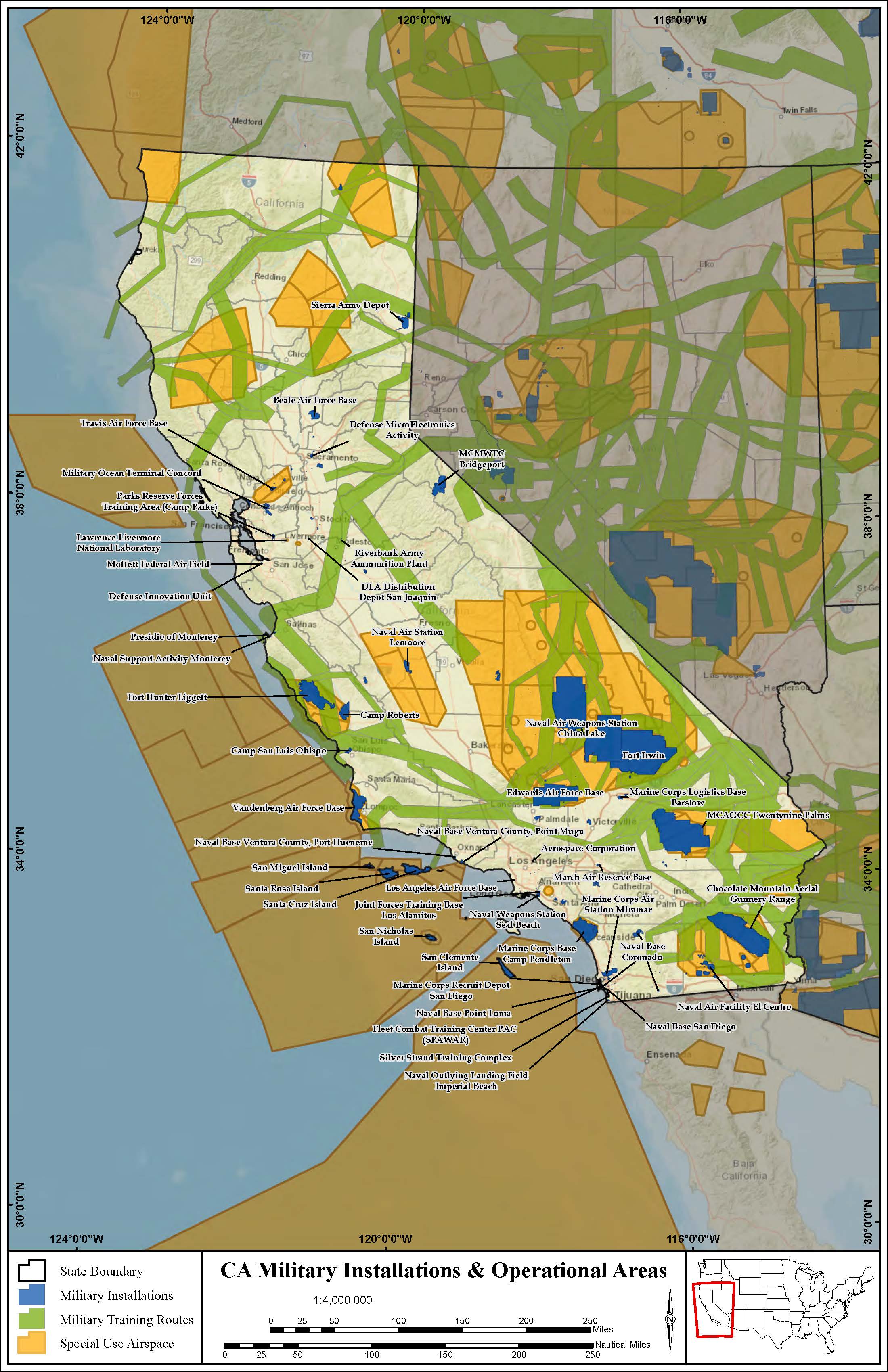
California’s clear skies and expansive unpopulated areas have made it ideal for air force operations. Edwards Air Force Base, located in the Mojave Desert near Palmdale, is an iconic landmark in aerospace history, known as the birthplace of modern aviation testing. Its immense dry lakebeds serve as natural runways, and its facilities have witnessed countless breakthroughs in aircraft design and space exploration. Travis Air Force Base near Fairfield, often called “the Gateway to the Pacific,” is a critical logistical hub for global air mobility, characterized by massive cargo plane hangars and extensive support infrastructure. To the north, Vandenberg Space Force Base near Lompoc is a national treasure for space launches and missile defense, with its dramatic coastal launch pads carved into the bluffs, blending technological advancement with a stunning natural backdrop. These bases are distinct landmarks of human ambition and technological prowess, their structures reflecting the cutting edge of aeronautical and astronautical engineering.
Army and Marine Corps Training Grounds: Desert and Mountain Fortresses
The vast, rugged landscapes of inland California are perfectly suited for large-scale ground combat training. Fort Irwin National Training Center near Barstow in the Mojave Desert is one of the premier maneuver warfare training centers in the world. Its sheer size and simulated combat environments make it an unparalleled landmark in military readiness, a vast landscape transformed into a living laboratory for conflict simulation. For the Marine Corps, Marine Corps Base Camp Pendleton near Oceanside is the primary West Coast amphibious assault training facility, with miles of coastline, mountains, and urban training areas. Its historical buildings, many dating back to its World War II origins, showcase a blend of functional military architecture and a commitment to preserving the natural environment. Further east in the Mojave Desert lies Marine Corps Air Ground Combat Center Twentynine Palms near Twentynine Palms, the largest United States Marine Corps base, a vast expanse for combined arms training, with unique desert architecture adapted to the harsh environment. These installations are monuments to rigorous training and strategic preparation, their sheer scale and specialized features making them significant landmarks of military doctrine and practice.
Architectural Legacy and Historical Significance
Beyond their operational roles, California’s military bases possess a rich architectural and historical narrative, deserving recognition as unique landmarks.
Echoes of the Past: Historic Buildings and Infrastructure
Many military bases in California house structures that date back over a century, offering a tangible connection to different eras of military history. From the Spanish colonial revival architecture seen in parts of the Presidio of San Francisco to the Art Deco elements found in some administrative buildings constructed during the interwar period, the architectural styles within these bases are diverse. Examples include the historic barracks at Fort Mason, the unique structures designed for coastal defense at Fort Miley (both in San Francisco), or the industrial marvels of the former Mare Island Naval Shipyard near Vallejo. These buildings, often robustly constructed, reflect the prevailing architectural trends and engineering capabilities of their time, while also showcasing adaptations for military function. They serve as enduring landmarks, silently narrating tales of past conflicts, technological shifts, and the daily lives of countless service members.
Preserving Legacy: Museums and Memorials
While direct public access to active military installations is often restricted for security reasons, many bases and former military sites in California actively preserve and share their history through museums, memorials, and public parks. These accessible landmarks provide invaluable insights into the state’s military past. The USS Midway Museum in San Diego, for example, is a retired aircraft carrier now serving as a prominent museum, offering visitors a firsthand experience of naval life and aviation history. Similarly, the March Field Air Museum, located adjacent to March Air Reserve Base in Riverside, showcases an impressive collection of historic aircraft and artifacts, chronicling the rich history of aviation in California and the role of the base itself. These dedicated institutions act as vital historical landmarks, making the stories, equipment, and sacrifice associated with California’s military bases accessible to the public and ensuring that their significant contributions are remembered and honored.
The Enduring Impact: Beyond the Gates
The influence of military bases in California extends far beyond their perimeters, shaping local economies, communities, and even the natural environment.
Economic and Community Fabric
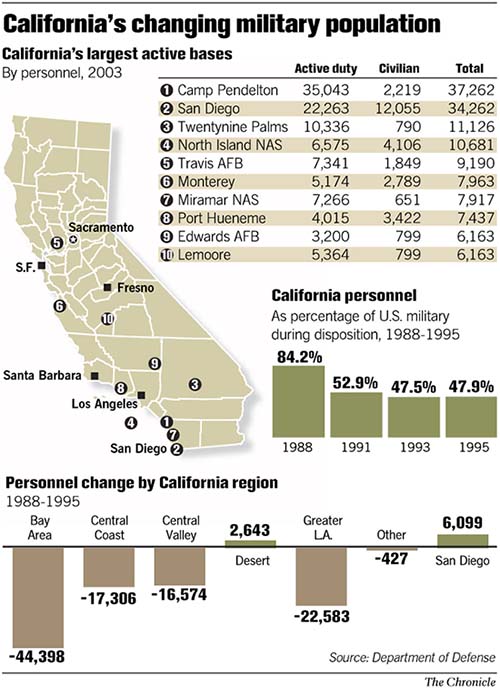
Military installations are often the largest employers in their respective regions, contributing significantly to local economies through salaries, contracts, and supporting industries. Towns like Oceanside (adjacent to Marine Corps Base Camp Pendleton) or Lemoore (home to Naval Air Station Lemoore) have grown and thrived in symbiotic relationships with their military neighbors. This deep integration means the bases are not just strategic assets but profound community landmarks, their presence influencing everything from local businesses to cultural events and educational institutions. The unique dynamics between civilian populations and military communities add another layer to the identity and historical development of these regions.
Natural Landscapes and Environmental Stewardship
Many military bases in California are vast, encompassing diverse ecosystems from coastal wetlands to desert habitats. Paradoxically, the restricted access to these lands has often inadvertently resulted in the preservation of significant natural landscapes and biodiversity. For instance, Marine Corps Base Camp Pendleton includes some of the last undeveloped coastal stretches in Southern California, serving as a crucial habitat for endangered species. Vandenberg Space Force Base is home to rare plant species and coastal dunes. These bases, therefore, also function as significant environmental landmarks, demonstrating a complex relationship between national defense needs and ecological preservation. Modern military installations increasingly emphasize environmental stewardship, engaging in conservation efforts and sustainable practices, thereby adding a crucial dimension to their status as enduring landmarks.
In conclusion, California is far more than a land of sunshine and innovation; it is a state deeply interwoven with the fabric of national defense. The military bases that dot its landscape are formidable landmarks, each a repository of history, a showcase of distinct architecture, and a testament to strategic importance. From the historic fortifications overlooking the Golden Gate to the sprawling desert training grounds and the advanced aerospace facilities, these installations reflect centuries of commitment to security and progress. While access may be limited, their presence, their stories, and their profound impact on California’s identity make them indispensable landmarks in the broader narrative of the United States. Their existence underscores a continuous dedication to protecting national interests, evolving with the times, and maintaining a formidable presence on both land, sea, and in space.
LifeOutOfTheBox is a participant in the Amazon Services LLC Associates Program, an affiliate advertising program designed to provide a means for sites to earn advertising fees by advertising and linking to Amazon.com. Amazon, the Amazon logo, AmazonSupply, and the AmazonSupply logo are trademarks of Amazon.com, Inc. or its affiliates. As an Amazon Associate we earn affiliate commissions from qualifying purchases.