
For many, a driver’s license in California isn’t just a privilege; it’s a cornerstone of their daily lifestyle. From commuting to work in bustling cities like Los Angeles or San Francisco to enjoying weekend road trips along the picturesque coast, independent mobility is deeply intertwined with personal and professional freedom. Understanding the intricate point system managed by the California Department of Motor Vehicles (DMV) is therefore not merely a matter of legal compliance but a crucial aspect of safeguarding your lifestyle. Accumulating too many points can lead to a suspended license, abruptly halting your ability to navigate the Golden State and profoundly impacting everything from your career to your social life. This comprehensive guide will demystify the point system, detail the thresholds for suspension, and offer strategies to maintain your driving privileges, ensuring your California lifestyle remains uninterrupted.
Understanding California’s Driver Point System: A Cornerstone of Responsible Lifestyle
The California Department of Motor Vehicles (DMV) employs a comprehensive point system to track driving offenses and identify “negligent operators.” This system is designed to promote road safety by penalizing drivers who repeatedly violate traffic laws, ultimately making California roads safer for everyone. For drivers, understanding this system is paramount to maintaining their lifestyle, as losing driving privileges can significantly disrupt daily routines, work commitments, and personal freedom.
The DMV’s Role in Maintaining Road Safety
The Department of Motor Vehicles is tasked with enforcing vehicle codes and ensuring driver accountability. Each time a driver is convicted of a traffic violation or is found at fault in an accident, “negligent operator” points are assigned to their driving record. These points are not arbitrary; they reflect the severity of the offense and the potential danger it poses to others on the road. The DMV uses this accumulation of points as an indicator of a driver’s risk level, intervening when a driver demonstrates a pattern of unsafe behavior. This oversight is a critical component of public safety infrastructure, protecting citizens whether they’re commuting in San Diego or exploring Yosemite National Park.
Why the Point System Matters for Your Mobility and Freedom
In a state as vast and diverse as California, personal transportation is often essential. A driver’s license grants the freedom to pursue career opportunities, manage family responsibilities, access healthcare, and enjoy the state’s myriad recreational activities. The point system directly threatens this mobility. A suspension means losing the ability to drive independently, often necessitating reliance on public transport, ride-sharing services, or the goodwill of others. This change can be incredibly disruptive, adding stress, cost, and significant time to daily tasks. For many, losing their license equates to a substantial decrease in their quality of life and a profound challenge to their established lifestyle.
Distinguishing Between Negligent Operator Points and Other Violations
It’s important to differentiate between violations that add “negligent operator” points and those that incur fines but do not impact your license status directly. While all traffic violations should be taken seriously, only specific moving violations and at-fault accidents contribute to the point count that can lead to a suspension. For instance, parking tickets typically incur fines but no points, whereas speeding tickets or reckless driving convictions accrue points. Understanding this distinction is key to strategizing your response to traffic infractions and effectively managing your driving record to prevent the severe consequences of a license suspension. The Negligent Operator Treatment System is specifically designed to target these point-accruing offenses.
The Point Thresholds That Impact Your California Lifestyle
The California Department of Motor Vehicles operates on a tiered system regarding negligent operator points, meaning specific accumulations over defined periods trigger increasingly severe actions. These thresholds are critical for every driver to understand, as crossing them directly leads to a suspension or revocation of driving privileges, profoundly impacting one’s ability to maintain their everyday lifestyle. The consequences are not just legal; they are deeply personal, affecting commutes, family responsibilities, and overall independence.
Accumulating Points: What Triggers a License Suspension?
The California DMV identifies a driver as a “negligent operator” if they accumulate too many points within certain timeframes. The key thresholds for license suspension are:
- 4 points in 12 months: Accumulating four or more negligent operator points within a one-year period will typically trigger a driver’s license suspension.
- 6 points in 24 months: Six or more points accumulated over a two-year period also leads to a suspension.
- 8 points in 36 months: Eight or more points within a three-year period will result in a suspension.
Once a driver reaches any of these thresholds, the DMV will usually issue an “Order of Suspension” and schedule a DMV Hearing to determine if the driver should be classified as a negligent operator and have their license suspended. This hearing is a crucial opportunity for drivers to present their case and potentially avoid a suspension, or at least mitigate its duration. Ignoring these notices is a grave mistake that can lead to an immediate and automatic suspension.
Short-Term Suspensions: Immediate Impacts on Daily Life
A typical first-time negligent operator suspension often lasts for six months. During this period, driving is prohibited, with severe penalties for non-compliance, including impoundment of the vehicle, heavy fines, and even jail time. The immediate impact on daily life is substantial. Commuting to work or school becomes a logistical challenge, requiring reliance on public transportation, carpooling, or expensive ride-sharing services. Simple errands like grocery shopping or taking children to activities become complex endeavors. For those whose livelihoods depend on driving, such as delivery drivers or salespeople, a suspension can mean immediate job loss and significant financial distress, unraveling the very fabric of their established lifestyle.
Long-Term Repercussions: Beyond the Initial Suspension
Beyond the initial period of suspension, the repercussions of a negligent operator designation can linger for years. Once your license is reinstated, you may face increased insurance premiums, as insurance companies view drivers with a history of suspensions as high-risk. This financial burden can last for several years. Furthermore, subsequent point accumulations after reinstatement can lead to even longer suspension periods, demonstrating a pattern of negligence that the DMV takes very seriously. For those with professional driving licenses (e.g., commercial drivers), the impact can be even more devastating, potentially ending a career. Managing your driving record proactively is not just about avoiding immediate penalties but also about protecting your long-term financial stability and professional prospects.
Common Violations and Their Point Values: Driving Smart for a Seamless Lifestyle
Understanding the point values associated with different traffic violations is fundamental to managing your driving record and preventing the accumulation of points that could jeopardize your California lifestyle. Each infraction carries a specific weight, and even seemingly minor offenses can contribute to reaching a suspension threshold if repeated. Being informed allows drivers to make conscious decisions on the road that prioritize safety and compliance, thereby protecting their mobility and freedom.
One-Point Violations: Minor Infractions, Major Consequences Over Time
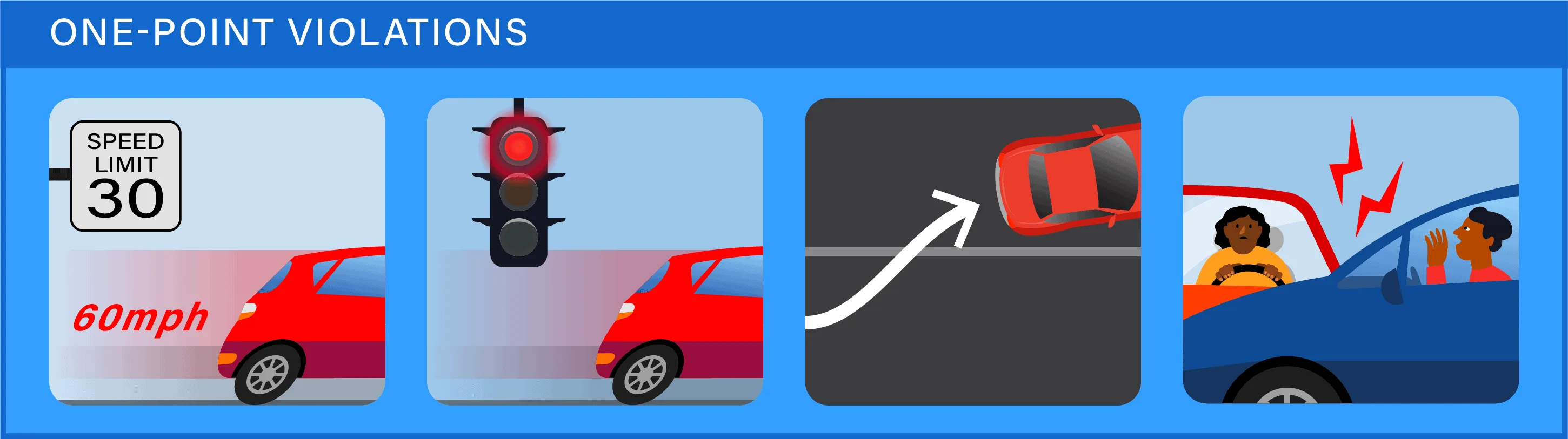
The majority of common moving violations in California are classified as one-point offenses. While a single one-point ticket might seem insignificant, accumulating several of them over a 12, 24, or 36-month period can quickly lead to a license suspension. These include, but are not limited to:
- Speeding: Exceeding the posted speed limit, within certain parameters.
- Failure to stop at a stop sign or red light: Running a stop sign or red light.
- Unsafe lane changes: Changing lanes without proper signaling or when it’s unsafe to do so.
- At-fault accidents: Being determined responsible for a traffic collision.
- Driving without proof of insurance: Although often a fix-it ticket, if unaddressed, it can result in points.
- Failure to yield to pedestrians: Not giving the right-of-way to pedestrians in crosswalks.
The cumulative effect of these “minor” infractions is what often catches drivers off guard. A driver might not feel they are driving recklessly, but a series of small lapses in judgment can quickly add up, transforming minor inconveniences into a serious threat to their driving privileges. This highlights the importance of consistent, vigilant driving practices.
Two-Point Violations: Serious Offenses with Immediate Threat to Driving Privileges
Two-point violations are considered more serious offenses due to the elevated risk they pose to public safety. Accumulating just two of these within a year, or a combination with one-point offenses, can swiftly push a driver past the suspension threshold. These types of violations often carry stiffer penalties, including higher fines, and are a clear indicator of behavior that the DMV deems particularly dangerous. Examples of two-point violations include:
- Reckless driving: Driving with willful or wanton disregard for the safety of persons or property.
- Driving under the influence (DUI): Operating a vehicle while impaired by alcohol or drugs. This offense also carries significant criminal penalties.
- Hit-and-run: Leaving the scene of an accident without providing information or rendering aid.
- Driving with a suspended or revoked license: Operating a vehicle when legally prohibited from doing so.
- Evading a peace officer: Attempting to flee from law enforcement.
These violations not only accrue points rapidly but also often result in immediate criminal charges, substantial fines, mandatory education programs, and potentially jail time, alongside the license suspension. The impact on one’s lifestyle from a two-point violation is typically immediate and severe, affecting not just driving privileges but also personal freedom and financial stability.
No-Point Violations: Financial Penalties Without License Impact (But Still Important)
Not all traffic infractions result in points on your record. “No-point” violations primarily incur financial penalties but do not directly contribute to the negligent operator point count. These often include:
- Parking violations: Overtime parking, parking in a restricted zone, etc.
- Equipment violations: Non-functioning lights, tinted windows, etc., which are often “fix-it” tickets.
- Failure to carry registration or driver’s license: While these can lead to fines, they generally don’t add points if resolved promptly.
While these do not affect your license points, they should not be ignored. Unpaid fines can escalate, leading to collection agency involvement, holds on vehicle registration renewal, and eventually, if severe enough, can indirectly impact your driving privileges or credit score. Maintaining a responsible lifestyle means addressing all legal obligations, even those that don’t directly threaten your driver’s license.
Strategies for Managing and Mitigating Points: Safeguarding Your Mobility
Proactive management of your driving record is essential for preserving your mobility and protecting your California lifestyle. When faced with a traffic violation, understanding your options and acting strategically can make a significant difference in preventing point accumulation and avoiding license suspension. There are several avenues available to drivers to mitigate the impact of infractions, ranging from educational courses to legal challenges.
Traffic School: Your Opportunity to Clear Points and Enhance Skills
One of the most common and effective ways to mitigate points from a minor infraction is by attending Traffic Violator School. If eligible, completing a DMV-approved traffic school course can prevent the point from being added to your public driving record. Generally, you can attend traffic school once every 18 months for a one-point violation.
- Eligibility: Typically, the violation must be a one-point offense, you must not have attended traffic school for a prior violation within the last 18 months, and you must hold a non-commercial driver’s license.
- Process: After receiving a ticket, you’ll pay the fine plus an administrative fee to the court, and then enroll in an approved online or in-person traffic school. Upon completion, the school will electronically notify the court and the DMV, and the point will be masked from your driving record.
Traffic school not only helps safeguard your license but also serves as a valuable refresher course on traffic laws and safe driving practices, making you a more responsible and aware driver. This proactive approach reinforces a conscientious lifestyle.
Fighting a Ticket: When and How to Contest a Violation
If you believe you were wrongly cited or that there are extenuating circumstances, you have the right to contest a traffic ticket in court. While not always successful, fighting a ticket can be a viable strategy to avoid points, fines, and potentially a license suspension.
- Evidence Gathering: Collect any evidence that supports your case, such as photographs, witness statements, or dashcam footage.
- Court Appearance: Present your case to a judge or commissioner. You may choose to represent yourself or hire a traffic attorney. An attorney can be particularly beneficial for complex cases or two-point violations, as they have expertise in traffic law and court procedures.
- Trial by Written Declaration: For many minor infractions, California allows you to contest the ticket through a “Trial by Written Declaration,” where you submit your argument and evidence in writing, without needing to appear in court.
Successfully fighting a ticket means the violation is dismissed, and no points are added to your record, effectively preserving your clean driving history and preventing negative impacts on your lifestyle.
Safe Driving Practices: The Best Defense for Your License and Lifestyle
Ultimately, the most effective strategy for managing points and safeguarding your driving privileges is consistent safe and defensive driving. Adhering to traffic laws, avoiding distractions, and practicing patience on the road significantly reduces your likelihood of receiving a violation.
- Obey Speed Limits: Speeding is a leading cause of tickets and accidents.
- Avoid Distractions: Put away your phone and focus solely on driving.
- Maintain Your Vehicle: Ensure your car is in good working order to avoid equipment violations.
- Drive Defensively: Anticipate the actions of other drivers and be prepared for unexpected situations.
- Never Drive Impaired: Driving under the influence is a severe two-point violation with criminal implications.
By embedding these practices into your daily routine, you not only prevent point accumulation but also contribute to safer roads for everyone, maintaining a responsible and secure lifestyle for yourself and your community.
The Impact of a Suspended License on Your California Lifestyle and Beyond
Losing your driving privileges in California extends far beyond the inconvenience of not being able to drive. A suspended license can trigger a cascade of practical, financial, and personal challenges that significantly disrupt your established lifestyle. Understanding these multifaceted impacts underscores the critical importance of diligent driving and proactive point management. The consequences can be long-lasting, influencing your daily routines, financial stability, and even your future opportunities.
Practical Challenges: Commuting, Errands, and Social Life
The most immediate and obvious impact of a suspended license is the sudden loss of independent mobility. In a state largely designed for car travel, this can be debilitating:
- Commuting: Getting to work or school becomes a major logistical hurdle. Public transportation in many California areas, especially outside major metropolitan centers like Los Angeles or San Francisco, can be limited, unreliable, or non-existent. Ride-sharing services become a necessity, adding significant daily costs.
- Errands: Simple tasks like grocery shopping, doctor’s appointments, or taking children to school and activities transform into complex planning endeavors, often requiring reliance on others.
- Social Life: Spontaneous outings, visiting friends or family, and participating in hobbies that require driving become difficult or impossible, leading to social isolation and a diminished quality of life. The freedom to explore California’s many attractions is severely curtailed.
This dramatic shift in daily routine can lead to increased stress, decreased productivity, and a profound sense of lost independence, fundamentally altering one’s accustomed lifestyle.
Financial Burdens: Fines, Increased Insurance, and Lost Opportunities
The financial ramifications of a license suspension are substantial and can persist long after the suspension period ends:
- Fines and Fees: You’ll face various fines for the original violation(s) and reinstatement fees to the DMV. If you are caught driving on a suspended license, the penalties are even more severe, including additional hefty fines, vehicle impoundment fees, and potential jail time.
- Increased Insurance Premiums: Upon reinstatement, your car insurance rates will almost certainly skyrocket. Being classified as a “negligent operator” or having a history of suspension flags you as a high-risk driver, leading to significantly higher premiums for several years. You may also be required to obtain an SR-22 certificate of financial responsibility, which further increases costs.
- Lost Income: If your job requires driving, a suspension can lead to job loss or severely limit your career options. Even for those whose jobs don’t directly involve driving, the inability to commute efficiently can impact punctuality and attendance, potentially affecting job security or promotion prospects.
These financial burdens can strain household budgets, leading to long-term economic instability and impacting overall financial well-being.

Reinstating Your License: The Path Back to Unrestricted Driving
Reinstating your license is not automatic once the suspension period concludes. There are specific steps you must follow to regain your driving privileges:
- Serve the Full Suspension: You must complete the entire suspension period.
- Pay All Fines and Fees: Ensure all outstanding traffic fines, court fees, and DMV reinstatement fees are paid in full.
- Provide Proof of Insurance: You will likely need to provide proof of financial responsibility, often in the form of an SR-22 certificate, for a specified period.
- Complete Any Required Programs: Depending on the reason for suspension (e.g., DUI), you may need to complete traffic school, DUI programs, or other educational courses.
- Pass Driving Tests: In some cases, the DMV may require you to retake the written and/or driving tests.
Successfully navigating this process is crucial for reclaiming your independence and resuming your normal California lifestyle. A suspended license is a serious challenge, but with careful adherence to regulations and a commitment to safe driving, the path back to unrestricted mobility is achievable.