
California, often perceived globally as a bastion of progressive politics and a liberal stronghold, presents a complex and dynamic political landscape that belies simple categorization. While its electoral college votes reliably lean Democratic in presidential elections, and state-level governance is dominated by the Democratic Party, beneath the surface lies a rich tapestry of political affiliations that shape the unique lifestyle of its diverse communities. Understanding the precise number of registered Republicans in California is not merely an exercise in statistical enumeration; it offers crucial insights into the state’s socio-economic fabric, its regional variations, and the ongoing dialogue that defines public policy and community values across its vast expanse.

This article delves into the latest data on Republican voter registration in the Golden State, exploring the historical context, geographic distribution, and the broader implications for California’s lifestyle. By examining the figures and their underlying trends, we can gain a more nuanced appreciation of the political diversity that thrives within one of the world’s largest sub-national economies, impacting everything from local governance to the broader cultural currents of the state.
The Evolving Political Landscape of California
California’s political identity has undergone significant transformations over the decades, reflecting shifts in demographics, economic priorities, and national political trends. Once a state known for its moderate Republican leadership, epitomized by figures like Earl Warren and Ronald Reagan, California has progressively moved towards a more liberal orientation since the late 20th century. This evolution has profound implications for the state’s lifestyle, influencing everything from environmental regulations and social policies to urban development and educational priorities.
Historical Context of Party Affiliation
For much of the 20th century, California was considered a swing state, capable of electing leaders from either major party. Republican governors, senators, and even presidential candidates found fertile ground in its diverse electorate. The economic boom following World War II, coupled with waves of migration, contributed to a dynamic political scene. However, pivotal moments in the late 1980s and 1990s, particularly the backlash against Proposition 187 in 1994 and the state’s growing ethnic diversity, accelerated a leftward shift. This period saw a significant exodus of voters from the Republican Party and a corresponding surge in Democratic and No Party Preference registrations. This demographic and political realignment fundamentally reshaped California’s identity, influencing its civic lifestyle and public discourse in ways that continue to define the state today.
Current Registration Trends
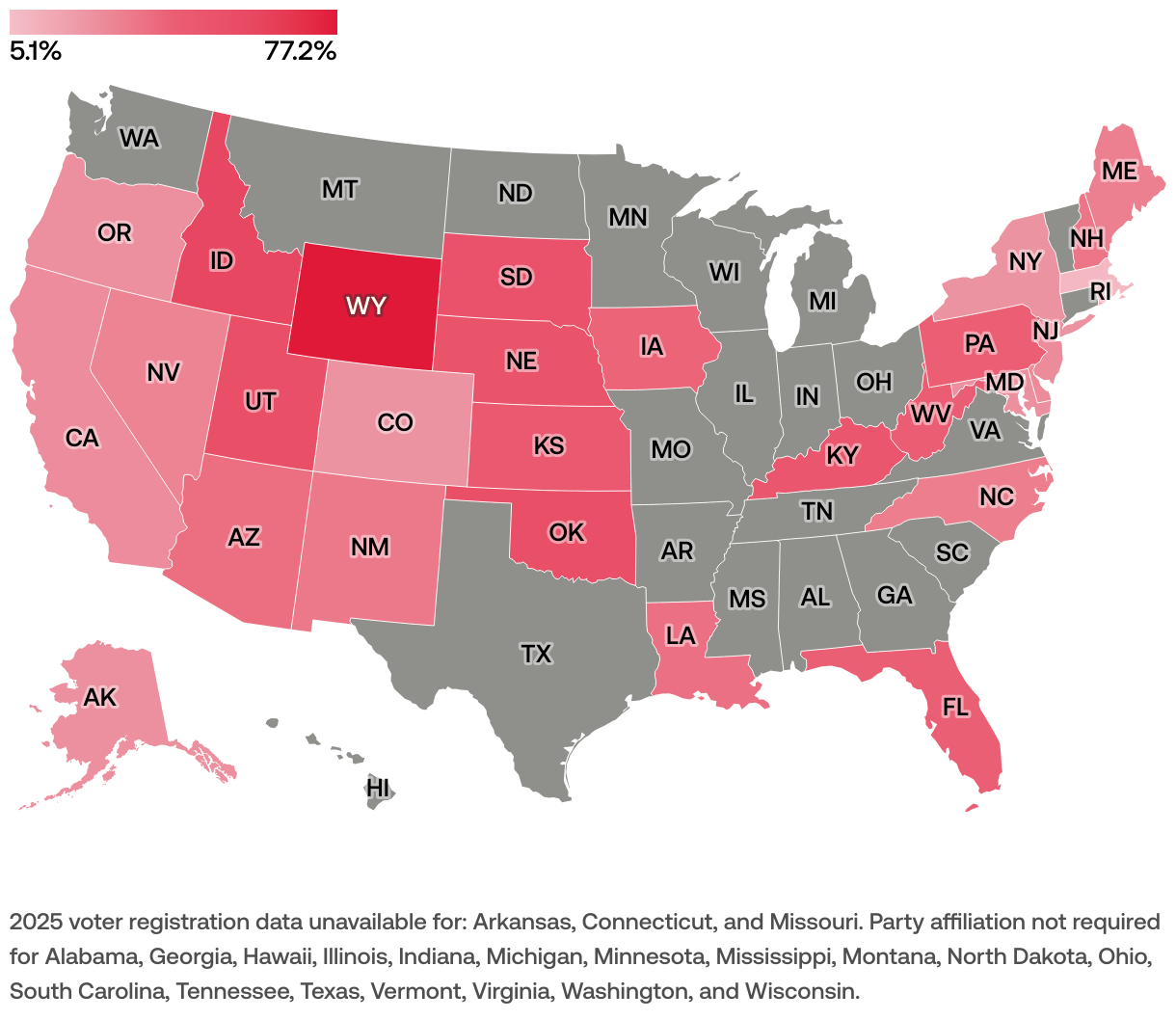
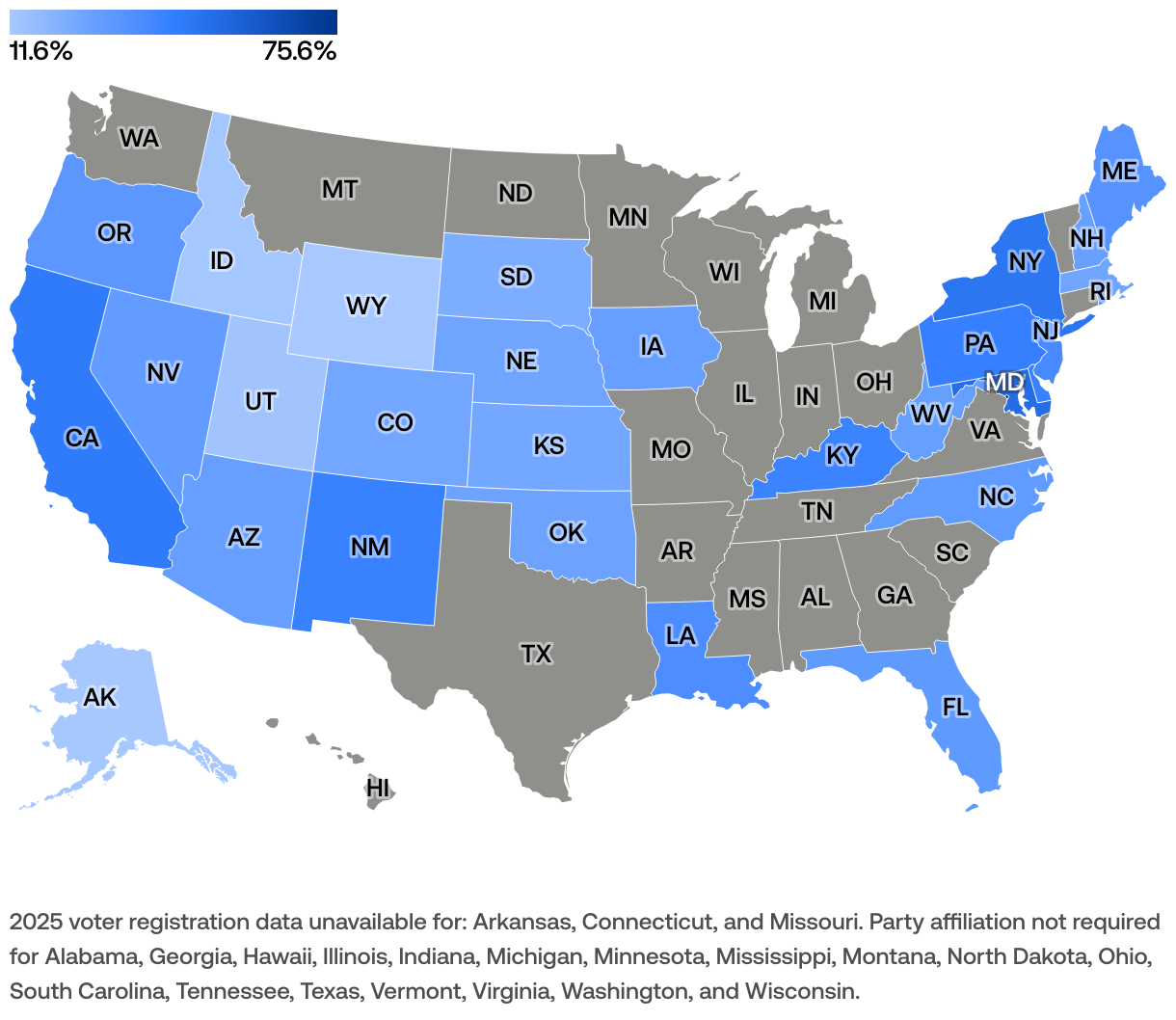
As of recent official reports from the California Secretary of State, the total number of registered voters in California consistently hovers around 22-23 million individuals. Within this vast electorate, the distribution among political parties provides a clear picture of the state’s political leanings. Democrats constitute the largest bloc, typically accounting for approximately 47-48% of all registered voters. The “No Party Preference” (NPP) category has seen significant growth and now represents a substantial segment, often matching or slightly exceeding the Republican share, at around 24-25%.
In this context, registered Republicans generally account for approximately 24-25% of the total registered electorate. This translates to roughly 5.3 to 5.5 million registered Republican voters across the state. While this figure places them as the second-largest official party, it is important to note the substantial lead held by Democrats and the growing influence of NPP voters, many of whom often lean Democratic or split their tickets. This distribution directly impacts the state’s governance, budget allocations, and the overall social and economic “lifestyle” that policies shape. These numbers are fluid, continually updated by the California Secretary of State, but the general proportions have remained stable for several years, illustrating a persistent political alignment.
Geographic Distribution of Republican Voters
While statewide figures offer a macroscopic view, the political lifestyle of California is best understood through its regional variations. Republican registration, though numerically smaller statewide, is far from evenly distributed. Instead, it concentrates in distinct geographic pockets, reflecting diverse local economies, cultural identities, and historical patterns that collectively contribute to the state’s complex political mosaic. These regional strongholds often showcase a different side of the California lifestyle than its more famously liberal urban centers.
Pockets of Conservative Strongholds
Despite California’s overall progressive lean, significant conservative strongholds persist. These areas often stand in stark contrast to the liberal coastal metropolises, presenting a distinct lifestyle and set of community values. Key regions with higher concentrations of registered Republicans include:
- Orange County: Historically a Republican bastion, Orange County has seen some shifts, particularly in its northern, more diverse cities. However, many southern and eastern parts of the county remain reliably conservative, home to communities that prioritize fiscal conservatism and traditional values. The Orange County lifestyle often blends affluence with a strong emphasis on family, community, and business enterprise, frequently aligning with Republican tenets.
- San Diego County: While the city of San Diego itself leans Democratic, the broader county, particularly its northern and eastern inland areas, retains a significant Republican presence. Military communities and areas with a strong agricultural base often contribute to this conservative tilt, influencing local policies and the daily lifestyle of its residents.
- Central Valley: Stretching from Bakersfield in the south to Redding in the north, the Central Valley is a critical agricultural region and a consistent source of Republican votes. Communities here often prioritize water rights, agricultural policies, and reduced regulation, reflecting a lifestyle deeply rooted in farming and rural independence. Cities like Fresno, Modesto, and Bakersfield often serve as focal points for conservative political activity.
- Rural Northern California: Beyond the San Francisco Bay Area, much of rural Northern California, including counties in the Sierras and along the Oregon border, are staunchly conservative. These areas often embody a rugged, self-reliant lifestyle, with residents valuing gun rights, resource management, and limited government intervention.
Urban vs. Rural Divides
The pattern of Republican registration in California largely mirrors a nationwide urban-rural political divide. Major urban centers and their immediate suburbs, such as Los Angeles, San Francisco, Oakland, and Sacramento, are overwhelmingly Democratic. These areas are characterized by diverse populations, a high concentration of knowledge workers, and a lifestyle that often embraces progressive social policies, extensive public services, and cultural liberalism.
In contrast, rural areas and more sparsely populated regions, particularly in the Central Valley and Northern California’s interior, lean heavily Republican. These communities are often driven by agriculture, natural resource industries, and a lifestyle emphasizing traditional values, individual responsibility, and often, a skepticism towards extensive government regulation. This stark divergence in political affiliation between urban and rural California is a defining feature of the state’s political landscape, leading to ongoing debates and different approaches to quality of life issues.
The Republican Lifestyle and Influence in California
Beyond mere numbers, the presence of millions of registered Republicans profoundly shapes the lifestyle and political discourse within California. Their values, priorities, and participation in civic life contribute to the state’s dynamic character, influencing everything from local school board decisions to statewide ballot initiatives. Understanding this influence is key to appreciating the full spectrum of the California experience.
Values and Priorities
The core values of Republican voters in California largely align with national conservative principles, though often tempered by the state’s unique context. These typically include:
- Fiscal Conservatism: A strong emphasis on lower taxes, reduced government spending, and balanced budgets. This impacts local debates on property taxes, business regulations, and infrastructure projects, shaping the economic lifestyle in communities where Republicans are prominent.
- Individual Liberty and Limited Government: A preference for less government intervention in personal lives and economic activities. This manifests in discussions about personal freedoms, business autonomy, and property rights, influencing the regulatory environment for everything from housing development to environmental protection.
- Strong Economy and Business Growth: Support for policies that foster a robust private sector, job creation, and economic competitiveness. This is particularly salient in regions reliant on agriculture, manufacturing, or oil and gas, where a pro-business lifestyle is often prioritized.
- Traditional Values: While diverse, many Republicans in California adhere to more traditional social values, which can influence local discussions on education curricula, family policies, and community standards.
These values contribute to a distinct lifestyle in various communities, often favoring self-reliance, entrepreneurial spirit, and a focus on local community rather than broader state or federal directives.
Economic and Social Impact
The presence of a significant Republican electorate, particularly in their geographic strongholds, has tangible economic and social impacts on California’s lifestyle. In these areas, Republican influence often leads to:
- Pro-Business Local Policies: Local governments in Republican-leaning areas may pursue policies aimed at attracting businesses, reducing regulatory burdens, and fostering a more competitive economic environment. This can result in different local ordinances regarding zoning, permits, and taxation compared to more liberal areas.
- Fiscal Prudence in Local Governance: Communities with a strong Republican presence may prioritize fiscal conservatism in municipal budgets, leading to different approaches to public services, infrastructure investment, and municipal debt. This influences the availability and quality of public amenities and services, directly affecting local lifestyle.
- Impact on Ballot Initiatives: While often outvoted statewide, Republican voters remain a crucial bloc in supporting or opposing ballot initiatives, especially those related to taxation, regulation, and property rights. Their collective vote can sometimes be decisive in close contests.
- Community Values and Education: In areas with higher Republican registration, community discussions around education, public safety, and local development often reflect conservative perspectives. This can influence school board elections, local law enforcement priorities, and the character of community events.
In essence, while the narrative of California is often dominated by its progressive coastal cities, the substantial Republican presence ensures a vibrant and multifaceted political lifestyle, contributing to ongoing debates and diverse approaches to governance and community development.
Challenges and Opportunities for the Republican Party in California
The significant number of registered Republicans in [California](https://lifeoutofthebox.com/california], while substantial, operates within a challenging political environment. The state’s overall demographic trends and dominant political culture pose both hurdles and unique opportunities for the Republican Party to maintain relevance and potentially grow its base, thereby influencing the future lifestyle of the state.
Demographic Shifts and Electoral Challenges
California’s demographic evolution is arguably the most significant long-term challenge for the Republican Party. The state is one of the most diverse in the nation, with a rapidly growing Latino and Asian population, alongside a decreasing proportion of non-Hispanic white residents. These demographic groups have historically shown a stronger propensity to register and vote Democratic or No Party Preference. The party’s struggle to attract a broader, more diverse coalition has been a key factor in its declining statewide electoral fortunes. Furthermore, the continuous migration from other states and countries often brings individuals with different political inclinations, further diversifying the electorate. This ongoing shift reshapes the very fabric of California’s lifestyle, requiring political parties to adapt or risk marginalization.
Beyond demographics, the state’s progressive political culture and strong union presence in many sectors also present structural challenges. Issues such as climate change, gun control, and social justice often take center stage in public discourse, areas where the Republican platform frequently finds itself at odds with the prevailing sentiment.
Strategic Pathways Forward
Despite the challenges, opportunities exist for the Republican Party to remain a vital force and potentially expand its influence, contributing to the diversity of political lifestyle in California.
- Focus on Local Engagement: Republicans have found more success at the local level, particularly in their strongholds. By focusing on city council, school board, and county supervisor races, they can directly impact the daily lives and lifestyle of constituents, demonstrating effective governance and building a grassroots base.
- Issue-Based Campaigns: Instead of relying solely on national party platforms, emphasizing specific California-centric issues where there is broader public discontent can resonate with a wider audience. Topics such as the high cost of living, housing affordability (while being careful about specific solutions), homelessness, crime rates, and electricity grid reliability are non-partisan concerns that affect everyone’s lifestyle and could offer inroads.
- Reaching No Party Preference Voters: The large and growing bloc of NPP voters represents a critical swing segment. Tailoring messages to appeal to these independent voters, who often prioritize pragmatic solutions over strict partisan ideology, could be a pathway to growth.
- Moderation and Inclusivity: Adopting a more moderate and inclusive stance on social issues, while retaining core fiscal conservative principles, could help the party shed its more extreme national image and appeal to a broader cross-section of California voters. This would involve a deliberate effort to engage with diverse communities and understand their specific concerns.
- Leveraging Geographic Strengths: Consolidating power in their regional strongholds, particularly in the Central Valley and rural counties, and using these areas as models of Republican governance, can help showcase their approach to a productive and desirable lifestyle.
In conclusion, while the number of registered Republicans in California reflects a minority status in a predominantly liberal state, their presence is significant and deeply embedded in the state’s diverse political lifestyle. Understanding their distribution, values, and the challenges they face provides a more complete and nuanced picture of California’s vibrant, complex, and ever-evolving political landscape. The ongoing dynamic between political factions continues to shape the Golden State, impacting policies, communities, and the unique lifestyle experienced by millions of Californians every day.
LifeOutOfTheBox is a participant in the Amazon Services LLC Associates Program, an affiliate advertising program designed to provide a means for sites to earn advertising fees by advertising and linking to Amazon.com. Amazon, the Amazon logo, AmazonSupply, and the AmazonSupply logo are trademarks of Amazon.com, Inc. or its affiliates. As an Amazon Associate we earn affiliate commissions from qualifying purchases.