
Navigating California‘s Driving Regulations: A Crucial Aspect of Responsible Lifestyle
Maintaining a fluid and independent lifestyle in California often hinges on the ability to drive. The vast expanse of the state, from its bustling urban centers like Los Angeles and San Francisco to its serene natural attractions, necessitates reliable personal transportation for many. However, this freedom comes with significant responsibilities, particularly concerning adherence to traffic laws. Understanding the rules governing speeding tickets and their potential for driver’s license suspension is not merely about avoiding legal trouble; it’s about safeguarding your mobility, financial stability, and overall daily lifestyle. The California Department of Motor Vehicles (DMV) employs a stringent point system designed to identify and penalize “negligent operators,” individuals who accumulate a disproportionate number of traffic violations. Ignoring these regulations can lead to severe consequences, disrupting everything from your daily commute to your ability to enjoy weekend excursions.

The California DMV Point System Explained
At the heart of California’s approach to traffic enforcement is the DMV point system. Each moving violation, including speeding tickets, carries a specific point value that is added to your driving record. These points remain on your record for a certain period, contributing to your cumulative total. The system is designed to track driver behavior and identify those who pose a higher risk on the roads. Accumulating too many points within a defined timeframe will classify you as a “Negligent Operator,” triggering administrative actions by the DMV, which can culminate in license suspension. This process isn’t just a bureaucratic formality; it’s a direct threat to the convenience and freedom that driving affords, potentially derailing one’s personal and professional lifestyle. Understanding how these points accumulate and what they signify is the first step in protecting your driving privileges.
Point Values for Common Speeding Violations
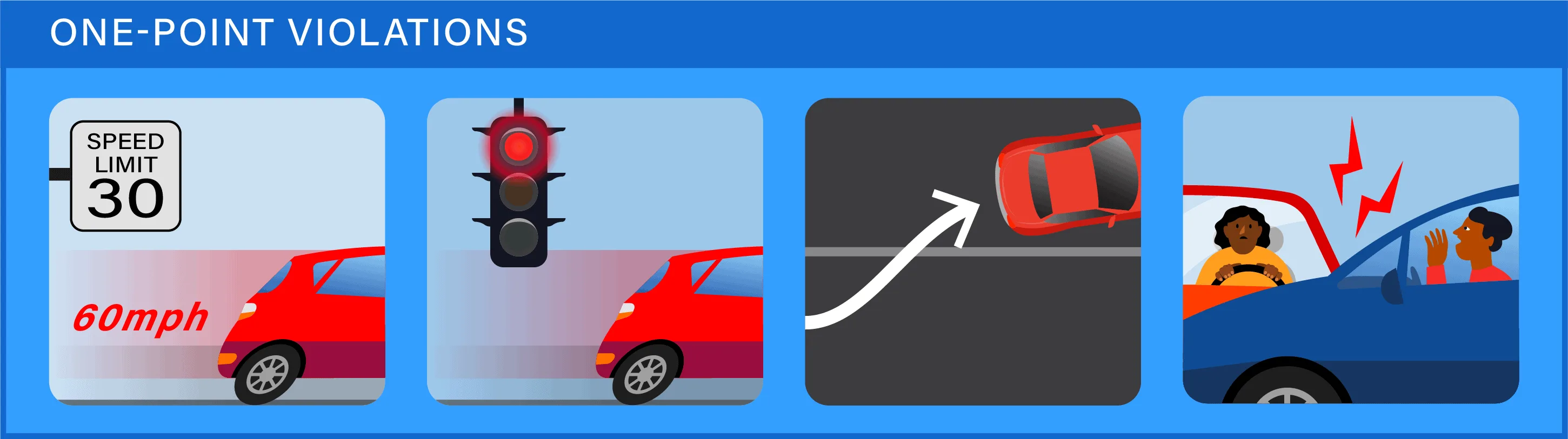
Most common speeding violations in California are classified as one-point offenses. This typically includes exceeding the posted speed limit by a reasonable margin without other aggravating factors. For instance, a ticket for going 70 mph in a 65 mph zone on a freeway would likely result in a single point. These one-point violations generally remain on your driving record for three years.
However, more severe speeding infractions can carry a two-point value. These usually involve more egregious behavior, such as speeding excessively (e.g., over 100 mph), engaging in reckless driving, or causing an accident due to speed. Two-point violations are considered far more serious and remain on your record for a longer duration, typically seven or ten years, significantly increasing your risk of reaching the negligent operator thresholds. It’s crucial to recognize that while a single one-point ticket might seem minor, the cumulative effect of multiple infractions—even seemingly minor ones—can quickly escalate into a serious problem that threatens your driving lifestyle.
The Thresholds for “Negligent Operator” Suspension: When Your Lifestyle is Directly Impacted
The crucial question for many drivers is not just how many tickets, but how many points and over what period. California’s DMV has specific thresholds that define a “Negligent Operator” and trigger an automatic license suspension review. Reaching these thresholds directly impacts your freedom of movement, your ability to conduct daily tasks, and by extension, your entire lifestyle.
The primary thresholds are:
- 4 points in 12 months: Accumulating four points on your driving record within a rolling 12-month period.
- 6 points in 24 months: Accumulating six points within a 24-month period.
- 8 points in 36 months: Accumulating eight points within a 36-month period.
It’s important to note that these are cumulative. For example, if you receive three one-point speeding tickets and one two-point reckless driving ticket within a year, you would accrue five points, exceeding the 4-point/12-month threshold. The clock on these periods is always rolling, meaning points from older violations eventually drop off, but new violations can quickly push you over a limit. For many California residents, driving is indispensable for commuting, managing family responsibilities, and even pursuing hobbies. Losing this privilege due to a suspension can bring an established lifestyle to a screeching halt, forcing reliance on public transport, ride-sharing, or the goodwill of others.
What Happens After Reaching Point Thresholds?
When a driver reaches one of the negligent operator point thresholds, the DMV will mail an “Order of Suspension/Revocation” along with a notice of “Intent to Suspend.” This is not an immediate suspension; rather, it informs you of the DMV’s intention to suspend your license and your right to request a DMV hearing. This hearing is a critical opportunity to present your case, challenge the violations, or argue for a probationary period instead of an outright suspension. If no hearing is requested or if the hearing results in a decision against the driver, the suspension typically takes effect. A standard negligent operator suspension lasts for six months, though a probationary period can sometimes be granted, which allows restricted driving privileges contingent on maintaining a clean record. Navigating this process successfully is vital for minimizing the disruption to your personal and professional lifestyle.
Beyond Speeding: Other Violations That Contribute to Point Accumulation
While speeding tickets are a common source of points, they are by no means the only ones. Many other moving violations also contribute to your point total and can quickly push you over the negligent operator thresholds. These include, but are not limited to:
- Running a Red Light or Stop Sign: Typically one point.
- Unsafe Lane Changes: One point.
- Driving Under the Influence (DUI): A serious two-point violation, often leading to immediate license suspension independent of the point system.
- Reckless Driving: Two points.
- Hit and Run (with or without injury): Two points.
It’s the accumulation of these diverse violations that often catches drivers off guard. A driver might have a few speeding tickets, then an ignored stop sign, and suddenly find themselves facing a suspension. A responsible driving lifestyle in California requires vigilance across all aspects of traffic law, not just speed limits.
Mitigating the Impact: Strategies to Preserve Your Driving Lifestyle

Facing a potential license suspension can be daunting, but there are proactive steps and available recourses to help mitigate the impact and potentially preserve your driving lifestyle. Understanding these options is crucial for any driver in California seeking to maintain their mobility.
Traffic School: A Common Recourse for Point Reduction
One of the most widely utilized options for dealing with a single-point traffic violation, including many speeding tickets, is attending traffic school. If eligible, completing traffic school allows you to mask the point from your public driving record and, crucially, from your insurance company. This prevents insurance premium hikes and keeps your point total from escalating towards a negligent operator suspension.
Eligibility for traffic school typically requires that the violation is a one-point offense, was not committed in a commercial vehicle, and does not involve alcohol or drugs. Drivers can generally attend traffic school once every 18 months. While it doesn’t erase the violation entirely (it remains on your confidential DMV record), it prevents the point from being counted against your negligent operator status and shields your insurance rates. This can be a vital tool in managing your driving record and ensuring your vehicle insurance costs don’t spiral out of control, thus protecting your financial lifestyle.
Contesting a Ticket and DMV Hearings
If you believe a speeding ticket or other traffic violation was issued in error or unjustly, you have the right to contest it in Superior Court. While challenging a ticket can be time-consuming, a successful defense means the ticket is dismissed, and no points are added to your record. This can be a strategic move, especially if you are close to a point threshold.
Furthermore, if the DMV sends you an “Intent to Suspend” notice, requesting a DMV hearing is paramount. This administrative hearing is distinct from court proceedings for the original ticket. At the hearing, you can present arguments, evidence, and sometimes even character witnesses to demonstrate why your license should not be suspended. This might involve showing proof of mitigating circumstances, arguing errors in the DMV’s record-keeping, or requesting a probationary period with restricted driving instead of a full suspension. Engaging with legal counsel specializing in traffic law can significantly improve your chances in both contesting tickets and successfully navigating DMV hearings, helping you defend your mobility and maintain your established lifestyle.
The Broader Repercussions on Your California Lifestyle
The consequences of accumulating too many speeding tickets and facing a license suspension extend far beyond the immediate inconvenience. They can ripple through various aspects of your life, creating significant financial strain, limiting your personal freedoms, and even impacting professional opportunities—all directly affecting your overall California lifestyle.
Financial Strain and Insurance Premiums
One of the most immediate and tangible impacts of traffic violations is the financial burden. Fines for speeding tickets in California can range from hundreds to thousands of dollars, depending on the speed and location. These fines are often accompanied by court costs, administrative fees, and if applicable, traffic school enrollment fees. Should your license be suspended, there will also be reinstatement fees. This accumulation of costs can quickly deplete savings or strain monthly budgets, diverting funds that might otherwise be used for travel, leisure, or other aspects of your desired lifestyle.
Perhaps even more impactful in the long run are the inevitable increases in auto insurance premiums. Insurers view drivers with multiple points and suspensions as high-risk, leading to substantial rate hikes, often lasting for several years. These increases can be hundreds or even thousands of dollars annually, adding a significant and persistent financial drain. For some, the combined cost of violations and increased insurance might even make car ownership prohibitively expensive, forcing a complete overhaul of their transportation habits and daily lifestyle.
Impact on Daily Mobility and Professional Opportunities
A driver’s license suspension can dramatically curtail one’s daily mobility. In a state as car-dependent as California, losing the ability to drive independently can make simple tasks—like commuting to work, taking children to school, grocery shopping, or attending appointments—extremely challenging. Relying on public transportation, ride-sharing services, or others for rides introduces inflexibility, increased costs, and loss of valuable time, fundamentally altering one’s routine and sense of independence.
For individuals whose professions require driving—such as sales representatives, delivery drivers, truck drivers, or ride-share operators—a license suspension can be catastrophic, potentially leading to job loss or significant career setbacks. Even for those whose jobs don’t directly involve driving, the inability to reliably commute can jeopardize employment. Beyond professional life, personal freedom is severely impacted. Spontaneous weekend trips, visits to distant friends or family, or even exploring the scenic beauty of the Golden State become difficult, if not impossible. This reduction in autonomy and access to experiences significantly diminishes the quality of one’s lifestyle.
Maintaining a Responsible Driving Lifestyle in the Golden State
Ultimately, understanding the exact number of speeding tickets before a suspension in California boils down to a clear understanding of the DMV point system and its thresholds: 4 points in 12 months, 6 points in 24 months, or 8 points in 36 months. However, the true insight lies in recognizing that preventing these issues is far more beneficial than reacting to them.
Maintaining a responsible driving lifestyle is not just about avoiding fines and suspensions; it’s about safeguarding your freedom, financial well-being, and overall quality of life in California. This means adhering to posted speed limits, being aware of all traffic laws, and practicing defensive driving. By doing so, you minimize the risk of accumulating points, facing costly penalties, and experiencing the significant disruptions that a license suspension can bring. A careful and compliant approach to driving ensures that the vast and vibrant experiences offered by the Golden State remain accessible to you, allowing your lifestyle to thrive unhindered.
LifeOutOfTheBox is a participant in the Amazon Services LLC Associates Program, an affiliate advertising program designed to provide a means for sites to earn advertising fees by advertising and linking to Amazon.com. Amazon, the Amazon logo, AmazonSupply, and the AmazonSupply logo are trademarks of Amazon.com, Inc. or its affiliates. As an Amazon Associate we earn affiliate commissions from qualifying purchases.