
Detroit, often hailed as the “Motor City,” possesses a rich and storied legacy in the world of professional ice hockey, most notably through its beloved Detroit Red Wings. The franchise’s history is deeply intertwined with the pursuit and capture of the Stanley Cup, hockey’s ultimate prize. Understanding the number of championships won by the Red Wings is not just a statistic for fans; it’s a testament to decades of dedication, legendary talent, and a fiercely competitive spirit that has etched Detroit into the annals of hockey greatness. This exploration delves into the historical triumphs and the eras that defined Detroit’s dominance on the ice.

The Golden Eras of Red Wings Dominance
The Detroit Red Wings have enjoyed several periods of unparalleled success, each characterized by distinct leadership, iconic players, and a collective drive to hoist the Stanley Cup. These eras are not merely historical footnotes but foundational pillars of the team’s identity and its enduring appeal to fans across Michigan and beyond.
The Original Six Dynasty: 1940s and 1950s
The post-World War II era marked the beginning of a remarkable dynasty for the Detroit Red Wings. As one of the NHL’s “Original Six” franchises, the team consistently fielded powerhouse squads that dominated the league. This period saw the emergence of legendary figures who would become synonymous with Red Wings hockey and indeed, with the sport itself.
The Production Line and Its Legacy
At the heart of this dynasty was the famed “Production Line,” a trio of forwards that included Gordie Howe, Sid Abel, and Ted Lindsay. This line was not only prolific in scoring but also embodied the gritty, hard-nosed style of play that characterized the era. Their chemistry and individual brilliance were instrumental in the Red Wings capturing multiple Stanley Cups during the 1950s. The team’s tactical acumen, strong goaltending, and unwavering team defense made them a formidable opponent for any rival. The championships secured during this time laid the groundwork for Detroit’s reputation as a hockey powerhouse.
Key Championship Years in the Mid-20th Century
The Detroit Red Wings won the Stanley Cup in the following seasons during this dominant period:
- 1950: This victory was particularly memorable, marked by a dramatic overtime goal by Pete Babando in Game 7 against the New York Rangers.
- 1952: The “Red Wings Revival” saw the team sweep the Toronto Maple Leafs in the finals, showcasing the exceptional talent of Gordie Howe and the team’s cohesive play.
- 1954: Another hard-fought victory, this time against the Montreal Canadiens, solidified their status as a dynasty.
- 1955: The Red Wings defended their title, completing back-to-back championships and further cementing their place in hockey history.
This concentration of championships within a single decade underscored the exceptional talent and strategic brilliance of the Red Wings organization during this era.
The “Gordie Howe Era” Continued Success
Even after the peak of the “Production Line” dominance, Gordie Howe continued to be a central figure for the Detroit Red Wings. While championships became less frequent in the late 1950s and into the 1960s due to the rise of other formidable teams like the Montreal Canadiens, Howe’s sustained excellence kept the team competitive. His longevity and unparalleled skill set were a source of inspiration and a reminder of the team’s storied past. The “Gordie Howe Era” may not have seen the same frequency of Stanley Cup wins as the 1950s, but it maintained a level of respect and competitive edge for the franchise.
The Modern Dynasty: The 1990s and Early 2000s
After a period of rebuilding and a championship drought that lasted over 40 years, the Detroit Red Wings re-emerged as a dominant force in the National Hockey League during the 1990s and continued their success into the early 21st century. This resurgence was driven by a new generation of talent, shrewd management, and a renewed commitment to the championship pedigree that had been established in earlier decades.
Building a Champion Roster
The foundation of this modern dynasty was laid through strategic drafting, savvy trades, and the acquisition of key veteran players. General Manager Ken Holland and Coach Scotty Bowman were instrumental in assembling a roster that blended skill, toughness, and a relentless work ethic. Players like Steve Yzerman, Nicklas Lidström, Igor Larionov, and Brendan Shanahan formed the core of a team that was built for sustained success.
The Rise of the Russian Five
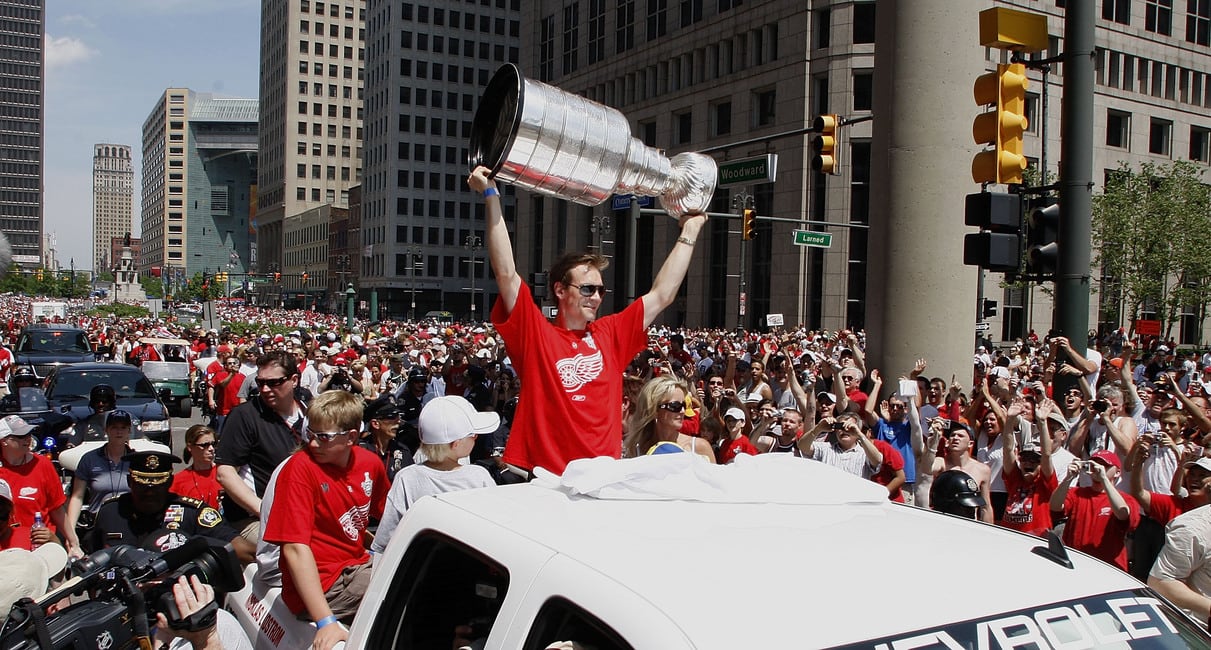
A significant factor in the Red Wings’ resurgence was the integration of several highly skilled Russian players, collectively known as the “Russian Five.” This group, which included Igor Larionov, Sergei Fedorov, Vyacheslav Kozlov, Vladimir Konstantinov, and goaltender Mikhail Shtalenkov, brought a unique brand of offensive creativity and puck-handling prowess that complemented the team’s existing strengths. Their seamless integration into the team’s system proved to be a masterstroke, revitalizing the Red Wings’ offensive capabilities and contributing directly to their championship ambitions.
Consecutive Stanley Cup Victories
The period between 1997 and 2008 saw the Detroit Red Wings become the premier franchise in the NHL, capturing the Stanley Cup multiple times and establishing a new benchmark for excellence.
The 1997 Championship
The drought ended in 1997 when the Red Wings defeated the Philadelphia Flyers in a dominant four-game sweep. This victory was particularly significant as it marked the team’s first championship in 42 years, breaking a long streak of near misses and playoff disappointments. The team’s physical play, led by enforcer Darren McCarty, and the balanced scoring attack proved too much for their opponents. The emotional outpouring in Detroit following this win was immense, reflecting the deep connection between the city and its hockey team.
The 1998 Championship Defense
Building on their success, the Red Wings successfully defended their title in 1998, defeating the Washington Capitals in the Stanley Cup Finals. This marked the first time since the Edmonton Oilers in the late 1980s that a team had won back-to-back championships. The Red Wings’ ability to maintain their focus and execute at a high level under immense pressure demonstrated the maturity and depth of the roster. The leadership of Steve Yzerman and the defensive brilliance of Nicklas Lidström were again key factors in their triumph.
The 2002 Championship
After a few seasons of strong contention but no championships, the Red Wings once again reached the pinnacle of the sport in 2002. This championship team was arguably one of the most talented in NHL history, featuring a mix of veteran superstars and emerging talent. The addition of future Hall of Famers Luc Robitaille and Brett Hull bolstered an already formidable lineup. They defeated the Carolina Hurricanes in the finals, securing their third Stanley Cup of the modern era. This victory solidified the Red Wings’ reputation as a dynasty and a model franchise for success in professional sports.
The 2008 Championship
The Red Wings continued their impressive run of success by winning their fourth Stanley Cup of this era in 2008, defeating the Pittsburgh Penguins. This victory was particularly sweet for the team and its fans, as it came against a younger, up-and-coming team, showcasing the Red Wings’ enduring ability to adapt and compete at the highest level. Goaltender Dominik Hašek was instrumental in their playoff run, delivering a masterful performance between the pipes. This championship further cemented the Red Wings’ status as one of the most successful franchises in NHL history.
Total Stanley Cups Won by Detroit
When tallying the championships, the Detroit Red Wings stand as one of the most decorated franchises in the National Hockey League. Their illustrious history is marked by a consistent pursuit of excellence and a remarkable ability to secure hockey’s most coveted prize.
A Legacy of Champions
The Detroit Red Wings have won the Stanley Cup a total of eleven times. This impressive total places them among the elite franchises in NHL history, trailing only the Montreal Canadiens and the Toronto Maple Leafs in total championships.

Breakdown of Championship Years
The eleven Stanley Cup victories are distributed across two distinct and highly successful eras for the franchise:
- 1936
- 1937
- 1943
- 1950
- 1952
- 1954
- 1955
- 1997
- 1998
- 2002
- 2008
This impressive collection of trophies is a testament to the enduring legacy of the Red Wings and their unparalleled contribution to the sport of ice hockey. The franchise continues to inspire generations of fans with its rich history of success and its unwavering commitment to championship aspirations.
LifeOutOfTheBox is a participant in the Amazon Services LLC Associates Program, an affiliate advertising program designed to provide a means for sites to earn advertising fees by advertising and linking to Amazon.com. Amazon, the Amazon logo, AmazonSupply, and the AmazonSupply logo are trademarks of Amazon.com, Inc. or its affiliates. As an Amazon Associate we earn affiliate commissions from qualifying purchases.