
Florida, the Sunshine State, beckons millions of travelers each year with its pristine beaches, vibrant cities, and world-class attractions. From the magical theme parks of Orlando to the Art Deco splendor of Miami Beach and the historic charm of St. Augustine, the state offers a dizzying array of experiences. However, a common misconception, even among seasoned travelers, pertains to the state’s time zones. While many U.S. states operate uniformly under a single time zone, Florida presents a unique scenario that astute travelers should be aware of to ensure seamless itinerary planning and timely arrivals. The answer to “How many time zones in Florida?” is two, and understanding their division is key to a perfectly choreographed trip.
Florida’s Dual Time Zones Explained
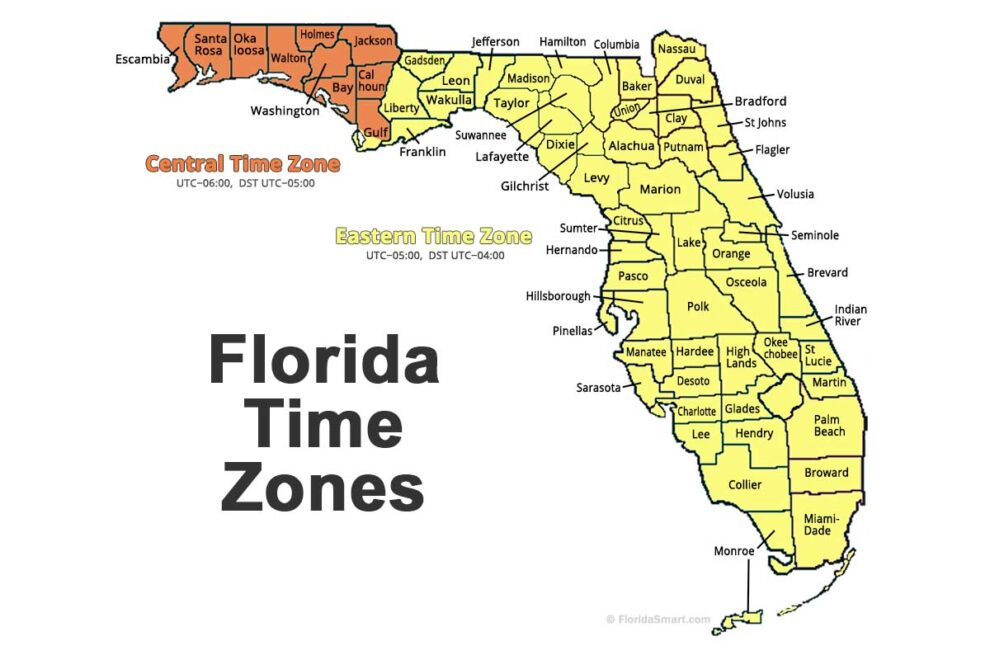
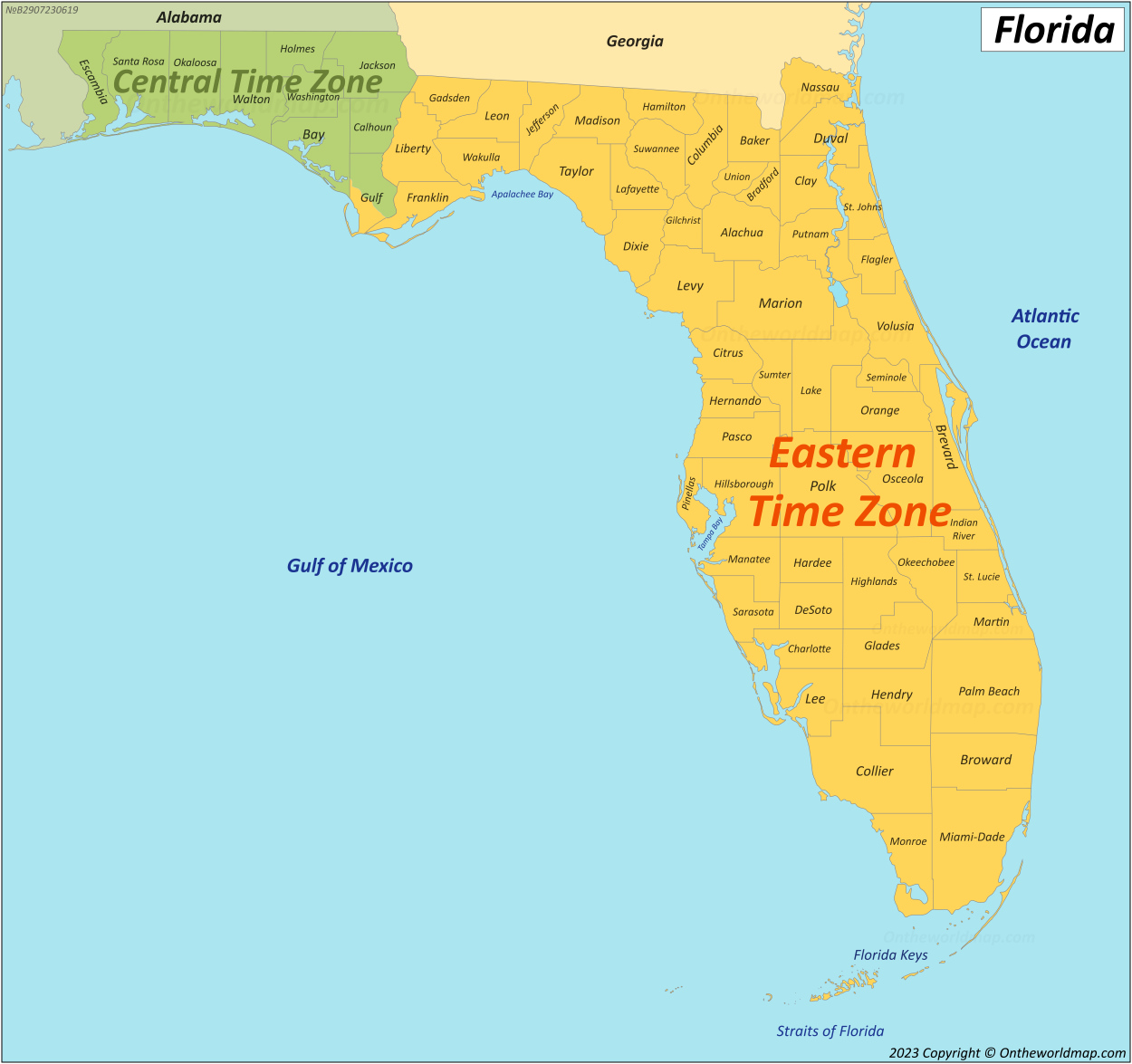
Despite its relatively compact east-to-west width compared to states like Texas or California, Florida spans two distinct time zones: the Eastern Time Zone (ET) and the Central Time Zone (CT). This division is a geographical necessity, aligning with the traditional demarcation lines that govern timekeeping across North America. For most of Florida’s population and its most popular tourist destinations, the Eastern Time Zone is the standard. However, a significant portion of the western Panhandle region observes Central Time, introducing a subtle yet crucial time difference that can impact travel plans.
The Dominant Eastern Time Zone (EST/EDT)
The vast majority of Florida, including all major metropolitan areas and tourist hotspots, falls within the Eastern Time Zone. This means that whether you are exploring the vibrant nightlife of South Beach, embarking on a cruise from Port Everglades or Port Canaveral, or immersing yourself in the magic of Walt Disney World Resort, you will be operating on Eastern Standard Time (EST) during the winter months and Eastern Daylight Time (EDT) during Daylight Saving Time. Cities such as Miami, Orlando, Tampa, Jacksonville, and the state capital Tallahassee all adhere to ET. This uniformity across most of the state simplifies planning for many visitors, but the distinction becomes important for those venturing west.
The Western Panhandle and Central Time (CST/CDT)
The exception to Florida’s ET dominance lies in its western Panhandle region. Specifically, counties west of the Apalahicola River observe Central Time (CT). This includes popular coastal destinations like Pensacola, Destin, Fort Walton Beach, and Panama City Beach. When comparing CT to ET, Central Time is one hour behind Eastern Time. So, if it’s 3:00 PM in Orlando, it will be 2:00 PM in Pensacola. This one-hour shift might seem minor, but it can significantly impact travel logistics, especially when crossing the time zone boundary or coordinating with individuals in different parts of the state.
A Brief History of Time Zones in the Sunshine State
The implementation of time zones across the United States dates back to the late 19th century, primarily driven by the needs of the burgeoning railroad industry for standardized scheduling. Prior to this, localities often kept their own local “sun time,” leading to immense confusion and logistical nightmares.
Federal Legislation and Local Adaptations
The Standard Time Act of 1918 formally established the time zones we recognize today. Initially, the responsibility for defining and adjusting time zone boundaries fell to the Interstate Commerce Commission, later transferred to the Department of Transportation with the Uniform Time Act of 1966. These acts sought to create orderly boundaries, often following state or county lines where practical, but sometimes adhering to natural geographical features or economic corridors. In Florida’s case, the division along the Apalachicola River and portions of the Intracoastal Waterway in the Panhandle reflected a blend of historical precedence and practical considerations for the region’s communities. The adherence of Tallahassee to Eastern Time, despite its proximity to the Central Time Zone, is often attributed to its status as the state capital, maintaining alignment with the economic and political hub of Florida’s east coast.
The Influence of Commerce and Geography
The geographical position of the Florida Panhandle plays a significant role in its time zone designation. Bordering Alabama and Georgia, which largely observe Central and Eastern Time respectively, the westernmost counties naturally align with the Central Time Zone to maintain consistent business and social interactions with their neighboring states. This alignment facilitates commerce, transportation, and daily life for residents who frequently cross state lines. The decision to draw the line along the Apalachicola River wasn’t arbitrary; it provided a clear, natural boundary that minimized confusion for local communities and travelers.

Practical Implications for Travelers to Florida
For most visitors focusing on South Florida, Central Florida, or even Northeast Florida, the time zone issue might never arise. However, if your travel plans include exploring the beautiful beaches of the Panhandle or involve driving across the state, understanding the time zone shift is paramount.
Planning Your Itinerary Across Zones
When crafting your Florida itinerary, pay close attention to the time zone when booking flights, accommodations, and activities. If you’re flying into Pensacola International Airport (PNS), remember that your flight arrival time will be in Central Time, which is an hour behind the bustling Orlando International Airport (MCO). Similarly, if you plan to drive from, say, Tallahassee (ET) to Destin (CT), be mindful that you will “gain” an hour as you cross the time zone boundary. This can be beneficial, extending your day, but it’s crucial for managing check-in times or scheduled tours.
Navigating Appointments and Transportation
The one-hour difference becomes particularly critical when dealing with time-sensitive appointments. Imagine you’ve booked a deep-sea fishing charter out of Panama City Beach at 8:00 AM. If you’re driving from a hotel in Tallahassee and forget about the time zone change, you might mistakenly aim to depart at 7:00 AM ET, only to realize upon arrival that you’re an hour late for your 8:00 AM CT departure. The same applies to hotel check-in/check-out times, restaurant reservations, or any pre-booked tours and attractions. Always confirm the local time for your specific destination within Florida. Modern smartphones and GPS devices typically adjust automatically, but it’s always wise to double-check manually, especially when approaching a time zone boundary.
Daylight Saving Time Considerations
Both the Eastern Time Zone and the Central Time Zone observe Daylight Saving Time (DST). This means that the one-hour difference between the two zones remains constant throughout the year. When most of Florida switches from Eastern Standard Time (EST) to Eastern Daylight Time (EDT), the Panhandle simultaneously shifts from Central Standard Time (CST) to Central Daylight Time (CDT). The key takeaway for travelers is that the relative time difference never changes; it will always be one hour behind in the Panhandle compared to the rest of the state.
Key Cities and Their Respective Time Zones
To provide clarity for your Florida adventures, here’s a breakdown of some prominent cities and the time zones they observe:
Eastern Time Zone Hubs: Miami, Orlando, Tampa
- Miami (and Miami Beach): The vibrant cultural and economic hub of South Florida. All activities, flights from Miami International Airport (MIA), and cruise departures from PortMiami adhere to Eastern Time.
- Orlando: Home to the world-famous theme parks, including Walt Disney World Resort and Universal Orlando Resort. All magic happens on Eastern Time.
- Tampa (and St. Petersburg): The thriving urban centers on the Gulf Coast are firmly in the Eastern Time Zone, including flights into Tampa International Airport (TPA) and cruises from Port Tampa Bay.
- Jacksonville: Florida’s largest city by population, located in the northeast, operates on Eastern Time.
- Tallahassee: The state capital, despite its western location in the Panhandle, maintains Eastern Time to align with the rest of the state’s government and major population centers.
Central Time Zone Gateways: Pensacola, Destin, Panama City Beach
- Pensacola: A historic city with beautiful beaches on the western tip of the Panhandle. All local activities and transportation run on Central Time.
- Destin (and Fort Walton Beach): Famous for its stunning white sands and emerald waters. These popular vacation spots are in the Central Time Zone.
- Panama City Beach: Another iconic Panhandle destination known for spring break and family vacations, adhering to Central Time.
Understanding Florida’s dual time zones is a simple yet effective way to streamline your travel plans and avoid unnecessary stress. While the majority of the state operates on Eastern Time, a quick check of your destination in the Panhandle can prevent any timing mishaps. With this knowledge in hand, you’re well-equipped to enjoy all the sun-drenched experiences Florida has to offer, without missing a single moment.
LifeOutOfTheBox is a participant in the Amazon Services LLC Associates Program, an affiliate advertising program designed to provide a means for sites to earn advertising fees by advertising and linking to Amazon.com. Amazon, the Amazon logo, AmazonSupply, and the AmazonSupply logo are trademarks of Amazon.com, Inc. or its affiliates. As an Amazon Associate we earn affiliate commissions from qualifying purchases.