
Florida, a state synonymous with sunshine, vibrant theme parks, and stunning coastlines, also boasts a robust and diverse higher education landscape. Beyond the allure of its popular tourist destinations, the Sunshine State is a significant hub for learning and research, home to a substantial number of public and private universities that cater to a wide array of academic interests and career aspirations. Understanding the sheer volume of these institutions is crucial for prospective students, educators, and anyone interested in the state’s intellectual and economic contributions.
The Scope of Florida’s Higher Education System
Florida’s commitment to higher education is evident in the sheer number of institutions it hosts. This comprehensive system is a testament to the state’s dedication to providing accessible and quality educational opportunities for its residents and attracting talent from across the globe. The landscape is broadly divided into public and private universities, each offering unique strengths and fostering distinct academic environments.
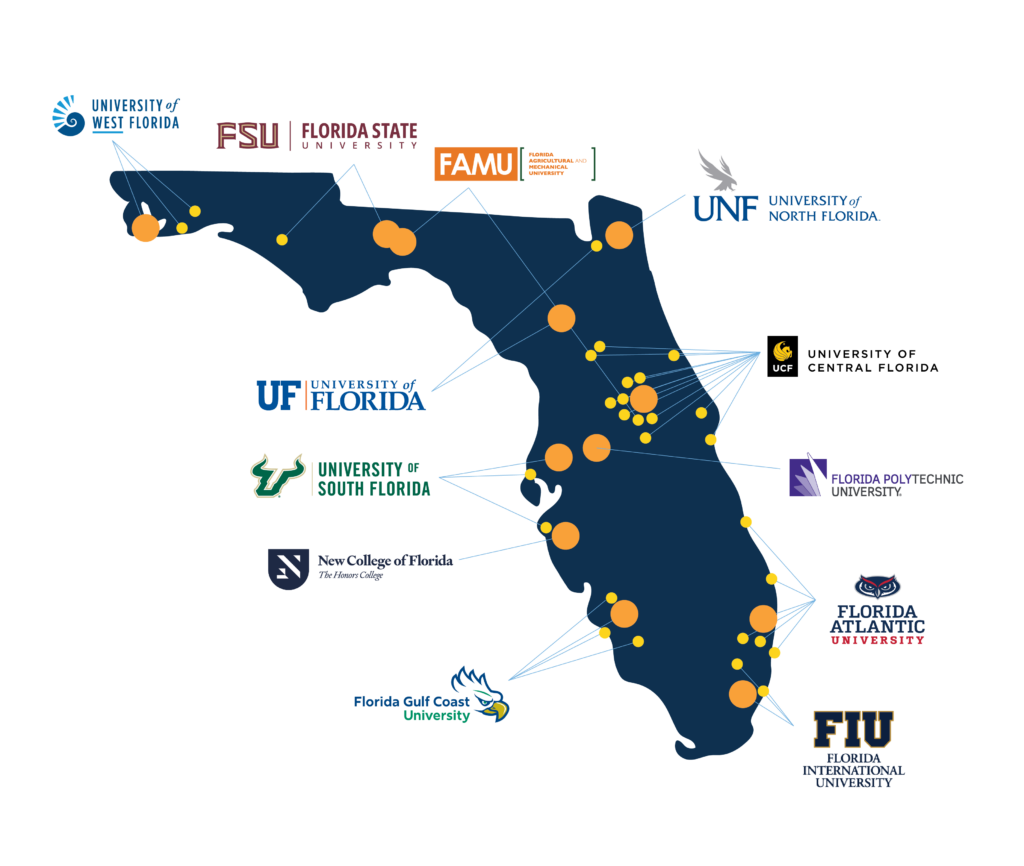
Public University Systems
Florida’s public university system is one of the largest and most comprehensive in the nation, distinguished by its commitment to affordability, research excellence, and serving the diverse needs of the state.
The State University System of Florida (SUS)
The cornerstone of public higher education in Florida is the State University System of Florida (SUS). This system comprises twelve distinct universities, each with its own unique mission, strengths, and geographical location, contributing to the educational fabric of different regions within the state. These institutions are governed by the Board of Governors and are dedicated to advancing knowledge, fostering innovation, and preparing graduates for success in a global economy.
-
University of Florida (UF): Located in Gainesville, the University of Florida is a flagship research university and a member of the prestigious Association of American Universities. It consistently ranks among the top public universities nationally, offering a vast array of undergraduate and graduate programs, and is renowned for its strengths in areas such as agriculture, engineering, health sciences, and business.
-
Florida State University (FSU): Situated in Tallahassee, the state capital, Florida State University is another major research institution with a strong reputation for its programs in arts, humanities, sciences, and education. It is also known for its vibrant campus life and successful athletic programs.
-
University of Central Florida (UCF): Based in Orlando, the University of Central Florida is one of the largest universities in the United States by enrollment. It is a leader in areas like optics and lasers, digital media, and simulation. Its proximity to the University of Central Florida Research Park fosters significant industry partnerships.
-
University of South Florida (USF): With its main campus in Tampa and additional campuses throughout the region, the University of South Florida is a major metropolitan research university. USF excels in fields such as health sciences, engineering, and business, and is recognized for its commitment to innovation and community engagement.
-
Florida International University (FIU): Located in Miami, Florida International University is a leading public research university with a strong international focus. It is particularly noted for its programs in hospitality management, international business, and environmental studies, reflecting the diverse cultural and economic landscape of South Florida.
-
Florida Atlantic University (FAU): With its main campus in Boca Raton, Florida Atlantic University serves the southeastern part of the state. FAU is recognized for its programs in marine science, business, and public administration, leveraging its coastal location and proximity to a growing economic region.
-
University of North Florida (UNF): Situated in Jacksonville, the University of North Florida emphasizes a personalized learning experience with smaller class sizes and a strong focus on community engagement and sustainability. Its programs in business, health sciences, and education are highly regarded.
-
Florida Gulf Coast University (FGCU): Located near Fort Myers, Florida Gulf Coast University is one of the newer universities in the SUS, established with an emphasis on environmental and technological innovation. It is known for its programs in health sciences, business, and environmental studies, drawing inspiration from its Southwest Florida location.
-
Florida A&M University (FAMU): A historically black college and university (HBCU) located in Tallahassee, Florida A&M University has a rich legacy of academic excellence and social impact. FAMU is renowned for its strong programs in pharmacy, journalism, and agriculture, and plays a vital role in fostering diversity and inclusion in higher education.
-
University of West Florida (UWF): Based in Pensacola, the University of West Florida offers a range of undergraduate and graduate programs with a focus on regional relevance. UWF is recognized for its programs in education, business, and history, and plays a key role in the economic development of the Florida Panhandle.
-
Florida Polytechnic University: Located in Lakeland, Florida Polytechnic University is the state’s newest university, established specifically to focus on science, technology, engineering, and mathematics (STEM) education. It is dedicated to preparing a skilled workforce for the technology-driven economy of the 21st century.
-
New College of Florida: Situated in Sarasota, New College of Florida is a public liberal arts college that offers a unique, interdisciplinary approach to higher education. It is known for its rigorous academic programs, independent study system, and high rates of graduate school admission.
Florida College System
Beyond the SUS, the Florida College System comprises 28 state colleges. These institutions primarily offer associate degrees, vocational training, and certificate programs, serving as crucial pathways for students to enter the workforce or transfer to four-year universities. They play an indispensable role in workforce development and providing accessible post-secondary education across the state.
Private Universities and Colleges
In addition to its extensive public university system, Florida is home to a diverse array of private universities and colleges. These institutions, often with religious affiliations or specific pedagogical focuses, contribute significantly to the educational ecosystem, offering alternative learning environments and specialized programs.
-
University of Miami: Located in Coral Gables, near Miami, the University of Miami is a leading private research university. It is recognized for its strong programs in medicine, law, business, and marine science, and attracts a highly diverse student body.
-
St. Thomas University: Also situated in Miami Gardens, St. Thomas University is a Catholic archdiocesan university offering a range of undergraduate and graduate programs with a focus on ethical leadership and service.
-
Nova Southeastern University (NSU): With its main campus in Fort Lauderdale, Nova Southeastern University is a large, private, non-profit research university. It offers a wide array of programs, particularly strong in health professions, business, and education, with a significant online presence.

-
Rollins College: Located in Winter Park, Rollins College is a private liberal arts college known for its beautiful campus and its emphasis on interdisciplinary learning and global citizenship. It is one of the oldest institutions of higher learning in Florida.
-
University of Tampa: Situated in the heart of Tampa, the University of Tampa is a private coeducational university offering more than 200 areas of study. It is known for its business, communication, and health sciences programs.
-
Eckerd College: A private liberal arts college in St. Petersburg, Eckerd College offers a unique curriculum focused on experiential learning, interdisciplinary studies, and a strong emphasis on student engagement, set on a picturesque waterfront campus.
-
Ave Maria University: Located in Ave Maria, this private Catholic university emphasizes faith, reason, and the arts, offering a distinct educational experience rooted in Catholic tradition.
-
Florida Institute of Technology (FIT): Based in Melbourne, Florida Institute of Technology is a private research university specializing in science, technology, engineering, and mathematics (STEM). It is particularly strong in aerospace engineering, computer science, and physics.
This is not an exhaustive list, as many smaller colleges, specialized institutions, and faith-based universities also contribute to the rich tapestry of higher education in Florida.
Factors Influencing the Number and Types of Universities
The substantial number of universities in Florida is a result of several interconnected factors:
Population Growth and Demand
As a rapidly growing state with a significant influx of residents and a burgeoning population, Florida has experienced a corresponding increase in the demand for higher education. The state’s government has consistently invested in expanding its university systems and creating new institutions to meet this demand, ensuring that educational opportunities are available to its growing populace.
Economic Development and Workforce Needs
Florida’s diversified economy, encompassing tourism, technology, aerospace, healthcare, and agriculture, necessitates a highly skilled workforce. Universities play a critical role in producing graduates who can fill these roles, driving innovation and economic growth. The establishment of specialized universities and programs, such as Florida Polytechnic University, directly addresses the state’s strategic economic development goals.
Strategic Planning and Investment
The state’s commitment to higher education is reflected in its strategic planning initiatives and continuous investment in its university systems. Policies aimed at increasing access, improving quality, and fostering research excellence have led to the expansion of existing institutions and the creation of new ones. The Board of Governors for the State University System, for instance, plays a crucial role in guiding the development and direction of its member universities.
Research and Innovation Hubs
Certain regions within Florida have developed into significant research and innovation hubs, attracting universities that specialize in cutting-edge fields. Areas like Orlando with its simulation and digital media focus, Tampa Bay with its robust healthcare and business sectors, and the Space Coast with its aerospace ties, have fostered environments where universities can thrive and contribute to their respective industries.
The Impact of Florida’s Universities on Tourism and Lifestyle
While this article primarily focuses on the academic landscape, it’s impossible to ignore the profound impact Florida’s universities have on the state’s tourism and lifestyle.
Student Populations and Their Influence
The hundreds of thousands of students enrolled in Florida’s universities and colleges contribute significantly to the local economies of their host cities. They are consumers of local businesses, participants in cultural events, and often form a vibrant part of the community’s social fabric. For cities like Gainesville, Tallahassee, and Orlando, the presence of a major university is a defining characteristic of their lifestyle.
Research and Innovation Driving New Attractions
The research and development conducted within Florida’s universities often lead to technological advancements and discoveries that can, in turn, influence tourism. For example, advancements in marine biology at institutions like the University of South Florida (USF) or the University of Florida (UF) can contribute to the appeal of marine parks and eco-tourism. Innovations in digital media and simulation at the University of Central Florida (UCF) tie directly into the entertainment and theme park industries that are central to Florida’s tourism brand.
Cultural and Sporting Events
Universities are often vibrant centers for cultural and sporting events that draw visitors from outside their immediate communities. Major athletic competitions, theatrical productions, musical performances, and art exhibitions hosted by universities like Florida State University (FSU) or the University of Miami add to the diverse range of experiences available to both residents and tourists, enriching the overall lifestyle appeal of Florida. The energy and fan culture surrounding collegiate sports, particularly football, are significant lifestyle draws for many regions.

Legacy of Higher Education
The presence of well-established universities also contributes to the perception of Florida as a state that values education, intellectualism, and progress. This can enhance its appeal as a destination for families considering relocation, business investments, or even for tourists seeking a well-rounded experience that goes beyond sun and sand. The blend of academic rigor and the state’s inherent leisure opportunities creates a unique lifestyle proposition.
In conclusion, Florida is a powerhouse of higher education, hosting a substantial number of public and private universities that are vital to its intellectual, economic, and social landscape. From the expansive State University System to its diverse array of private institutions, the Sunshine State offers a comprehensive and dynamic educational environment, profoundly influencing not just academic pursuits but also the very lifestyle and tourism appeal that defines this vibrant part of the United States.
LifeOutOfTheBox is a participant in the Amazon Services LLC Associates Program, an affiliate advertising program designed to provide a means for sites to earn advertising fees by advertising and linking to Amazon.com. Amazon, the Amazon logo, AmazonSupply, and the AmazonSupply logo are trademarks of Amazon.com, Inc. or its affiliates. As an Amazon Associate we earn affiliate commissions from qualifying purchases.