
Attending a live professional football game in the National Football League is an exhilarating experience, and for travelers visiting the vibrant city of Chicago, catching a Chicago Bears game at historic Soldier Field stands out as a quintessential local attraction. Beyond just the spectacle of the sport, it offers a deep dive into the city’s fervent sports culture and an opportunity to be part of a passionate fan base. However, for those planning their trip, a crucial question often arises: how much do Chicago Bears tickets actually cost? The answer is multifaceted, influenced by a variety of factors that can lead to significant price fluctuations. Understanding these dynamics is key to budgeting for your travel experience and securing your spot in the stands.

The Chicago Bears Game Day Experience: An Essential Chicago Attraction
For many, a trip to Chicago isn’t complete without experiencing its legendary sports scene. The Bears, one of the oldest and most storied franchises in the NFL, embody much of the city’s grit and spirit. Game day at Soldier Field, situated majestically on the lakefront, transforms the surrounding area into a lively hub of tailgating, camaraderie, and anticipation. For a traveler, this isn’t merely a sporting event; it’s a cultural immersion, an attraction offering a unique glimpse into the heart of Chicago life. The roar of the crowd, the smell of grilling brats, and the shared excitement with thousands of fellow fans create an unforgettable memory, making the cost of admission a worthy consideration in any travel itinerary.
Understanding Bears Ticket Pricing Dynamics
The price of a Chicago Bears ticket is rarely static. Several key variables contribute to its fluctuation, requiring prospective attendees to be savvy shoppers. Travelers should account for these factors when planning their visit to Chicago around a game.
Opponent and Game Popularity
Perhaps the most significant factor influencing ticket prices is the opponent. Games against arch-rivals, such as the Green Bay Packers, Minnesota Vikings, or Detroit Lions, consistently command higher prices due to increased demand. Similarly, matchups against other high-profile teams with strong fan bases or those featuring superstar players will inevitably drive costs up. Conversely, games against teams with losing records or less competitive outlooks might offer more budget-friendly options, especially early in the season. The stakes of the game also play a role; late-season contests with playoff implications are typically more expensive than pre-season matchups or early regular-season games where the team’s trajectory is still uncertain.
Seating Location and View
As with most major sporting venues, the closer you are to the action, the more expensive the ticket. Seats at midfield, particularly in the lower bowls, offer the best views and subsequently the highest prices. Club seats, which often come with added amenities like padded seating, access to exclusive lounges, and premium food and beverage options, represent the pinnacle of luxury and cost.
- Upper Deck/End Zone: These are typically the most affordable options, offering a panoramic view of the entire field. While the action might seem distant, the atmosphere remains electric. Prices for these seats can range from $70-$150 on the secondary market for less popular games, soaring to $200-$350+ for marquee matchups.
- Corner/Side Line (Mid-Level): These seats offer a good balance between view and cost. You’re closer to the field without paying the premium of direct midfield seating. Expect prices from $150-$300 for average games, potentially reaching $400-$600+ for high-demand contests.
- Lower Bowl/Midfield/Club Seats: These are the most coveted and expensive tickets. Expect prices to start at $300-$500 for a regular game, easily exceeding $800-$1,000+ for premium matchups or playoff scenarios. Club seats can often run into the thousands.
Time of Season and Day
Pre-season games are generally the least expensive, as teams primarily use them to evaluate talent and many starters play limited snaps. If the goal is simply to experience Soldier Field and the game day atmosphere without breaking the bank, pre-season offers a viable option. Regular-season games are significantly pricier, with prices escalating towards the end of the season, especially if the Bears are contenders for a playoff spot. Early afternoon games on Sundays tend to be standard, while prime-time matchups (Sunday Night Football, Monday Night Football, Thursday Night Football) often carry a premium due to their broader national appeal and enhanced fan experience.
Primary vs. Secondary Markets
The initial release of tickets directly from the team or through official vendors like Ticketmaster constitutes the primary market. These are often season ticket holder packages or single-game tickets released at face value. However, the vast majority of tickets available to casual fans, especially after the initial release, are found on the secondary market. Platforms like StubHub, SeatGeek, and Vivid Seats facilitate sales between fans. Prices on the secondary market are dictated by supply and demand, meaning they can be significantly higher than face value for popular games or potentially lower for less desirable matchups, particularly closer to game time if sellers are desperate to offload tickets.
Your Guide to Purchasing Bears Tickets

For travelers, navigating the ticket market requires a strategic approach. Knowing where to look and when to buy can save both money and stress.
Official Sales Channels
For the most reliable and transparent pricing, starting with official channels is advisable. The Chicago Bears website and their official ticketing partner (Ticketmaster) are the primary sources for initial ticket releases. Season ticket holders often have first access, but a limited number of single-game tickets are typically made available to the general public before the season begins. These tickets will be at face value, which is usually the lowest you’ll find for a desired seat. Be prepared for high demand and quick sell-outs, especially for popular games. Subscribing to the Bears mailing list can provide alerts for public sales.
Reputable Resale Platforms
For most travelers planning a trip around specific dates, the secondary market will be the primary avenue for securing tickets. Platforms like StubHub, SeatGeek, and Vivid Seats are generally reliable, offering buyer protections. It’s crucial to compare prices across multiple platforms, as fees and individual seller pricing can vary. Keep an eye on prices as game day approaches; sometimes, last-minute deals can be found, but this also carries the risk of tickets selling out or prices spiking further. Consider setting price alerts on these sites for your desired game.
Package Deals and Hospitality
For those looking for a more comprehensive or luxurious travel experience, various hospitality packages are available. These often bundle game tickets with hotel stays, exclusive pre-game parties, or access to premium club seating at Soldier Field. While significantly more expensive than standard tickets, they offer convenience and an elevated experience, making them a worthwhile consideration for luxury travelers or those celebrating a special occasion. Local Chicago travel agencies or sports tour operators might offer such curated experiences.
Making the Most of Your Soldier Field Visit
Beyond the cost of the ticket, truly experiencing a Chicago Bears game as a traveler involves more than just the 60 minutes of football. It’s about immersing yourself in the destination’s unique atmosphere.
Pre-Game Festivities and Tailgating
Tailgating is an integral part of the Bears game day tradition. Even if you don’t have your own setup, the area around Soldier Field becomes a massive outdoor party. Arriving several hours before kickoff allows travelers to soak in this unique aspect of American sports culture, with fans grilling, playing games, and socializing. Some local bars and restaurants near the stadium or in downtown Chicago also host pre-game events. Budget for food and drinks if you plan to partake in these festivities.
Transportation and Logistics
Soldier Field is conveniently located near downtown Chicago, but game day traffic and parking can be formidable challenges. For travelers, utilizing public transportation is often the most efficient option. The CTA offers bus routes directly to the stadium, and the Roosevelt station (serving the Red, Green, and Orange Lines) is a walkable distance away. Taxis and rideshares are also available, but surge pricing can be expected immediately before and after games. Factor transportation costs and travel time into your overall game day budget and itinerary.
Budgeting for the Full Experience
Beyond the ticket price, consider other expenses that contribute to the overall game day experience:
- Food and Beverages: Concession prices inside Soldier Field are typical for major sports venues – expect to pay premium rates for hot dogs, beer, and snacks.
- Merchandise: A Chicago Bears jersey or hat can be a great souvenir of your trip, but factor in these costs.
- Souvenirs: Beyond team apparel, small mementos of Soldier Field or Chicago can add to your travel memories.
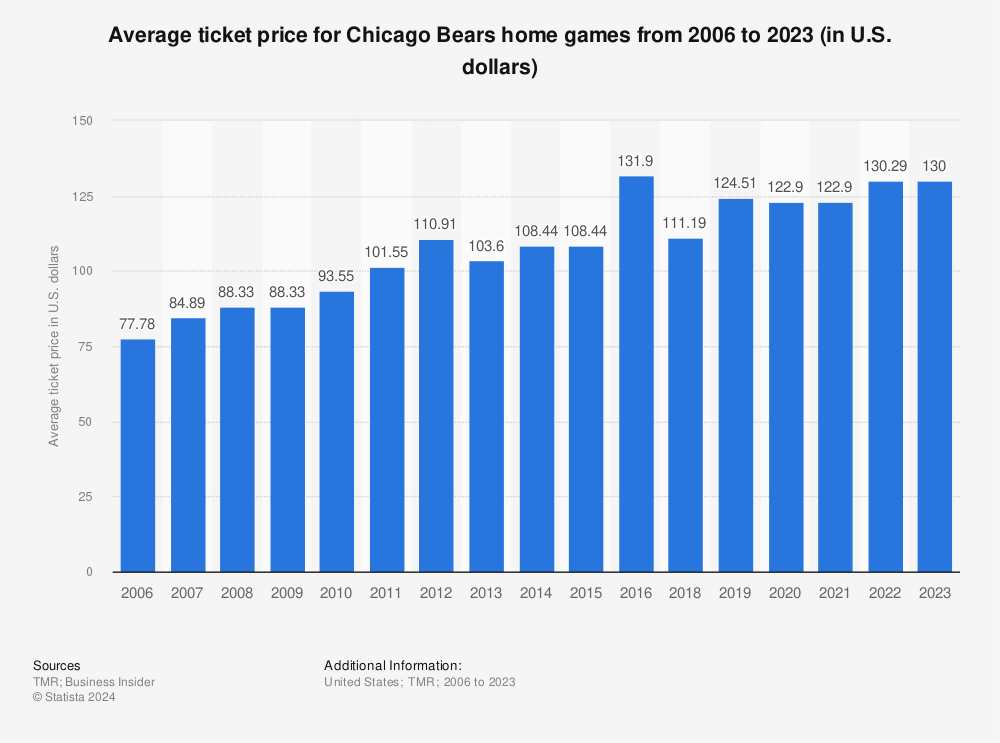
In summary, the cost of Chicago Bears tickets is highly variable, ranging from under $100 for a pre-season upper deck seat to well over $1,000 for prime seats at a high-stakes game. By understanding the factors that drive prices and strategically utilizing both primary and secondary markets, travelers can secure their desired experience at Soldier Field and immerse themselves in one of Chicago’s most iconic attractions. Planning ahead and budgeting for the entire game day experience will ensure an unforgettable part of your Chicago adventure.
LifeOutOfTheBox is a participant in the Amazon Services LLC Associates Program, an affiliate advertising program designed to provide a means for sites to earn advertising fees by advertising and linking to Amazon.com. Amazon, the Amazon logo, AmazonSupply, and the AmazonSupply logo are trademarks of Amazon.com, Inc. or its affiliates. As an Amazon Associate we earn affiliate commissions from qualifying purchases.