
Navigating significant life events such as welcoming a new child or caring for a seriously ill family member often requires a delicate balance between personal responsibility and financial stability. Fortunately, California offers a robust Paid Family Leave (PFL) program, designed to provide crucial wage replacement benefits, allowing individuals to step away from work without severe financial repercussions. Understanding and utilizing this benefit is a cornerstone of responsible lifestyle planning, ensuring peace of mind during pivotal family moments. This comprehensive guide will walk you through the application process, helping you seamlessly access the support you deserve.

Understanding Paid Family Leave in California
California’s Paid Family Leave program is a vital component of the state’s social safety net, funded through employee payroll deductions for State Disability Insurance (SDI). It provides partial wage replacement to eligible workers who need to take time off work for specific family-related reasons. The core purpose of PFL is to support families during critical periods, fostering stronger bonds and facilitating care when it’s most needed.
There are three primary reasons an individual can apply for PFL:
- Bonding with a New Child: This includes bonding with a newborn baby, a newly adopted child, or a child placed for foster care. This period is crucial for establishing family connections and provides parents with invaluable time during their child’s early stages.
- Caring for a Seriously Ill Family Member: PFL allows individuals to provide care for a seriously ill child, parent, parent-in-law, grandparent, grandchild, sibling, spouse, or registered domestic partner. “Seriously ill” typically refers to an illness, injury, impairment, or physical or mental condition that requires inpatient care in a hospital, hospice, or residential medical care facility, or continuing treatment by a healthcare provider.
- Military Assist Program: This benefit covers individuals whose family member is called to active military duty in the U.S. armed forces. It allows time off for qualifying exigencies, such as attending official ceremonies, making financial or legal arrangements, or arranging for childcare.
Who is Eligible?
Eligibility for PFL is primarily tied to an individual’s work history and contributions to the State Disability Insurance fund. To qualify, you must:
- Be unable to work due to one of the PFL-eligible reasons.
- Have earned at least $300 in wages subject to SDI deductions during your base period. The base period is a 12-month timeframe that the Employment Development Department (EDD) uses to calculate your benefit amount.
- Be employed or actively looking for work at the time your family leave begins.
- Suffer a wage loss due to the need to take time off for family leave.
- File a claim within the required timeframe (typically no later than 41 days after your family leave begins).
PFL offers significant benefits for a balanced lifestyle. It reduces the financial strain associated with taking time off, allowing families to focus on health, care, and bonding without the added stress of lost income. This support empowers individuals to prioritize family needs, contributing to overall well-being and a more fulfilling personal life.
Navigating the Application Process: A Step-by-Step Guide
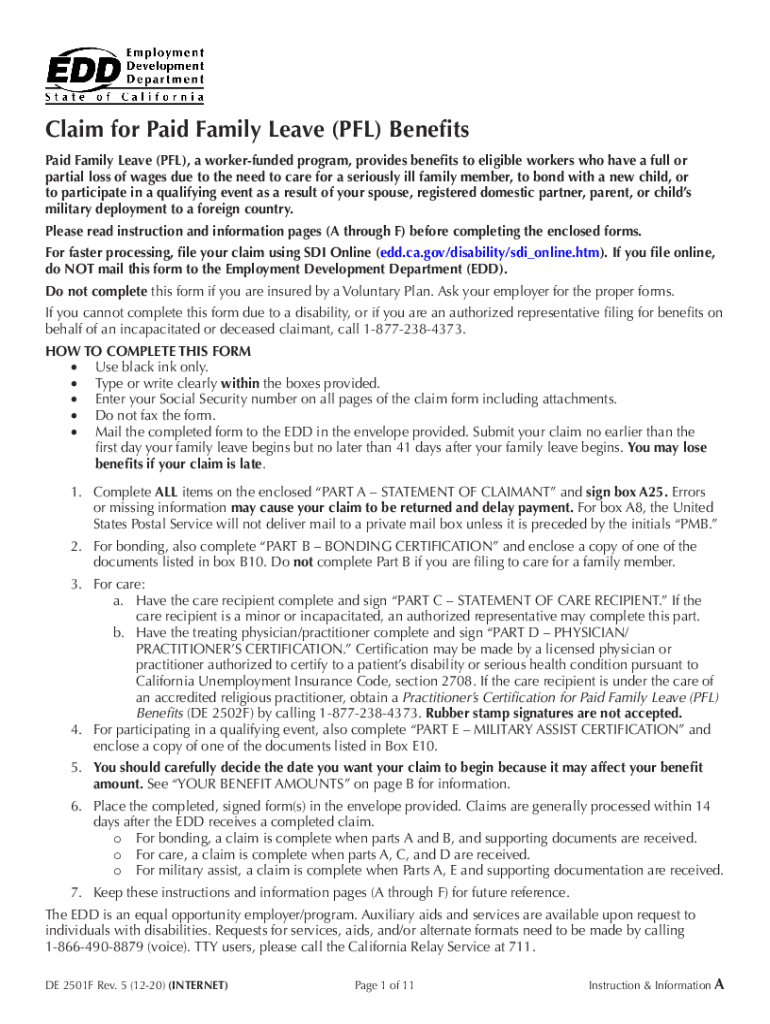
Applying for Paid Family Leave in California involves several key steps, from gathering documentation to submitting your claim. The process is managed by the Employment Development Department (EDD), which offers both online and mail-in application options.
Gathering Required Documentation
Before initiating your application, it’s crucial to collect all necessary documents. This preparation will streamline the process and prevent delays. While specific documents may vary slightly based on the reason for your leave, general requirements include:
- Proof of Identity: Your California Driver’s License or ID card number, or other acceptable forms of identification.
- Wage Information: Details about your employment, including employer names, addresses, and dates of employment. This helps the EDD verify your contributions to SDI.
- Proof of Relationship: Documents verifying your relationship to the family member for whom you are providing care or bonding with. This could include a birth certificate, adoption decree, foster care placement letter, marriage certificate, or domestic partnership registration.
Online Application through EDD
The most efficient way to apply for PFL is through the EDD’s online portal, SDI Online. This platform allows you to submit your claim electronically and manage your benefits securely.
- Register for an SDI Online Account: If you don’t already have one, you’ll need to register for an account on the EDD website. This involves verifying your identity.
- Complete the PFL Application: Log in to SDI Online and select “File a New Claim.” Follow the prompts to complete the PFL application (DE 2501F). Be prepared to enter personal information, employment details, and information about your family leave event.
- Submit Required Forms: Depending on your reason for leave, you will need additional forms:
- For Bonding: You will complete Part A of the PFL Claim Form (DE 2501F). The child’s other parent or the foster/adoptive agency may need to complete Part C.
- For Caregiving: The seriously ill family member’s healthcare provider must complete and submit a “Physician/Practitioner’s Certificate for PFL” (DE 2501F-P) directly to the EDD. Ensure they do this promptly.
- For Military Assist: You’ll need to submit the “Statement of Facts for Military Family Leave” (DE 2501F-M) with your application.
- Confirm Submission: After submitting your application and any required certifications, you will receive a confirmation number. Keep this for your records.
Mail-in Application Option
If you prefer to apply by mail or do not have access to SDI Online, you can request a paper application.
- Obtain Forms: You can order the “Claim for Paid Family Leave (PFL) Benefits” (DE 2501F) form by calling the EDD or printing it from their website.
- Complete and Mail: Fill out the form accurately and completely. Ensure all sections relevant to your claim are addressed. Attach any supporting documentation.
- Follow-up with Certifications: Just like with online applications, any required medical certifications (for caregiving) or military forms must be completed by the appropriate party and mailed to the EDD separately or with your application.
Deadlines and Timelines
It is crucial to file your PFL claim promptly. You must submit your application no earlier than the first day your family leave begins and no later than 41 days after your family leave begins. Filing late can result in a reduction or denial of benefits. The EDD generally processes claims within 14 business days of receiving all required information. Payments are usually issued every two weeks after the initial processing.
Specific Scenarios and Documentation
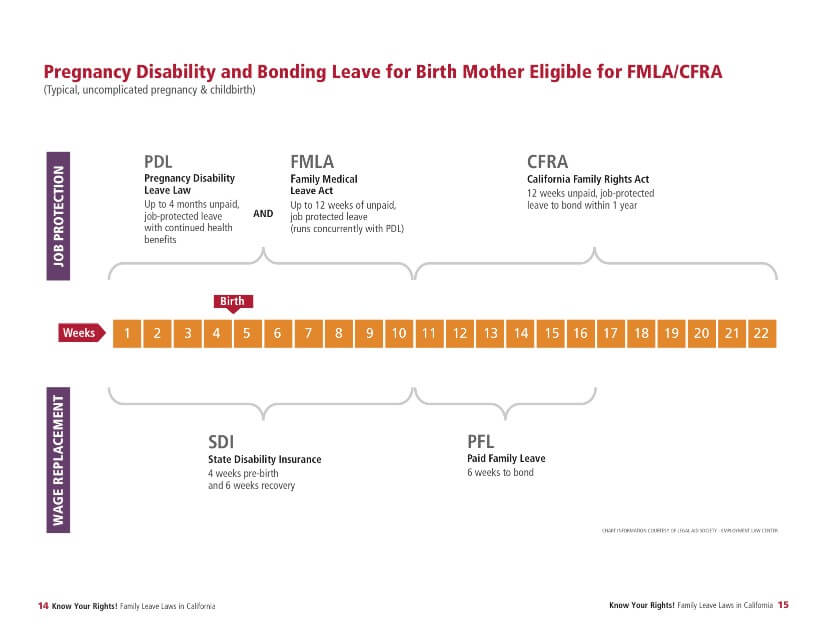
- Bonding with a New Child: For birth mothers, PFL often follows a period of State Disability Insurance for pregnancy and childbirth recovery. You will need the baby’s birth certificate or proof of birth. For adoption or foster care, you will need the placement order or a letter from the agency. Both parents can take PFL to bond with the same child, either concurrently or at different times.
- Caring for a Seriously Ill Family Member: The healthcare provider of the ill family member must submit a complete and timely medical certificate (DE 2501F-P). This certificate details the diagnosis, the period of disability, and the necessity of your care. Ensure the provider understands the urgency of submitting this form.
- Military Assist Program: The “Statement of Facts for Military Family Leave” (DE 2501F-M) requires details about the qualifying exigency and the military member’s deployment. You may also need to provide documentation of the military service, such as orders or a call to duty.
Maximizing Your Paid Family Leave Experience
Paid Family Leave offers a significant opportunity to balance your work and family life, but effective planning is key to maximizing its benefits. Understanding the financial aspects, coordinating with your employer, and knowing your rights can ensure a smooth and stress-free leave.
Understanding Benefit Amounts and Duration
PFL benefits typically pay approximately 60 to 70 percent of your weekly wages earned 5 to 18 months before your claim start date, up to a maximum weekly benefit amount. The specific percentage depends on your income. You can receive benefits for up to eight weeks within any 12-month period. These weeks do not have to be consecutive; you can take your leave intermittently, for example, two days a week for several weeks, as long as your employer agrees. This flexibility is a key aspect of making PFL fit your unique lifestyle needs.
Coordination with Employer Benefits
It is essential to communicate with your employer about your intention to take PFL. While PFL provides wage replacement, it does not offer job protection on its own. However, your job may be protected under other federal and state laws, such as the Family and Medical Leave Act (FMLA) or the California Family Rights Act (CFRA).
- FMLA/CFRA: These laws provide up to 12 weeks of job-protected leave for eligible employees for reasons similar to PFL, including bonding with a new child or caring for a seriously ill family member. If you are eligible for FMLA/CFRA, your PFL can run concurrently with this protected leave, ensuring both wage replacement and job security.
- Sick Leave, Vacation, or PTO: You may choose to use available sick leave, vacation time, or paid time off (PTO) to supplement your PFL benefits, potentially allowing you to receive 100% of your wages during your leave. Employers can also require you to use up to two weeks of accrued vacation time before or concurrently with PFL. Discuss these options with your HR department.
Employer Responsibilities and Employee Rights
Your employer cannot discriminate against you for exercising your right to take PFL. While PFL itself doesn’t guarantee job protection, it’s critical to understand that your job might be protected under other state or federal laws. Inform your employer in advance, ideally 30 days before your leave, if feasible. This allows both you and your employer to plan for your absence. The EDD website provides detailed information on employee rights and employer responsibilities.
Planning for a Smooth Transition Back to Work
Returning to work after family leave can be an adjustment. To facilitate a smooth transition:
- Maintain Communication: Stay in touch with your employer or manager as appropriate during your leave.
- Gradual Return: If possible, discuss a phased return to work, such as part-time for a few weeks, to ease back into your routine.
- Childcare/Caregiving Arrangements: Finalize any necessary childcare or caregiving arrangements well before your return date.
Common Questions and Troubleshooting
Even with careful planning, questions or issues may arise during your Paid Family Leave experience. Knowing how to address them can save you time and stress, ensuring your focus remains on your family.
What if my claim is denied?
If your PFL claim is denied, you have the right to appeal the decision. The EDD will send you a “Notice of Determination” (DE 2517), which explains the reason for the denial. This notice will also provide instructions on how to file an appeal. You typically have 30 days from the mailing date of the notice to submit a written appeal. An administrative law judge will review your case, and you may be required to attend a hearing. It’s advisable to gather any additional supporting documentation that might strengthen your case for the appeal.
How are benefits paid?
PFL benefits are generally paid every two weeks by debit card or direct deposit. When you apply, you’ll have the option to choose your preferred payment method. The EDD issues a debit card (Bank of America EDD Debit Card) for those who do not choose direct deposit. You’ll receive your first payment within a few weeks of your claim being approved, with subsequent payments continuing on a bi-weekly schedule for the duration of your approved leave.
Tax implications of PFL benefits
Paid Family Leave benefits are considered taxable income by the federal government and must be reported on your federal tax return. The EDD issues a 1099G form, typically by January 31st of the following year, detailing the total benefits you received. It’s important to note that PFL benefits are not subject to California state income tax. You may opt to have federal income tax withheld from your benefit payments when you apply, or you can make estimated tax payments throughout the year. Consulting with a tax professional can help you understand your specific obligations.
Resources and Support
The primary resource for all PFL-related inquiries is the official Employment Development Department (EDD) website. It provides comprehensive guides, forms, FAQs, and contact information.
- EDD Website: Visit EDD’s website for up-to-date information, forms, and access to SDI Online.
- Customer Service: The EDD provides phone support for specific questions related to your claim.
- Community Organizations: Various non-profit organizations and legal aid groups in California offer assistance and guidance to workers navigating family leave benefits. These organizations can be particularly helpful for complex cases or appeals.
By understanding the requirements, diligently preparing your application, and knowing your rights, you can successfully apply for Paid Family Leave in California. This valuable program provides the financial bridge needed to attend to crucial family matters, allowing you to prioritize your lifestyle and well-being without undue financial burden.
LifeOutOfTheBox is a participant in the Amazon Services LLC Associates Program, an affiliate advertising program designed to provide a means for sites to earn advertising fees by advertising and linking to Amazon.com. Amazon, the Amazon logo, AmazonSupply, and the AmazonSupply logo are trademarks of Amazon.com, Inc. or its affiliates. As an Amazon Associate we earn affiliate commissions from qualifying purchases.