
Understanding the intricate landscape of residential rent increases in California is paramount for both landlords managing long-term accommodation properties and tenants seeking stable housing. The state, renowned for its dynamic real estate market and high cost of living, has implemented a patchwork of regulations designed to balance property owner rights with tenant protections. Navigating these rules, which include both statewide mandates and diverse local ordinances, requires careful attention to detail and an awareness of recent legislative changes.
Understanding California’s Rent Control Landscape
California’s approach to rent control is not monolithic. Instead, it’s a tiered system that combines a statewide law with numerous city-specific ordinances, creating a complex web of regulations that dictate how much landlords can raise rent and under what conditions.

The Tenant Protection Act of 2019 (AB 1482)
The most significant statewide legislation affecting rent increases is the Tenant Protection Act of 2019, also known as AB 1482. This act, effective January 1, 2020, introduced both rent caps and “just cause” eviction protections for many residential rental properties across the state. Prior to AB 1482, rent increases in areas without local rent control could be unlimited, leading to significant instability for long-term residents.
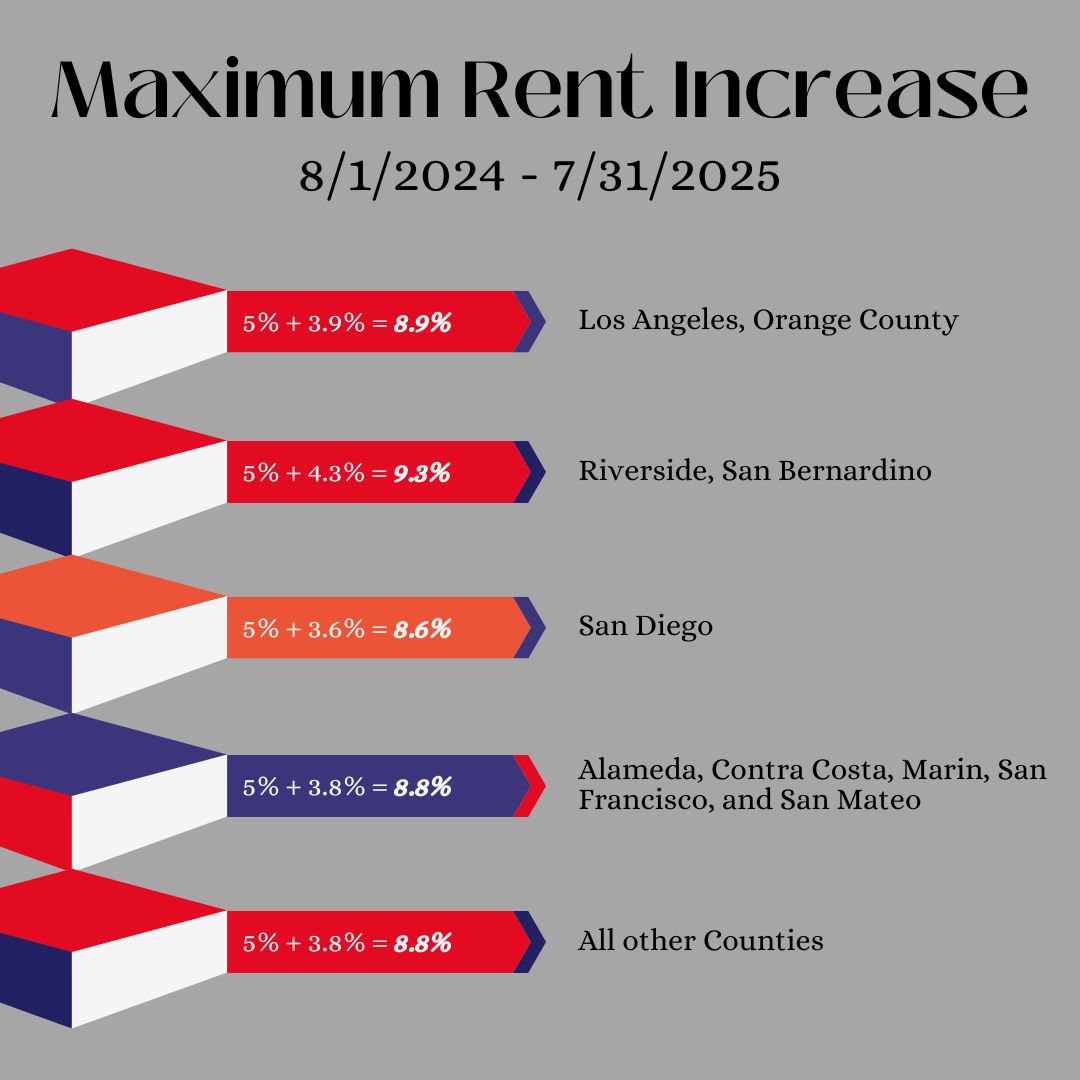
AB 1482 established a maximum annual rent increase for covered properties at 5% plus the percentage change in the cost of living (as measured by the Consumer Price Index), or CPI, for the applicable area, not to exceed a total of 10%. This cap applies to existing tenancies, meaning that when a tenant moves out, the landlord is generally free to set the initial rent for the next tenant at market rate (a practice known as “vacancy decontrol”). The legislation also mandates that properties must have been issued a certificate of occupancy at least 15 years prior to be subject to its rent caps, providing some exemption for newer buildings.
Local Rent Control Ordinances
While AB 1482 provides a baseline, many cities and counties in California have their own, often stricter, rent control ordinances. These local laws take precedence over AB 1482 if they offer stronger tenant protections. Cities like San Francisco, Los Angeles, Oakland, and San Jose have long-standing rent control laws that typically impose lower annual rent caps and may cover a broader range of properties than the state law.
For instance, a city’s ordinance might limit annual increases to a smaller percentage than AB 1482’s cap, or it might apply to buildings constructed more recently than 15 years ago. It is crucial for landlords and tenants to determine if a property is subject to local rent control and, if so, to follow the stricter of the two applicable laws (state or local).
Exemptions to Statewide and Local Controls
Not all rental properties in California are subject to rent control. Both AB 1482 and many local ordinances include specific exemptions:
- New Construction: Properties issued a certificate of occupancy within the last 15 years are exempt from AB 1482’s rent cap. Some local ordinances may have similar or different new construction exemptions.
- Single-Family Homes and Condominiums: Generally, these are exempt from AB 1482’s rent caps, unless they are owned by a corporation, real estate investment trust, or an LLC with at least one corporate member. However, for this exemption to apply, the landlord must provide specific notice to the tenant that the property is exempt. Importantly, these properties are still subject to AB 1482’s just cause eviction protections after a tenant has resided for 12 months.
- Owner-Occupied Duplexes/Triplexes: Buildings where the owner occupies one of the units as their primary residence are often exempt from both rent caps and just cause eviction provisions, provided specific conditions are met.
- Subsidized Housing: Housing that is already subject to specific affordable housing covenants or restrictions that limit rent increases is generally exempt.
- Dormitories and Short-Term Rentals: Student dormitories, hotels, motels, and short-term rentals (less than 30 days) are typically exempt from long-term accommodation rent control laws.
Understanding these exemptions is critical for landlords to ensure compliance and for tenants to know their rights regarding long-term residency.
Calculating Allowable Rent Increases
For properties subject to AB 1482 or local rent control, calculating the permissible rent increase involves specific steps and understanding of key metrics.
Annual Cap Under AB 1482
The statewide rent cap is calculated as 5% plus the percentage change in the CPI for the metropolitan area where the property is located. This total increase cannot exceed 10%. The relevant CPI is typically the CPI for All Urban Consumers (All Items) for the 12-month period ending in April of the current year, published by the U.S. Bureau of Labor Statistics.
Landlords must refer to the CPI for their specific region (e.g., San Francisco-Oakland-San Jose, Los Angeles-Long Beach-Anaheim). The California Department of Consumer Affairs often publishes guidance on the current year’s allowable increase percentage, making it easier for landlords to comply.
The Role of the Consumer Price Index (CPI)
The CPI is a measure of the average change over time in the prices paid by urban consumers for a market basket of consumer goods and services. Its inclusion in rent cap calculations links allowable rent increases to the broader economic reality of inflation. When inflation is low, the allowable increase will be closer to 5%. During periods of higher inflation, the increase can approach the 10% maximum. Landlords must use the correct regional CPI and the proper reporting period to ensure accurate calculations.
Notice Requirements for Rent Increases
Regardless of whether a property is under statewide or local rent control, landlords must provide proper written notice to tenants before implementing a rent increase.
- Less than 10% Increase: If the increase is 10% or less over a 12-month period, landlords must provide at least 30 days’ written notice.
- More than 10% Increase: If the increase is more than 10% over a 12-month period, landlords must provide at least 90 days’ written notice.
These notice periods are critical for tenants to budget for the change or to seek alternative long-term accommodation if necessary. Failure to provide proper notice can invalidate the rent increase.
Just Cause Eviction Protections
Beyond rent caps, AB 1482 also introduced significant “just cause” eviction protections, which are intrinsically linked to the stability of long-term accommodation. For covered properties, a landlord cannot terminate a tenancy without a “just cause,” meaning a legitimate, legally specified reason. This provision prevents arbitrary evictions, providing a crucial layer of security for residents.
“At Fault” Just Cause
“At fault” just cause reasons are typically related to a tenant’s actions or inactions. These include:
- Failure to pay rent.
- Breach of a material term of the lease (e.g., unauthorized subletting, significant damage to the property).
- Nuisance (e.g., repeatedly disturbing other tenants).
- Criminal activity on the premises.
- Refusal to allow lawful entry by the landlord.
“No-Fault” Just Cause and Relocation Assistance
“No-fault” just cause reasons are those for which the tenant is not responsible. These include:
- Owner or relative move-in (where the owner or a direct family member intends to occupy the unit as their primary residence).
- Withdrawal of the rental property from the market (e.g., permanent demolition or conversion to non-residential use).
- Compliance with a government order (e.g., order to vacate due to uninhabitable conditions).
- Intent to substantially remodel the unit.
In most cases of “no-fault” evictions under AB 1482, landlords are required to provide relocation assistance to the tenant, typically equal to one month’s rent. Local rent control ordinances may impose higher relocation assistance requirements or additional conditions. This provision aims to mitigate the financial burden on tenants who are forced to find new long-term accommodation through no fault of their own.
Impact on Long-Term Accommodation Stability
The just cause eviction protections significantly enhance the stability of long-term accommodation in California. They prevent landlords from evicting tenants simply to raise rents dramatically for new occupants, thereby maintaining the spirit of the rent cap provisions. For tenants, this means greater peace of mind and the ability to establish long-term roots within their communities. For landlords, it means understanding and adhering to clear legal grounds for tenancy termination.
Navigating Exemptions and Special Cases
The nuances of California’s rent laws often lie in their exemptions and special conditions, which can significantly alter the permissible rent increase and eviction rules for specific types of long-term accommodation.
New Construction Exemptions
As mentioned, properties with a certificate of occupancy issued within the last 15 years are exempt from AB 1482’s rent caps. This exemption is designed to encourage new housing development in California, a state grappling with a severe housing shortage. However, these newer properties are still subject to AB 1482’s “just cause” eviction protections once a tenant has resided for 12 months, or 24 months for additional adult tenants.
Owner-Occupied Duplexes/Triplexes
A landlord who lives in one unit of a duplex or triplex and has occupied it as their primary residence for at least 12 months typically exempts the other units from both AB 1482’s rent caps and just cause eviction rules. This is a common exemption intended to protect small, owner-occupant landlords.
Single-Family Homes and Condos (with caveats)
The exemption for single-family homes and condominiums from AB 1482 rent caps is one of the most frequently misunderstood provisions. While generally exempt, they lose this exemption if owned by certain corporate entities or if the landlord fails to provide the required written notice to the tenant at the start of the tenancy (or upon proper notification for existing tenancies) stating the property is exempt from AB 1482 rent caps. It is crucial for landlords of these property types to provide this specific notice, otherwise, the rent cap provisions will apply.
Subsidized Housing
Housing that is deed-restricted or otherwise subject to a governmental affordable housing program is generally exempt from AB 1482 because these properties already have their own, often more stringent, rent regulation frameworks.
Resources for Tenants and Landlords
Navigating California’s complex accommodation laws can be challenging. Both tenants and landlords should leverage available resources to ensure compliance and protect their rights.
California Department of Real Estate
While primarily focused on real estate licensing, the California Department of Real Estate can offer general information or point individuals to relevant statutes and regulations concerning landlord-tenant law.
Local Housing Authorities and Rent Boards
For properties within cities or counties with local rent control ordinances, the local housing authority or rent board is an invaluable resource. These bodies often provide detailed information specific to their jurisdiction, conduct tenant/landlord counseling, mediate disputes, and sometimes adjudicate cases. Examples include the San Francisco Rent Board, the Los Angeles Housing Department, and the City of Oakland Rent Adjustment Program.

Legal Aid Services and Tenant Rights Organizations
Tenants who believe their rights have been violated can seek assistance from local legal aid organizations or tenant rights advocacy groups. These organizations often provide free or low-cost legal advice and representation. Landlords seeking legal guidance on compliance or disputes can consult with attorneys specializing in landlord-tenant law.
The landscape of long-term accommodation in California is continually evolving. Staying informed about legislative updates, understanding the specific rules applicable to a given property, and utilizing available resources are essential for fostering fair and stable rental relationships.
LifeOutOfTheBox is a participant in the Amazon Services LLC Associates Program, an affiliate advertising program designed to provide a means for sites to earn advertising fees by advertising and linking to Amazon.com. Amazon, the Amazon logo, AmazonSupply, and the AmazonSupply logo are trademarks of Amazon.com, Inc. or its affiliates. As an Amazon Associate we earn affiliate commissions from qualifying purchases.