
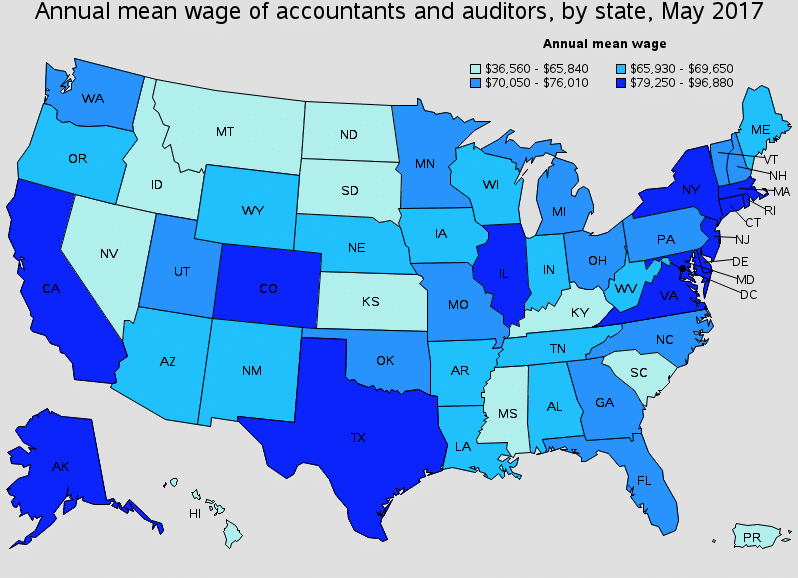
While the allure of Texas often conjures images of wide-open spaces, bustling metropolises, and a rich cultural tapestry, it’s also a state with a robust economy that supports a diverse range of professions. Among these, the accounting profession plays a vital role in ensuring the financial health of businesses, from burgeoning startups in Austin to established corporations in Dallas. For those considering a career in accounting, or for businesses looking to understand the cost of financial talent, a key question arises: “How much do accountants make in Texas?” This article delves into the salary landscape for accountants across the Lone Star State, exploring the factors that influence earning potential and providing a comprehensive overview of what you can expect.

Understanding the Accountant Salary Landscape in Texas
The earning potential of an accountant in Texas is not a monolithic figure. It’s a dynamic range influenced by a confluence of factors, including experience level, specific role, geographic location within the state, and the size and type of the employing organization. Whether you’re a recent graduate embarking on your career or a seasoned professional seeking to advance, understanding these variables is crucial for setting realistic salary expectations and for employers seeking to attract and retain top talent.
Entry-Level Accountants and Junior Roles
For those just beginning their journey in accounting, starting salaries typically reflect their limited experience and the foundational nature of their responsibilities. Entry-level accountant positions often involve tasks such as accounts payable and receivable, basic bookkeeping, data entry, and assisting senior accountants with financial statement preparation. In Texas, the average starting salary for an accountant can range from approximately $45,000 to $60,000 annually. This figure can vary depending on the city. For instance, an entry-level accountant in a major metropolitan area like Houston or Dallas might command a slightly higher starting salary compared to those in smaller towns, owing to the higher cost of living and greater demand for financial professionals.
Educational background also plays a role. Accountants with a bachelor’s degree in accounting or a related field are the standard requirement. However, those who have pursued certifications like the Certified Public Accountant (CPA) designation, even at the entry level, can often negotiate a higher starting salary. Employers recognize the commitment and advanced knowledge that a CPA signifies, making them more attractive candidates. Furthermore, internships and prior work experience, even in related fields, can positively impact an entry-level accountant’s earning potential. A strong resume showcasing practical application of accounting principles can set a candidate apart.
Mid-Level Accountants and Specialized Roles
As accountants gain experience and develop specialized skills, their earning potential significantly increases. Mid-level accountants, typically with 3-7 years of experience, often take on more complex responsibilities, including financial analysis, budgeting, forecasting, tax preparation, and auditing. They may also begin to supervise junior staff or manage specific accounting functions. The average salary for a mid-level accountant in Texas can range from $60,000 to $90,000 per year.
Within the mid-level bracket, specialization can lead to even greater earning potential. For example, accountants who focus on areas like forensic accounting, internal auditing, management accounting, or financial planning and analysis (FP&A) often command higher salaries. These specialized roles require a deeper understanding of particular financial disciplines and often involve critical decision-making and problem-solving. A management accountant, for instance, who works closely with operational managers to analyze costs and profitability, might earn more than a general staff accountant. Similarly, an accountant with expertise in international accounting standards or specific industry regulations will likely be more valuable to companies operating in those arenas.
The acquisition of professional certifications remains a significant driver of salary growth at the mid-level. Beyond the CPA, other valuable certifications include the Certified Management Accountant (CMA) and the Certified Internal Auditor (CIA). Holding one or more of these credentials demonstrates a high level of proficiency and dedication to the profession, making individuals more competitive in the job market and justifying higher salary demands.
Senior Accountants, Managers, and Directors
At the senior levels, accountants transition into leadership and strategic roles, overseeing entire accounting departments, managing complex financial operations, and contributing to the overall financial strategy of an organization. These positions require extensive experience, advanced technical skills, strong leadership abilities, and a deep understanding of business operations and regulatory compliance.
Senior Accountants, often with 7-10 years of experience, may take on responsibilities such as overseeing month-end and year-end close processes, preparing financial reports for executive leadership, and ensuring compliance with accounting standards like GAAP (Generally Accepted Accounting Principles). Their average salaries can range from $80,000 to $120,000 annually.
Accounting Managers, typically with 10+ years of experience, are responsible for leading accounting teams, developing financial policies, managing budgets, and implementing internal controls. They play a crucial role in guiding the financial direction of a company. Salaries for Accounting Managers in Texas generally fall between $90,000 and $140,000 per year.
At the highest echelons, Directors of Accounting or Controllers often oversee all financial operations, including accounting, financial reporting, treasury, and tax. These roles are critical for the financial health and strategic planning of an organization. Salaries for these senior leadership positions can range from $120,000 to $200,000 or even higher, depending on the size and complexity of the company. The CPA designation is almost always a prerequisite for these executive-level accounting roles.
Geographic Variations in Accountant Salaries Across Texas
Texas is a vast state with diverse economic hubs, and the cost of living and demand for accountants can vary significantly from one metropolitan area to another. This geographic disparity directly impacts salary offerings.

Major Metropolitan Areas: Houston, Dallas, Austin, and San Antonio
Houston, the largest city in Texas and a global energy capital, boasts a high demand for accountants across its numerous oil and gas companies, healthcare institutions, and a growing tech sector. Consequently, salaries in Houston tend to be competitive, often at the higher end of the state’s average. Accountants in Houston can expect salaries that are generally 5-10% higher than the state average, particularly for specialized roles.
Dallas, a major financial and corporate hub, also offers strong earning potential for accountants. With a concentration of Fortune 500 companies and a thriving business environment, the demand for skilled accounting professionals is consistently high. Similar to Houston, salaries in Dallas are typically above the state average. The presence of major accounting firms like Deloitte, PwC, and EY in Dallas further contributes to a robust job market and competitive compensation.
Austin, known for its booming technology industry and vibrant startup scene, presents a unique salary landscape for accountants. While the cost of living in Austin has risen dramatically, so too have salaries for finance professionals. Accountants in Austin working in tech companies or fast-growing startups might find themselves in positions offering compensation comparable to, or even exceeding, those in Houston or Dallas, especially if they possess skills in areas like financial modeling for venture capital-backed companies.
San Antonio, while perhaps not as densely populated with large corporate headquarters as Dallas or Houston, still offers a solid market for accountants, particularly within its growing healthcare, defense, and tourism sectors. Salaries in San Antonio might be slightly lower than in the other major metropolises but remain competitive, reflecting the city’s economic strengths and quality of life.
Emerging Economic Centers and Smaller Cities
Beyond the major metropolitan areas, Texas has several emerging economic centers and numerous smaller cities that also employ accountants. Cities like Fort Worth, a significant part of the Dallas-Fort Worth metroplex, El Paso, with its border economy, and Corpus Christi, a hub for the petrochemical industry, all offer opportunities. Salaries in these locations may be somewhat lower than in the primary metropolitan areas but are often more aligned with the local cost of living, offering a good quality of life alongside professional growth.
In smaller towns and rural areas, the demand for accountants might be less intense, and consequently, salaries may be lower. However, accountants in these locations often find broader responsibilities and a more intimate working environment within local businesses, school districts, or government entities. The lifestyle offered by these smaller communities can be a significant draw, balancing a potentially lower salary with a higher quality of life and lower living expenses.
Factors Influencing Accountant Salaries Beyond Experience and Location
While experience and geographic location are primary determinants of an accountant’s salary in Texas, several other factors can significantly influence earning potential. Understanding these nuances can provide a more comprehensive picture for both aspiring and established accounting professionals.
Industry and Company Size
The industry in which an accountant works and the size of the company play a crucial role in salary determination. For example, accountants in the high-paying oil and gas industry or the lucrative financial services sector often command higher salaries compared to those in non-profit organizations or education. These industries typically have larger budgets, more complex financial structures, and a greater need for specialized financial expertise, which translates into higher compensation.
Similarly, larger corporations generally offer higher salaries and more comprehensive benefits packages than smaller businesses. Larger companies often have more structured compensation plans, opportunities for advancement, and the resources to offer competitive salaries to attract top talent. A multinational corporation with headquarters in Houston will likely offer a different compensation package than a small accounting firm serving local businesses in a town like Waco.
Demand and Specialization
The current demand for specific accounting skills also impacts salary. For instance, if there’s a shortage of accountants with expertise in cybersecurity auditing or data analytics for finance, those individuals can command premium salaries. As the business world becomes increasingly data-driven, accountants who can leverage technology and provide strategic insights from financial data are in high demand.
Specializations within accounting, such as forensic accounting, international tax law, or mergers and acquisitions (M&A) advisory, often lead to higher earning potential. These niche areas require advanced knowledge, specialized training, and often involve high-stakes financial work, making professionals in these fields more valuable to employers.
Education and Certifications
As previously mentioned, educational attainment and professional certifications are critical drivers of salary. A bachelor’s degree is the baseline, but a master’s degree in accounting or taxation can further enhance earning potential. However, the most significant salary boosts typically come from professional certifications. The CPA license is paramount in the accounting world and opens doors to higher-paying roles. Other certifications like the CMA (Certified Management Accountant), CIA (Certified Internal Auditor), Enrolled Agent (EA), or even specialized certifications in areas like IT auditing (CISA) can significantly increase an accountant’s marketability and their ability to negotiate a higher salary. Employers see these certifications as a testament to an individual’s commitment, expertise, and ability to handle complex financial matters.
In conclusion, the question of “How much do accountants make in Texas?” yields a complex yet insightful answer. While entry-level positions offer a solid foundation, the earning potential for accountants in the Lone Star State can grow substantially with experience, specialization, strategic career choices regarding industry and company size, and the pursuit of advanced education and certifications. Whether you’re drawn to the energy sector of Houston, the corporate landscape of Dallas, the tech-driven environment of Austin, or any of the diverse economic regions across Texas, a career in accounting offers a financially rewarding path with ample opportunities for growth and advancement.
LifeOutOfTheBox is a participant in the Amazon Services LLC Associates Program, an affiliate advertising program designed to provide a means for sites to earn advertising fees by advertising and linking to Amazon.com. Amazon, the Amazon logo, AmazonSupply, and the AmazonSupply logo are trademarks of Amazon.com, Inc. or its affiliates. As an Amazon Associate we earn affiliate commissions from qualifying purchases.