
California, often celebrated as the Golden State, is synonymous with innovation, diverse landscapes, and a vibrant lifestyle. For physical therapists, it presents a compelling professional landscape, boasting a high demand for skilled practitioners alongside a notoriously high cost of living. Aspiring and experienced physical therapists alike frequently ponder the critical question: how much can one truly earn in California? Understanding the salary potential is not just about financial planning; it’s about evaluating the viability of a lifestyle in one of the world’s most dynamic economies. This comprehensive guide delves into the intricate factors that shape physical therapist salaries across California, providing insights into average earnings, regional variations, benefits, and career growth prospects.

Overview of Physical Therapist Salaries in California
The allure of practicing physical therapy in California is undeniable. The state’s massive population, aging demographics, and active lifestyle contribute to a robust and consistent demand for rehabilitative services. However, this demand comes hand-in-hand with an elevated cost of living that impacts everything from housing to daily expenses.
The Golden State Advantage: Why PTs Choose California
Many physical therapists are drawn to California not only for its professional opportunities but also for the quality of life it promises. Access to diverse recreational activities, a generally progressive healthcare system, and a competitive professional environment are significant pulls. This creates a highly competitive, yet rewarding, market for PTs. The sheer volume of healthcare facilities, from world-class hospitals to specialized clinics, offers a broad spectrum of employment choices.
Average Salary Benchmarks
On average, physical therapists in California command some of the highest salaries in the nation. While national averages for physical therapists might hover around $95,000 to $100,000 annually, California frequently exceeds this. Data from various sources, including the U.S. Bureau of Labor Statistics (BLS) and professional salary aggregators, consistently place the average annual salary for a physical therapist in California in the range of $105,000 to $115,000, with many experienced professionals earning significantly more. It’s crucial to remember that these are averages, and individual earnings can vary widely based on specific factors.
Entry-Level vs. Experienced Earnings
The salary trajectory for physical therapists in California follows a predictable pattern of growth linked to experience and expertise.
- Entry-Level (0-2 years experience): New graduates or those with minimal experience typically start in the range of $85,000 to $95,000 annually. These positions often provide invaluable exposure to diverse patient populations and clinical settings, forming the foundation for career advancement.
- Mid-Career (3-9 years experience): As PTs gain experience, refine their skills, and potentially take on more responsibilities, their salaries tend to rise considerably. Mid-career professionals can expect to earn between $95,000 and $110,000.
- Experienced (10+ years experience): Highly experienced physical therapists, especially those with specialized certifications, leadership roles, or a strong reputation, can command salaries upwards of $110,000 to $130,000+. Some top earners in specialized or management roles might even exceed $140,000 to $150,000.
Key Factors Influencing PT Compensation
Several critical variables play a significant role in determining a physical therapist’s earning potential in California. Understanding these factors can help professionals strategically navigate their careers to maximize income.
Geographic Location
Perhaps the most impactful factor is location. California’s vastness means substantial economic and cost-of-living disparities between its regions.
- Urban vs. Rural: Major metropolitan areas like Los Angeles, San Francisco, and San Diego typically offer higher salaries to offset the exorbitant cost of living, particularly housing. Rural or less densely populated areas, while having a lower cost of living, might offer slightly lower salaries, though demand can still be high.
- Specific High-Cost Cities: Cities within the San Francisco Bay Area (e.g., San Francisco, San Jose, Oakland) consistently report the highest PT salaries in the state, often reaching averages of $120,000 to $130,000 or more for experienced professionals. However, these areas also have the highest cost of living, making net disposable income a crucial consideration.
Practice Setting
The environment in which a physical therapist practices significantly influences their pay scale.
- Hospitals (Acute Care): Generally offer competitive salaries and comprehensive benefits due to the demanding nature of the work and often 24/7 operations.
- Outpatient Clinics: Salaries can vary widely here. Private clinics, especially those specializing in certain areas, might offer higher pay, while larger corporate chains might have standardized scales. Productivity bonuses are common in this setting.
- Home Health: Often among the highest-paying settings due to the independent nature of the work, travel time, and the specialized skill set required. Pay is frequently per visit or a higher base salary.
- Skilled Nursing Facilities (SNFs): Historically strong payers, SNFs offer good salaries, especially for therapists willing to work with an older, often complex, patient population.
- Schools and Universities: While offering stable hours and excellent benefits, salaries in educational settings may be slightly lower than clinical counterparts, often aligning with public school pay scales.
- Travel Physical Therapy: Though not a permanent setting, travel PT contracts in California can offer significantly higher take-home pay (often $2,000-$2,500+ per week) but come with less job security and potentially fewer long-term benefits.
Specialization and Advanced Certifications
Physical therapists who pursue specialization often see a boost in their earning potential. Specialized areas demonstrate advanced knowledge and skills, making these PTs more valuable to employers and patients seeking specific expertise.
- Orthopedics: A common specialization, highly valued in active California.
- Sports Physical Therapy: Particularly lucrative in a state with a strong sports culture and numerous professional teams.
- Neurology, Geriatrics, Pediatrics, Women’s Health: All represent areas where advanced certification (e.g., from the American Board of Physical Therapy Specialties – ABPTS) can lead to higher salaries.
- Advanced Degrees/Certifications: Pursuing a Doctor of Physical Therapy (DPT) is now the entry-level requirement, but additional residencies, fellowships, or certifications like Certified Strength and Conditioning Specialist (CSCS) can further enhance earning potential.
Experience and Education
As discussed earlier, experience is a linear driver of salary growth. Beyond initial experience, continuous professional development, mentorship, and assuming leadership roles (e.g., lead therapist, director of rehabilitation) directly translate into higher compensation.
Regional Salary Deep Dive: A Tale of Two Coasts (and Inland)
California’s diverse geography means salary ranges fluctuate significantly across its major regions.
Northern California Hotspots
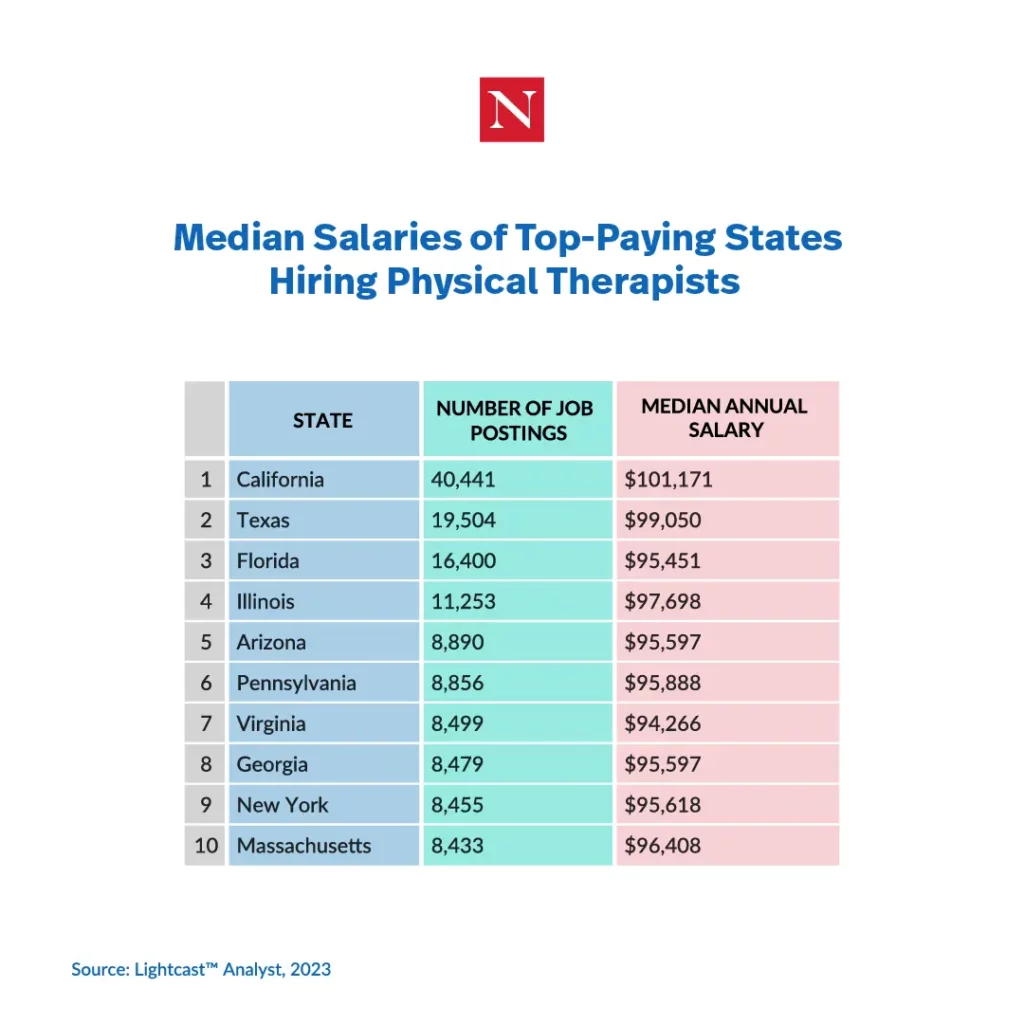
The San Francisco Bay Area consistently leads the state in average PT salaries. Cities like San Francisco, San Jose, and Oakland often report average salaries well over $120,000, with top earners reaching $140,000+. The demand is high, fueled by a dense, affluent population and a concentration of advanced healthcare facilities and tech companies offering robust employee benefits. However, the cost of living here, particularly housing, is among the highest in the world, requiring careful financial planning to thrive.
Southern California Centers
Southern California also offers highly competitive salaries, especially in major urban centers.
- Los Angeles County: As the most populous county, Los Angeles offers a vast job market. Average PT salaries often range from $105,000 to $120,000.
- San Diego County: Known for its quality of life and healthcare industry, San Diego typically sees PT salaries in a similar range to Los Angeles, perhaps slightly lower on average but still very strong.
- Orange County: This affluent area offers excellent opportunities, with salaries competitive with Los Angeles, often around $110,000 to $125,000.
Inland Empire and Central Valley Considerations
Regions further inland, such as the Inland Empire (e.g., Riverside, San Bernardino) and the Central Valley (e.g., Fresno, Sacramento), generally offer lower average salaries compared to the coastal metropolises, often in the $95,000 to $105,000 range. However, the significantly lower cost of living, particularly housing, means that the purchasing power and overall quality of life might be comparable or even higher for some individuals. These areas often have a high demand for healthcare professionals and can offer a good work-life balance away from the intense pace of the big cities. Sacramento, as the state capital, represents a middle ground, offering a decent salary relative to its more manageable cost of living compared to coastal hubs.
Beyond the Base: Total Compensation and Benefits
A physical therapist’s total compensation package extends far beyond the base salary. Benefits and additional perks can significantly enhance overall financial well-being and career satisfaction.
Sign-On Bonuses and Performance Incentives
In a competitive market like California, sign-on bonuses are common, especially for experienced therapists or those willing to commit to underserved areas or specific contracts. These can range from a few thousand dollars to upwards of $10,000-$15,000. Performance-based incentives and productivity bonuses are also prevalent, particularly in outpatient and home health settings, allowing therapists to increase their earnings based on patient volume or outcomes.
Healthcare, Retirement, and Paid Time Off
Most reputable employers in California offer comprehensive benefits packages including:
- Health Insurance: Medical, dental, and vision coverage are standard.
- Retirement Plans: 401(k) or 403(b) plans with employer matching contributions are a significant long-term financial benefit.
- Paid Time Off (PTO): Including vacation, sick leave, and holidays. The amount varies but is a crucial component of work-life balance.
Continuing Education and Professional Development
Many employers support or fully fund continuing education units (CEUs) required for licensure renewal. They might also cover costs for specialized certifications, conferences, or professional organization memberships (e.g., the American Physical Therapy Association – APTA). Investing in professional development not only maintains licensure but also enhances skill sets, leading to better patient care and often, higher earning potential.
Career Outlook and Future Trends for PTs in California
The future for physical therapists in California remains exceedingly positive, driven by persistent demand and an evolving healthcare landscape.
Growing Demand and Job Security
The U.S. Bureau of Labor Statistics projects a much faster than average growth rate for physical therapy jobs nationally, and California mirrors this trend. Factors contributing to this demand include:
- Aging Population: As the Baby Boomer generation ages, there’s an increased need for rehabilitation services related to chronic conditions, falls, and post-surgical recovery.
- Rise of Chronic Diseases: Conditions like diabetes, obesity, and cardiovascular disease often require physical therapy interventions.
- Focus on Preventative Care: Healthcare systems are increasingly emphasizing prevention and non-pharmacological interventions, where PTs play a crucial role.
- Active Lifestyles: Californians’ active lifestyles mean a higher incidence of sports injuries and a desire for optimal physical function, fueling demand for orthopedic and sports PT.
Adapting to Healthcare Landscape Changes
The healthcare landscape is continually evolving, with shifts towards value-based care, telehealth, and integrated care models. Physical therapists who are adaptable, tech-savvy, and skilled in interdisciplinary collaboration will be well-positioned for success. Telehealth, in particular, has expanded access to care and opened new avenues for practice, potentially even allowing for greater flexibility in work arrangements.
Strategies for Maximizing Earning Potential
For physical therapists in California looking to maximize their income, several strategies stand out:
- Specialize: Pursue advanced certifications in high-demand areas.
- Seek Leadership Roles: Progress into lead therapist, clinic manager, or director positions.
- Consider Diverse Settings: Explore home health, travel PT, or private practice for higher earning potential.
- Negotiate Effectively: Always negotiate salary and benefits based on market rates, experience, and the comprehensive value you bring.
- Continuous Learning: Stay current with the latest evidence-based practices and treatment modalities.
- Network: Build professional relationships within the California healthcare community.
Conclusion
The question of “How much do physical therapists make in California?” reveals a nuanced answer rooted in a dynamic interplay of factors. While the Golden State offers some of the highest average salaries for physical therapists in the nation, this must always be balanced against its equally high cost of living. Prospective and current PTs must carefully consider geographic location, practice setting, specialization, and experience to accurately gauge their earning potential and, more importantly, their potential for a fulfilling lifestyle. With a strong demand for services and ample opportunities for professional growth, California remains a compelling, albeit challenging, destination for physical therapists committed to excellence in patient care and the pursuit of a vibrant career. By strategically navigating the unique landscape of California’s healthcare industry, physical therapists can achieve both financial success and a high quality of life.
LifeOutOfTheBox is a participant in the Amazon Services LLC Associates Program, an affiliate advertising program designed to provide a means for sites to earn advertising fees by advertising and linking to Amazon.com. Amazon, the Amazon logo, AmazonSupply, and the AmazonSupply logo are trademarks of Amazon.com, Inc. or its affiliates. As an Amazon Associate we earn affiliate commissions from qualifying purchases.