
The Silver State, known for its dazzling Las Vegas Strip and vast desert landscapes, also presents a compelling picture when it comes to the compensation of its educators. Understanding teacher salaries in Nevada is crucial for aspiring educators, current teachers, and policymakers alike. While headline figures offer a starting point, a deeper dive reveals a complex interplay of factors influencing earnings, from experience and education level to the specific school district and cost of living in different regions of the state.
This exploration aims to provide a comprehensive overview of teacher compensation across Nevada, delving into average salaries, salary schedules, and the economic realities that shape the teaching profession within its borders. We will navigate the nuances that differentiate paychecks for teachers working in bustling urban centers compared to those in more rural communities, offering insights that go beyond a simple number.
Understanding Nevada Teacher Salary Structures
Nevada teachers’ salaries are typically determined by a structured pay scale, often referred to as a salary schedule. This schedule is a standardized system that dictates how much a teacher earns based on several key variables. The most influential of these are years of experience and the level of education attained.
Experience and Its Impact on Earnings
The longer a teacher has dedicated their career to the classroom, the higher their salary generally becomes. Most salary schedules in Nevada are designed with incremental increases for each year of service. This reward system acknowledges the accumulated knowledge, pedagogical skills, and proven effectiveness that come with experience. For a first-year teacher, the entry-level salary will be significantly lower than that of a teacher with 10, 15, or even 20 years under their belt. These annual step increases, while often modest individually, add up considerably over a career, providing a tangible incentive for retention within the profession.
For instance, a teacher moving from their fifth year to their sixth year of experience might see a bump of a few hundred to a few thousand dollars, depending on the district’s specific schedule. This progression continues, with significant salary jumps often occurring at milestones like 10, 15, or 20 years of service, reflecting the cumulative value placed on seasoned educators.
Education Level: A Key Determinant
Beyond experience, a teacher’s educational qualifications play a pivotal role in their earning potential. The baseline for most teaching positions is a bachelor’s degree. However, teachers who pursue further education, such as a master’s degree or even a doctorate, are typically compensated at higher salary levels.
A master’s degree, for example, often places a teacher on a different, higher lane within the salary schedule. This acknowledges the advanced subject matter expertise, research skills, and specialized pedagogical training that a master’s program typically entails. Similarly, individuals holding a Ph.D. or other terminal degrees are often placed on the highest rung of the educational qualification ladder, reflecting the pinnacle of academic achievement.
The difference in annual earnings between a teacher with a bachelor’s and one with a master’s can range from several thousand dollars, making the investment in further education a financially beneficial decision for many educators in Nevada. It’s important to note that many districts will also offer salary increases for specific professional development courses or certifications, encouraging continuous learning.
District-Specific Variations
It is crucial to understand that teacher salaries are not uniform across the entire state. Each of Nevada’s numerous school districts operates with its own independently negotiated salary schedule. This means that a teacher with identical experience and education levels can earn a different salary depending on whether they are employed by the Clark County School District (the largest in the state, serving the Las Vegas metropolitan area) or a smaller, rural district like those found in Elko County.
Factors influencing these district-level variations include the district’s local tax base, its ability to attract and retain qualified teachers in a competitive market, and the collective bargaining agreements in place with teacher unions. Districts in areas with a higher cost of living, such as those closer to Reno or Las Vegas, may offer higher base salaries to compensate for the increased expenses faced by their teachers. Conversely, smaller, more remote districts might have more modest salary schedules, though they may offer other incentives like housing assistance or lower costs of living.
Average Teacher Salaries in Nevada
While salary schedules provide the framework, understanding the average salary offers a broader perspective on teacher earnings in Nevada. These averages are typically compiled by state education departments and national organizations, offering a snapshot of the overall compensation landscape.
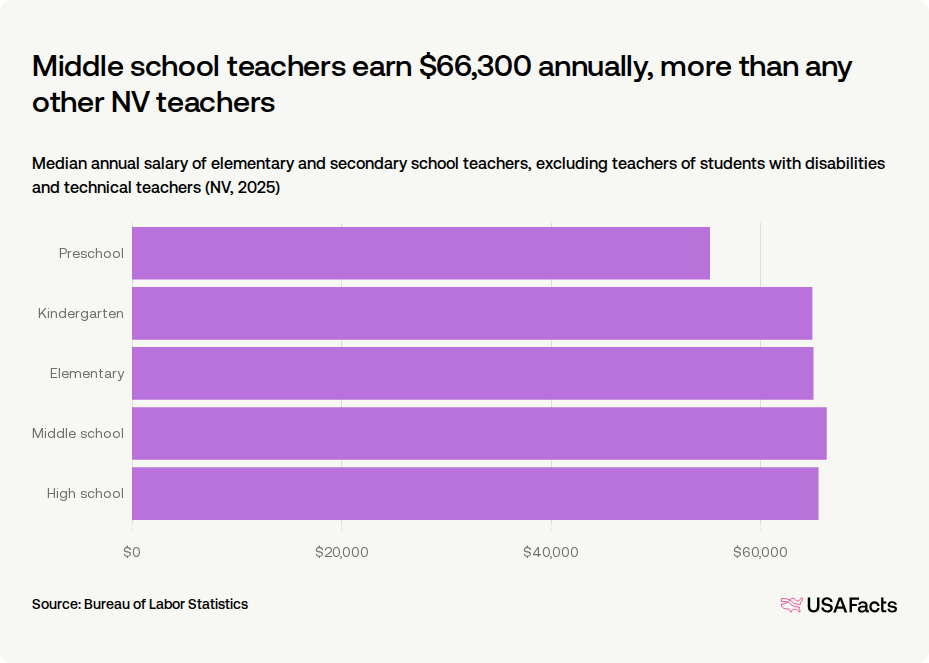
As of recent data, the average teacher salary in Nevada often falls within a range that reflects the national averages, though with notable variations. For the most up-to-date figures, consulting the Nevada Department of Education or reputable salary aggregators is recommended. However, general trends indicate that entry-level teachers might begin their careers earning in the low to mid-$40,000s, while experienced educators with advanced degrees can command salaries well into the $60,000s, and in some cases, approaching or exceeding $70,000.
Impact of Location: Urban vs. Rural Compensation
The geographic location within Nevada significantly impacts a teacher’s earning potential, primarily driven by the cost of living and the district’s financial capacity.
Metropolitan Areas: Clark County and Washoe County
In major metropolitan areas like Clark County, which encompasses Las Vegas, and Washoe County, home to Reno, teacher salaries tend to be higher. These districts, serving large student populations, generally have more robust budgets derived from a broader tax base. The higher salaries are also a necessity to attract a larger pool of qualified candidates to densely populated areas where the cost of housing and daily living expenses are typically elevated. Teachers in these regions are more likely to find themselves on the higher end of the state’s salary scales.
For example, a teacher in the Clark County School District with 10 years of experience and a master’s degree might earn considerably more than a teacher with the same qualifications in a rural county.
Rural and Frontier Communities

Conversely, teachers in the more sparsely populated rural and frontier areas of Nevada may earn less in base salary. Districts in places like White Pine County or Pershing County often operate with tighter budgets. While the cost of living can be significantly lower in these communities, making the salary stretch further, the absolute dollar figures might be less attractive. However, these districts may offer additional benefits, such as housing stipends, student loan forgiveness programs, or a more close-knit community environment, which can be attractive to some educators.
The Role of Benefits and Additional Compensation
Beyond the base salary, it’s essential to consider the full compensation package for Nevada teachers. This typically includes a comprehensive benefits package, which can add significant value.
Health Insurance and Retirement Plans
Most Nevada school districts offer robust health insurance plans, covering medical, dental, and vision for teachers and often their dependents. The value of these benefits can be substantial, saving teachers thousands of dollars annually in premiums and out-of-pocket expenses. Furthermore, participation in state-sponsored retirement plans, such as the Public Employees’ Retirement System of Nevada (PERS) (PERS), provides a secure pathway to financial stability after a career in public service. Employer contributions to these retirement funds are a critical component of overall compensation.
Extracurricular and Supplemental Pay
Many teachers supplement their base salary by taking on additional responsibilities. Coaching sports teams, advising clubs, leading extracurricular activities, or teaching summer school programs often come with stipends that can add several thousand dollars to an educator’s annual income. These roles not only provide extra income but also allow teachers to engage with students in different capacities and develop new skills.
Factors Influencing Teacher Salaries Beyond the Schedule
While salary schedules are the primary determinant, several other factors can influence how much a teacher earns in Nevada. Understanding these nuances can provide a more complete picture of the teaching profession’s financial landscape.
Teacher Shortages and Incentives
In areas or subject areas facing critical teacher shortages, districts may offer specialized incentives to attract and retain educators. These can include signing bonuses, relocation assistance, or higher starting salaries for hard-to-staff positions, such as special education or certain STEM fields. For instance, a district struggling to find qualified math teachers might offer a signing bonus of several thousand dollars to new hires in that discipline, above and beyond the standard salary schedule.
Performance-Based Pay and Bonuses
While less common than experience- and education-based pay, some districts in Nevada have experimented with or implemented performance-based pay models. These systems aim to reward teachers for demonstrated student achievement or other measurable outcomes. However, the implementation and effectiveness of such programs are often subjects of debate within the education community. When performance bonuses are offered, they can represent an additional, albeit variable, source of income.
Subject Area Demand
Certain subject areas are in higher demand across the country, and Nevada is no exception. Teachers specializing in subjects like computer science, engineering, advanced mathematics, or bilingual education may find themselves in a more advantageous position when negotiating starting salaries or seeking positions in districts eager to fill these critical roles. The demand can sometimes translate into higher starting salaries or additional stipends.
The Cost of Living in Nevada and Teacher Salaries
A crucial element in evaluating teacher compensation is its relationship to the cost of living. While Nevada offers a diverse range of living expenses, from the glitz of Las Vegas to the more affordable landscapes of its rural areas, teacher salaries must be considered in this context.
Housing Affordability
Housing is often the largest expense for any individual or family. In areas with high demand and a thriving economy, such as the Las Vegas metropolitan area, housing prices and rents can be substantial. This makes it essential for teacher salaries in these regions to be competitive to ensure educators can afford to live in the communities they serve. Conversely, in more rural parts of Nevada, housing is generally more affordable, allowing teacher salaries to stretch further.
Daily Expenses and Purchasing Power
Beyond housing, everyday expenses like groceries, transportation, utilities, and childcare also factor into the overall cost of living. These costs can vary significantly across Nevada. While a salary might appear modest on paper, its purchasing power can be greater in areas with lower overall living expenses. For example, a teacher earning $50,000 in a rural county might have a comparable or even better quality of life than a teacher earning $60,000 in a high-cost urban center, depending on the specific economic conditions.
Economic Outlook and Its Influence
The broader economic health of Nevada also plays a role in teacher compensation. As the state’s economy, heavily influenced by tourism, gaming, and increasingly technology, grows or contracts, so too does its ability to fund public services, including education. Periods of economic prosperity can lead to increased state revenue, potentially allowing for salary increases and improved benefits for teachers. Conversely, economic downturns can put pressure on school budgets, potentially leading to salary freezes or cuts.
In conclusion, teacher salaries in Nevada are a multifaceted issue, influenced by a structured system of experience and education, district-level policies, geographic location, and the prevailing economic conditions. While the figures provide a quantitative measure, a qualitative understanding of the benefits, cost of living, and potential for supplemental income offers a more complete picture of the financial rewards of teaching in the Silver State. The dedication and hard work of Nevada’s educators are a cornerstone of its future, and understanding their compensation is vital to supporting and strengthening this essential profession.
LifeOutOfTheBox is a participant in the Amazon Services LLC Associates Program, an affiliate advertising program designed to provide a means for sites to earn advertising fees by advertising and linking to Amazon.com. Amazon, the Amazon logo, AmazonSupply, and the AmazonSupply logo are trademarks of Amazon.com, Inc. or its affiliates. As an Amazon Associate we earn affiliate commissions from qualifying purchases.