
California, a state synonymous with dreams, innovation, and unparalleled natural beauty, beckons millions of travelers each year. From the sun-drenched beaches of San Diego to the majestic redwoods of the north, and from the bustling streets of Los Angeles to the serene vineyards of Napa Valley, the Golden State offers an endless array of experiences. For any discerning traveler planning an immersive journey, understanding the practicalities of communication within this vast and diverse state is paramount. While modern mobile phones have simplified much of our daily interactions, knowing the area codes of California remains a crucial piece of information for seamless travel planning, local engagement, and even emergency preparedness. It’s not a single area code that defines California; rather, it’s a intricate tapestry of numbers, each corresponding to a specific geographic region, reflecting the state’s immense size, population, and vibrant economic activity. Delving into California’s area code system offers not just a logistical advantage but also a deeper appreciation for its regional identities and historical growth.

Navigating the Golden State: Why Area Codes Matter for Travelers
For visitors to California, area codes serve as more than just prefixes for phone numbers; they are signposts that help identify geographical locations and facilitate efficient communication. Whether you’re booking a stay at a boutique hotel in Santa Barbara, reserving a table at a renowned restaurant in San Francisco, arranging transportation, or needing to contact a local service, understanding the relevant area code is essential. In an era where 10-digit dialing is standard across many parts of the United States, including virtually all of California, knowing the appropriate area code ensures your calls connect.
Beyond mere connectivity, area codes offer insights into local identity. A local business might proudly display its area code as part of its branding, instantly signaling its regional roots. For travelers, this can be an subtle cue to the local nature of a service or establishment, enhancing the authentic travel experience. Moreover, in emergencies or when seeking local assistance, quickly identifying the correct local number, including its area code, can save precious time. For those using prepaid local SIM cards or making calls from landlines, this knowledge becomes even more critical, circumventing potential dialing errors or confusion.
A Mosaic of Numbers: California’s Diverse Area Code Landscape
California’s vast geographical expanse and population density necessitated the implementation of numerous area codes over the decades. What began with a few primary codes has evolved into a complex network of over 30 distinct area codes, covering every corner of the state. These codes are meticulously assigned to ensure sufficient phone number availability for residents and businesses alike, reflecting the state’s continuous growth.
Southern California Hubs: Los Angeles, San Diego, and Beyond
Southern California is a bustling region known for its sprawling cities, entertainment industry, and diverse cultural landscapes. The density of population centers like Los Angeles, Orange County, and San Diego has led to a concentration of area codes.
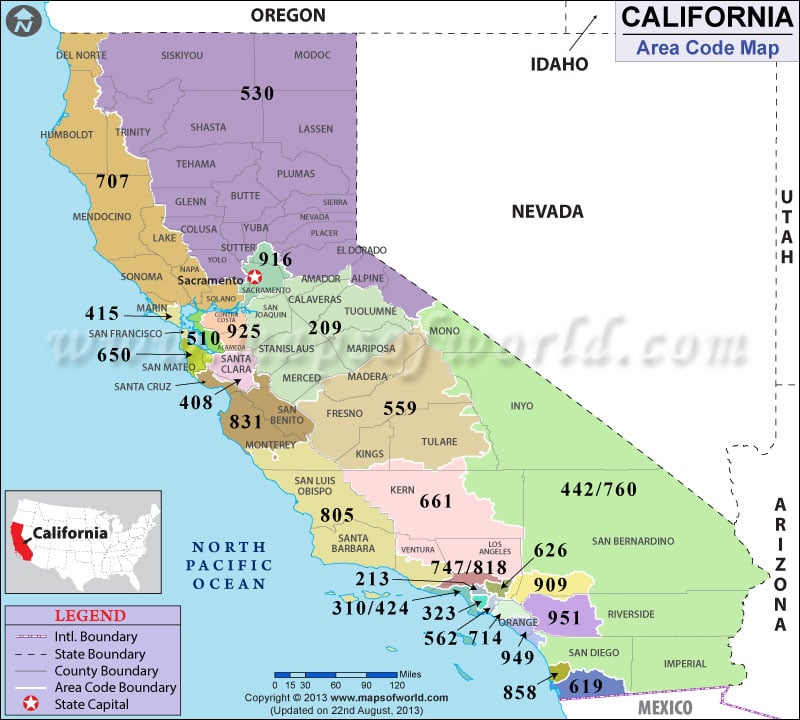
- 213/323: These historic codes primarily cover downtown Los Angeles and the immediately surrounding central areas, including neighborhoods like Hollywood and East Los Angeles. The 323 overlay was introduced to meet increasing demand.
- 310/424: Serving the affluent Westside and South Bay regions of Los Angeles, encompassing cities like Santa Monica, Beverly Hills, and Long Beach, these codes are common for travelers frequenting coastal areas and upscale districts. The 424 is an overlay for 310.
- 626: East and Northeast Los Angeles County, including cities like Pasadena and Alhambra, use this area code.
- 818/747: The San Fernando Valley is covered by these codes, crucial for reaching attractions like Universal Studios and various businesses in the valley. The 747 is an overlay for 818.
- 562: This code serves a strip stretching from Southeast Los Angeles County into parts of Orange County, including Long Beach and Downey.
- 714/657: Primarily covering central and northern Orange County, these codes are essential for anyone visiting destinations like Disneyland in Anaheim or the vibrant communities of Fullerton. The 657 is an overlay.
- 949/326: Southern Orange County and parts of Laguna Beach and Newport Beach fall under these codes. The 326 is an overlay.
- 909/840: East Los Angeles County and parts of the Inland Empire, including Riverside and San Bernardino, use these codes. The 840 is an overlay.
- 951: This code specifically covers much of the Riverside County portion of the Inland Empire.
- 760/442: Stretching across a vast desert and mountain region, this code covers areas like Palm Springs, the Mojave Desert, and the Death Valley National Park region, extending north along the Eastern Sierra. The 442 is an overlay.
- 619/858/764: San Diego County is primarily served by these codes. 619 covers the central and southern parts of the city, while 858 covers the northern parts and coastal communities like La Jolla. 764 is a new overlay for the region.
Northern California Icons: The San Francisco Bay Area and Wine Country
Northern California is renowned for its technological innovation, scenic beauty, and world-class wine regions. The San Francisco Bay Area is another densely populated corridor with multiple area codes.
- 415/628: The city of San Francisco and Marin County are covered by these codes, iconic for reaching landmarks like the Golden Gate Bridge and the tech hubs within the city. The 628 is an overlay.
- 510/341: The East Bay, encompassing cities like Oakland, Berkeley, and Fremont, uses these codes. The 341 is an overlay.
- 650: This code covers the San Francisco Peninsula, extending south to include significant portions of Silicon Valley, with cities like Palo Alto and Redwood City.
- 408/669: The South Bay, including San Jose (the capital of Silicon Valley) and surrounding areas, relies on these codes. The 669 is an overlay.
- 707: This extensive code covers a large swath of Northern California north of the San Francisco Bay Area, including the famous Napa Valley and Sonoma County wine regions, as well as coastal areas up to the Redwood Empire.
- 925: The East Bay’s inland communities, often referred to as the “Tri-Valley” area, including Walnut Creek, Concord, and Livermore, use this code.
Central California and Beyond: Valleys, Mountains, and Coasts
Central California offers a mix of agricultural heartlands, national parks, and dramatic coastlines, each with its own set of area codes.
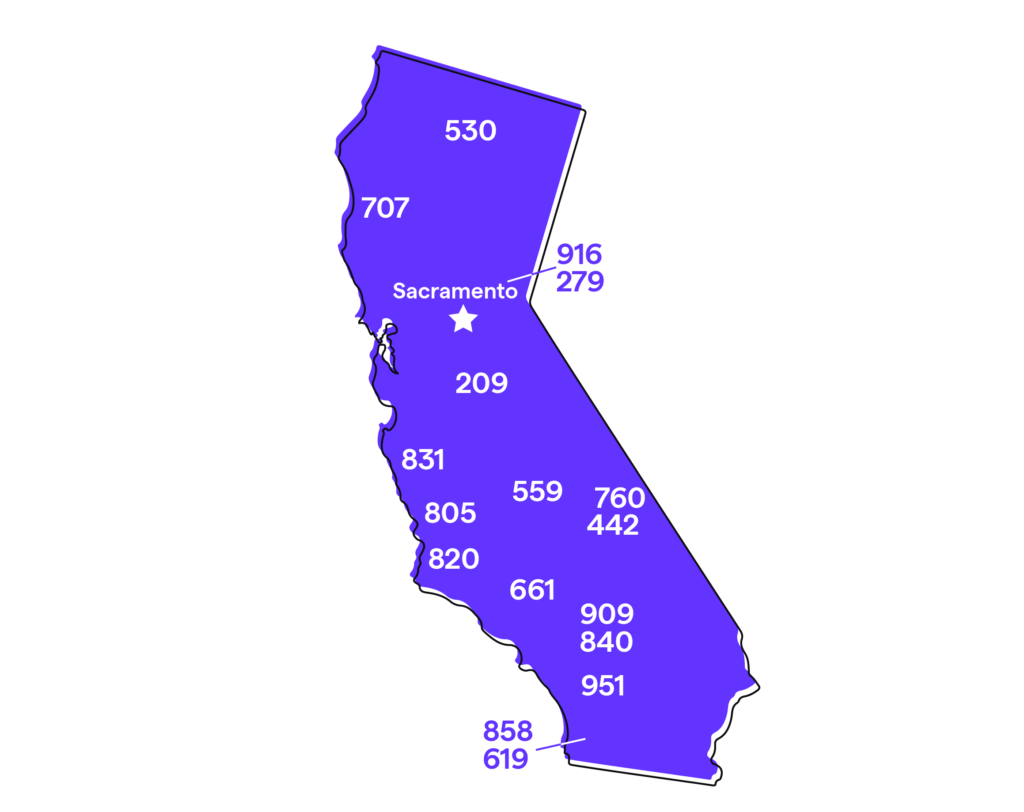
- 209: This code covers the central part of the state, including the San Joaquin Valley cities like Stockton and Modesto, and extends into the Sierra Nevada foothills, serving as a gateway to Yosemite National Park.
- 559: Further south in the San Joaquin Valley, cities like Fresno and Visalia use this area code.
- 661: This code covers much of Kern County, including Bakersfield, and also portions of the northern Los Angeles County desert cities like Palmdale.
- 805/820: Along the Central Coast, from Santa Barbara north through San Luis Obispo and Ventura counties, these codes are used. They are crucial for travelers exploring the scenic Highway 1 route and destinations like Big Sur. The 820 is an overlay.
- 530: A very large geographical area in Northern California, encompassing the state capital Sacramento, Redding, Chico, and the popular resort area of Lake Tahoe and the Sierra Nevada mountains, relies on this code.
Historical Evolution and Modern Dialing: Understanding California’s Phone System
California’s area code system has undergone significant transformations since its inception. Initially, the state was divided into just a few large area codes, such as 213 for Southern California and 415 for Northern California. As the population boomed, especially after World War II and with the rise of technology and urban centers, demand for phone numbers surged. This led to a series of “splits,” where existing area codes were divided into smaller geographical regions, each assigned a new code. For example, 213 was split to create 714, 805, and later 310, 562, and others.
The Rise of Overlays: Accommodating Growth
More recently, instead of geographical splits, regulatory bodies began implementing “overlay” area codes. An overlay means that a new area code is introduced within the same geographical region as an existing one. For instance, the 424 code was overlaid onto the 310 region. This approach avoids changing existing numbers but requires all callers within and into the overlay region to dial all ten digits (area code + 7-digit number) even for local calls. This system is now prevalent across most of California to ensure a continuous supply of phone numbers without further fragmenting geographical areas.
Essential Dialing Practices for Visitors
For travelers, the most important takeaway is that 10-digit dialing is virtually mandatory for all calls within and to California. This means always including the three-digit area code, followed by the seven-digit local number. Even if you are calling a number within the same area code you are currently in, you must dial all ten digits. Failing to do so will result in an error message or a failed call. This standard simplifies the process by removing the guesswork of whether a call is “local” or “long-distance” within the state’s complex area code map.
For international visitors, remember to first dial your country’s international access code (e.g., 00 from Europe, 011 from North America), followed by the United States country code (1), then the 10-digit California number.
Beyond the Numbers: Practical Travel Applications
Understanding California’s area codes offers practical advantages that enhance the travel experience, moving beyond mere connectivity to strategic planning.
Planning Your Itinerary: Connecting with Local Services
When meticulously planning your trip, area codes become invaluable. Imagine you’re organizing a guided tour of Yosemite National Park. Knowing that most services in the park and surrounding areas fall under the 209 or 559 area codes helps you verify contact information for tour operators, lodges, or local rangers. If you’re looking for unique dining experiences in San Jose, quickly recognizing numbers beginning with 408 or 669 confirms you’re contacting businesses truly embedded in the Silicon Valley heartland.
This knowledge also extends to transportation. Whether you need to book a shuttle from Los Angeles International Airport (likely using 310/424 numbers) or arrange a car service for a wine-tasting tour in Sonoma County (707), having a mental map of area codes streamlines your efforts and minimizes errors. For travelers aiming to experience various regions, such as the deserts of Joshua Tree National Park (760/442) and the vibrant city life of Sacramento (530), distinguishing between these codes helps organize their contact lists efficiently.
Emergency Preparedness and Staying Connected
While 911 is the universal emergency number throughout the United States, knowing local non-emergency numbers, which typically include an area code, can be critical for less urgent situations, such as contacting local police departments for non-emergency issues, utility companies, or roadside assistance services. When traveling, having this context of regional communication can be a subtle but significant layer of preparedness.
Furthermore, for business travelers or those with family and friends across the state, understanding the various area codes helps maintain clear and effective communication. It provides a geographical context to contacts, making it easier to manage a diverse network of connections. Even with the prevalence of mobile numbers that can travel across area codes, landlines and business numbers remain tied to their geographic area codes, making this information continuously relevant for local engagement and service access. In essence, while seemingly just a set of numbers, California’s area codes are a fundamental component of navigating and experiencing the state fully and efficiently.
LifeOutOfTheBox is a participant in the Amazon Services LLC Associates Program, an affiliate advertising program designed to provide a means for sites to earn advertising fees by advertising and linking to Amazon.com. Amazon, the Amazon logo, AmazonSupply, and the AmazonSupply logo are trademarks of Amazon.com, Inc. or its affiliates. As an Amazon Associate we earn affiliate commissions from qualifying purchases.