
Probate, the legal process of validating a deceased person’s will and administering their estate, is often viewed with apprehension, particularly in a state as complex and populous as California. For many, the specter of high costs, lengthy delays, and intricate legal procedures can be daunting, adding to the burden of grief. Understanding the financial implications of probate in California is crucial for anyone involved in estate planning or for those navigating the aftermath of a loved one’s passing. This comprehensive guide will demystify the costs associated with probate, providing insight into the various fees, timelines, and potential strategies to minimize expenses, all while upholding the highest standards of financial prudence.

Understanding California Probate Fees
The most significant and often surprising aspect of probate costs in California relates to statutory fees. These fees are not arbitrary; they are set by the California Probate Code, specifically sections 10810 and 10811, and apply to both the personal representative (executor or administrator) of the estate and their attorney. The calculation of these fees is based on the gross value of the probate estate, not the net value after debts, which can significantly inflate the perceived cost.
Statutory Fees for Personal Representatives and Attorneys
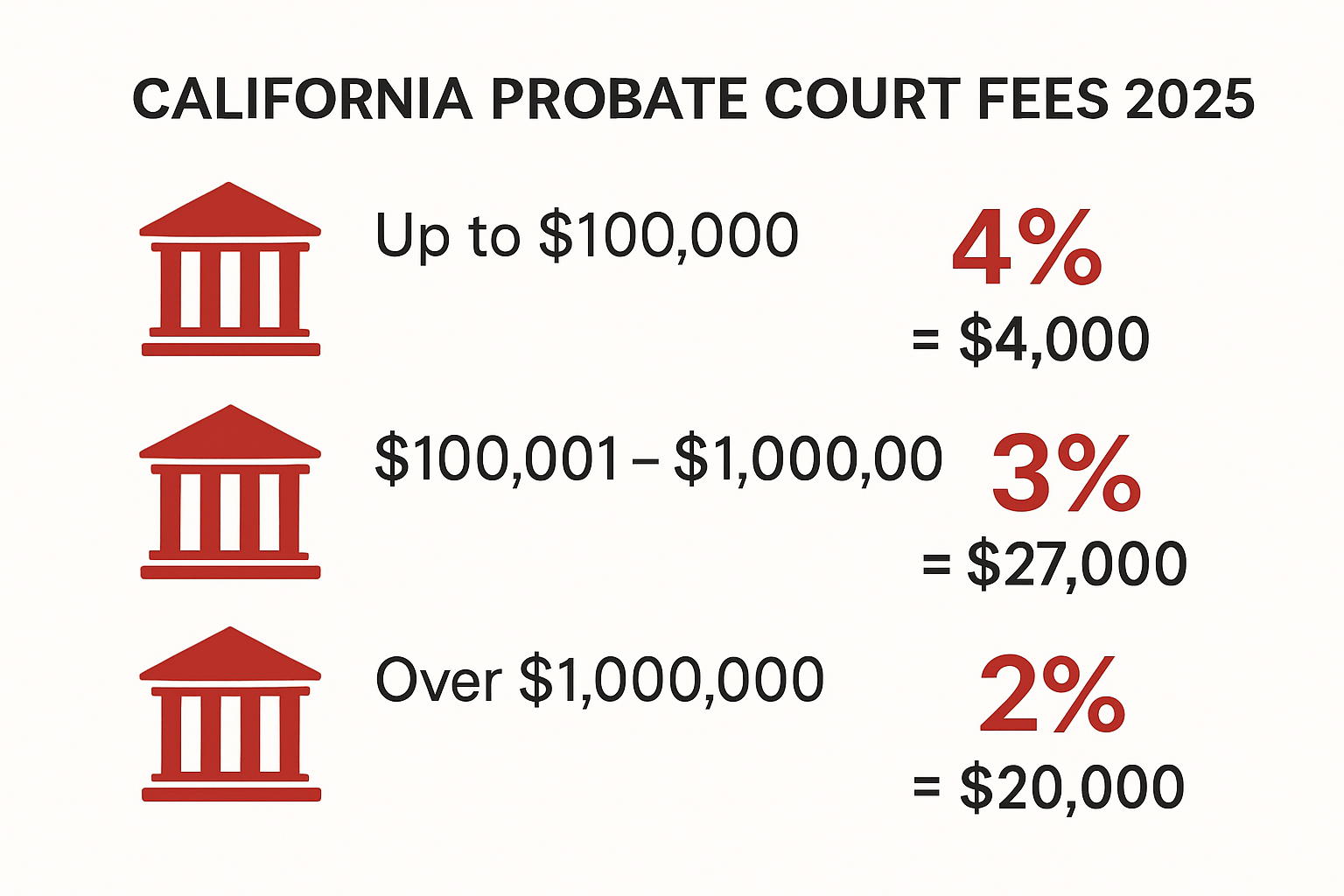
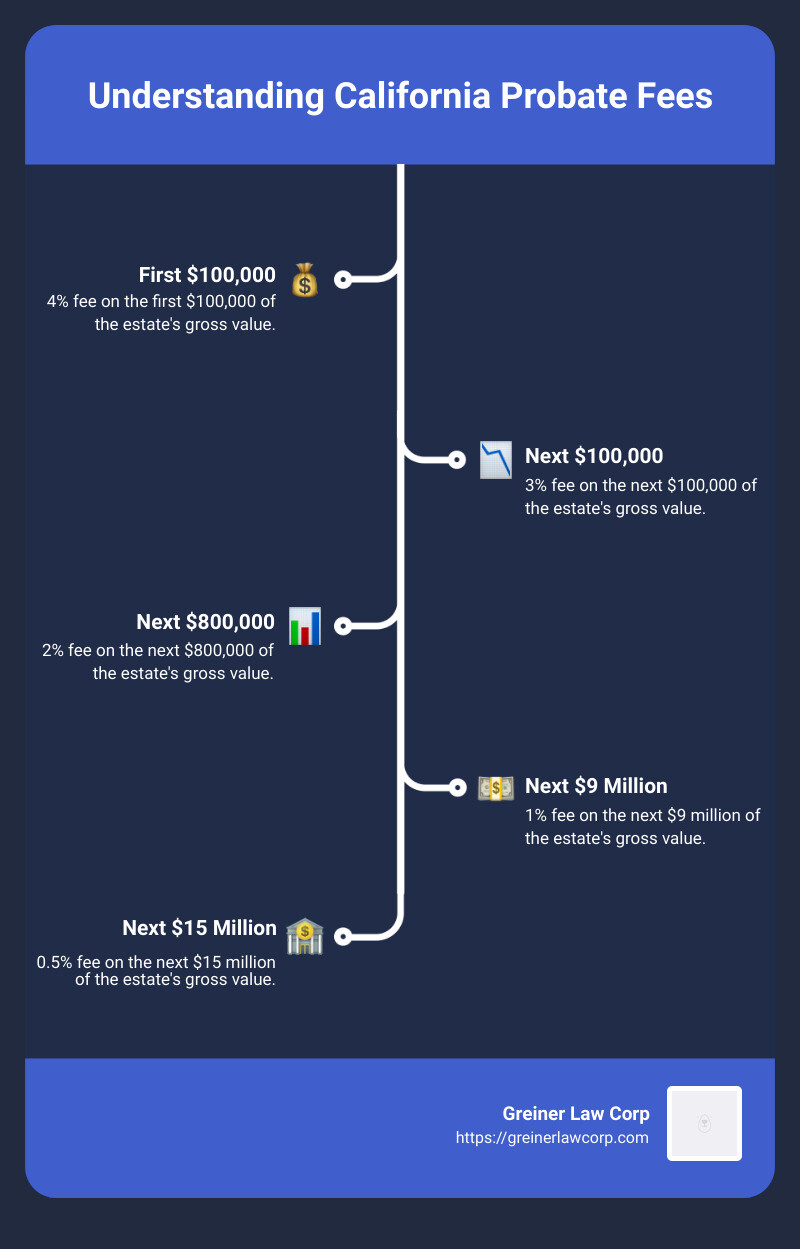
The statutory fee schedule is uniform across California’s Superior Courts and is calculated as follows:
- 4% on the first $100,000 of the estate’s gross value
- 3% on the next $100,000
- 2% on the next $800,000
- 1% on the next $9,000,000
- 0.5% on the next $15,000,000
- A reasonable amount determined by the court for estates exceeding $25,000,000
It is critical to note that both the personal representative and their attorney are entitled to these exact same statutory fees. This means that for an estate with a gross value of, say, $500,000, the statutory fees alone would total $13,000 for the personal representative and another $13,000 for the attorney, amounting to $26,000 before any other costs are considered. This can be a substantial sum, often a shock to beneficiaries who might anticipate a more streamlined or less expensive process. The reasoning behind compensating both parties is that the personal representative undertakes significant fiduciary duties and administrative tasks, while the attorney provides essential legal guidance to navigate the complex probate laws.
What is Included in the Gross Estate Value?
Defining the “gross estate value” for probate purposes in California is crucial for accurate fee calculation. It generally includes:
- All real property (e.g., houses, land) solely owned by the decedent or held as tenants in common.
- All personal property (e.g., bank accounts, investments, vehicles, tangible personal property) solely owned by the decedent.
- Any assets where the decedent was a beneficiary but not the sole owner, such as a percentage of a partnership interest.
It does not include:
- Assets held in a living trust.
- Assets held in joint tenancy with a right of survivorship (e.g., a jointly owned bank account or property with a surviving spouse).
- Assets with designated beneficiaries, such as life insurance policies, retirement accounts (401k, IRAs), or Payable-on-Death (POD) bank accounts.
- Assets that pass directly to a surviving spouse through spousal property petition.
Understanding these distinctions can significantly impact the probate costs, as assets that bypass probate will not be included in the gross estate value for statutory fee calculation. Strategic planning during one’s lifetime, such as utilizing trusts or proper beneficiary designations, can therefore drastically reduce potential probate expenses.
Additional Costs Beyond Statutory Fees
While statutory fees represent a significant portion of probate expenses, they are by no means the only costs involved. Several other expenses inevitably arise during the probate process, adding to the overall financial burden on the estate.
Court Filing Fees and Publication Costs
Every probate case begins with filing a petition with the Superior Court in the county where the deceased resided. This initial filing incurs a court fee, which can vary slightly but is generally consistent across California courts. As of current guidelines, these fees are typically several hundred dollars. Additionally, state law requires that notice of the probate proceeding be published in a local newspaper of general circulation. This publication informs potential creditors and beneficiaries of the probate action, allowing them to make claims or assert their rights. The cost of publication can range from $200 to $1,000, depending on the newspaper and its publication rates, but is a mandatory expense.
Appraisal Fees
The probate process often requires an independent appraisal of certain assets to determine their fair market value as of the date of death. This is particularly common for real estate, business interests, and valuable personal property. A court-appointed referee, known as a probate referee, performs these appraisals. The fee for the probate referee is typically 0.1% (one-tenth of one percent) of the appraised value of the assets, with a minimum fee often around $75 to $150, but it can reach a few thousand dollars for larger estates with multiple assets. Accurate appraisals are vital for tax purposes and for equitable distribution to beneficiaries.
Miscellaneous Administrative Costs
Throughout the probate administration, various other expenses may arise:
- Bond Premium: If the will does not waive bond or if there is no will, the personal representative may be required to secure a surety bond. This bond protects the estate and its beneficiaries from potential mismanagement by the personal representative. The premium for such a bond can be an annual cost, typically ranging from a few hundred to several thousand dollars, depending on the estate’s value and the personal representative’s creditworthiness.
- Accountant and Tax Preparation Fees: Estates often have tax obligations, including preparing the decedent’s final income tax return (Form 1040) and potentially an estate income tax return (Form 1041). Depending on the complexity of the estate and its tax situation, hiring a professional accountant or tax preparer can be necessary, incurring fees that range from a few hundred to several thousand dollars.
- Property Maintenance and Sales Costs: If the estate includes real property, expenses for maintenance, repairs, insurance, utilities, and potentially real estate agent commissions and closing costs for selling the property will be incurred. These can be substantial, especially if a property needs significant work or is held for an extended period.
- Litigation Costs: In some cases, disputes among beneficiaries, challenges to the will, or creditor claims can lead to litigation. Such legal battles can dramatically increase probate costs, involving additional attorney fees and court expenses that far exceed the statutory fees.
Total Estimated Probate Costs and Timeline
Considering all these factors, the total cost of probate in California can be substantial. For an estate with a gross value of $750,000, for example, the statutory fees for the attorney and personal representative would each be $18,000, totaling $36,000. Add to that court fees, publication costs, appraisal fees (e.g., $750), a potential bond ($1,000 annually), and miscellaneous administrative expenses ($1,000 – $5,000), the total could easily approach $40,000 to $45,000 or more. This represents approximately 5% to 6% of the gross estate value, a figure that many find surprisingly high.
Beyond the financial costs, the timeline for probate in California is another significant concern. A straightforward probate case, without complications or disputes, typically takes 9 to 18 months to complete. However, cases with property sales, tax issues, creditor disputes, or beneficiary disagreements can easily extend for two to three years, or even longer. This extended timeline not only delays the distribution of assets to beneficiaries but also prolongs the period during which the estate incurs ongoing administrative expenses. The delays can be particularly challenging for beneficiaries who may be relying on their inheritance for financial stability or planning.
Strategies for Reducing Probate Costs and Delays
Given the significant costs and lengthy timelines associated with probate in California, many individuals seek strategies to minimize or entirely avoid the process. Proactive estate planning is the most effective approach to safeguard assets and ensure a more efficient transfer of wealth to heirs.
Utilizing a Living Trust
The most popular and effective method to avoid probate in California is establishing a Revocable Living Trust. When assets are properly transferred and titled into a living trust during the grantor’s lifetime, these assets bypass the probate process entirely upon death. Instead, a successor trustee (appointed by the grantor in the trust document) takes over management of the trust assets and distributes them according to the trust’s terms, typically in a matter of weeks or months, and without court intervention. This strategy eliminates statutory fees for the assets held in the trust, as well as many of the associated court and administrative costs. While there is an upfront cost to draft and fund a living trust, these expenses are often significantly less than the potential probate costs for a moderately sized estate.
Joint Tenancy and Beneficiary Designations
Other strategies to bypass probate include:
- Joint Tenancy with Right of Survivorship: When property (real estate or bank accounts) is held in joint tenancy, ownership automatically transfers to the surviving joint tenant(s) upon the death of one owner, outside of probate.
- Payable-on-Death (POD) or Transfer-on-Death (TOD) Designations: Bank accounts can be designated as POD, and investment accounts or vehicles can be designated as TOD, ensuring that the assets pass directly to the named beneficiary without probate.
- Life Insurance and Retirement Accounts: These assets inherently bypass probate when beneficiaries are properly named. It is crucial to review and update beneficiary designations periodically, especially after major life events such as marriage, divorce, or the birth of children.
- Small Estate Affidavit: For estates with a gross value of $184,500 or less (as of 2023, subject to inflation adjustments), California allows for a simplified transfer of assets using a Small Estate Affidavit. This expedited process avoids formal probate and significantly reduces costs and time, though certain types of property (like real estate over a specific value) may still require a more formal process.
The Role of an Experienced Estate Planning Attorney
While some individuals may attempt to navigate estate planning or probate themselves, the complexities of California law make it highly advisable to consult with an experienced estate planning or probate attorney. An attorney can help:
- Draft and fund a comprehensive living trust: Ensuring all assets are properly titled to maximize probate avoidance.
- Advise on appropriate beneficiary designations: Preventing common errors that can lead to unintended probate.
- Guide personal representatives through the probate process: Ensuring all legal requirements are met efficiently, minimizing delays and potential pitfalls.
- Resolve disputes: Acting as an impartial advisor or litigator to address conflicts that arise, protecting the estate’s integrity.
Investing in expert legal guidance upfront can save families tens of thousands of dollars and countless hours of stress down the line. It ensures that your estate plan aligns with your wishes, protects your beneficiaries, and minimizes the financial and emotional toll of the probate process.
In conclusion, the cost of probate in California extends far beyond statutory fees, encompassing court costs, appraisal fees, and various administrative expenses. While these costs can be substantial and the timeline lengthy, proactive estate planning through tools like living trusts and careful asset titling offers robust strategies to mitigate these burdens. Understanding these financial realities is the first step toward ensuring a smoother, more cost-effective transfer of your legacy to the next generation, reflecting thoughtful financial lifestyle planning.
LifeOutOfTheBox is a participant in the Amazon Services LLC Associates Program, an affiliate advertising program designed to provide a means for sites to earn advertising fees by advertising and linking to Amazon.com. Amazon, the Amazon logo, AmazonSupply, and the AmazonSupply logo are trademarks of Amazon.com, Inc. or its affiliates. As an Amazon Associate we earn affiliate commissions from qualifying purchases.