
Exploring the golden state of California by car offers unparalleled freedom, from the sun-drenched beaches of San Diego to the majestic redwoods of the north, and the bustling cityscapes of Los Angeles and San Francisco. However, the excitement of the open road can quickly turn sour with the flash of a police siren. A speeding ticket, especially for a first-time offense, can be a significant unexpected expense and a hassle for any traveler. Understanding the potential costs and processes involved is crucial for navigating California’s roadways with confidence, ensuring your trip remains memorable for all the right reasons.

Understanding California’s Traffic Fines
The immediate question for anyone pulled over for speeding in California is, “How much will this cost me?” The answer is rarely straightforward, as the final amount extends far beyond the base fine. What might appear as a relatively low base fine on the citation quickly escalates once additional fees, surcharges, and penalties are applied. For travelers, this complex structure can be particularly confusing, adding to the stress of an unfamiliar legal system.
The Base Fine vs. Total Cost
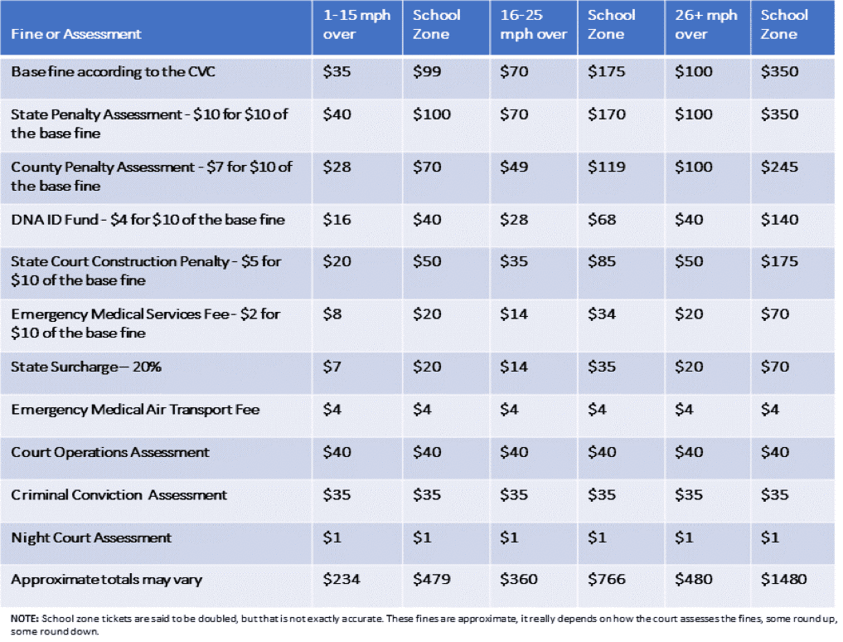
A speeding ticket in California starts with a base fine, which is determined by how much you exceeded the speed limit. These base fines are generally structured as follows:
- 1-15 mph over the limit: Around $35
- 16-25 mph over the limit: Around $70
- 26+ mph over the limit: Around $100
However, these figures are just the tip of the iceberg. California adds numerous “assessments” to these base fines. These include:
- State Penalty Assessments: An additional $4 for every $10 of the base fine.
- County Penalty Assessments: An additional $7 for every $10 of the base fine.
- Court Construction Fee: A flat fee, usually $5.
- Court Operations Assessment: A flat fee, often $40.
- Emergency Medical Services (EMS) Fund: An additional $4 for every $10 of the base fine.
- Traffic Violator School Fee: An administrative fee, typically around $52, if you opt for traffic school.
When all these assessments, surcharges, and fees are tallied, a ticket with a $35 base fine can easily skyrocket to well over $230. A ticket for going 16-25 mph over, with a base fine of $70, can exceed $360. This exponential increase means that a seemingly minor infraction can quickly become a significant financial burden, especially for travelers who may not have budgeted for such an expense.
Factors Influencing the Fine
Several factors can further influence the final cost of a speeding ticket in California.
- Location of the Offense: Speeding in a designated construction zone or a safety zone (like a school crossing) carries significantly higher penalties. These zones often have double fines to deter dangerous driving in sensitive areas. For instance, a ticket that might cost $230 elsewhere could double to over $460 in a construction zone.
- Prior Driving Record: While this article focuses on first-time offenders, it’s worth noting that repeat offenses lead to progressively harsher penalties.
- Manner of Driving: While not strictly about the fine amount, egregious speeding (e.g., 100 mph or more) can escalate the charge from an infraction to a misdemeanor, involving much higher fines, mandatory court appearances, and potential license suspension. Even for out-of-state drivers, this can have serious repercussions for their driving privileges back home.
Navigating the Process: What to Do After a Ticket
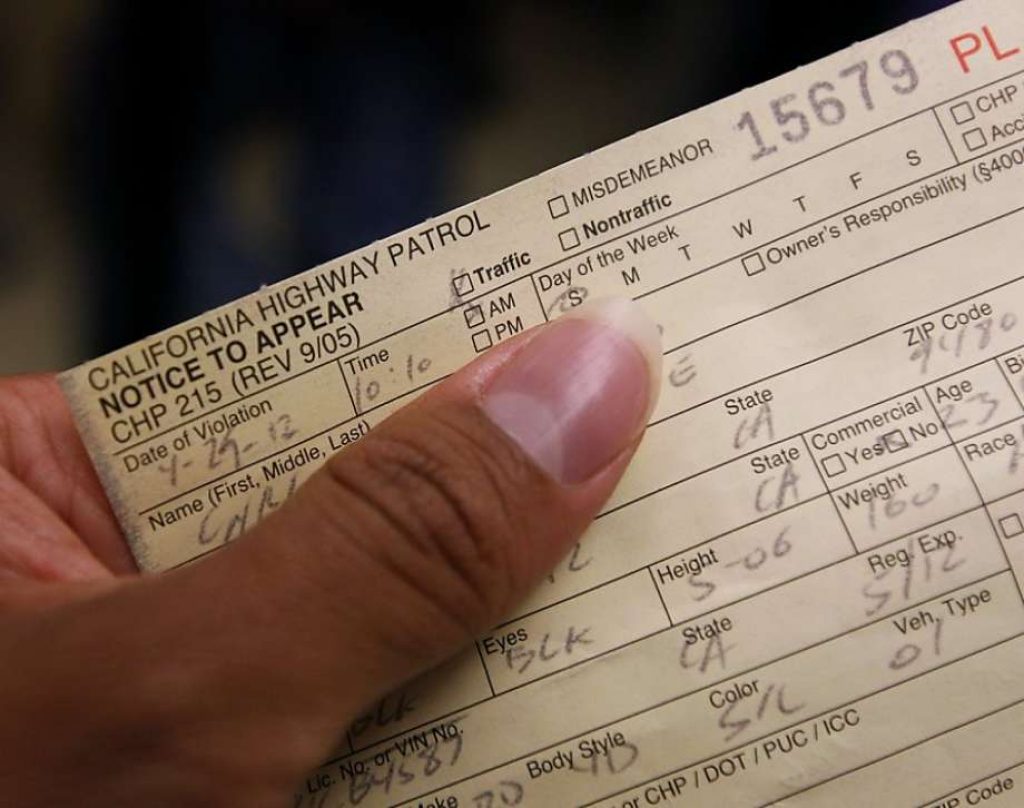
Receiving a speeding ticket while traveling in California can be disorienting. However, understanding the post-citation process is key to managing the situation effectively. The citation will outline your options and a deadline for your response, typically referred to as the “due date” or “appearance date.”
Options for Response: Pay, Traffic School, or Contest
You generally have three primary ways to respond to a first-time speeding ticket:
- Pay the Fine (Forfeit Bail): This is the simplest and most common option. By paying the total bail amount (which includes the base fine and all assessments), you admit guilt and close the case. However, this also means a point will be added to your driving record, which can impact your insurance premiums. For out-of-state drivers, this point is usually reported to their home state’s Department of Motor Vehicles (DMV).
- Attend Traffic School: If eligible, opting for traffic school allows you to keep the violation off your public driving record and prevent points from accumulating. This is often the preferred choice for first-time offenders looking to mitigate long-term impacts.
- Contest the Ticket (Go to Court): You have the right to plead not guilty and request a trial. This involves appearing before a judge to present your case, often challenging the officer’s testimony or the calibration of their speed-measuring device. While it offers a chance for dismissal, it also requires time, preparation, and potentially legal fees, which can be particularly challenging for travelers who may have already left California.
Traffic School Benefits and Eligibility
For many first-time speeding ticket recipients, traffic school is the most appealing option due to its ability to prevent the violation from appearing on their public driving record.
- Eligibility: Generally, you are eligible for traffic school if:
- You have a valid driver’s license.
- The offense was an infraction (not a misdemeanor or felony).
- The offense occurred in a non-commercial vehicle.
- You haven’t attended traffic school for a prior violation within the last 18 months.
- The ticket does not involve alcohol or drugs.
- You were not speeding excessively (e.g., 25 mph or more over the limit).
- Process: If eligible, you must pay the full bail amount plus an administrative fee (typically around $52) to the court. You then enroll in and complete an approved traffic violator school course, usually an 8-hour program that can be completed online or in-person. Once you successfully complete the course, the school reports your completion to the DMV, and the court will mask the point from your public record. This prevents the point from affecting your insurance rates.
For travelers, the availability of online traffic school courses makes this a highly convenient option, allowing them to fulfill the requirement without having to return to California.
Long-Term Consequences Beyond the Dollar Amount
While the immediate financial hit of a speeding ticket is significant, the long-term consequences can be even more impactful, particularly concerning your driving record and insurance premiums. These often overlooked aspects underscore why understanding the full scope of a ticket is essential.
Insurance Premium Hikes
One of the most common and costly long-term effects of a speeding ticket is the increase in auto insurance premiums. When a speeding violation appears on your driving record, insurance companies view you as a higher risk. They may raise your rates for several years, often for three to five years, depending on your insurer and specific policy. The amount of the increase varies widely but can range from 10% to 30% or even more.
For a first-time offender, the ability to attend traffic school and prevent the point from appearing on their public record is invaluable precisely because it helps avoid these premium hikes. If you simply pay the fine without attending traffic school, your insurance company will likely be notified, leading to increased costs that far outweigh the initial ticket amount over time. Even for out-of-state drivers, their home insurance company can access their California driving record and adjust rates accordingly.
DMV Point System
California operates on a point system managed by the DMV. Most moving violations, including speeding, result in one or more points being added to your driving record.
- One-point violation: Typically for infractions like basic speeding, unsafe lane changes, or failing to stop.
- Two-point violation: Reserved for more serious offenses, such as reckless driving or hit-and-run.
Accumulating too many points within a specific timeframe can lead to severe penalties, including:
- 4 points in 12 months
- 6 points in 24 months
- 8 points in 36 months
Reaching these thresholds can result in your driver’s license being suspended or revoked. While a first-time speeding ticket (a one-point violation) isn’t likely to cause an immediate suspension, it starts the clock and makes any subsequent violations much more impactful. For out-of-state drivers, these points are generally reported to their home state’s DMV, which may have its own point system and corresponding penalties. Understanding how a California ticket interacts with your home state’s rules is crucial for avoiding unexpected consequences.
Tips for Avoiding a Speeding Ticket While Traveling in California
Prevention is always better than cure, especially when it comes to traffic tickets. By adopting mindful driving habits, travelers can significantly reduce their chances of receiving a speeding ticket and ensure a smoother, more enjoyable journey through California.
Awareness of Speed Limits
California speed limits can vary significantly and sometimes seemingly arbitrarily.
- Basic Speed Law: Always drive at a speed that is safe for current road conditions, regardless of the posted limit. This means slowing down in heavy traffic, bad weather, or through construction zones.
- Posted Limits: Pay close attention to speed limit signs. These can change frequently, especially when transitioning between urban and rural areas, or entering and exiting freeways.
- Unposted Limits: Be aware of default speed limits:
- 55 mph on two-lane undivided highways and for vehicles towing trailers.
- 25 mph in business or residential districts.
- 25 mph near schools when children are present.
- 15 mph in alleys and at railroad crossings without gates.
- Use Cruise Control: On long stretches of highway, cruise control can be an effective tool for maintaining a consistent speed and avoiding inadvertent speeding.
- Follow Traffic Flow (Responsibly): While it’s generally safer to drive with the flow of traffic, do not exceed the speed limit simply because others are doing so. Law enforcement often targets vehicles that stand out, either by going significantly faster or slower than surrounding cars.
Distracted Driving and Other Common Infractions
Beyond just speeding, other common driving infractions can attract police attention and potentially lead to a stop where speeding is then also observed.
- Distracted Driving: California has strict hands-free laws. Using a cell phone for talking or texting without a hands-free device is illegal and can result in significant fines. This is a primary reason drivers are pulled over.
- Lane Violations: Improper lane changes, failing to signal, or straddling lanes can draw unwanted attention.
- Tailgating: Following too closely is not only dangerous but can also be cited.
- Seatbelt Laws: Ensure all occupants are buckled up, as failing to do so can result in fines for each unbelted passenger.
By practicing defensive driving, maintaining situational awareness, and adhering to posted speed limits, travelers can protect their wallets and their peace of mind, allowing them to fully appreciate the stunning beauty and diverse attractions that California has to offer. A little caution on the road goes a long way in preventing an unexpected and costly interruption to your travel plans.
LifeOutOfTheBox is a participant in the Amazon Services LLC Associates Program, an affiliate advertising program designed to provide a means for sites to earn advertising fees by advertising and linking to Amazon.com. Amazon, the Amazon logo, AmazonSupply, and the AmazonSupply logo are trademarks of Amazon.com, Inc. or its affiliates. As an Amazon Associate we earn affiliate commissions from qualifying purchases.