
Embarking on a road trip through the vast and varied landscapes of Texas offers an unforgettable experience, from the vibrant cityscape of Dallas to the historic charm of San Antonio and the live music scene of Austin. Travelers often seek to maximize their time, eager to explore every landmark, indulge in local cuisine, and perhaps even stay in one of the state’s many unique resorts or boutique hotels. However, amidst the excitement of discovery, it’s crucial for both residents and visitors alike to be mindful of local traffic laws, especially speed limits. A speeding ticket can quickly transform a dream vacation or a routine business trip into a costly and frustrating ordeal, impacting not just your budget but potentially your future travel plans. Understanding the financial implications and legal consequences of a speeding ticket in Texas is essential for anyone hitting the open road in the Lone Star State. This guide aims to shed light on what you can expect if pulled over for speeding, helping you prepare and, ideally, avoid such an incident altogether.
The Immediate Financial Hit: Base Fines and Variability
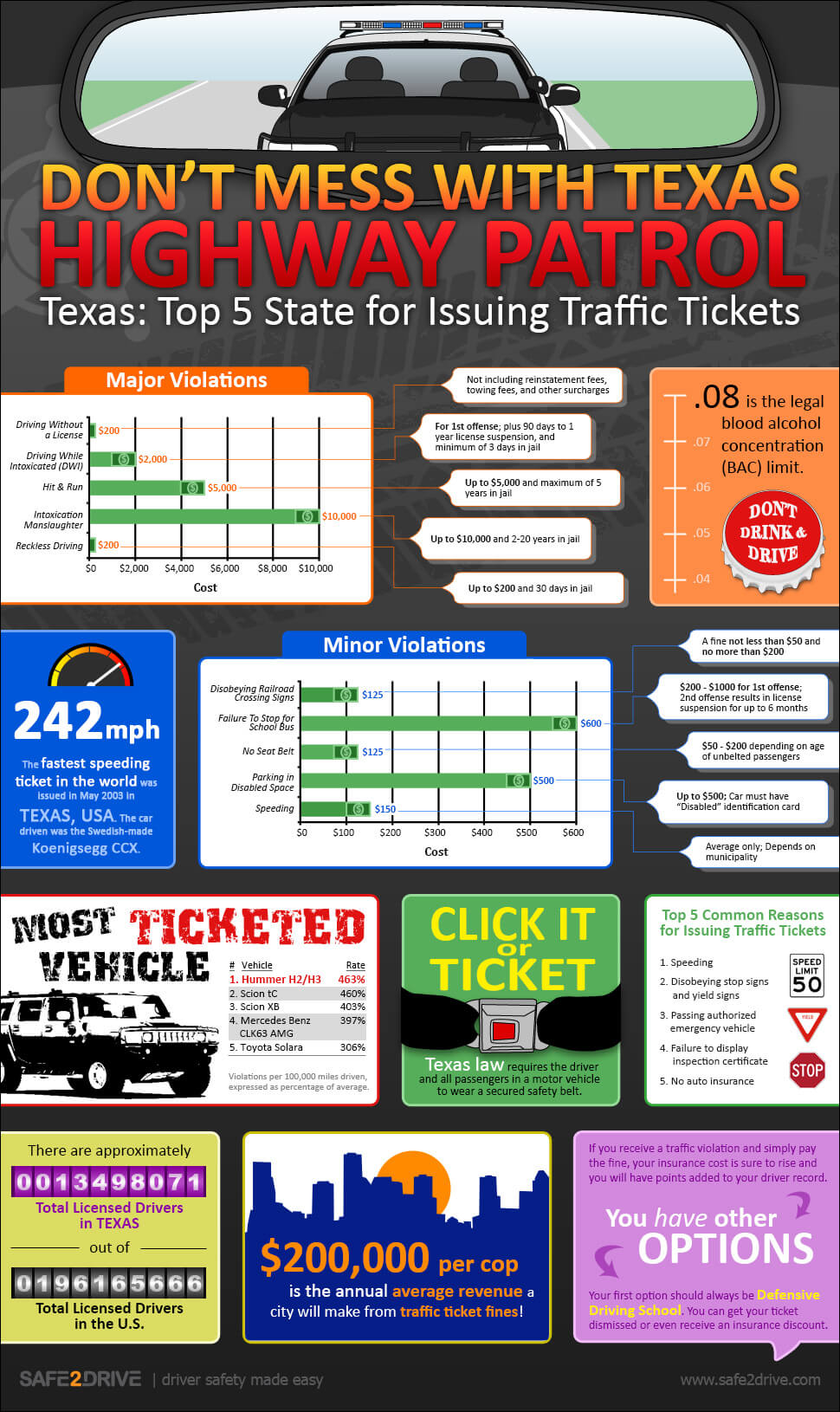
The question “How much is a speeding ticket in Texas?” doesn’t have a single, straightforward answer. Unlike some states with a fixed schedule for traffic violations, the cost of a speeding ticket in Texas can vary significantly based on a multitude of factors. The base fine is just the starting point, and it’s heavily influenced by how fast you were going, where you were caught, and which specific municipality or county issued the ticket.
Generally, for speeding up to 10 miles per hour over the limit, you might expect a base fine ranging from $130 to $170. As your speed increases, so does the penalty. For instance, exceeding the limit by 15-20 mph could see fines climb to $180-$230 or more. Going 25 mph or more over the posted speed limit often incurs fines well over $300, sometimes reaching into the $400-$500 range, depending on the jurisdiction. These figures are illustrative; actual costs can be higher or lower.
A critical factor in determining the base fine is the location of the offense. Speeding in a school zone or a construction zone carries significantly heftier penalties. These areas are designated for increased safety, and traffic enforcement is typically stringent. Fines in these zones can easily double, sometimes reaching $300-$500 for relatively minor infractions. For example, a violation that might cost $150 in a regular zone could be $300 or more in a school zone, plus additional court costs. This is particularly important for tourists navigating unfamiliar cities like Houston or Fort Worth, where school zones might not always be immediately apparent.
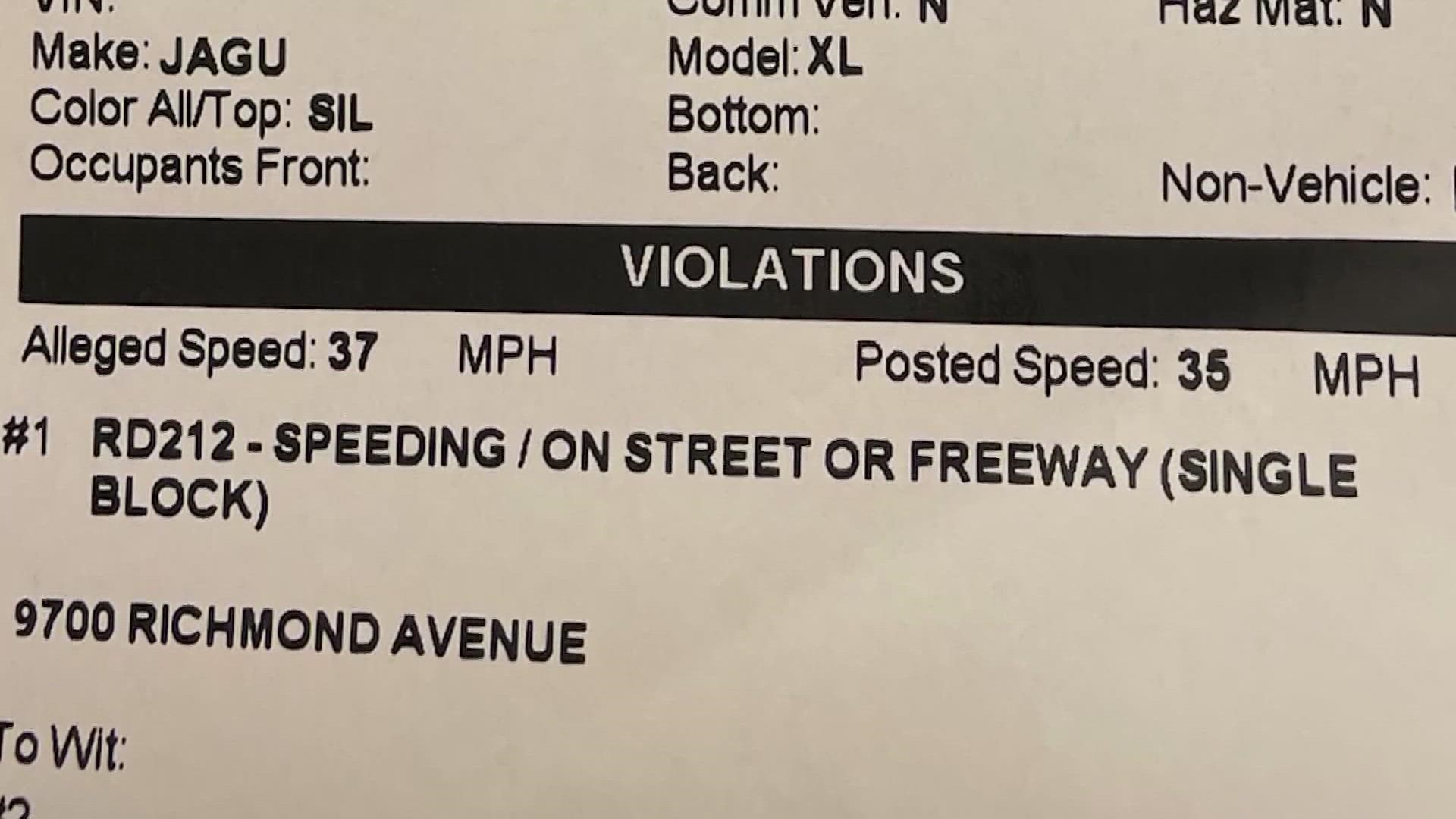
Furthermore, different counties and cities have their own fine schedules. A ticket issued in a small town along a rural highway might have a different cost structure than one issued by the municipal police department in El Paso or Corpus Christi. This variability underscores the importance of checking the specific citation you receive for details on the issuing agency and the stated fine amount. The exact amount will typically be printed on the ticket itself or can be found by contacting the relevant municipal court or Justice of the Peace court.
It’s also worth noting that judges have some discretion in setting fines, especially in cases where the defendant appears in court. While there are guidelines, the final amount can sometimes be influenced by circumstances presented to the court. However, for most standard speeding tickets, the fine schedule is fairly rigid.
Beyond the Fine: Hidden Costs and Long-Term Repercussions
While the initial fine on your speeding ticket is what catches the eye, it’s often just the tip of the iceberg. Several additional costs and long-term repercussions can significantly inflate the total expense of a Texas speeding ticket, impacting your lifestyle and travel budget far beyond the immediate penalty.
Administrative Fees and Court Costs
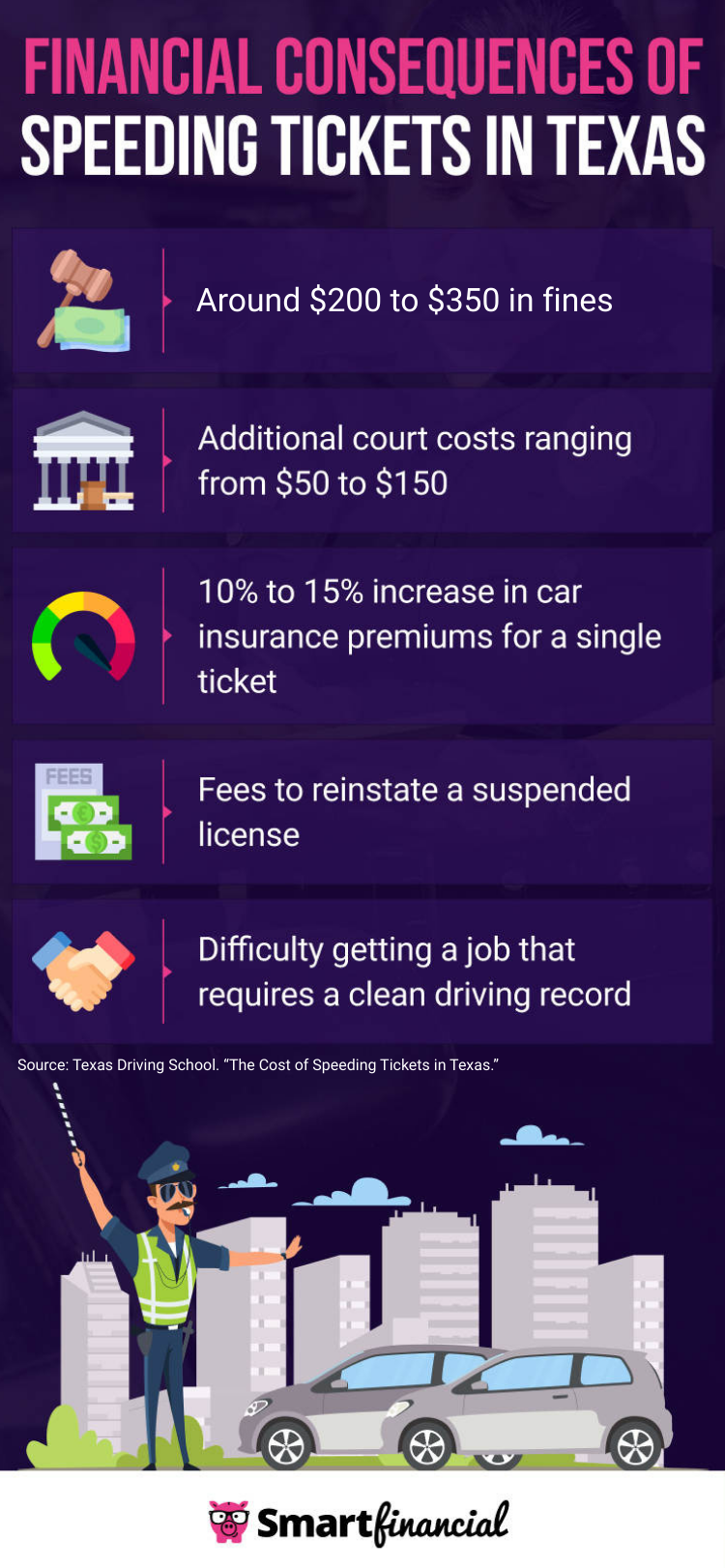
Almost every speeding ticket comes bundled with various administrative fees and court costs. These can include state court costs, administrative fees, technology fees, and fees for specific programs. These additional charges can easily add another $50 to $100 (or more) to your total bill, regardless of the base fine. For travelers on a tight budget, these unexpected expenses can quickly deplete funds allocated for attractions or accommodations. Imagine having to cut short a stay at a charming bed and breakfast in Fredericksburg or skip a planned excursion in Galveston because of an unforeseen speeding ticket.
Driver Responsibility Program Surcharges
Texas previously had a “Driver Responsibility Program” which imposed annual surcharges on drivers who accumulated a certain number of points on their driving record or were convicted of specific offenses. While this program was largely repealed in September 2019, its legacy and the concept of accumulating points still influence driving privileges and costs. Currently, convictions for moving violations like speeding can still lead to points being added to your driving record by the Texas Department of Public Safety (DPS). Accumulating too many points can result in a driver’s license suspension. For out-of-state drivers, this can have implications for their driving privileges in their home state due to interstate compacts.
Insurance Premium Hikes
Perhaps the most significant long-term financial impact of a speeding ticket is the potential increase in your automobile insurance premiums. Insurance companies often view speeding violations as an indicator of increased risk. A single speeding ticket can lead to a premium increase of 10% to 30% or even more, depending on your insurer, driving history, and the severity of the offense. These higher premiums can last for several years, meaning the true cost of a speeding ticket could easily run into hundreds or even thousands of dollars over time. This is a crucial consideration for anyone planning their budget, as ongoing insurance costs can impact overall financial health, potentially limiting future travel opportunities or the ability to splurge on luxury travel experiences.
Rental Car Implications
For tourists driving rental cars, a speeding ticket can introduce another layer of complexity. If you receive a ticket in a rental car, the fine will ultimately be your responsibility. However, the rental car company might charge an administrative fee for processing the ticket and forwarding your information to the authorities. Some companies may even pay the fine on your behalf and then charge your credit card, often with an added surcharge. This can lead to unexpected charges appearing on your statement weeks or months after your trip, long after you’ve returned home from exploring Texas’s national parks or vibrant city centers.
Impact on Driver’s License
A speeding ticket conviction in Texas typically results in points being added to your driving record. Accumulating too many points within a certain period can lead to a driver’s license suspension. While this is primarily a concern for Texas residents, out-of-state drivers should also be aware that their home state’s DMV will likely be notified of the conviction through interstate compacts. This could result in points being added to their out-of-state license, potentially leading to increased insurance premiums or even suspension in their home state. Such an outcome could severely impact future travel plans, especially those requiring rental cars or personal vehicle use.
Navigating Your Options: How to Address a Speeding Ticket
Receiving a speeding ticket can be disconcerting, but understanding your options is key to mitigating its impact. In Texas, you generally have a few avenues to consider, each with its own pros and cons.
1. Paying the Fine
The simplest and most common option is to pay the fine. This means admitting guilt and closing the case. While it avoids court appearances and further immediate hassle, paying the fine will result in the conviction being reported to the Texas Department of Public Safety (DPS), and points will likely be added to your driving record. As discussed, this can lead to increased insurance premiums. For many busy travelers or those with a clean driving record, paying the fine might seem like the easiest path, but it’s important to weigh the long-term financial consequences.
2. Deferred Disposition
Deferred disposition is an excellent option for many first-time offenders or those with relatively clean records. With deferred disposition, you plead “no contest” or “guilty,” but the judge postpones entering a finding of guilt for a specific period (usually 90 to 180 days). During this period, you must meet certain conditions, such as not receiving another citation, paying a deferral fee (often similar to the fine amount), and sometimes completing a defensive driving course. If you successfully complete the deferral period without any new violations, the ticket is dismissed, and no conviction is reported to the DPS. This means no points on your record and, ideally, no impact on your insurance premiums. This option is particularly appealing for travelers who want to avoid any complications with their out-of-state driver’s license or rental car companies.
Eligibility for deferred disposition typically requires that you were not speeding excessively (e.g., usually not 25 mph or more over the limit), the offense did not occur in a commercial vehicle, and you haven’t recently used deferred disposition for a similar offense. You usually need to request this option in court or by mail before your initial appearance date.
3. Defensive Driving Course
Another common strategy to keep a speeding ticket off your record is to request permission to complete a state-approved defensive driving course. Similar to deferred disposition, upon successful completion of the course and payment of court costs, the ticket is dismissed, preventing a conviction from appearing on your driving record. This keeps points off your license and helps avoid insurance rate hikes.
To be eligible for defensive driving, you generally must:
- Have a valid Texas driver’s license (or be a qualified out-of-state driver).
- Not have completed a defensive driving course for ticket dismissal in the past 12 months.
- Not be speeding excessively (typically less than 25 mph over the limit).
- Not have a commercial driver’s license.
- Not have been ticketed in a construction zone with workers present.
The course itself typically takes 6 hours to complete and can often be done online, offering flexibility for busy individuals or tourists who have returned home. The cost of the course is usually around $25-$50, in addition to court fees.
4. Fighting the Ticket in Court
If you believe you were wrongly accused or have extenuating circumstances, you have the right to contest the ticket in court. This involves pleading “not guilty” and presenting your case to a judge. While this path can potentially lead to a dismissal, it also requires time, effort, and possibly legal representation. For out-of-state travelers, returning to Texas for a court date can be impractical and expensive, often outweighing the cost of the ticket itself.
However, if you have strong evidence, such as dashcam footage, calibration records for your speedometer, or compelling testimony, fighting the ticket might be a viable option. It’s often advisable to consult with a traffic attorney, especially if the speeding offense is severe or if you have a history of violations. An attorney can explain your rights, represent you in court, and potentially negotiate a favorable outcome, such as a reduction of the charge or deferred disposition.
Preventing a Speeding Ticket: Best Practices for Travelers in Texas
The best way to avoid the financial strain and legal headaches of a speeding ticket is to prevent it from happening in the first place. For travelers exploring the vast and beautiful expanse of Texas, mindful driving is not just about avoiding tickets; it’s about ensuring a safe and enjoyable journey.
1. Know the Speed Limits
Texas has varying speed limits depending on the type of road and location. While interstates and major highways often have limits of 70-75 mph, and sometimes even 80-85 mph on specific stretches (like segments of Interstate 10 and Interstate 20 in West Texas), limits drop significantly in urban areas, residential zones, and especially around schools and construction sites. Always pay close attention to posted speed limit signs. If no signs are present, the general speed limit in urban districts is 30 mph, and outside an urban district is 70 mph on a numbered highway or 60 mph otherwise, unless posted otherwise. When in doubt, err on the side of caution.
2. Utilize Navigation Apps with Speed Limit Displays
Modern GPS navigation applications, such as Google Maps, Waze, and Apple Maps, often display the current speed limit of the road you’re on, and some even provide audible alerts if you exceed it. These tools can be invaluable for tourists navigating unfamiliar territories, especially when transitioning between different types of roads or entering cities like Plano or Laredo where limits can change rapidly.
3. Be Aware of School and Construction Zones
These zones are critically important. School zones typically have reduced speed limits during specific hours when children are present, often as low as 15-20 mph. Flashing lights usually indicate when these limits are active. Construction zones, similarly, have reduced limits for the safety of workers. Fines are often doubled in both types of zones, so vigilance in these areas is paramount. For travelers heading to family-friendly attractions or navigating bustling city centers, knowing when to slow down can save a lot of money and stress.
4. Use Cruise Control on Long Stretches
For long drives across Texas’s vast plains, cruise control can be your best friend. Setting your speed to the limit (or slightly below) helps maintain a consistent velocity and prevents accidental speeding, especially when fatigue sets in or the scenery becomes monotonous. This is particularly useful on major interstates like Interstate 35 connecting Dallas and San Antonio.
5. Drive Defensively and Stay Alert
Always drive defensively. Be aware of your surroundings, anticipate potential hazards, and avoid distractions. Keep a safe following distance, especially behind larger vehicles that might obstruct your view of speed limit signs. Remember that law enforcement officers are often present in areas known for speeding or accident hotspots.
6. Factor in Travel Time
When planning your itinerary, allocate realistic travel times between destinations. Rushing to make it to a scheduled hotel check-in or a dinner reservation is a common reason for speeding. Embrace the journey, enjoy the scenic drives, and give yourself ample time to reach your destination without feeling pressured to exceed the speed limit. This mindful approach aligns perfectly with the relaxed pace many seek in their travel and lifestyle choices.
Conclusion
A speeding ticket in Texas is far more than just an inconvenient piece of paper; it’s a potential financial drain that can significantly impact your travel budget, your long-term insurance costs, and even your driving privileges. While the base fine itself can range from around $130 to well over $500 depending on the severity and location of the offense, the added administrative fees, potential insurance premium hikes, and the hassle of addressing the ticket can push the total cost much higher.
For tourists, an unexpected speeding ticket can mar an otherwise perfect trip, diverting funds meant for exploring Texas’s incredible landmarks, enjoying its diverse tourism offerings, or staying in comfortable accommodation. Understanding the various options—paying the fine, opting for deferred disposition, taking a defensive driving course, or contesting the ticket—empowers you to make an informed decision. However, the ultimate strategy for a stress-free and budget-friendly journey through the Lone Star State remains responsible and attentive driving. By adhering to posted speed limits, being aware of special zones, and planning your travel wisely, you can ensure your memories of Texas are filled with adventure and enjoyment, not the costly burden of a speeding violation. Drive safely, explore freely, and let the beauty of Texas be your guide.
LifeOutOfTheBox is a participant in the Amazon Services LLC Associates Program, an affiliate advertising program designed to provide a means for sites to earn advertising fees by advertising and linking to Amazon.com. Amazon, the Amazon logo, AmazonSupply, and the AmazonSupply logo are trademarks of Amazon.com, Inc. or its affiliates. As an Amazon Associate we earn affiliate commissions from qualifying purchases.