
Navigating the complexities of capital gains tax in California can feel like traversing a dense, winding trail without a map. For travelers, investors, and even those simply making significant asset sales within the Golden State, understanding these tax implications is paramount. Whether you’ve sold a vacation home in Lake Tahoe, a portfolio of stocks to fund your next adventure, or perhaps even a small business used for funding travel ventures, capital gains taxes will likely play a role. This guide aims to demystify the process, breaking down how California levies these taxes and what factors influence the rates you’ll encounter.
Understanding Capital Gains
At its core, a capital gain is the profit realized from the sale of a capital asset. These assets can range widely, encompassing real estate, stocks, bonds, cryptocurrencies, collectibles, and even certain personal property. The “gain” is the difference between the asset’s selling price and its original cost basis (which includes purchase price plus any improvements or acquisition costs).
Capital gains are generally categorized into two types: short-term and long-term. The distinction is crucial for tax purposes, as they are taxed at different rates.
Short-Term Capital Gains
These are profits from the sale of assets held for one year or less. In California, short-term capital gains are treated as ordinary income. This means they are subject to your regular income tax bracket, which can be as high as 13.3% for the highest earners in the state. This is in addition to any federal capital gains tax, which also applies at ordinary income rates for short-term gains.
Long-Term Capital Gains
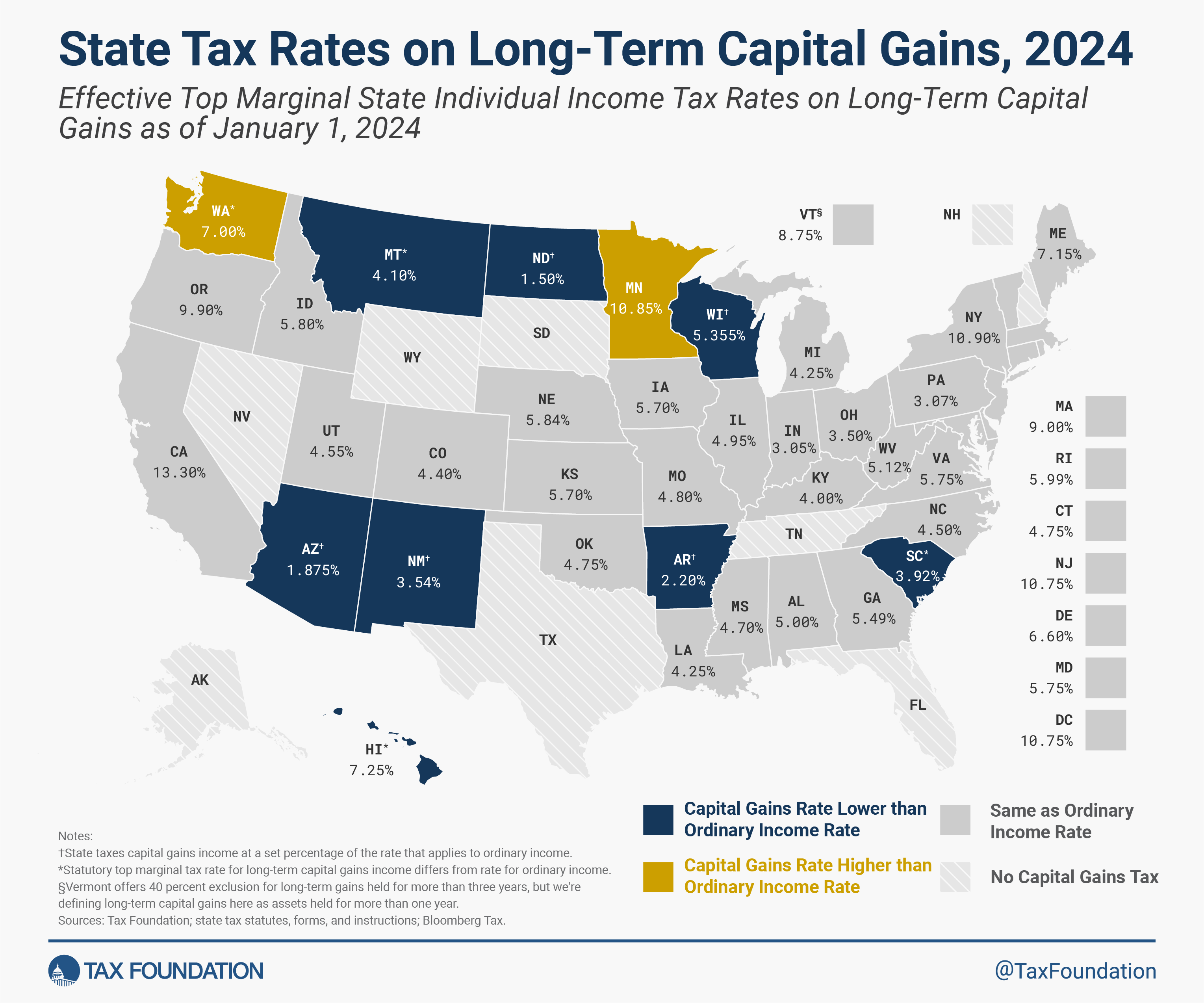
Profits from the sale of assets held for more than one year fall into this category. Historically, long-term capital gains have been taxed at preferential rates, which are generally lower than ordinary income rates. However, California takes a unique approach. Unlike the federal government, which has specific long-term capital gains tax rates (0%, 15%, or 20% depending on income), California taxes long-term capital gains as ordinary income. This means the same progressive tax rates that apply to your salary or business income also apply to your long-term capital gains.
This distinction is significant for anyone planning to sell assets in California after holding them for over a year. While you might be accustomed to lower federal long-term capital gains rates, the state will tax that profit at your marginal income tax rate.
California’s Capital Gains Tax Rates
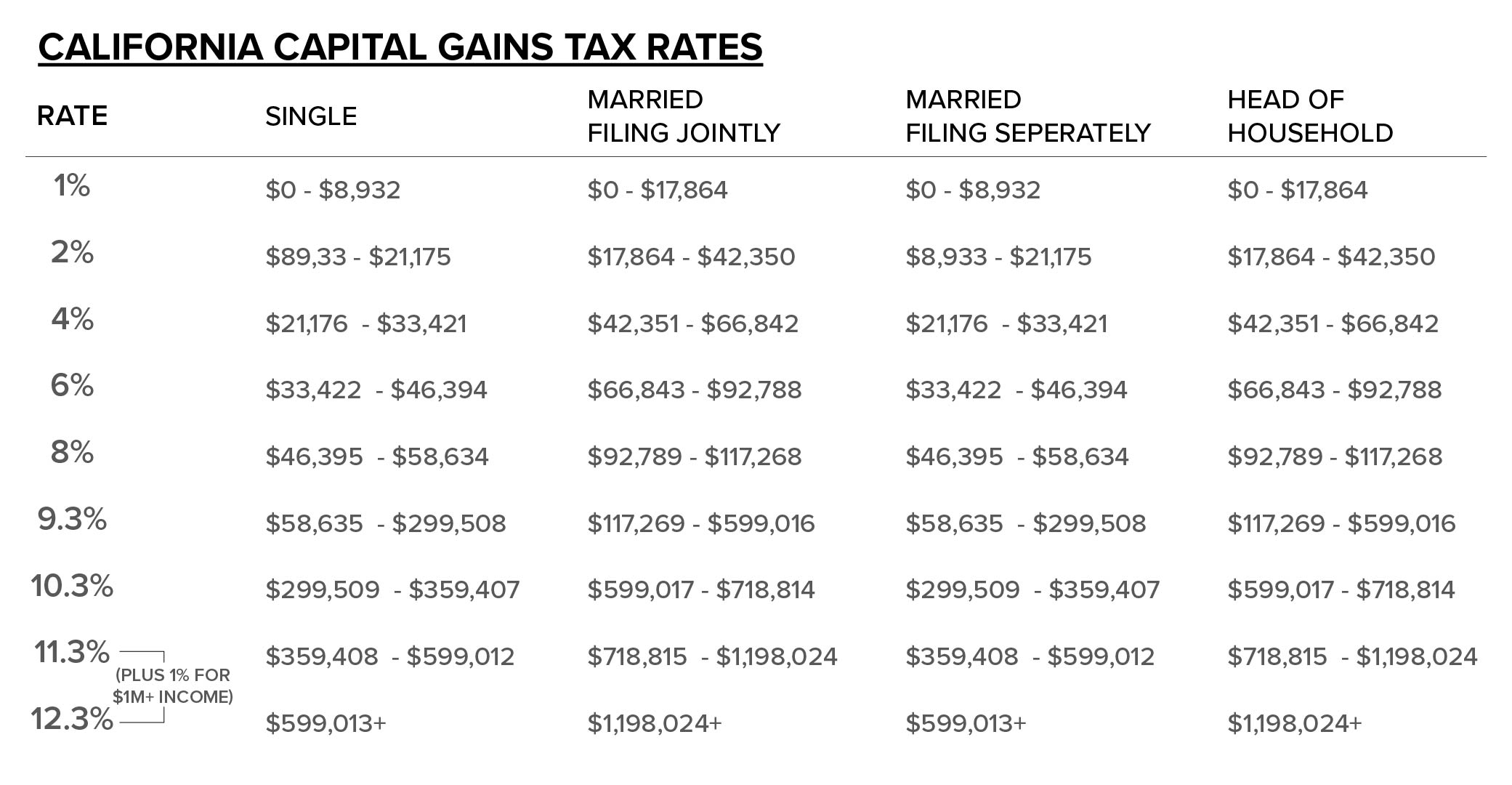
As established, California does not have separate preferential tax rates for long-term capital gains. Instead, all capital gains, whether short-term or long-term, are folded into your total taxable income and taxed according to the state’s progressive income tax brackets.
These brackets are adjusted annually for inflation. For the 2023 tax year, the rates range from 1% to 13.3%.
Understanding the Tax Brackets
To illustrate, let’s consider a hypothetical scenario. Suppose you sell an investment property in San Francisco for a profit of $500,000 after holding it for three years. This $500,000 would be considered a long-term capital gain. If your total taxable income for the year, including this gain, places you in the highest tax bracket of 13.3%, you would owe approximately $66,500 in state capital gains tax on that $500,000 profit.
It’s crucial to consult the most current tax year’s brackets, as they are subject to change. The Franchise Tax Board (FTB) is the official source for these figures.
Factors Influencing Your Capital Gains Tax Liability
Several factors can significantly impact the actual amount of capital gains tax you will owe in California:
Your Income Level
As mentioned, California uses a progressive tax system. The higher your overall taxable income, the higher your marginal tax rate will be, and consequently, the higher the percentage of your capital gains that will be taxed. This means that two individuals selling assets for the exact same profit might pay vastly different amounts in state capital gains tax based on their other income sources.
Holding Period of the Asset
While California taxes both short-term and long-term gains at ordinary income rates, the holding period still has implications, particularly when considering other tax strategies or potential federal implications. However, for state tax calculation itself, the duration matters less in terms of rate differentiation and more in terms of how it’s reported and potentially integrated with other investment strategies.
Cost Basis
The cost basis is fundamental. It’s not just the purchase price but also includes expenses incurred to acquire the asset (like closing costs for real estate) and any capital improvements made over the years (e.g., renovations on a vacation home). Accurately calculating and documenting your cost basis is essential to avoid overpaying taxes. For instance, if you bought a rental property in Malibu for $1 million and spent $200,000 on improvements, your cost basis would be $1.2 million, significantly reducing your taxable gain upon sale.
Capital Losses
Capital losses can offset capital gains. If you have sold assets at a loss, these losses can be used to reduce your taxable capital gains. If your capital losses exceed your capital gains, you can typically deduct up to $3,000 of the remaining loss against your ordinary income each year. Any further net capital loss can be carried forward to future tax years. This strategy is particularly relevant for investors who hold diversified portfolios, perhaps with assets in locations like Napa Valley or San Diego.
State-Specific Deductions and Credits
While California has a broad definition of what constitutes taxable income, there are deductions and credits available that can reduce your overall tax liability. These might include deductions for business expenses if the sale relates to a business activity, or credits for specific investments or activities. It’s always advisable to consult with a tax professional to ensure you are leveraging all available tax-saving opportunities.
Planning for Capital Gains in California
Given California’s tax structure, proactive planning is key to minimizing your capital gains tax burden.
Timing Your Sales
Strategically timing the sale of assets can be beneficial. If you anticipate being in a lower income bracket in a future year, perhaps due to reduced work or a change in investment strategy, delaying the sale of a profitable asset might lead to a lower tax bill. Conversely, if you are already in a high tax bracket, realizing a capital gain now might be less impactful than if your income were to increase further in the future.
Diversification and Portfolio Management
For investors, maintaining a diversified portfolio across different asset classes and geographies can help manage risk and tax liabilities. Regularly reviewing your portfolio with a financial advisor can help identify opportunities to rebalance, potentially realizing gains in years where losses in other areas can offset them. This is especially relevant if you hold assets across various regions, perhaps considering properties in Big Sur or international travel investments.
Tax-Advantaged Accounts
Utilizing tax-advantaged retirement accounts, such as 401(k)s and IRAs, can be a powerful tool. Gains within these accounts grow tax-deferred or tax-free (in the case of Roth accounts), meaning you don’t pay capital gains tax annually on profits generated within them. When you eventually withdraw funds in retirement, the tax treatment depends on the account type. This can be a crucial strategy for long-term wealth building, indirectly affecting your overall tax exposure when capital assets are held outside these accounts.

Seeking Professional Advice
The intricacies of California tax law, especially concerning capital gains, warrant professional guidance. A qualified tax advisor or CPA can help you:
- Accurately calculate your cost basis.
- Identify all potential deductions and credits.
- Develop strategies for tax deferral or minimization.
- Ensure compliance with all California tax regulations.
Whether you are a frequent traveler who has invested in vacation properties across the state, a business owner in Los Angeles, or an investor managing a portfolio of stocks and bonds, understanding California’s approach to capital gains tax is essential for sound financial decision-making and maximizing the returns on your assets.
LifeOutOfTheBox is a participant in the Amazon Services LLC Associates Program, an affiliate advertising program designed to provide a means for sites to earn advertising fees by advertising and linking to Amazon.com. Amazon, the Amazon logo, AmazonSupply, and the AmazonSupply logo are trademarks of Amazon.com, Inc. or its affiliates. As an Amazon Associate we earn affiliate commissions from qualifying purchases.