
Navigating the complexities of child support can be one of the most significant financial considerations for parents in Texas. For those with one child, understanding the guidelines and potential amounts is crucial, not just for immediate financial stability but also for planning future lifestyle choices, including family travel, accommodation, and leisure activities. While the direct calculation of child support falls under legal purview, its ramifications profoundly impact a parent’s disposable income, directly influencing their ability to explore destinations, book comfortable hotels, and create lasting memories through travel experiences.
This comprehensive guide delves into the specifics of child support for one child in the Lone Star State, explaining how it’s calculated, what factors influence the final amount, and, importantly, how these financial considerations intersect with a family’s lifestyle, particularly concerning travel and accommodation choices. Whether you’re a parent making payments or receiving them, understanding these dynamics is key to maintaining a balanced life and ensuring your child continues to experience the world, from local Texas landmarks to broader travel adventures.
Understanding Texas Child Support Calculations for One Child
In Texas, child support is primarily determined by a set of guidelines outlined in the Texas Family Code. These guidelines are designed to provide a fair and consistent approach to ensure that children continue to receive financial support from both parents, regardless of marital status. For one child, the calculation is relatively straightforward, but several variables can affect the final amount.
The Income-Based Formula
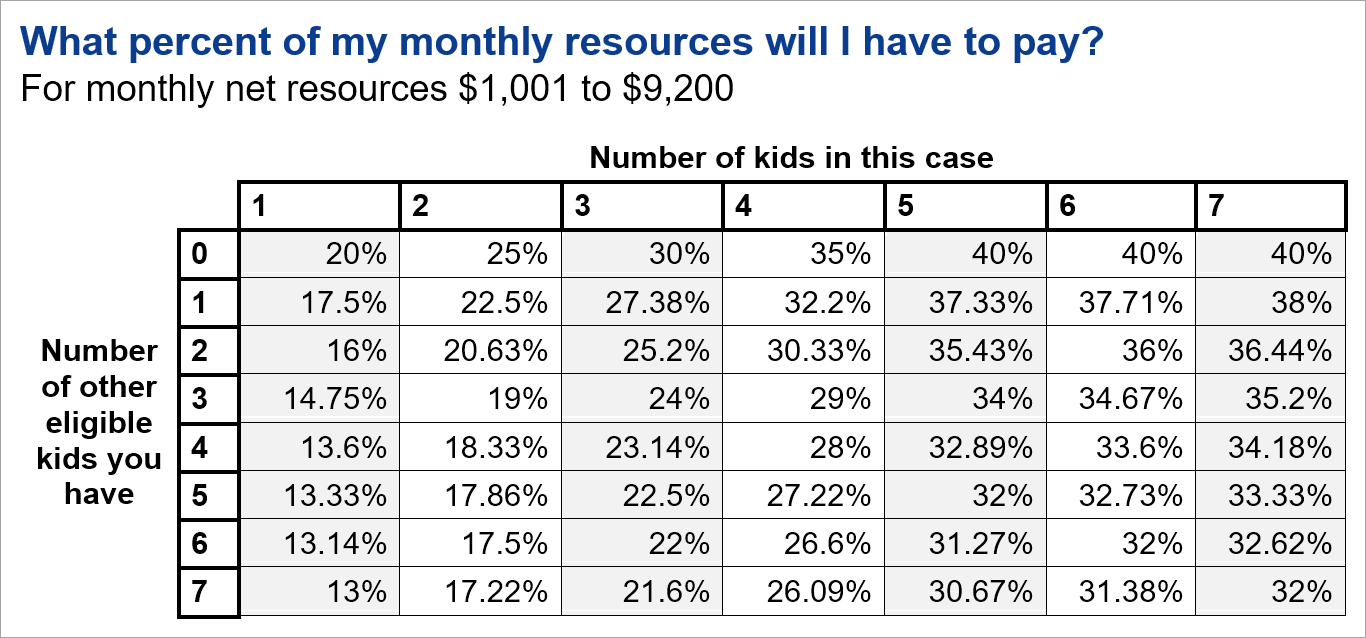
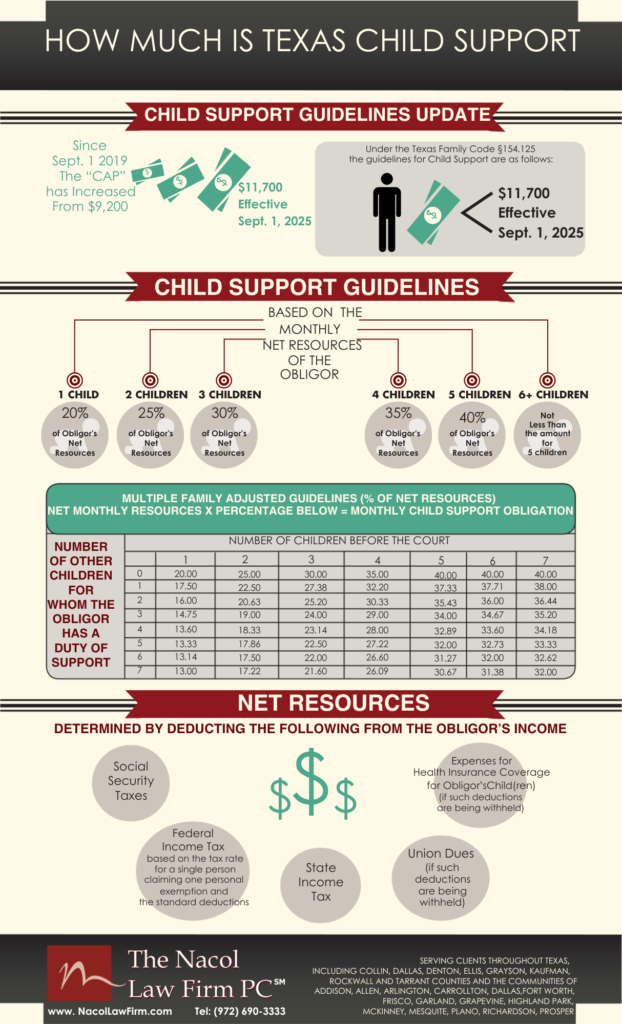
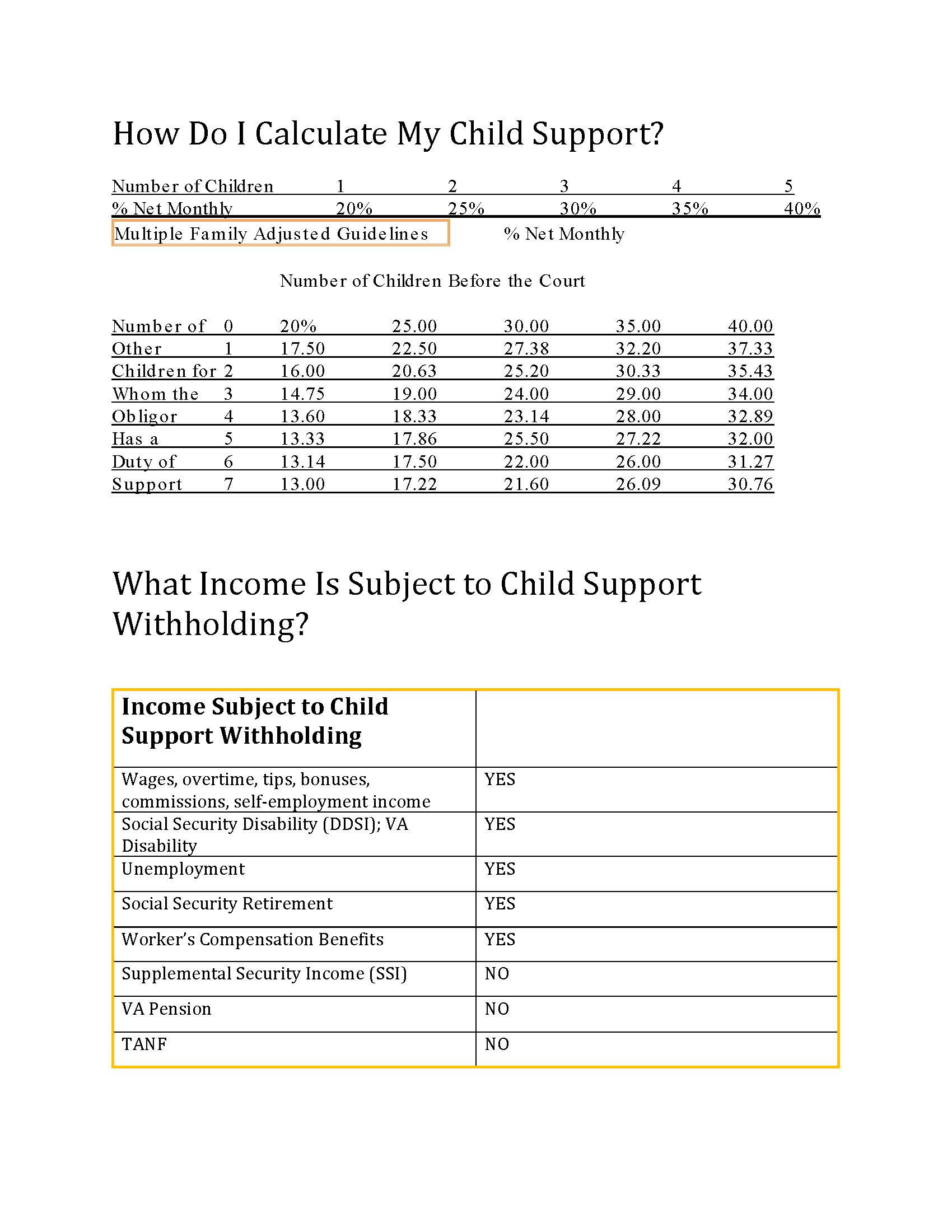
The cornerstone of Texas child support for a single child is the obligor’s (the parent ordered to pay support) net monthly resources. The general guideline is that child support will be 20% of the obligor’s net monthly resources for one child. But what exactly constitutes “net resources”?
To calculate net resources, the court first considers the obligor’s gross income. This includes all wages and salary, self-employment income, commissions, overtime, tips, bonuses, and any other form of income received, such as rental income, severance pay, retirement benefits, pensions, social security benefits, unemployment benefits, and even gifts or prizes. From this gross income, the following deductions are typically made to arrive at the net resources:
- Social Security Taxes: The obligor’s actual social security tax contributions.
- Federal Income Taxes: Calculated based on the tax rate for a single individual claiming one personal exemption and the standard deduction.
- State Income Taxes: (Not applicable in Texas, as it has no state income tax, but included in the general formula for other states).
- Union Dues: Mandatory union membership fees.
- Health Insurance Premiums for the Child: The actual cost of health insurance for the child for whom support is being paid, if paid by the obligor.
Once these deductions are made, the resulting figure is the obligor’s “net monthly resources.” The 20% guideline is then applied to this amount.
Example:
If an obligor has a gross monthly income of $5,000, and after deducting social security taxes, federal income taxes (as per the single filer, one exemption rule), and union dues, their net monthly resources are determined to be $4,000, the guideline child support for one child would be 20% of $4,000, which equals $800 per month.
It’s crucial to note that the Texas Family Code also includes a statutory cap on the amount of net resources to which the percentage guidelines apply. This cap is periodically adjusted. For instance, as of the time of writing (and subject to change), the guidelines apply to the first $9,200 of an obligor’s net monthly resources. If an obligor’s net resources exceed this cap, the court may order additional support above the guideline amount if the child’s proven needs require it. This is where the specific circumstances of the child and parents become more relevant, moving beyond a simple percentage calculation.
Factors Affecting the Base Amount
While the 20% guideline provides a starting point, courts in Texas have the discretion to deviate from this amount if it’s deemed to be in the child’s best interest. Several factors can influence a judge’s decision to order more or less than the guideline amount:
- The child’s age and needs: Older children or those with special needs might require more financial support.
- The parents’ ability to support the child: If the obligor has significantly higher earning capacity or resources, the court might consider ordering above guidelines, especially if the child’s standard of living prior to separation was much higher.
- Any extraordinary expenses: This could include specialized educational needs, significant medical bills not covered by insurance, or extracurricular activities that are expensive.
- The amount of time each parent spends with the child: While the primary factor is income, if the obligor has extended periods of possession and is responsible for a substantial portion of the child’s direct expenses during those times, the court might adjust the support downwards, though this is less common for one child under the standard possession order.
- Childcare expenses: The costs associated with daycare or after-school care can be a significant factor, often shared between parents in addition to the base support.
- The income of the custodial parent: While the calculation starts with the obligor’s income, the court may consider the custodial parent’s income to determine the child’s overall needs and the fairness of the support order.
- Other dependents: If the obligor has other children they are legally obligated to support, either from a prior relationship or current marriage, the percentage guideline for the child in question will be slightly reduced. For instance, if the obligor has one other child to support, the percentage for the child in the current case might drop from 20% to 17.5%.
Understanding these factors is crucial because they represent avenues through which the court can tailor a child support order to the specific realities of a family, ensuring that the child’s best interests remain paramount.
Medical and Dental Support
Beyond the basic cash child support, Texas courts almost always order one parent to provide health insurance for the child. Typically, the parent with access to the most affordable and comprehensive plan will be ordered to do so. If neither parent has access to private insurance, the court may order one parent to enroll the child in a public health benefit plan, such as Medicaid or CHIP. The cost of this health insurance premium is often factored into the overall support calculation, usually by reducing the obligor’s net resources or by having the cost reimbursed by one parent to the other.
Furthermore, parents are usually ordered to share uninsured medical, dental, and vision expenses. A common arrangement is a 50/50 split, but this can also be adjusted based on the parents’ respective financial abilities. These are crucial aspects of child support that directly impact a family’s financial planning, extending beyond the monthly cash payment.
Beyond the Basics: Lifestyle Implications of Child Support in Texas
The financial implications of child support extend far beyond a monthly transfer of funds. For many families in Texas, these payments or receipts significantly influence their lifestyle, particularly concerning discretionary spending on experiences like travel, recreation, and accommodation. Understanding this interplay is vital for comprehensive financial planning and ensuring a rich, fulfilling life for both parents and children.
Budgeting for Family Travel and Experiences
Child support, whether paid or received, fundamentally alters a parent’s budget for family activities. For the obligor, child support payments represent a fixed outgoing expense that reduces disposable income. This often necessitates more careful budgeting for family trips, weekend getaways, or even day trips to Texas attractions like Six Flags Over Texas in Arlington or exploring the San Antonio Riverwalk. A parent paying child support might prioritize budget travel options, seeking out deals on flights or opting for road trips to nearby destinations like Austin or Houston instead of more distant locales.
Conversely, for the custodial parent, receiving child support can provide a stable financial foundation, enabling them to plan for enriching experiences for their child. This might mean being able to afford a stay at a family-friendly resort on South Padre Island, enrolling the child in a special summer camp, or taking an annual vacation that might otherwise be out of reach. For both parents, the goal remains to provide the best possible experiences for their child, and child support plays a pivotal role in defining the financial boundaries for these aspirations. It forces a strategic approach to financial planning, encouraging parents to think about how to maximize every dollar for quality family time and memorable experiences.
Choosing Accommodation: From Budget-Friendly Stays to Luxury Retreats
The impact of child support on accommodation choices is significant. When planning a trip, the type of hotel, suite, apartment, or villa a family can afford directly correlates with their disposable income.
Parents paying child support often find themselves gravitating towards more cost-effective accommodation options. This could mean booking stays at value-oriented hotels such as a Motel 6 or Super 8, exploring vacation rentals on platforms like Airbnb for kitchen amenities to save on dining out, or even considering camping trips in Texas State Parks like Big Bend Ranch State Park. The focus shifts to finding clean, safe, and family-friendly places that offer good value without breaking the bank, ensuring that the primary purpose of the trip – creating memories – isn’t overshadowed by excessive cost.
For parents receiving child support, there might be more flexibility to consider a broader range of options. This could include enjoying the amenities of mid-range hotels such as a Hilton Garden Inn or Marriott Courtyard, or even occasionally splurging on a luxury travel experience at a full-service resort like JW Marriott San Antonio Hill Country Resort & Spa. These choices often come with added comforts like pools, kids’ clubs, and on-site dining, enhancing the overall vacation experience. The key is to make informed choices that align with the family’s financial reality, ensuring that accommodation enhances, rather than detracts from, the enjoyment of family time.
Navigating Co-Parenting Travel Arrangements
Child support orders, while primarily financial, are often intertwined with the practicalities of co-parenting and child custody arrangements, which frequently involve travel. For parents in Texas, this can mean navigating long-distance travel for visitation, especially if one parent lives in Dallas and the other in El Paso, or even out of state.
The cost of transporting the child for visitation – flights, gas, or other travel expenses – can be a significant additional financial burden. While child support is generally intended to cover the basic needs of the child, specific provisions regarding travel expenses for visitation are sometimes included in custody orders. For instance, the order might specify that parents split the cost of airfare, or that the non-custodial parent is responsible for picking up and dropping off the child. These arrangements directly impact the practical budget of both parents and are a crucial element of financial planning around child support.
Moreover, planning international travel or even interstate trips requires careful coordination between co-parents, often necessitating written consent from both, especially if the child needs a passport. The financial ability to undertake such journeys is influenced by child support, but also by the co-parents’ willingness to collaborate on expenses and logistics. Understanding how child support affects the larger co-parenting dynamic, including travel stipulations, is essential for minimizing conflict and ensuring a smooth experience for the child.
Financial Planning and Travel: Maximizing Family Experiences Post-Divorce
For many families, child support marks a significant transition point in their financial lives. Instead of viewing it as merely a legal obligation or a fixed income stream, parents can strategically integrate child support into a broader financial plan that prioritizes enriching family experiences and sustained happiness. This proactive approach allows parents to navigate the financial landscape post-divorce or separation with greater confidence, ensuring that their child’s lifestyle, including opportunities for travel and exploration, remains vibrant.
Smart Savings Strategies for Future Adventures
After accounting for essential expenses and child support obligations, parents can implement smart savings strategies specifically aimed at funding future family adventures. For the obligor, this might involve setting up a dedicated savings account for a “travel fund” that receives regular contributions, even if small. By consistently putting aside money, perhaps from bonuses or tax refunds, they can accumulate funds for a larger trip, such as a visit to Big Bend National Park or an out-of-state adventure. This proactive saving helps mitigate the impact of child support on discretionary travel funds.
For the custodial parent, child support can free up other income to be directed towards savings for experiences. Instead of solely relying on the support for daily needs, a portion of other income can be allocated to a “family experience fund.” This fund could be used for memorable trips, special events, or even investing in activities that enhance the child’s development, like an educational tour of NASA Johnson Space Center in Houston. Utilizing budgeting tools and financial apps can help track expenses and savings goals, making it easier to see how child support fits into the larger financial picture and how it can contribute to future family memories.
Exploring Texas Destinations on Any Budget
Texas itself offers a vast array of destinations and experiences suitable for various budgets, regardless of child support considerations. Parents can leverage this diversity to plan memorable trips without overstretching their finances.
For those adhering to a stricter budget due to child support payments, exploring local gems can be highly rewarding. Many Texas State Parks offer affordable camping or day-use fees, providing access to nature, hiking, and educational programs. Cities like Austin or San Antonio boast free attractions such as parks, public art installations, and historical sites like The Alamo. Enjoying picnics, visiting free museums on certain days, or exploring local tourism options can create rich experiences without the high cost of luxury hotels or elaborate dining.
For families with more financial flexibility, Texas offers premium experiences. Galveston provides beachfront resorts and attractions like Moody Gardens. The Texas Hill Country boasts charming bed and breakfasts, vineyards, and scenic drives. Even a visit to Dallas can involve staying at a high-end hotel like The Adolphus Hotel and dining at acclaimed restaurants. The key is to match the trip’s scope with the family’s financial comfort zone, ensuring that child support facilitates rather than hinders the pursuit of happy family moments.
The Role of Financial Stability in Memorable Family Trips
Ultimately, the goal of child support is to ensure the financial well-being of the child. When child support is consistently paid and effectively managed, it contributes significantly to a parent’s overall financial stability. This stability, in turn, is the bedrock upon which memorable family trips and experiences are built.
A financially stable parent is better equipped to plan for future travel, handle unexpected expenses that arise during trips, and provide a sense of security for their child. It reduces stress and allows for a more relaxed and enjoyable vacation experience, whether it’s a business stay that incorporates family time or a dedicated family trip to a faraway land. Child support, therefore, isn’t just a legal obligation; it’s an investment in a child’s future and a component of the financial health that allows parents to continue enriching their child’s life with diverse experiences and invaluable memories, making the most of every opportunity for adventure, near or far.
Disclaimer: This article provides general information about Texas child support guidelines for one child and their lifestyle implications. It is not a substitute for legal advice. Laws can change, and individual circumstances vary. Always consult with a qualified family law attorney in Texas for specific advice regarding your situation.
LifeOutOfTheBox is a participant in the Amazon Services LLC Associates Program, an affiliate advertising program designed to provide a means for sites to earn advertising fees by advertising and linking to Amazon.com. Amazon, the Amazon logo, AmazonSupply, and the AmazonSupply logo are trademarks of Amazon.com, Inc. or its affiliates. As an Amazon Associate we earn affiliate commissions from qualifying purchases.