
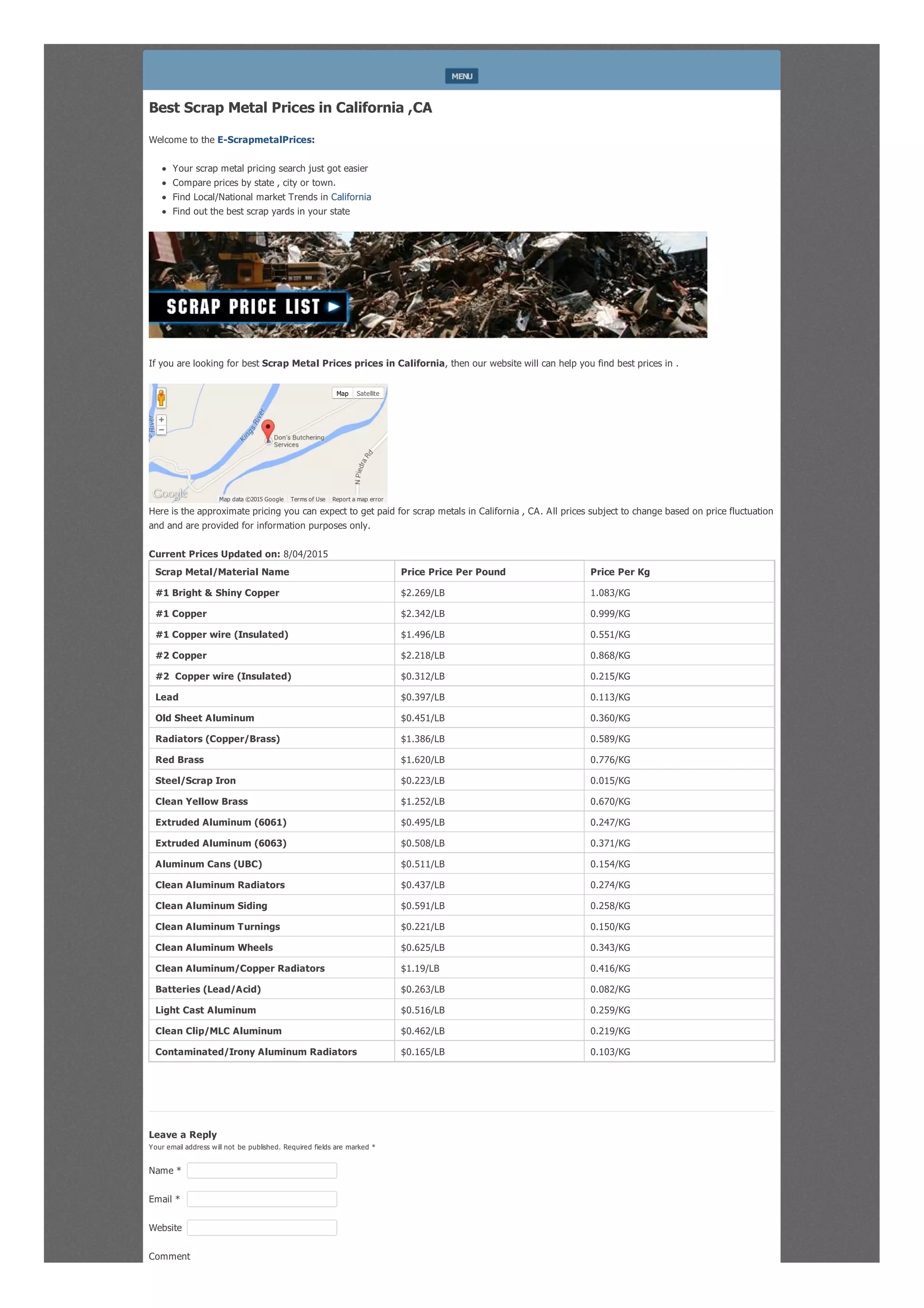
While the title “How Much Is Copper Per Pound In California?” might initially suggest a focus on industrial commodities or financial markets, its placement within the context of travel, hotels, tourism, accommodation, landmarks, and lifestyle necessitates a unique interpretation. This article will explore the economic pulse of copper within the Golden State not as a mere market price, but as an intrinsic element shaping the state’s heritage, influencing its development, and subtly impacting the visitor experience. We will delve into the historical significance of copper mining in California, its contemporary relevance to the state’s infrastructure and economy, and how these factors might tangentially touch upon the world of travel and tourism, albeit indirectly.

The Echoes of Copper in California’s Past
California’s rich history is intertwined with the extraction of valuable resources, and copper played a significant, albeit often overshadowed, role. The discovery and exploitation of copper deposits fueled early economic growth and settlement, particularly in the northern and southeastern regions of the state. While not as iconic as the gold rush, copper mining contributed to the development of transportation networks, the establishment of communities, and the overall industrial landscape that still bears its imprint. Understanding this historical context allows travelers and those interested in California’s heritage to appreciate the foundations upon which modern attractions and locales were built.
Early Mining Ventures and Their Legacy
The late 19th and early 20th centuries saw the peak of copper extraction in California. Regions like the Cerro Gordo Mines in Inyo County, though more famously known for silver and lead, also yielded significant amounts of copper. These mining operations often led to the creation of company towns, infrastructure such as rail lines to transport ore, and the development of local economies. The remnants of these ventures can still be explored by adventurous travelers, offering a glimpse into a bygone era. Ghost towns, preserved mining equipment, and interpretive centers often tell the stories of these hardy pioneers and the economic forces that shaped the state. For those seeking an off-the-beaten-path California experience, exploring these historical mining sites can be a deeply engaging endeavor, connecting them to the very earth and the labor that once defined these landscapes.
Copper’s Role in Infrastructure Development
The copper extracted from California’s mines was not solely for export. It played a crucial role in the development of the state’s burgeoning infrastructure. Electrical grids, telegraph lines, and early plumbing systems all relied on copper. This internal demand further cemented the metal’s importance to the state’s progress. As California grew and modernized, the demand for copper continued, driving further exploration and extraction. This foundational element in the state’s infrastructure is something that, while unseen, underpins much of the modern experience for residents and visitors alike, from the reliable electricity powering hotels in Los Angeles to the communication networks enabling travel planning across San Francisco.
Contemporary Copper: A Modern Economic Influence
While large-scale copper mining in California has significantly declined compared to its historical peaks, the metal’s influence persists. Its current market price, though not directly accessible to the average traveler, indirectly impacts various sectors that do affect the visitor experience. The cost of copper influences the price of goods and services, from building materials for new hotels and resorts to the components in the vehicles used for transportation. Understanding this economic backdrop, even at a high level, adds a layer of appreciation for the cost structures and developments within California.
The Global Copper Market and California’s Connection

California is a major economic player on the global stage, and its participation in various industries means it is connected to global commodity markets, including copper. While the state may not be a primary producer of copper today, it is a significant consumer. The price of copper per pound globally, influenced by factors such as supply and demand from major producers like Chile and Peru, and industrial demand from countries like China, will inevitably affect industries operating within California. This interconnectedness means that fluctuations in the copper market can have ripple effects, impacting construction costs for new attractions or the price of electronic components used in tourist services.
Copper in Infrastructure and Technology: The Unseen Component
Copper remains an indispensable material in modern infrastructure and technology. The electrification of transportation, the expansion of renewable energy grids, and the proliferation of advanced electronics all rely heavily on copper. As California continues to innovate and invest in sustainable technologies and infrastructure projects, the demand for copper, whether sourced locally or imported, remains significant. For instance, the construction of new high-speed rail lines or the expansion of electric vehicle charging networks across California indirectly ties into the global demand and pricing of copper. This is a vital, albeit often unseen, component of the state’s forward-looking development that shapes the very fabric of its visitor-friendly amenities.
Exploring California Through an Economic Lens
While one cannot simply “buy copper per pound” at a tourist attraction, understanding the economic underpinnings of materials like copper can enrich the travel experience. It offers a deeper appreciation for the state’s history, its industrial development, and the invisible forces that shape its modern landscape and the services available to visitors.
Historical Sites and the Copper Trail
For the historically inclined traveler, seeking out former mining towns and sites can be an incredibly rewarding experience. Places like the Kewenaw Peninsula in Michigan are more renowned for copper, but California offers its own subtle nods. Visiting areas that were once centers of copper extraction allows one to visualize the labor, the ingenuity, and the economic drivers that shaped these regions. Museums dedicated to local history or mining often feature exhibits detailing the importance of copper, providing a tangible connection to the past. These excursions offer a unique perspective, moving beyond typical tourist brochures to a more grounded understanding of the state’s formative years.
Modern Infrastructure and the Visitor Experience
The modern visitor to California benefits daily from the widespread use of copper. The reliable electricity in their hotel rooms at the Grand Hyatt Hotel in San Francisco, the functioning of their smartphones and Wi-Fi, and the efficiency of the public transportation systems in San Diego all rely on this essential metal. While the price per pound of copper isn’t displayed at the checkout counter, its underlying value contributes to the cost and quality of the services and amenities that make a California vacation possible and enjoyable. Recognizing this can foster a greater appreciation for the complex systems that support the seamless travel experience.
Conclusion: Copper as a Subtle Indicator of California’s Economic Vitality
In essence, while the direct question of “How Much Is Copper Per Pound In California?” points to a specific market metric, its relevance to travel, tourism, and lifestyle in the state is more nuanced. Copper’s story in California is one of historical significance, foundational infrastructure, and ongoing economic influence. It serves as a silent testament to the state’s industrious past and its continued role in technological advancement and economic development. For the discerning traveler, understanding these undercurrents can transform a simple visit into a richer, more insightful exploration of the Golden State, revealing layers of its character that go beyond the visible attractions.
LifeOutOfTheBox is a participant in the Amazon Services LLC Associates Program, an affiliate advertising program designed to provide a means for sites to earn advertising fees by advertising and linking to Amazon.com. Amazon, the Amazon logo, AmazonSupply, and the AmazonSupply logo are trademarks of Amazon.com, Inc. or its affiliates. As an Amazon Associate we earn affiliate commissions from qualifying purchases.