
Navigating the financial landscape of living with a disability in Florida is a critical component of one’s overall lifestyle and well-being. While the Sunshine State offers numerous attractions and a vibrant culture, understanding the economic support available for individuals with disabilities is paramount for residents. The term “disability” in the context of financial benefits primarily refers to federal programs, namely Social Security Disability Insurance (SSDI) and Supplemental Security Income (SSI), both administered by the Social Security Administration (SSA). Unlike some other states, Florida does not provide a state-specific supplement to these federal benefits, making the SSA’s payouts the primary financial lifeline. For those building a life or considering a move to Florida with a disability, comprehending these programs is essential for financial planning and maintaining a sustainable lifestyle.
Understanding Federal Disability Programs in Florida
The core of disability financial support in Florida rests on two distinct federal programs: SSDI and SSI. While both offer assistance to individuals unable to work due to a severe medical condition, their eligibility criteria, funding sources, and benefit calculation methods differ significantly. Understanding these distinctions is crucial for anyone seeking to determine their potential income from disability benefits in the state.
Social Security Disability Insurance (SSDI)
SSDI is an insurance program for workers who have paid Social Security taxes through their employment. To qualify, an individual must have worked a certain number of years and accumulated enough “work credits.” The number of work credits required depends on the age at which the disability began. Generally, most adults need 40 credits, with 20 earned in the last 10 years before becoming disabled. The disability itself must be severe enough to prevent gainful activity and is expected to last for at least one year or result in death. Because it’s an earned benefit, SSDI is not subject to income or asset limits, though substantial gainful activity can prevent eligibility.
Supplemental Security Income (SSI)
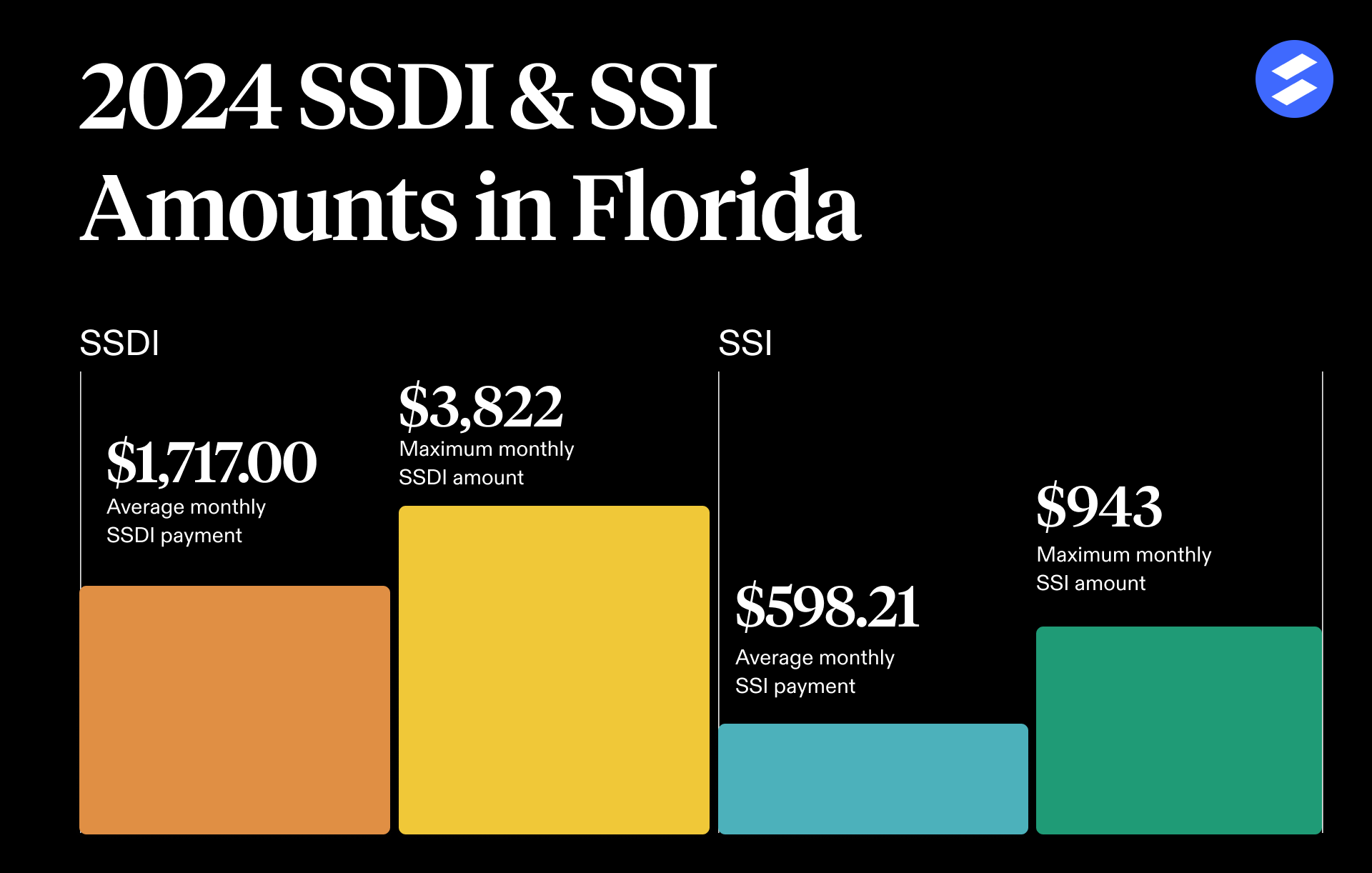
SSI, conversely, is a needs-based program designed to provide financial assistance to low-income individuals who are aged, blind, or disabled, regardless of their work history. To qualify for SSI, an applicant must meet strict income and asset limits. For 2024, the federal benefit rate (FBR) is $943 per month for an eligible individual and $1,415 for an eligible couple. However, this amount can be reduced by “countable income,” which includes wages, other benefits, and in-kind support. Resources, such as bank accounts, cash, and property (excluding one’s primary residence and vehicle), must not exceed $2,000 for an individual and $3,000 for a couple. SSI recipients in Florida often automatically qualify for Medicaid, providing vital healthcare access, which is a significant lifestyle benefit.
Calculating SSDI Benefits for Florida Residents
The amount of SSDI benefit an individual receives in Florida is highly personalized and depends on their lifetime earnings history. Unlike SSI, there isn’t a fixed federal rate for SSDI. The SSA uses a complex formula to calculate what is known as the “primary insurance amount” (PIA), which is the base amount of disability benefits before any reductions.
Factors Influencing SSDI Payments
The PIA is derived from an individual’s average indexed monthly earnings (AIME) over their working years. This means that generally, the more an individual earned and paid into Social Security taxes, the higher their SSDI benefit will be. The SSA regularly adjusts these calculations, but as of early 2024, the average SSDI payment nationwide was approximately $1,537 per month. However, maximum benefit amounts can exceed $3,600 for those with consistently high earnings.
It’s important for Florida residents to understand that the amount is determined at the federal level and is not adjusted based on the cost of living in specific Florida cities like Miami or Orlando. This means that a recipient in a high-cost area of Florida will receive the same federal benefit as someone in a lower-cost area, which significantly impacts their lifestyle quality given varying regional expenses. After a 24-month waiting period from the date of entitlement to SSDI, recipients also become eligible for Medicare, providing essential health insurance coverage.
Determining SSI Payouts in the Sunshine State
For Florida residents relying on SSI, the calculation is more straightforward as it primarily adheres to the federal benefit rate (FBR). As mentioned, the FBR for an individual in 2024 is $943 per month, and $1,415 for an eligible couple. However, this is the maximum federal payment; the actual amount received can be less, depending on various factors.

Impact of Countable Income and Resources
The SSA employs a complex method to calculate “countable income,” which reduces the FBR. For instance, only a portion of earned income (wages) and unearned income (e.g., pensions, other benefits) is counted. Some income sources are entirely excluded, such as the first $20 of most income, the first $65 of earned income, and half of the remaining earned income. This calculation is vital because any countable income above a certain threshold will reduce the SSI payment dollar for dollar.
Crucially, Florida is one of the states that does not offer a state supplementary payment for SSI recipients. This means that the maximum federal amount an individual can receive is the FBR, reduced by any countable income. This absence of a state supplement can significantly affect the lifestyle of SSI recipients, particularly in areas of Florida with higher costs of living. The limited financial resources from SSI underscore the importance of accessing other public assistance programs, such as food assistance and housing support, to maintain a viable lifestyle.
Supplementary State Support and Considerations in Florida
While Florida does not provide a direct state supplement to SSDI or SSI cash benefits, the state does play a crucial role in providing other forms of assistance that are integral to the lifestyle of individuals with disabilities. These include healthcare, housing, and other social services.
Healthcare Access
One of the most significant benefits for SSI recipients in Florida is automatic eligibility for Medicaid. This state and federally funded program covers a wide range of medical services, including doctor visits, hospital stays, prescription drugs, and long-term care, which are critical for managing a disability and maintaining a healthy lifestyle. For SSDI beneficiaries, Medicare eligibility kicks in after a 24-month waiting period. During this waiting period, individuals might need to rely on private insurance, employer plans, or state programs like the Florida Health Insurance High-Risk Pool (though this program is no longer accepting new members due to the Affordable Care Act). Navigating healthcare access is a major component of living with a disability in Florida.
Housing and Other Social Services
Given the federal benefit amounts, particularly for SSI recipients, finding affordable housing can be a significant challenge in Florida’s competitive housing market. State and local agencies, often working with the Department of Children and Families (DCF), offer various programs that can help. These include rental assistance, public housing, and supportive housing programs for individuals with disabilities. Furthermore, various non-profit organizations throughout Florida provide support services, such as transportation assistance, independent living centers, and vocational rehabilitation, which are crucial for enhancing the independence and overall lifestyle of individuals with disabilities. Understanding and accessing these supplementary services is often as important as the cash benefits themselves for a fulfilling life in Florida.
Navigating the Application Process and Maximizing Your Lifestyle in Florida
The process of applying for disability benefits, whether SSDI or SSI, can be complex and time-consuming. However, successfully navigating it is essential for securing the financial foundation necessary for a stable lifestyle in Florida.
The Application Journey
Applying typically involves submitting an application to the SSA, which then forwards the medical portion to Florida’s Disability Determination Services (DDS). The DDS gathers medical evidence, and in some cases, may schedule an applicant for a consultative examination. Key to a successful application is providing comprehensive and consistent medical documentation from doctors, hospitals, and other healthcare providers, detailing the diagnosis, severity, treatment, and functional limitations imposed by the disability. Many applicants find that seeking assistance from a disability advocate or attorney can significantly improve their chances of approval, especially if their initial application is denied.

Financial Planning and Lifestyle Management
Once approved, recipients must carefully manage their benefits to cover living expenses in Florida. The cost of living varies significantly across the state; cities like Miami or Naples typically have higher housing, utility, and transportation costs than more rural areas or cities like Jacksonville. Budgeting and accessing additional support programs become vital. For instance, many Florida counties offer transportation services for individuals with disabilities, and various state and local programs can assist with utility bills or food costs.
Furthermore, individuals receiving benefits should be aware of rules regarding working while disabled. The SSA offers various “work incentives” programs, such as the Ticket to Work program, which allow beneficiaries to return to work without immediately losing their benefits, fostering greater independence and an improved quality of life. Understanding these provisions is key to maximizing one’s financial autonomy and overall lifestyle in Florida, allowing individuals with disabilities to actively participate in the state’s vibrant community and enjoy its many offerings.
LifeOutOfTheBox is a participant in the Amazon Services LLC Associates Program, an affiliate advertising program designed to provide a means for sites to earn advertising fees by advertising and linking to Amazon.com. Amazon, the Amazon logo, AmazonSupply, and the AmazonSupply logo are trademarks of Amazon.com, Inc. or its affiliates. As an Amazon Associate we earn affiliate commissions from qualifying purchases.