
While the allure of Texas often conjures images of vast ranches, bustling cities like Houston and Dallas, and a vibrant cultural tapestry, the practicalities of homeownership in the Lone Star State also play a significant role for many residents. One of the most impactful aspects of owning a home in Texas is the homestead exemption. This exemption offers a crucial tax break on property taxes, making homeownership more affordable. But how much is homestead exemption in Texas, and who qualifies? This comprehensive guide will delve into the specifics, helping you understand this vital financial benefit.
The concept of a homestead exemption is designed to protect homeowners from losing their primary residence due to unforeseen financial hardship or excessive property tax burdens. In Texas, this protection is enshrined in the state constitution and is a cornerstone of property tax relief. Understanding its nuances can significantly impact your annual expenses, allowing you more financial freedom for other pursuits, perhaps even a relaxing getaway to the Texas Hill Country or a memorable family trip to Galveston Island.
Understanding the Basics of Texas Homestead Exemption
At its core, a homestead exemption is a legal provision that shields a portion of a homeowner’s property value from taxation. In Texas, this exemption directly reduces the assessed value of your home, thereby lowering your overall property tax bill. It’s a straightforward yet powerful mechanism to make owning a primary residence more accessible.
What Constitutes a Homestead in Texas?
For a property to qualify as a homestead in Texas, it must meet specific criteria. Primarily, it must be the principal residence of the applicant. This means you must live in the home for at least six months of the year. The exemption applies to the land and any improvements on it that are used as a home. This can include single-family homes, townhouses, condominiums, and even mobile homes situated on land you own.
Furthermore, an individual can only claim one homestead. This ensures that the exemption is used for its intended purpose: to provide relief to homeowners on their primary dwelling. The size of the homestead is also limited. For a homestead outside of an incorporated city or town, the exemption can cover up to 200 acres of land, along with all the improvements on that land. For a homestead within an incorporated city or town, the exemption is limited to 10 acres of land, including any improvements. These acreage limitations are generous and typically encompass the vast majority of residential properties in Texas.
Key Benefits of the Homestead Exemption
The primary benefit of the homestead exemption is the reduction in your property tax liability. This reduction comes in two main forms: the general homestead exemption and optional homestead exemptions for specific groups like seniors and disabled individuals.
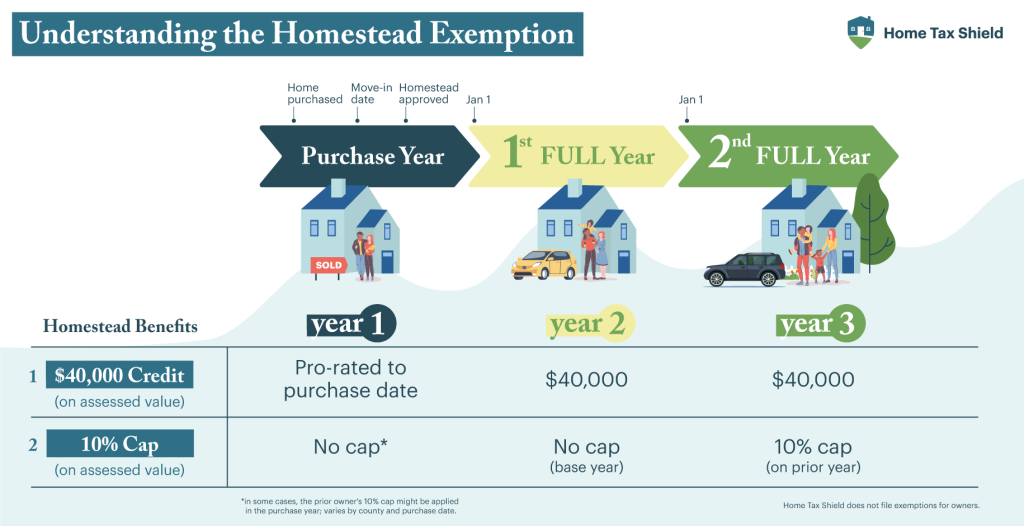
The general homestead exemption is available to all qualifying homeowners. For the 2022 tax year and beyond, homeowners in Texas benefit from a significant increase in the homestead exemption. The Texas Legislature approved a constitutional amendment that raised the general homestead exemption from $25,000 to $40,000. This means that the first $40,000 of your home’s appraised value is not subject to school district property taxes. This is a substantial increase and directly translates to lower tax bills for most homeowners.
Beyond the general exemption, Texas offers additional homestead exemptions that provide further tax relief. These are often tied to specific life circumstances and are designed to offer even greater financial support to those who may need it most.
Types of Texas Homestead Exemptions and Their Value
While the general homestead exemption offers a baseline reduction, Texas provides additional layers of protection for specific homeowner groups. Understanding these different types is crucial to maximize your savings.
The General Homestead Exemption (School Homestead)
As mentioned, the general homestead exemption, often referred to as the “school homestead,” provides the most widespread tax relief. This exemption reduces the taxable value of your home by $40,000 for school district property taxes. This applies to all homeowners who meet the basic homestead qualifications – living in the property as their primary residence.
It’s important to note that this exemption specifically applies to school district taxes. Other taxing entities, such as cities, counties, and special districts, may offer their own homestead exemptions, but the $40,000 reduction for school taxes is a statewide standard. This foundational exemption is the first step in reducing your property tax burden.
Additional Homestead Exemptions
In addition to the general exemption, Texas offers several optional homestead exemptions that can provide further savings. These are not automatically applied and typically require a separate application process.
Over-65 Homestead Exemption
Homeowners who are 65 years of age or older can qualify for an additional homestead exemption. This exemption offers two key benefits:
- An additional exemption of $10,000 from the appraised value of the homestead for property taxes levied by a school district. This is in addition to the general $40,000 exemption.
- A ceiling on the amount of property taxes that can be paid. Once a homeowner turns 65 and has an over-65 homestead exemption, the amount of property taxes they pay can be capped. This means that if the appraised value of their home increases in future years, their property tax bill will not go up. The taxes are frozen at the amount paid in the year the ceiling is established. This “tax ceiling” is a significant benefit for seniors on fixed incomes, providing long-term financial predictability.
The specific amount of the local portion of the tax ceiling (taxes levied by cities, counties, and special districts) can vary depending on the local taxing unit’s adoption of this provision. However, the school district portion of the ceiling is generally fixed.
Disability Homestead Exemption
Individuals who are disabled (as defined by Texas law) can also qualify for an additional homestead exemption. Similar to the over-65 exemption, this offers:
- An additional exemption of $10,000 from the appraised value of the homestead for property taxes levied by a school district. Again, this is in addition to the general $40,000 exemption.
- A tax ceiling for all property taxes. For homeowners who qualify for the disability exemption, the amount of property taxes they pay can also be capped. This provides a similar benefit to the over-65 exemption, protecting against rising tax bills due to property value increases.
The definition of disability for this exemption is specific and often requires certification from a physician. It’s essential to check the exact criteria with your local appraisal district.
Other Exemptions
Texas also offers exemptions for:
- Survivors of Disabled or Deceased Service Members: Certain surviving spouses and children of service members killed or disabled in the line of duty may qualify for a homestead exemption. This exemption can allow for a full exemption from property taxes, meaning no property taxes are owed on the homestead.
- Veterans with Disability Ratings: Veterans who have a disability rating from the U.S. Department of Veterans Affairs may also qualify for significant homestead exemptions. The amount of the exemption varies based on the veteran’s disability percentage. For example, veterans with a 100% disability rating can receive a full property tax exemption. Those with lower ratings receive a pro-rated exemption, with a minimum of $5,000 off their taxable value, in addition to the general homestead exemption.
These specialized exemptions highlight Texas‘s commitment to supporting its veterans and those who have made significant sacrifices.
How to Apply for Your Texas Homestead Exemption
Understanding the value of the homestead exemption is the first step; the next is ensuring you receive it. Applying for a homestead exemption is a relatively straightforward process, but it’s essential to follow the correct procedures and deadlines.
Eligibility Requirements
To qualify for a homestead exemption in Texas, you must meet the following criteria:
- Ownership: You must own the home.
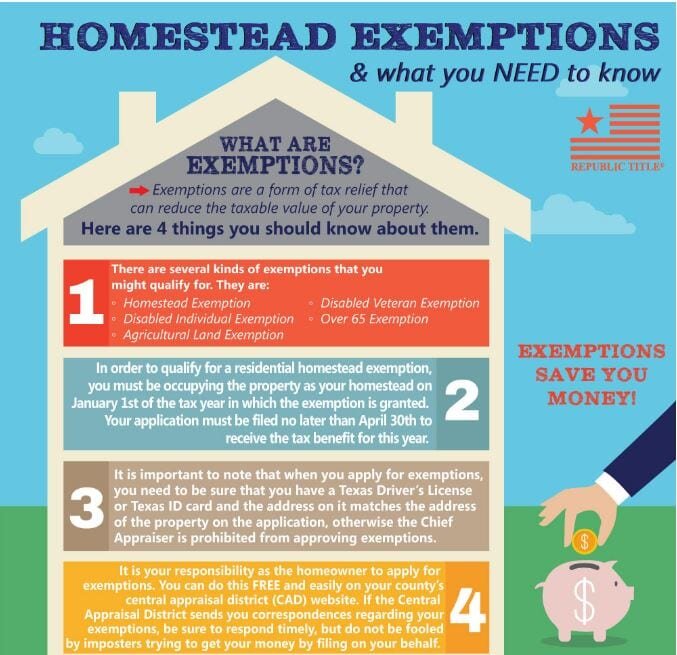
- Occupancy: You must occupy the home as your primary residence as of January 1st of the tax year for which you are applying.
- One Homestead: You can only claim one homestead in Texas.
The Application Process
The application for a homestead exemption is typically filed with the county’s Chief Appraiser or the County Appraisal District. The specific forms and procedures may vary slightly from county to county, but the general process is as follows:
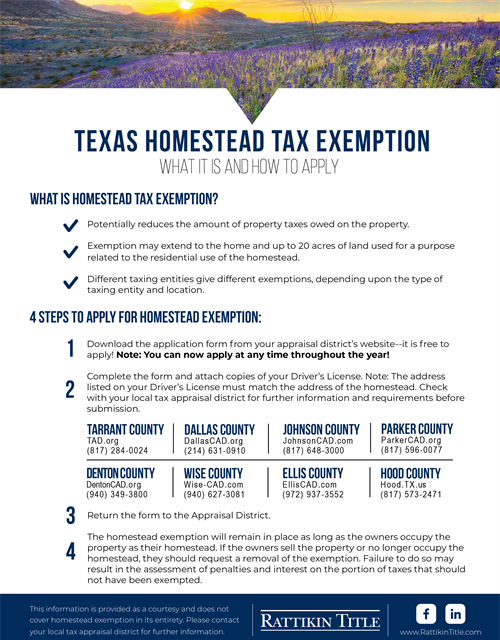
- Obtain the Application Form: You can usually download the homestead exemption application form from your local county appraisal district’s website or pick one up in person.
- Complete the Form: Fill out the application accurately, providing all requested information. This will include your name, address, property details, and a declaration that the property is your principal residence.
- Submit the Application: File the completed application with your county appraisal district. The deadline for filing is typically May 31st of the tax year for which you are seeking the exemption. However, for your initial application, you can file at any time before the appraisal review board adjourns.
- Approval and Renewal: Once approved, the homestead exemption generally renews automatically each year. You will not need to reapply unless you move to a new primary residence. If you have a disability or are over 65, you may need to provide proof of age or disability.
What to Do If You Move or No Longer Qualify
If you move to a new primary residence, you will need to apply for a homestead exemption on your new home. You should also notify the appraisal district if you no longer qualify for a homestead exemption on your previous property. This might happen if you sell your home or if it ceases to be your primary residence. Failing to do so could result in penalties or back taxes.
For those who have an over-65 or disability exemption, and the property taxes become capped, this cap typically remains in place even if the homeowner moves to a different homestead within the same taxing jurisdiction, provided they continue to meet the eligibility criteria. However, if you move to a different county, you will need to re-establish this protection in the new location.
The homestead exemption is a fundamental part of homeownership in Texas, offering significant financial relief and protection. By understanding the different types of exemptions available and the application process, homeowners can ensure they are taking full advantage of this valuable benefit, freeing up resources for exploring the diverse attractions Texas has to offer, from the vibrant music scene of Austin to the historical significance of San Antonio. Whether you’re planning a luxurious stay at a Dallas resort, a family adventure to Six Flags Over Texas, or simply enjoying the peace of your own home, the homestead exemption plays a vital role in making it all possible.
LifeOutOfTheBox is a participant in the Amazon Services LLC Associates Program, an affiliate advertising program designed to provide a means for sites to earn advertising fees by advertising and linking to Amazon.com. Amazon, the Amazon logo, AmazonSupply, and the AmazonSupply logo are trademarks of Amazon.com, Inc. or its affiliates. As an Amazon Associate we earn affiliate commissions from qualifying purchases.