
Understanding the intricacies of income tax is a crucial aspect of financial planning for residents and potential newcomers to any state. For those considering a move to the beautiful state of Oregon, or those already living within its borders, a clear grasp of the state’s income tax structure is essential. Oregon stands out in the United States for its progressive income tax system and its unique approach to tax collection, which can significantly impact personal finances. This guide delves into the various facets of Oregon income tax, from its progressive rates to specific deductions and credits, providing a comprehensive overview for informed decision-making.
Understanding Oregon’s Progressive Income Tax System
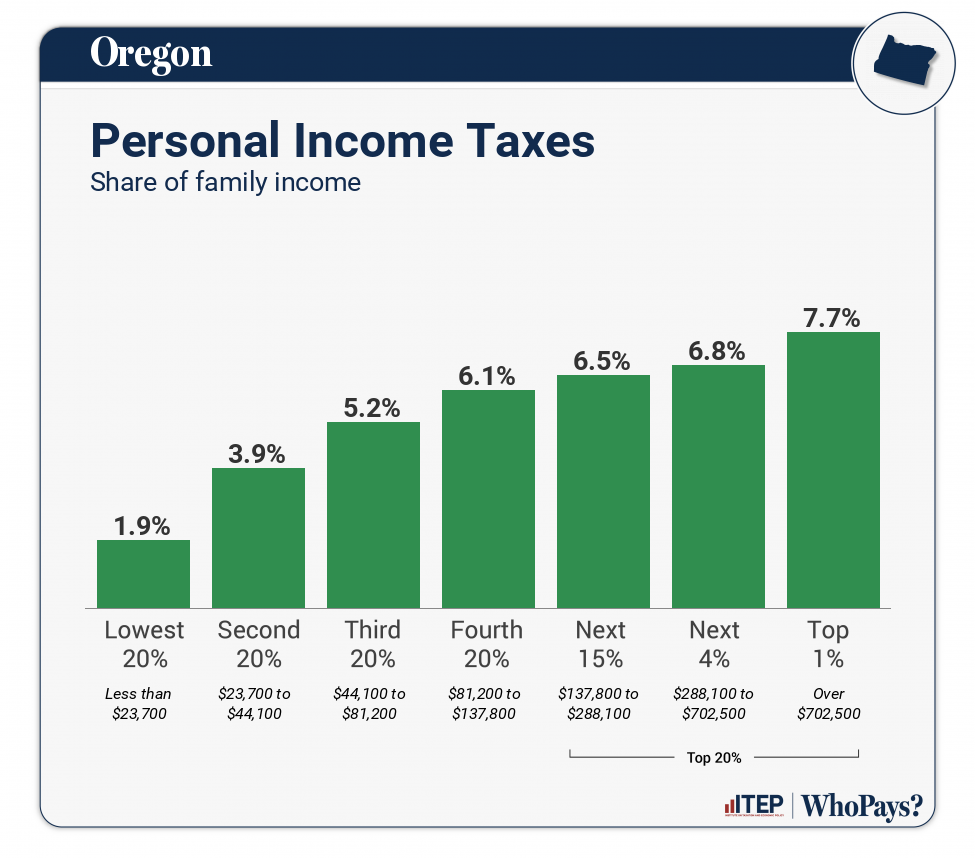
Unlike many other states that employ a flat tax rate or no income tax at all, Oregon utilizes a progressive income tax system. This means that the tax rate increases as an individual’s taxable income rises. The philosophy behind a progressive tax is that those who earn more should contribute a larger percentage of their income to support public services. Oregon’s progressive system is structured into several income brackets, each with its own corresponding tax rate.
Income Brackets and Tax Rates
The specific income brackets and their associated tax rates are subject to annual adjustments by the Oregon Department of Revenue to account for inflation and other economic factors. However, the general structure remains consistent. For example, in a typical tax year, the lowest income brackets might be taxed at a relatively low rate, while the highest income brackets could face significantly higher rates.
Let’s consider a hypothetical example to illustrate how this works. Suppose the tax rates for a given year are as follows (note: these are illustrative and actual rates may vary):
- Bracket 1: Income up to $3,650 taxed at 4.75%
- Bracket 2: Income from $3,651 to $9,150 taxed at 6.75%
- Bracket 3: Income from $9,151 to $125,000 taxed at 8.75%
- Bracket 4: Income over $125,000 taxed at 9.90%
Under this hypothetical system, a single individual earning $40,000 would not pay 9.90% on their entire income. Instead, the first $3,650 would be taxed at 4.75%, the next $5,500 ($9,150 – $3,650) at 6.75%, and the remaining $30,850 ($40,000 – $9,150) at 8.75%. This gradual increase in tax burden across income levels is the hallmark of a progressive system.
It is crucial for Oregon taxpayers to consult the most current tax tables provided by the Oregon Department of Revenue to determine their exact tax liability based on their filing status (single, married filing jointly, etc.) and their income for the specific tax year.
Taxable Income vs. Gross Income
A common point of confusion can be the difference between gross income and taxable income. Gross income is your total income from all sources before any deductions or adjustments. Taxable income, on the other hand, is the amount of income that is actually subject to tax. This is calculated by subtracting various deductions and exemptions from your gross income. In Oregon, taxpayers can reduce their taxable income through a variety of mechanisms, which are explored in more detail later.
Key Deductions and Credits Available in Oregon
Navigating the Oregon tax system becomes more manageable when you understand the various deductions and credits that can help reduce your overall tax liability. These provisions are designed to provide relief for specific expenses, encourage certain behaviors, or support particular groups of taxpayers.
Standard Deduction vs. Itemized Deductions
Similar to federal tax law, Oregon allows taxpayers to choose between taking the standard deduction or itemizing their deductions.
- Standard Deduction: This is a fixed dollar amount that reduces your taxable income. The amount of the standard deduction varies based on your filing status and age. It’s a straightforward option that requires minimal record-keeping.
- Itemized Deductions: If your total eligible itemized deductions exceed the standard deduction amount, it may be more beneficial to itemize. Common itemized deductions in Oregon can include certain medical expenses, state and local taxes (SALT) up to a certain limit, home mortgage interest, and charitable contributions. However, it’s important to note that Oregon has specific rules and limitations regarding which deductions can be itemized, and some deductions allowed at the federal level may not be permitted or may have different limits at the state level.
The decision of whether to take the standard deduction or itemize requires careful calculation based on an individual’s specific financial situation for the tax year in question.
Common Oregon Tax Credits
Tax credits directly reduce the amount of tax you owe, dollar for dollar. They are generally more valuable than deductions, which only reduce your taxable income. Oregon offers a range of tax credits, some of which are particularly noteworthy:
- Earned Income Tax Credit (EITC): Many states, including Oregon, offer an EITC that benefits low-to-moderate income working individuals and families. This credit is designed to supplement wages and can provide a significant financial boost.
- Child Care Expenses Credit: Taxpayers who incur costs for eligible child care services to enable them to work or seek employment may be able to claim a credit for these expenses.
- Dependent Care Credit: Similar to the child care credit, this may offer relief for expenses related to the care of qualifying dependents.
- Residential Energy Credits: Oregon may offer credits for individuals who invest in energy-efficient home improvements, such as solar panels or insulation, promoting sustainability.
- Business-Related Credits: For business owners, there are various credits available related to job creation, investment in distressed areas, or adoption of certain technologies.
The availability and specifics of these credits can change, so consulting official Oregon Department of Revenue publications or a qualified tax professional is advisable.
Filing Your Oregon Income Tax Return
The process of filing your Oregon income tax return involves gathering necessary documentation, accurately completing the required forms, and submitting them by the designated deadline.
Essential Documentation
Before you begin filing, ensure you have all the necessary documents. This typically includes:
- Income Statements: W-2s from employers, 1099 forms for freelance income, interest statements (1099-INT), dividend statements (1099-DIV), and any other documentation verifying your income.
- Deduction Records: Receipts and statements for any expenses you plan to itemize, such as medical bills, property tax statements, mortgage interest statements (1098), and records of charitable donations.
- Credit Information: Documentation to support any tax credits you intend to claim, such as childcare receipts or proof of energy-efficient home improvements.
- Previous Year’s Tax Return: This can serve as a helpful reference for income figures, deductions, and credits claimed in prior years.
Filing Methods
Oregon offers several convenient ways to file your income tax return:
- E-filing: This is the most common and often the quickest method. Many tax software programs are approved for e-filing with the Oregon Department of Revenue. E-filing typically leads to faster refunds.
- Mailing Your Return: You can download tax forms from the Oregon Department of Revenue website and mail your completed return to the specified address.
- Professional Tax Preparers: Many individuals choose to use tax professionals, such as Certified Public Accountants (CPAs) or Enrolled Agents (EAs), who can prepare and file their taxes on their behalf.
Filing Deadlines
The standard deadline for filing Oregon individual income tax returns is April 15th, mirroring the federal deadline. If April 15th falls on a weekend or a holiday, the deadline is typically extended to the next business day. Taxpayers who need more time to file can request an extension, usually by submitting Form 40-EXT, Application for Automatic Extension. However, it is important to note that an extension to file is not an extension to pay. Any estimated tax due should still be paid by the original deadline to avoid penalties and interest.
Unique Aspects of Oregon Taxation
Beyond the progressive tax rates and standard deductions, Oregon has a few distinctive features regarding its tax system that are worth noting.
No Sales Tax
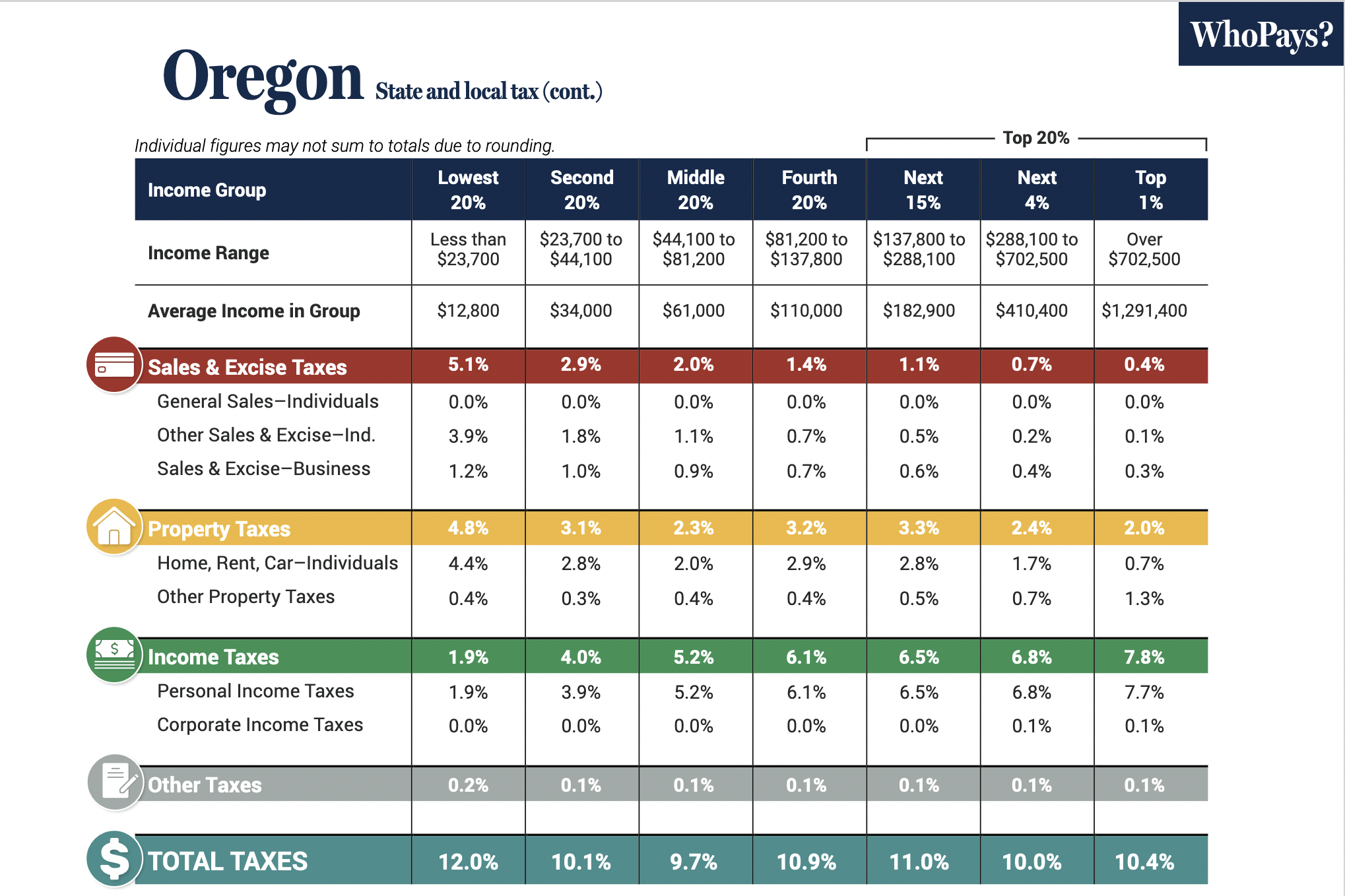
One of the most significant advantages of living in or visiting Oregon is the absence of a state sales tax. This means that purchases of goods and services are not subject to an additional percentage added at the point of sale, unlike in many other states. This can lead to substantial savings for consumers, especially on larger purchases. While this is a boon for shoppers, it also means the state relies more heavily on income tax, property tax, and business taxes to fund public services.
No Personal Property Tax
Oregon also does not levy a personal property tax on items like vehicles, boats, or other personal assets. This is another financial relief for residents. Property taxes in Oregon are primarily focused on real property (land and buildings), and these rates can vary significantly by local jurisdiction.

Other State-Specific Considerations
- Withholding: Employers are required to withhold state income tax from employee wages based on the information provided on the employee’s Withholding Income Tax Form (similar to the federal W-4).
- Estimated Taxes: Individuals who have income not subject to withholding, such as self-employment income or rental income, may be required to make estimated tax payments throughout the year to avoid penalties.
- Retirement Income: Unlike some states, Oregon does tax retirement income, including Social Security benefits, pensions, and IRA/401(k) distributions. However, there are some exemptions and deductions available for certain types of retirement income, particularly for lower-income individuals.
For those considering relocation, understanding how Oregon’s tax structure, particularly its income tax, aligns with their financial situation is a vital step in the decision-making process. While the absence of sales tax is a significant draw, the progressive income tax demands careful financial planning and awareness of available deductions and credits.
LifeOutOfTheBox is a participant in the Amazon Services LLC Associates Program, an affiliate advertising program designed to provide a means for sites to earn advertising fees by advertising and linking to Amazon.com. Amazon, the Amazon logo, AmazonSupply, and the AmazonSupply logo are trademarks of Amazon.com, Inc. or its affiliates. As an Amazon Associate we earn affiliate commissions from qualifying purchases.