
Understanding the cost of renters insurance in New York is crucial for anyone renting an apartment or home in the Empire State. While often overlooked, this protection is a vital component of responsible tenant living. The price you’ll pay is not a one-size-fits-all figure; rather, it’s a dynamic calculation influenced by a multitude of factors. This guide will delve into what dictates your premium, the average costs you can expect, and strategies for obtaining affordable yet comprehensive coverage.
Factors Influencing Renters Insurance Premiums in New York
The cost of renters insurance in New York is meticulously calculated by insurers, taking into account various elements that contribute to the overall risk profile of your rental property and your personal circumstances. Understanding these components can empower you to make informed decisions and potentially lower your premiums.
Location, Location, Location
The neighborhood and borough where your rental property is situated play a significant role in determining your insurance cost. Areas with higher crime rates, such as those with a greater incidence of theft or vandalism, will naturally command higher premiums. Conversely, more affluent or lower-crime areas might see more competitive pricing. For instance, a studio apartment in a historically safe, suburban part of Queens might have a lower premium than a similar dwelling in a bustling, densely populated area of Manhattan. Insurers assess the historical data of claims filed in specific zip codes, including factors like the frequency of fires, burglaries, and natural disasters.
Value of Your Belongings (Personal Property Coverage)
The amount of coverage you opt for on your personal property is a primary driver of your premium. This coverage protects your possessions – furniture, electronics, clothing, and other personal items – in the event of a covered loss like fire, theft, or vandalism. If you own high-value items such as expensive jewelry, art, or a large collection of electronics, you’ll need a higher coverage limit, which will, in turn, increase your premium. It’s essential to conduct a thorough inventory of your belongings to accurately estimate the value you need to insure.
Deductible Amount
The deductible is the amount you agree to pay out-of-pocket before your insurance coverage kicks in after a claim. A higher deductible generally results in a lower monthly premium, as you are taking on more of the initial financial burden in case of an incident. Conversely, a lower deductible means lower out-of-pocket costs for you when filing a claim, but it will lead to a higher premium. When choosing a deductible, it’s important to select an amount that you can comfortably afford to pay if the need arises.
Coverage Limits and Types
Beyond personal property, renters insurance policies typically include liability coverage and additional living expenses (ALE) coverage.
- Liability Coverage: This protects you financially if someone is injured in your rental unit, or if you accidentally cause damage to your landlord’s property. Higher liability limits will increase your premium. For example, opting for $300,000 in liability coverage will be more expensive than choosing $100,000.
- Additional Living Expenses (ALE): Also known as loss of use coverage, ALE covers the costs of temporarily living elsewhere if your rental becomes uninhabitable due to a covered peril. This can include hotel stays, restaurant meals, and other essential living expenses. The higher the estimated daily cost of living for you, the higher the ALE coverage limit, and thus the premium.
Your Claims History
If you have a history of filing insurance claims, whether for renters insurance or other types of policies, it can negatively impact your premium. Insurers view individuals with a past record of claims as higher risk. Conversely, a clean claims history can sometimes lead to discounts.
Building Construction and Safety Features
The type of construction of the building you live in can also influence your premium. Buildings with fire-resistant materials or advanced safety features like sprinkler systems and robust security measures might be perceived as lower risk, potentially leading to lower insurance rates. The age of the building and its proximity to fire stations and hydrants are also considered.
Insurer’s Own Risk Assessment
Each insurance company has its own proprietary algorithms and risk assessment models. This means that even with identical coverage details, the premiums quoted by different insurers can vary significantly. Some companies may specialize in certain types of properties or offer more competitive rates to specific demographics.
Average Cost of Renters Insurance in New York
Pinpointing an exact average for renters insurance in New York is challenging due to the aforementioned variables. However, industry data and expert analysis provide a general range.
National Averages vs. New York Specifics
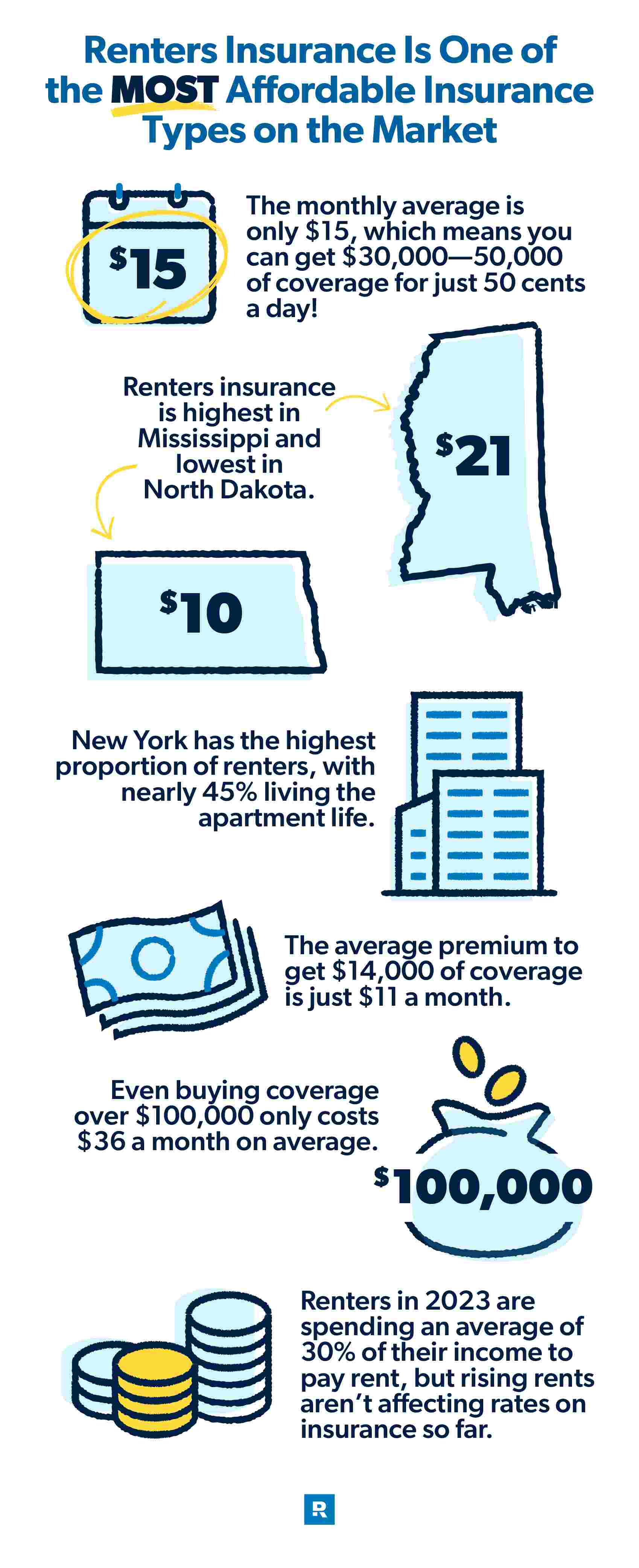
Nationally, renters insurance typically costs between $15 to $30 per month. In New York, due to its densely populated urban centers, higher property values, and increased risk factors associated with urban living, premiums tend to be on the higher end of this spectrum. It’s not uncommon for renters in New York to pay between $20 to $40 per month for a standard renters insurance policy with typical coverage limits. For a more comprehensive policy or for individuals living in high-risk areas, the monthly cost could extend to $50 or more.
Illustrative Examples (Hypothetical Scenarios)
To provide a clearer picture, consider these hypothetical scenarios for renters in New York:
-
Scenario 1: Young Professional in Brooklyn
- Renting a one-bedroom apartment.
- Basic furniture and electronics.
- Coverage: $20,000 for personal property, $100,000 for liability, $10,000 for ALE.
- Deductible: $500.
- Estimated Monthly Premium: $25 – $35.
-
Scenario 2: Family in a Brownstone in Manhattan
- Renting a multi-bedroom apartment.
- Higher value electronics, a collection of artwork, and more extensive furniture.
- Coverage: $50,000 for personal property, $300,000 for liability, $20,000 for ALE.
- Deductible: $1,000.
- Estimated Monthly Premium: $40 – $60.
-
Scenario 3: Student in a Shared Apartment near Columbia University
- Renting a room in a shared apartment.
- Limited personal belongings, primarily essentials.
- Coverage: $10,000 for personal property, $100,000 for liability, $5,000 for ALE.
- Deductible: $500.
- Estimated Monthly Premium: $18 – $28.

These are simplified examples, and actual quotes will vary based on the specific insurer and the precise details of the property and tenant.
Strategies for Obtaining Affordable Renters Insurance
Securing affordable renters insurance in New York doesn’t mean compromising on essential protection. By employing smart strategies, you can significantly reduce your premiums without leaving yourself vulnerable.
Shop Around and Compare Quotes
This is arguably the most effective method for finding affordable insurance. Different insurance companies have varying pricing structures and risk assessments. Dedicate time to obtaining quotes from multiple reputable insurers. Websites that allow you to compare quotes from various providers can be incredibly useful. Don’t just look at the monthly premium; also compare coverage limits, deductibles, and the reputation of the insurance company.
Bundle Your Policies
Many insurance companies offer discounts to customers who purchase multiple policies from them. If you already have auto insurance or another type of insurance, inquire about bundling your renters insurance with your existing policy. This can often lead to a significant reduction in your overall insurance costs.
Increase Your Deductible
As mentioned earlier, opting for a higher deductible can lower your monthly premium. Carefully consider your financial situation to determine a deductible that you can manage if you need to file a claim. A higher deductible is a trade-off: lower immediate cost for a potentially higher cost down the line.
Improve Your Home’s Safety Features
If you live in a building that has recently undergone safety upgrades, such as new fire suppression systems, improved security, or reinforced entryways, inform your insurance provider. These enhancements can sometimes lead to discounts as they reduce the perceived risk for the insurer.
Maintain a Good Credit Score
In many states, including New York, insurance companies use credit-based insurance scores to help determine premiums. Individuals with better credit scores are often seen as less likely to file claims, leading to lower insurance rates. While this factor might not be as impactful as others, maintaining a good credit history can contribute to savings.
Ask About Discounts
Insurance companies offer a variety of discounts that you might qualify for. These can include:
- Non-smoker discounts: If no one in your household smokes.
- Loyalty discounts: For being a long-term customer.
- Security system discounts: If your building has an alarm system.
- Paperless billing discounts: For opting for electronic statements.
- Professional affiliation discounts: Some insurers offer discounts to members of certain professional organizations.
Always ask your insurance agent or representative about any discounts you might be eligible for.
Review and Update Your Coverage Annually
Your insurance needs can change over time. As you acquire new possessions, or if your living situation changes, it’s important to review your renters insurance policy annually. Updating your coverage to reflect your current circumstances can ensure you’re not overpaying for coverage you don’t need or underinsured for what you do have. This annual review is also a good opportunity to shop around again and see if better rates are available.
Understanding What Renters Insurance Covers
Renters insurance is a comprehensive package designed to protect tenants from a variety of unforeseen events. It typically comprises three main types of coverage, each addressing different potential financial exposures.
Personal Property Coverage
This is often the most well-understood aspect of renters insurance. It protects your belongings against covered perils such as fire, smoke, windstorms, vandalism, theft, and certain types of water damage (like a burst pipe). It’s crucial to remember that this coverage generally does not extend to damage caused by floods or earthquakes, which usually require separate policies. The coverage is typically “actual cash value,” meaning it pays the depreciated value of your items. For items like jewelry, art, or high-end electronics, you may need to purchase a “scheduled personal property” endorsement or rider to ensure full replacement cost coverage.
Liability Coverage
Liability protection is a critical, yet often underestimated, component of renters insurance. If a guest slips and falls in your apartment, or if you accidentally cause a fire that damages your landlord’s property, your liability coverage can help pay for the injured person’s medical expenses or the cost to repair the landlord’s property. It can also help cover legal fees if you are sued as a result of such an incident. This coverage is typically offered in increments, such as $100,000, $300,000, or $500,000, with higher limits translating to higher premiums.
Additional Living Expenses (ALE)
Also known as “loss of use” coverage, ALE is designed to help you maintain your standard of living if your rental unit becomes uninhabitable due to a covered event. This could be due to a fire, a severe storm, or a similar disaster. ALE can reimburse you for the costs of temporary housing (like a hotel or short-term rental), meals, laundry, and even pet boarding if you need to evacuate. The coverage limit for ALE is usually a specific dollar amount or a percentage of your personal property coverage.

Conclusion: The Value of Renters Insurance in New York
While the exact cost of renters insurance in New York fluctuates based on numerous individual factors, the overall value it provides is undeniable. For a relatively modest monthly outlay, typically ranging from $20 to $40, tenants gain significant peace of mind and financial security. It’s an essential tool for protecting your personal property, safeguarding yourself from liability claims, and ensuring you have a place to live and resources to manage if disaster strikes. By understanding the cost drivers and employing smart shopping strategies, renters in New York can secure affordable and robust coverage, making it an indispensable part of their housing arrangements.
LifeOutOfTheBox is a participant in the Amazon Services LLC Associates Program, an affiliate advertising program designed to provide a means for sites to earn advertising fees by advertising and linking to Amazon.com. Amazon, the Amazon logo, AmazonSupply, and the AmazonSupply logo are trademarks of Amazon.com, Inc. or its affiliates. As an Amazon Associate we earn affiliate commissions from qualifying purchases.