
Navigating the vibrant metropolis of Chicago often involves traversing its extensive network of toll roads. For both local commuters and visitors exploring the Windy City, understanding the cost of these tolls is essential for efficient travel planning and budgeting. This guide aims to demystify the toll system in Chicago, detailing the various routes, payment methods, and general pricing structures to ensure a smooth journey through this iconic American city.
Understanding Chicago’s Toll Road Network
Chicago is served by the Illinois Tollway, a comprehensive system of toll highways that connect the city to its suburbs and surrounding regions. These routes are crucial for alleviating congestion on non-tolled arterial roads and are designed to provide faster, more predictable travel times. The primary tollways managed by the Illinois Tollway include:

- Jane Addams Memorial Tollway (I-90): Stretching northwest from the city, this route is a major artery connecting Chicago to Rockford and Wisconsin. It’s a vital corridor for freight and passenger traffic.
- Ronald Reagan Memorial Tollway (I-88): Extending west from Oak Brook, this tollway serves the western suburbs and provides access to the Quad Cities and Iowa.
- East-West Tollway (I-88): This is essentially the same highway as the Ronald Reagan Memorial Tollway, commonly referred to by its historical name.
- Veterans Memorial Tollway (I-355): This north-south tollway provides a crucial bypass around the western edge of the metropolitan area, linking I-80 in the south to I-90 in the north. It’s a key component for diverting traffic away from the city center.
- Tri-State Tollway (I-94, I-80, I-294): This extensive system encircles the southern and eastern portions of the metropolitan area, connecting Indiana and Wisconsin. It is divided into several segments, with I-294 being a significant portion of the tolled route within the immediate Chicago area.
- Illinois Tollway Authority (ITA): This governing body is responsible for the planning, construction, maintenance, and operation of these toll roads, ensuring they remain in optimal condition for travelers.
The presence of these tollways means that many journeys into, out of, or around Chicago will likely involve passing through toll plazas or encountering electronic tolling gantries. The cost of these tolls can vary based on the specific route, the distance traveled, and the vehicle’s classification.
Toll Collection Methods
The Illinois Tollway utilizes an all-electronic toll collection system, commonly known as Open Road Tolling (ORT). This system has significantly reduced congestion at toll plazas by eliminating the need for vehicles to stop. There are two primary ways to pay tolls:
- I-PASS: This is the Illinois Tollway’s own electronic transponder. When mounted in a vehicle, it communicates wirelessly with tolling equipment, automatically deducting the toll amount from a pre-paid account. I-PASS holders often receive discounted toll rates compared to other payment methods.
- E-ZPass: Many neighboring states and toll authorities use the E-ZPass system. The Illinois Tollway is compatible with E-ZPass transponders, meaning if you have an E-ZPass account from another state, it will work on Chicago’s tollways.
- Invoice (Toll by Mail): For vehicles without an I-PASS or E-ZPass, the toll authority captures the license plate image and sends an invoice to the registered owner of the vehicle. This method is generally more expensive than using a transponder due to administrative fees. It’s crucial to pay these invoices promptly to avoid late fees and potential penalties.
For visitors, the most straightforward approach is often to rent a car with an I-PASS or E-ZPass transponder already installed, or to be prepared to receive a toll invoice. Many rental companies offer toll payment plans for an additional fee, which can simplify the process of managing tolls during your stay.
How Tolls Are Calculated in Chicago
The pricing of tolls in Chicago is not a flat rate but rather a dynamic system based on several factors. The Illinois Tollway has implemented a mileage-based tolling system on many of its routes, meaning the longer you travel on a tolled segment, the more you will pay.
Vehicle Classification
The first major factor influencing toll cost is the vehicle’s classification. Tolls are typically categorized as follows:
- Class A: Passenger vehicles (cars, motorcycles, SUVs, pickup trucks) with a Gross Vehicle Weight Rating (GVWR) of 8,000 pounds or less and two axles. This is the most common classification for most travelers.
- Class B: Larger vehicles with two axles, such as RVs and some larger trucks, or vehicles with a GVWR over 8,000 pounds.
- Class C, D, E, F: These classes generally apply to commercial vehicles with three or more axles, with costs increasing significantly with the number of axles.
For the average traveler renting a car or driving a personal vehicle, the relevant classification will almost always be Class A.
Distance Traveled and Specific Routes
The Illinois Tollway’s pricing structure is often based on the specific segments of the tollway you use. For example, traveling the entire length of the Jane Addams Memorial Tollway (I-90) will incur a different total cost than just using a short segment of the Veterans Memorial Tollway (I-355).
The Tri-State Tollway (I-294), in particular, can become quite expensive for longer journeys due to its extensive network and the number of toll points. It serves as a major gateway into the city from the north and south and is vital for reaching O’Hare International Airport.
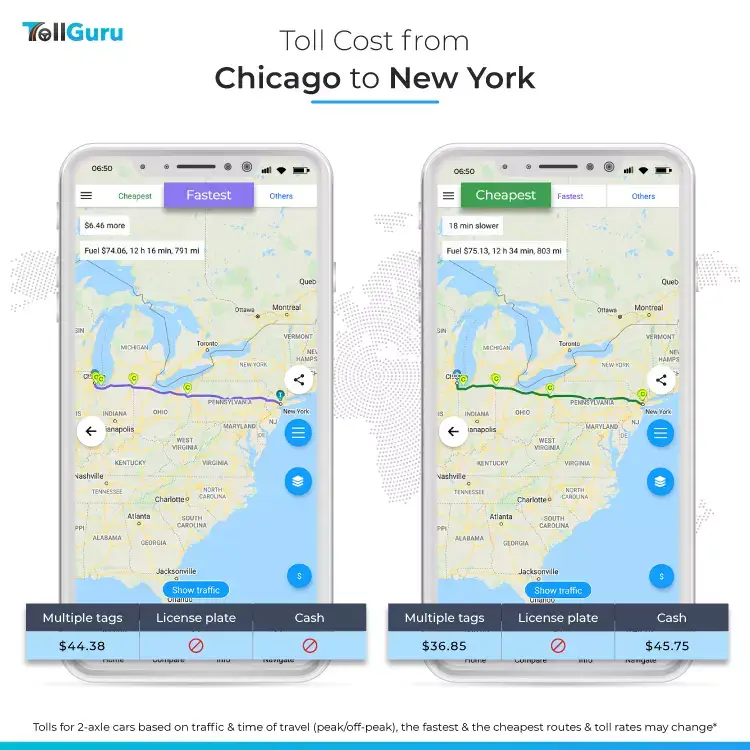
I-PASS vs. Invoice Pricing
A significant disparity exists between the toll rates for I-PASS/E-ZPass users and those who receive a toll invoice.
- I-PASS/E-ZPass: These users benefit from the lowest possible rates. The Illinois Tollway continuously aims to incentivize transponder use by offering these discounts. For a Class A vehicle, tolls can range from under $1 to several dollars per segment, depending on the route and distance.
- Invoice (Toll by Mail): This method incurs higher costs. In addition to the base toll rate, an administrative fee is added to each invoice. This fee can double or even triple the cost of a single toll passage, making it the most expensive way to pay. For instance, a $2 toll might end up costing $5 or more on an invoice.
Sample Toll Scenarios (Illustrative)
To provide a clearer picture, let’s consider some illustrative examples for a Class A vehicle. Please note that these are approximate and subject to change.
- A short hop on I-355: A few miles on the Veterans Memorial Tollway (I-355) might cost approximately $0.75 to $1.50 with I-PASS. The same trip via invoice could be $2.50 to $4.00.
- A moderate journey on I-90: Traveling a significant portion of the Jane Addams Memorial Tollway (I-90) from the northwest suburbs towards the city could cost in the range of $3.00 to $5.00 with I-PASS. Via invoice, this could escalate to $8.00 to $15.00 or more.
- A comprehensive I-294 trip: A longer drive on the Tri-State Tollway (I-294), especially if connecting from Indiana or Wisconsin and heading towards O’Hare or south, could accumulate tolls ranging from $5.00 to $10.00 or even higher with I-PASS. Invoice users could face charges of $15.00 to $30.00 or more for the same journey.
It’s essential to consult the official Illinois Tollway website or their mobile app for the most accurate and up-to-date toll rates. They provide detailed toll calculators and maps that allow you to plan your routes and estimate costs precisely.
Planning Your Trip and Managing Toll Costs
When planning a visit to Chicago or navigating within the metropolitan area, incorporating toll costs into your budget is a practical step. Here are some tips for managing your expenses:
Utilize the Illinois Tollway Website and App
The Illinois Tollway provides a wealth of information on its official website. You can find:
- Toll Rate Charts: Detailed breakdowns of tolls by route and vehicle class.
- Toll Calculator: An interactive tool to estimate the cost of specific routes.
- I-PASS Information: Details on how to obtain and manage an I-PASS account.
- Invoice Payment Portal: Where you can pay outstanding toll invoices.
- Mobile App: The “i-Pass” app (or similar official app) often provides real-time toll information, account management, and payment options.
Consider Your Itinerary
If your travel plans involve frequent use of toll roads, acquiring an I-PASS or E-ZPass transponder is highly recommended. Even for a short visit, the savings can quickly offset the initial cost or the hassle of managing invoices. If you’re renting a car, inquire about their toll payment options. Some rental agencies offer unlimited toll plans, which can be cost-effective if you anticipate heavy toll road usage.
Alternative Routes
For shorter trips or if you are not in a hurry, exploring alternative non-tolled routes can save money. Chicago has an extensive network of surface streets and state highways. However, be aware that these routes often experience significantly higher traffic volumes and can lead to longer travel times, especially during peak hours. Commuting through areas like the Kennedy Expressway (I-90), Dan Ryan Expressway (I-90/I-94), or Eisenhower Expressway (I-290) without the benefit of tolling can be time-consuming.

Understanding Tolls for Airport Travel
Traveling to and from O’Hare International Airport or Midway International Airport often involves using toll roads, particularly the Tri-State Tollway (I-294) for O’Hare. The cost of these tolls should be factored into your airport transportation budget, whether you’re driving yourself, using a taxi, or ride-sharing service.
By understanding the structure of Chicago’s tollways, the methods of payment, and how tolls are calculated, travelers can navigate the city more efficiently and cost-effectively. Whether you’re visiting iconic landmarks like the Art Institute of Chicago or exploring neighborhoods like Wicker Park, a little planning around toll roads can make your journey a smoother experience.
LifeOutOfTheBox is a participant in the Amazon Services LLC Associates Program, an affiliate advertising program designed to provide a means for sites to earn advertising fees by advertising and linking to Amazon.com. Amazon, the Amazon logo, AmazonSupply, and the AmazonSupply logo are trademarks of Amazon.com, Inc. or its affiliates. As an Amazon Associate we earn affiliate commissions from qualifying purchases.