
Welcoming a new child into the family is a momentous occasion, a profound life change that reshapes personal priorities and professional pathways. For expectant parents working in California, understanding the nuances of maternity leave can alleviate significant stress and allow for a more serene transition into parenthood. California is renowned for having some of the most comprehensive and generous family leave policies in the United States, often extending beyond federal mandates. Navigating these various layers of protection, from job security to financial compensation, is crucial for employees planning for maternity leave. This article delves into the intricacies of maternity leave in the Golden State, offering a clear and insightful guide for those preparing for this significant life event.
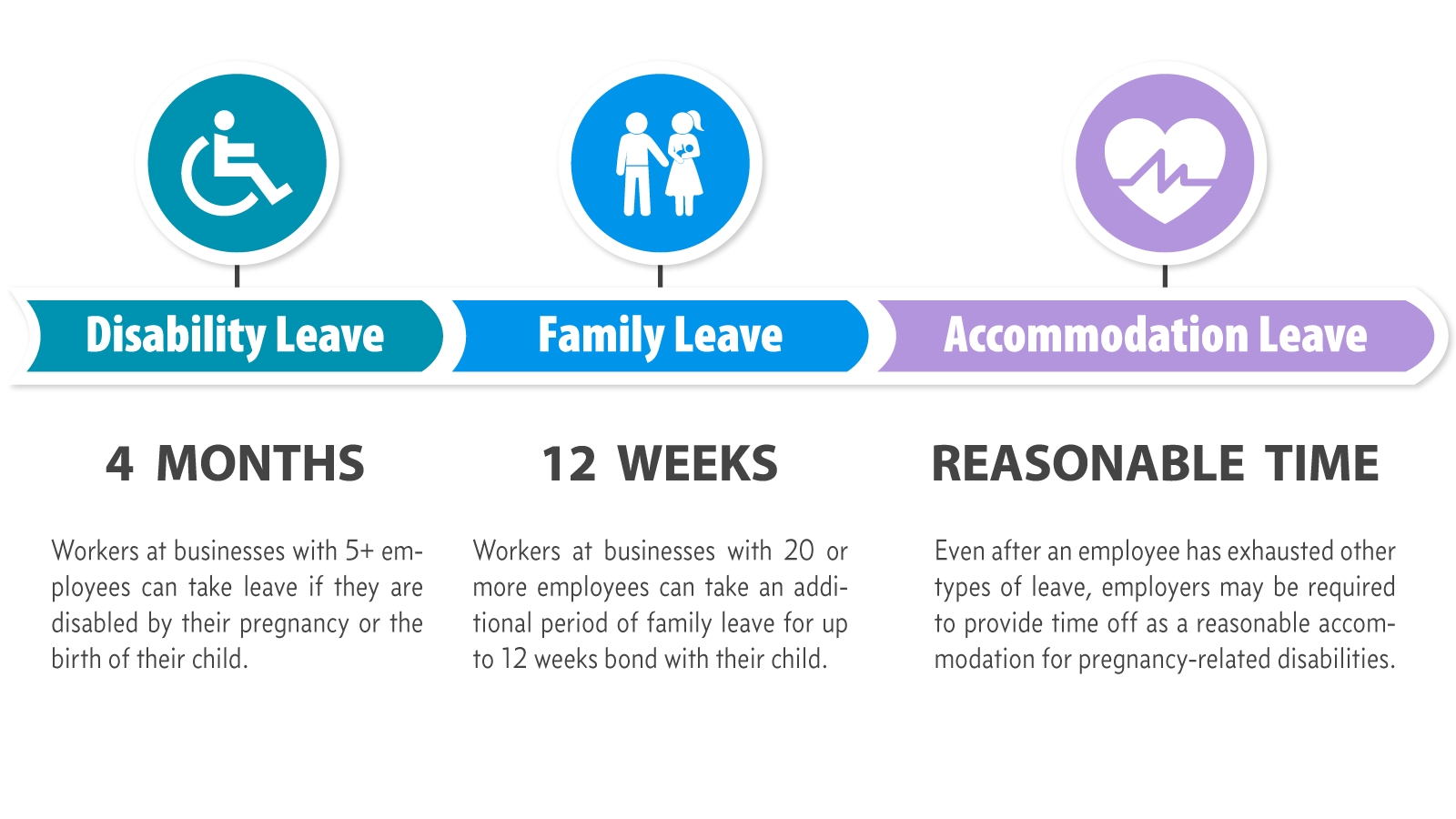
The concept of maternity leave encompasses several distinct periods and types of leave, each governed by different federal and state laws. These often overlap, allowing eligible employees to combine various benefits for an extended period away from work. Understanding which laws apply to your specific situation, the duration of leave you can take, and how you can receive compensation during this time is paramount. From the initial period of pregnancy-related disability to the invaluable bonding time with a newborn, California’s framework aims to support new families comprehensively, ensuring both health and financial stability during this pivotal chapter.
Understanding the Landscape of Leave in California
California’s approach to family leave is a tapestry woven from both federal and state regulations, designed to offer robust protections for employees. This multi-layered system ensures that a wide array of workers can access various forms of leave, offering both job protection and financial support. It’s essential to understand the interplay between these different laws, as they collectively shape the landscape of maternity leave.
Federal Protections: The FMLA
At the federal level, the cornerstone of family and medical leave is the Family and Medical Leave Act (FMLA). Enacted in 1993, the FMLA provides eligible employees with up to 12 weeks of unpaid, job-protected leave per year for specific family and medical reasons. These reasons include the birth of a child and to care for the newborn child within one year of birth, as well as the placement with the employee of a child for adoption or foster care. To be eligible under the FMLA, an employee must have worked for a covered employer for at least 12 months, accumulated at least 1,250 hours of service during the 12-month period immediately preceding the leave, and work at a location where the employer has 50 or more employees within 75 miles. While the FMLA guarantees job protection, it does not mandate paid leave, which is where California’s state laws significantly enhance employee benefits.
State-Specific Laws: A California Advantage
California goes above and beyond federal requirements, offering a suite of state-specific laws that provide additional and often more generous protections. These laws are critical for understanding the full scope of maternity leave options available to workers in the state.
First, the Pregnancy Disability Leave Law (PDL) ensures that pregnant employees are entitled to job-protected leave for disabilities related to pregnancy, childbirth, or related medical conditions. This leave can last for up to four months (or 17 1/3 weeks) per pregnancy. Unlike the FMLA, the PDL applies to employers with five or more employees and has a lower eligibility threshold, meaning more workers qualify. PDL can be taken before and after childbirth, as medically necessary.
Second, the California Family Rights Act (CFRA) mirrors many aspects of the FMLA but extends its protections. CFRA provides up to 12 weeks of job-protected leave for baby bonding, caring for a seriously ill family member, or for the employee’s own serious health condition. Critically, CFRA leave for baby bonding is separate from PDL. This means an employee can take up to four months of PDL for pregnancy disability and then take another 12 weeks of CFRA for bonding with the new child, totaling a potentially significant amount of leave. CFRA applies to employers with five or more employees, mirroring the PDL threshold and offering broader coverage than the federal FMLA.
Decoding Eligibility and Entitlement
Understanding who qualifies for these various leaves and the specific durations they offer is key to planning for maternity leave. The overlapping nature of federal and state laws means that an employee’s total leave entitlement can vary based on their employer’s size and their personal work history.
Who Qualifies for Leave?
Eligibility for maternity leave in California depends on the specific law being invoked:
- FMLA: Applies to employers with 50 or more employees within 75 miles. Employees must have worked for the employer for at least 12 months and completed 1,250 hours of service in the past year.
- PDL: Applies to employers with five or more employees. There is no minimum length of service or hours worked required; eligibility begins from day one of employment.
- CFRA: Applies to employers with five or more employees. Employees must have worked for the employer for at least 12 months and completed 1,250 hours of service in the past year.
It’s important to note that if an employee qualifies for both FMLA and CFRA, the leave periods often run concurrently for reasons like the employee’s own serious health condition (though not for pregnancy disability under PDL, which is separate).
Duration: How Long Can You Be Away?
The total duration of maternity leave for a California employee can be substantial:
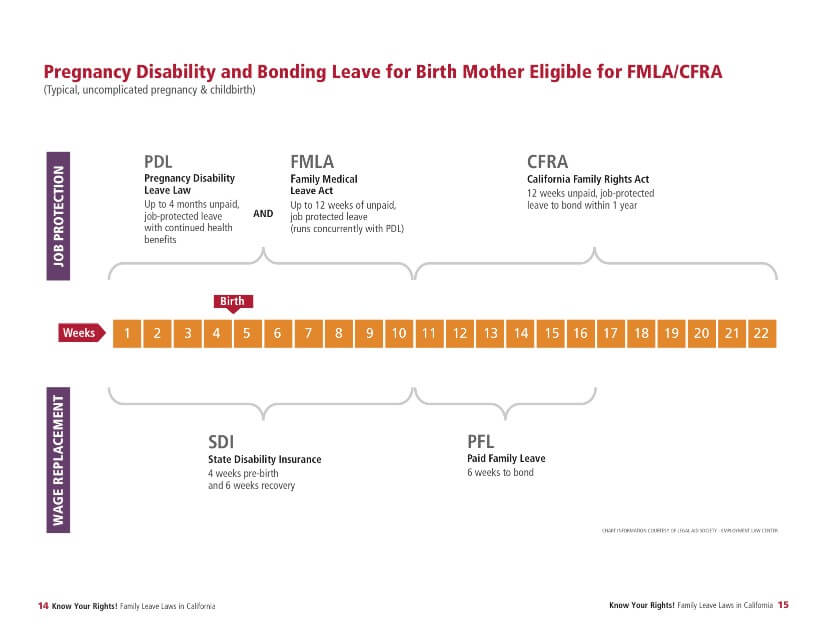
- Pregnancy Disability Leave (PDL): Up to four months (or 17 1/3 weeks) for pregnancy-related disability. This typically covers the period immediately before and after childbirth. For a normal, uncomplicated pregnancy, doctors often certify disability for up to four weeks before the estimated due date and six weeks after a vaginal delivery, or eight weeks after a Cesarean section. This entire period falls under PDL.
- Baby Bonding Leave (CFRA): After the PDL period ends, an eligible employee can take an additional 12 weeks of job-protected leave under CFRA for bonding with the new child. This leave must be taken within one year of the child’s birth.
Combining these, an employee could potentially take up to approximately 6-7 months of job-protected leave (17 1/3 weeks of PDL plus 12 weeks of CFRA). This duration is among the most generous in the nation, offering significant time for recovery and bonding.
Financial Aspects: Getting Paid During Leave
While FMLA and CFRA primarily ensure job protection, California also provides mechanisms for partial wage replacement during maternity leave, offering critical financial support to new parents.
State Disability Insurance (SDI) for Pregnancy
California’s State Disability Insurance (SDI) program provides short-term wage replacement to eligible workers who lose wages when they are unable to work due to a non-work-related illness, injury, or pregnancy. For pregnancy, SDI typically covers the period of disability certified by a doctor. This usually includes up to four weeks before the expected due date and six to eight weeks after childbirth (for vaginal and C-section deliveries, respectively). The benefit amount is generally 60-70% of the employee’s regular wages, up to a maximum weekly amount set annually. To be eligible for SDI, an employee must have paid into the SDI program through payroll deductions (which most California workers do) and meet minimum earnings requirements in a prior base period. Applications for SDI are processed through the Employment Development Department (EDD).
Paid Family Leave (PFL) for Bonding
Following the period covered by SDI for pregnancy disability, California’s Paid Family Leave (PFL) program steps in to provide wage replacement for bonding with a new child. PFL offers up to eight weeks of partial wage replacement (also generally 60-70% of wages, up to the maximum weekly amount) to eligible individuals who take time off work to bond with a new child. This leave must be taken within one year of the child’s birth or placement. Like SDI, PFL is funded through employee payroll deductions and administered by the EDD. PFL is often taken concurrently with CFRA leave for bonding, meaning employees can receive partial pay while their job is protected.
Employer-Provided Benefits
Beyond state programs, many employers in California offer their own paid leave benefits, such as short-term disability insurance, parental leave, or the ability to use accrued sick leave or vacation time. These employer-specific benefits can often supplement or run concurrently with state benefits, potentially allowing employees to receive 100% of their wages for a portion of their leave. It’s crucial for employees to review their company’s policies and speak with their HR department to understand what additional benefits might be available.
Navigating Your Rights and Responsibilities
Understanding your rights is crucial, but so is fulfilling your responsibilities as an employee. Proactive communication and diligent record-keeping can make the leave process significantly smoother for both the employee and the employer.
Job Protection and Reinstatement
A core feature of California’s leave laws is job protection. Under FMLA, PDL, and CFRA, eligible employees are entitled to return to the same or a comparable position upon the conclusion of their leave. This means the employer cannot demote the employee, reduce their pay, or alter their job duties in a way that is detrimental simply because they took leave. Employers are also generally required to maintain an employee’s health benefits during the leave period, under the same terms as if they had continued to work. It is illegal for an employer to retaliate against an employee for exercising their right to take maternity leave.
Communicating with Your Employer
Open and timely communication with your employer is paramount. Employees are generally required to provide reasonable notice of their intent to take leave. For foreseeable events like childbirth, this typically means giving at least 30 days’ notice. If 30 days’ notice is not practicable (e.g., due to a premature birth or unexpected medical complication), notice should be given as soon as possible. It is beneficial to communicate:
- Your estimated due date.
- The anticipated start and end dates of your leave.
- Your intent to use a combination of PDL, CFRA, and any employer-provided leave.
- Your plans for returning to work.
Maintaining a written record of communications and requests can be invaluable if any disputes arise.
Planning for a Smooth Transition
A well-planned maternity leave not only benefits the expectant parent but also ensures a smoother transition for their team and organization. Proactive steps can help maximize the benefits and minimize stress.
Proactive Planning and Documentation
Start planning early. As soon as you confirm your pregnancy, begin researching your employer’s specific policies and gather information on state and federal laws.
- Consult HR: Meet with your Human Resources department to discuss your company’s specific maternity leave policies, including any paid parental leave, short-term disability, and how company benefits coordinate with state programs.
- Review Pay Stubs: Verify that you are contributing to SDI through your payroll deductions.
- Understand Processes: Familiarize yourself with the application procedures for SDI and PFL through the EDD. These applications often require medical certification from your healthcare provider.
- Create a Leave Plan: Work with your manager to develop a plan for your absence, including who will cover your responsibilities and how critical tasks will be handled. This helps ensure business continuity and reduces stress upon your return.
Seeking Professional Guidance
The complexities of California’s maternity leave laws can be daunting. If you have questions or encounter difficulties, several resources can provide assistance:
- EDD: The official source for information and applications related to SDI and PFL. Their website and customer service lines can offer valuable guidance.
- California Department of Fair Employment and Housing (DFEH): The DFEH enforces California’s civil rights laws, including those related to pregnancy disability and family leave. They can provide information on your rights and assist if you believe your rights have been violated.
- Labor Attorneys or Employee Rights Organizations: For complex situations or disputes, consulting with a labor attorney specializing in employee rights can provide tailored advice and representation.
In conclusion, California’s maternity leave policies are designed to be a significant support system for new parents, offering extensive job protection and partial wage replacement. By understanding the federal FMLA and the more generous state laws like PDL, CFRA, SDI, and PFL, expectant parents can navigate this exciting transition with confidence and peace of mind. Proactive planning, clear communication, and leveraging available resources are key to a smooth and well-supported maternity leave experience in California.
LifeOutOfTheBox is a participant in the Amazon Services LLC Associates Program, an affiliate advertising program designed to provide a means for sites to earn advertising fees by advertising and linking to Amazon.com. Amazon, the Amazon logo, AmazonSupply, and the AmazonSupply logo are trademarks of Amazon.com, Inc. or its affiliates. As an Amazon Associate we earn affiliate commissions from qualifying purchases.