
The New York subway is a colossal entity, an urban circulatory system that underpins the very rhythm of the city. It’s more than just a mode of transport; it’s an experience, a canvas for the diverse tapestry of New York City, and a vital component for any visitor seeking to truly immerse themselves. Understanding “how much” the subway entails—in terms of cost, reach, and experience—is key to unlocking efficient and authentic exploration.
The Cost of a Journey
Navigating the New York subway begins with understanding its fare structure. While seemingly straightforward, the economics of a single ride can branch into various options depending on usage patterns and the desire for convenience.

Single Rides and MetroCards
The fundamental unit of fare is the single ride. For a standard fare, you can purchase a single-use ticket via OMNY (One Metro New York), the contactless payment system, or through a physical MetroCard. As of recent updates, a single ride typically costs $2.75. This is the most basic way to enter the system, perfect for infrequent users or those who prefer to pay as they go.
The MetroCard, a plastic card that can be refilled, has historically offered some benefits for bulk purchases. However, with the full implementation of OMNY, the reliance on physical MetroCards has diminished. For those who still prefer them, you can buy a MetroCard at station vending machines, and there’s a $1.00 card fee for new cards. You can then load either “Pay-Per-Ride” value onto it, which functions similarly to OMNY, or an unlimited amount.
Unlimited Rides: For the Avid Explorer
For travelers planning to utilize the subway frequently, especially for sightseeing and exploring multiple boroughs, an unlimited ride option becomes significantly more cost-effective. The New York Metropolitan Transportation Authority (MTA) offers 7-day and 30-day unlimited ride passes.
- 7-Day Unlimited Ride: This pass offers unlimited subway and local bus rides for seven consecutive days. The current price is $33.00. This is an excellent value if you anticipate taking more than 12 rides within a week, making it ideal for a short but intensive visit to New York City. It allows for spontaneous detours and late-night explorations without the constant worry of fare accumulation.
- 30-Day Unlimited Ride: For longer stays or if you’re a digital nomad working remotely from New York, the 30-day unlimited ride pass, priced at $127.00, provides the best value. This pass offers unlimited subway and local bus rides for 30 consecutive days. It removes any fare-related concerns and encourages deep dives into neighborhoods, from the artistic enclaves of Bushwick to the historic streets of Harlem.
Fare Capping with OMNY
A significant innovation in the fare system is OMNY’s fare capping. This means that after you’ve paid for a certain number of rides using the same contactless payment method (credit/debit card, smartphone, or wearable device) within a specific period, you will automatically receive a free ride. The fare cap is equivalent to the cost of a 7-day unlimited pass. So, if you use OMNY and your fares add up to $33.00 within a seven-day period, any subsequent rides during that week will be free. This offers the flexibility of pay-as-you-go with the eventual benefit of an unlimited pass, without the upfront commitment.
Special Fares and Discounts
While the standard fares apply to most adult riders, there are provisions for specific groups. Children under 44 inches tall ride for free when accompanied by a fare-paying adult. Reduced-fare programs are available for seniors (65 and older) and people with disabilities, often requiring an application and a specific reduced-fare card. These programs ensure accessibility for a wider range of New Yorkers and visitors.
The Reach and Network
The “how much” of the New York subway also extends to its sheer geographical scope. The system is one of the most extensive in the world, connecting not just the iconic landmarks of Manhattan but also the diverse outer boroughs of Brooklyn, Queens, The Bronx, and Staten Island.

An Extensive Network
The MTA operates 24 lines across 472 stations. This intricate web of tracks and platforms stretches over 665 miles of track. This means that almost any point of interest within the five boroughs is likely accessible by subway. Whether you’re heading to the glittering lights of Times Square, the artistic hub of Chelsea, the historic grounds of Governors Island, the vibrant food scene in Jackson Heights, or the tranquil shores of Rockaway Beach, the subway is your most reliable and often quickest connection.
Accessibility Considerations
While the network is vast, accessibility for individuals with disabilities is an ongoing focus. Not all stations are fully accessible, meaning they lack elevators or ramps. The MTA is continually working to upgrade stations, but it’s advisable for travelers with mobility challenges to check station accessibility in advance using the MTA’s official resources. Many newer lines and renovated stations are designed with universal accessibility in mind, featuring elevators and level boarding.
24/7 Operation
A defining characteristic of the New York subway is its 24-hour operation, seven days a week. This is a remarkable feat for any public transit system and offers unparalleled freedom for exploration. Late-night flights arriving at JFK Airport or LaGuardia Airport, early morning trips to catch the sunrise over the East River, or spontaneous evening concerts mean you are never stranded. This round-the-clock service is fundamental to the city’s relentless energy and a significant part of its “how much” value proposition for visitors.
The Experience Beyond the Ride
The cost and reach are tangible aspects of the New York subway, but “how much” it offers extends into the realm of experience, culture, and practicality.
A Slice of New York Life
Riding the subway is an intrinsic part of the New York experience. It’s where you’ll encounter the city’s diverse population: business professionals en route to Wall Street, students heading to Columbia University, artists with portfolios in tow, families on an adventure, and tourists with wide-eyed wonder. It’s a microcosm of the city, offering a unique window into the lives of its residents. The sounds, the smells, the conversations overheard—all contribute to an authentic, if sometimes overwhelming, sensory immersion.
Navigating the System: Tips for Travelers
To make the most of your subway journeys, a few practical tips are invaluable:
- Download a reliable transit app: Apps like Citymapper or Google Maps provide real-time train information, service alerts, and route planning. They are indispensable tools for efficient navigation.
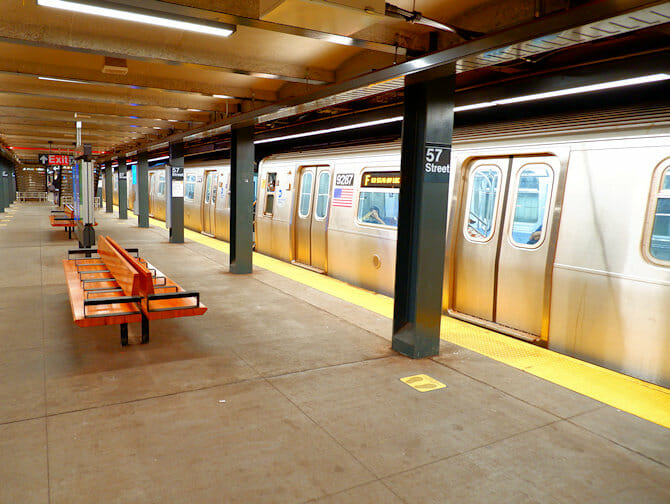
- Understand the lines and their directions: Pay attention to the letter or number of the line and the direction (Uptown/Downtown, Brooklyn-bound, Queens-bound). Signs on the platform and inside the train cars indicate the destination.
- Mind the gap: A common phrase that serves as a reminder to be aware of the space between the platform and the train.
- Let people exit before boarding: This is a courtesy that speeds up boarding times for everyone.
- Be aware of your surroundings: Like any major city transit system, it’s wise to be mindful of your belongings and personal safety, especially during off-peak hours or on less crowded trains.
- Weekend changes: Be aware that service patterns can change on weekends due to track maintenance. Always check for advisories.
Connecting to Attractions and Neighborhoods
The subway is the most direct link to virtually every major attraction and neighborhood in New York City.
- For history and culture buffs: The American Museum of Natural History and the Metropolitan Museum of Art in Upper East Side are easily reachable.
- For iconic views: Take the train to Battery Park for views of the Statue of Liberty or to DUMBO in Brooklyn for panoramic shots of the Manhattan skyline.
- For entertainment: Times Square and the Theater District are central hubs served by numerous lines.
- For diverse culinary experiences: Explore neighborhoods like Flushing, Queens, for authentic Chinese cuisine, or Arthur Avenue in The Bronx for Italian delights.
In essence, “how much New York Subway?” is a question that spans cost, coverage, and cultural immersion. It’s a system that, for a relatively low cost, grants access to an unparalleled urban landscape. Understanding its nuances—from fare structures and network reach to the practicalities of navigation—empowers travelers to experience the true heartbeat of New York City.
LifeOutOfTheBox is a participant in the Amazon Services LLC Associates Program, an affiliate advertising program designed to provide a means for sites to earn advertising fees by advertising and linking to Amazon.com. Amazon, the Amazon logo, AmazonSupply, and the AmazonSupply logo are trademarks of Amazon.com, Inc. or its affiliates. As an Amazon Associate we earn affiliate commissions from qualifying purchases.