
Understanding the tax implications of a bonus, especially in a state like California, is crucial for financial planning. A bonus, while a welcome reward, is treated as income and is subject to federal and state income taxes, as well as other payroll taxes. The exact amount of tax you’ll pay depends on several factors, including your total annual income, your tax bracket, and how your employer chooses to handle the bonus withholding.
Understanding Bonus Taxation in California
Bonuses are not considered gifts; they are supplemental wages. This means they are taxed differently than your regular salary, primarily in how the withholding is calculated. The Internal Revenue Service (IRS) and the California Franchise Tax Board have specific rules for taxing these payments.
Supplemental Wages vs. Regular Wages
Regular wages are typically paid on a fixed schedule (e.g., weekly, bi-weekly) and are subject to standard withholding based on your W-4 form. Bonuses, on the other hand, fall under the category of supplemental wages. This classification allows employers more flexibility in how they calculate and remit the taxes due.
Methods of Bonus Withholding
Employers have two primary methods for calculating income tax withholding on supplemental wages like bonuses:
- The Percentage Method: This is the most common method for bonuses. Under this method, the employer treats the bonus as a separate payment and applies a flat withholding rate to it. For federal taxes, this rate is currently 22% for supplemental wages up to $1 million. For any amount exceeding $1 million, a higher rate applies.
- The Aggregate Method: In this method, the employer combines the bonus with the employee’s regular wages for the current pay period and then calculates the withholding as if it were a single, larger paycheck. This method typically results in a higher withholding amount for that specific pay period because it pushes a larger sum into higher tax brackets.
Federal Withholding Rate for Bonuses
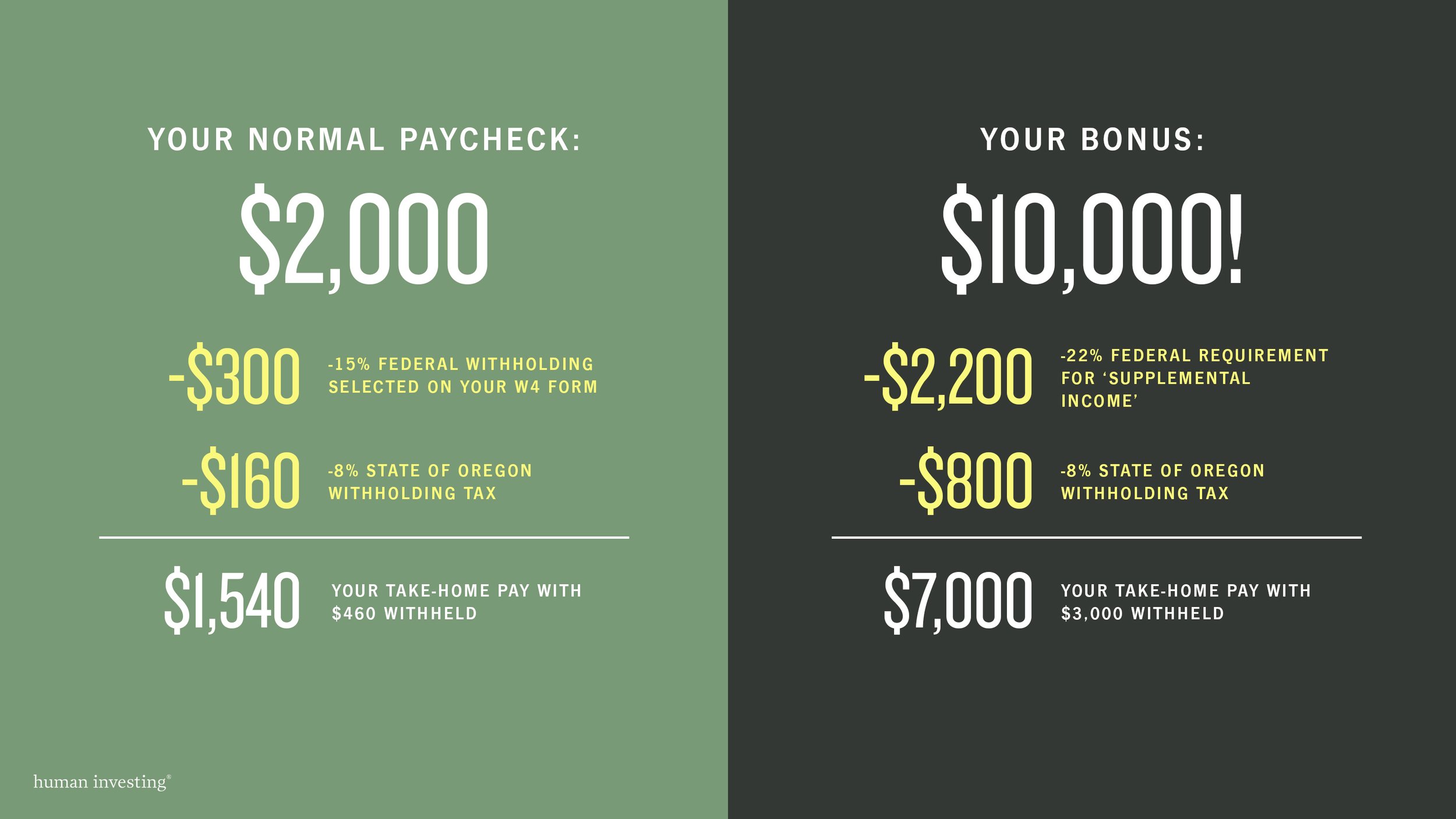
The federal flat rate of 22% for bonuses below $1 million is a significant factor. This rate is applied regardless of your individual tax bracket for your regular wages. This can sometimes lead to over-withholding if your overall tax bracket is lower than 22%. However, it simplifies the process for employers.
California State Withholding for Bonuses
California also has specific rules for withholding taxes on supplemental wages. Similar to the federal approach, California often uses a flat rate for supplemental wages. As of recent regulations, the state flat rate for supplemental wages is generally 6.6% for amounts up to $1 million. However, it’s important to note that California tax laws can change, and there might be specific situations or higher income thresholds that alter this rate. Your employer will use your submitted California DE 4 form to determine the appropriate state withholding.
Social Security and Medicare Taxes
In addition to income taxes, bonuses are also subject to FICA taxes (Federal Insurance Contributions Act). This includes:
- Social Security Tax: Currently 6.2% on earnings up to an annual limit (which changes yearly). This tax is paid by both the employee and the employer.
- Medicare Tax: Currently 1.45% on all earnings, with no income limit. An additional Medicare tax of 0.9% applies to earnings above a certain threshold, paid solely by the employee.
These taxes are generally withheld at the same rate as your regular wages, and the annual limits for Social Security still apply. A large bonus could push you over the Social Security wage base, meaning you’ll only pay Social Security tax on the portion of your income up to that limit.
Factors Influencing Your Net Bonus Amount
Several personal and employer-specific factors will determine the final amount of your bonus that lands in your bank account.
Your Total Annual Income and Tax Bracket
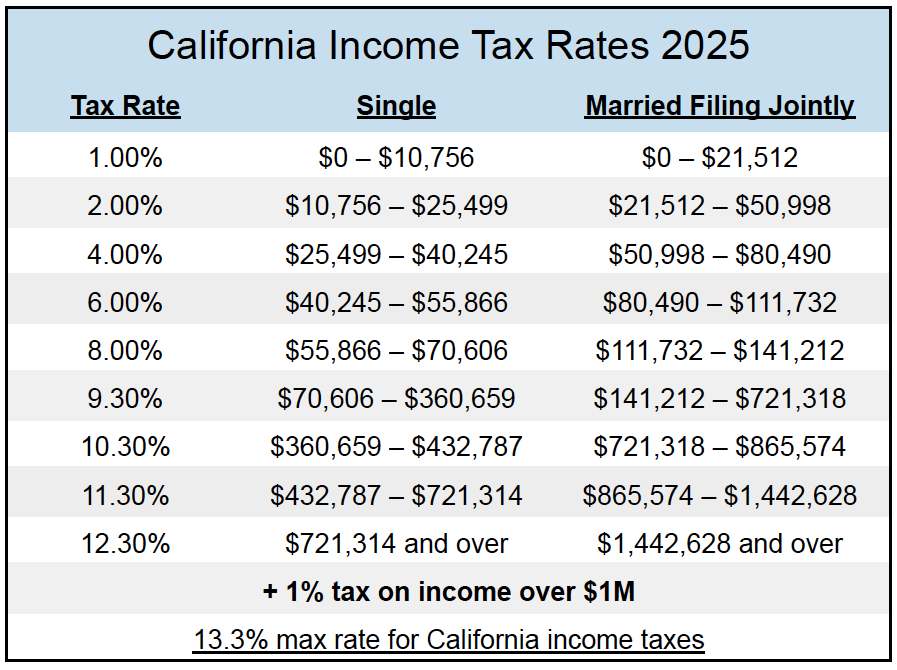
While the 22% federal flat rate for bonuses might seem straightforward, your overall tax situation matters. If your regular income places you in a tax bracket significantly lower than 22% (e.g., 10% or 12%), the flat withholding on your bonus means more tax is being held back upfront than your eventual annual tax liability might require. Conversely, if you are in a higher bracket, the flat rate might not be enough to cover your final tax obligation, leading to a bill when you file. California has a progressive tax system, meaning higher earners pay a larger percentage of their income in taxes.
Progressive Tax Systems Explained
In a progressive tax system like that of the United States and California, tax rates increase as income increases. This means that while a bonus is initially taxed at a flat rate, its inclusion in your total annual income will affect your marginal tax rate for the year, which is the rate applied to your last dollar earned.
Employer’s Withholding Practices
As mentioned, employers can choose between the percentage method and the aggregate method. If your employer uses the aggregate method and your bonus is paid in the same pay period as your regular salary, the withholding for that period will be higher. However, this doesn’t necessarily mean you’ll pay more tax overall; it’s just collected earlier.
Impact of Pay Period Timing

Consider receiving a large bonus in December versus having it spread out over several paychecks. If paid in one lump sum, the higher withholding for that period might feel significant. If distributed across multiple paychecks, the impact on each individual paycheck is lessened, but the total tax withheld throughout the year for the bonus will likely be similar.
Your Withholding Allowances (W-4 and DE 4 Forms)
The information you provide on your W-4 (federal) and DE 4 (state) forms plays a critical role in how your employer calculates taxes on both regular wages and supplemental wages when the aggregate method is used. If you claim fewer allowances or have additional withholding specified on these forms, your employer might withhold more tax from each paycheck, including the bonus portion.
Adjusting Your Allowances
It’s a good practice to review your W-4 and DE 4 forms annually, or when your financial situation changes (e.g., marriage, new dependents). Incorrectly filled forms can lead to either over-withholding (meaning you get a larger refund but had less money throughout the year) or under-withholding (meaning you owe taxes and potentially penalties). For bonus recipients, ensuring these forms are accurate can help mitigate surprises.
Calculating Your Estimated Net Bonus
While an exact figure is impossible without precise details, you can estimate the net amount of your bonus.
A Hypothetical Example
Let’s say you receive a $10,000 bonus in California.
- Federal Income Tax Withholding: $10,000 * 22% = $2,200
- Social Security Tax: $10,000 * 6.2% = $620 (assuming you haven’t hit the annual limit yet)
- Medicare Tax: $10,000 * 1.45% = $145 (assuming you haven’t hit the additional Medicare tax threshold)
- California State Income Tax Withholding: $10,000 * 6.6% = $660 (using the general flat rate)
Total Estimated Taxes: $2,200 + $620 + $145 + $660 = $3,625
Estimated Net Bonus: $10,000 – $3,625 = $6,375
Important Note: This is a simplified example. Your actual tax liability could be higher or lower depending on your total income, specific tax bracket, other deductions and credits, and the exact withholding methods used by your employer.
The Role of Tax Brackets in Your Annual Return
The flat withholding on your bonus is an estimate. When you file your taxes, the bonus is added to your total income, and the tax is calculated based on your applicable tax brackets.
- If you overpaid: If the total withholding from your regular pay and your bonus was more than your actual tax liability, you will receive a refund. This can happen if the 22% federal withholding was higher than your marginal tax rate for the year.
- If you underpaid: If the total withholding was less than your actual tax liability, you will owe money to the IRS and the California Franchise Tax Board. This might occur if the flat rate was lower than your marginal tax rate or if you had insufficient withholding on your regular wages.
Strategies for Managing Bonus Taxes
Understanding how your bonus is taxed is the first step; managing it effectively is the second.
Reviewing Your Withholding Forms
Periodically check your W-4 and DE 4 forms. If you anticipate receiving a significant bonus, you might consider adjusting your withholding to account for the increased income and potential for higher tax liability. Increasing your withholding on your regular paychecks can help offset the impact of the bonus tax.
Considering Tax-Advantaged Accounts
If your bonus puts you in a higher tax bracket than you anticipated, or if you are looking for ways to reduce your taxable income, consider contributing to tax-advantaged accounts.
- 401(k) or 403(b): If your employer offers a retirement plan, you can often make additional contributions, which are typically pre-tax, reducing your current taxable income. Some plans allow for catch-up contributions for individuals over age 50.
- IRA (Traditional or Roth): Depending on your income and filing status, you may be able to contribute to an Individual Retirement Arrangement. Traditional IRA contributions may be tax-deductible, while Roth IRAs offer tax-free withdrawals in retirement.
Seeking Professional Tax Advice
For large bonuses or complex financial situations, consulting with a qualified tax professional is highly recommended. They can provide personalized advice based on your specific circumstances, help you understand your tax obligations accurately, and suggest strategies for tax planning and minimization. They can also help you navigate specific tax codes for residents of California, which can be more complex than federal tax law alone.
Receiving a bonus is a positive event, and by understanding the tax implications in California, you can better plan for its impact on your finances and ensure you are not caught off guard when tax season arrives.
LifeOutOfTheBox is a participant in the Amazon Services LLC Associates Program, an affiliate advertising program designed to provide a means for sites to earn advertising fees by advertising and linking to Amazon.com. Amazon, the Amazon logo, AmazonSupply, and the AmazonSupply logo are trademarks of Amazon.com, Inc. or its affiliates. As an Amazon Associate we earn affiliate commissions from qualifying purchases.