
Understanding the lifespan of your tires is crucial for safety and preparedness, especially when navigating the diverse and often demanding conditions of California. From the scorching heat of the Mojave Desert to the winding mountain passes and the coastal highways, California presents a unique set of challenges for your vehicle’s most critical component. This guide aims to demystify tire wear and replacement, offering insights tailored to the Golden State.
Factors Influencing Tire Lifespan in California
The question of “how often” is rarely a simple mileage or time-based answer. Several interconnected factors dictate when you’ll need to replace your tires in California.
Driving Habits and Conditions
Your driving style significantly impacts tire wear. Aggressive acceleration, hard braking, and frequent cornering will wear down tread faster than smooth, consistent driving. In California, this translates to how you navigate the bustling freeways of Los Angeles or the challenging terrain surrounding Yosemite National Park.
- City Driving: Frequent stops and starts in urban environments like San Francisco or San Diego place more stress on tires.
- Highway Cruising: Long stretches on the Interstate 5 or the scenic Pacific Coast Highway are generally easier on tires, provided speeds are maintained.
- Off-Road or Rough Terrain: If your adventures take you beyond paved roads, such as exploring the trails near Big Sur or the off-road parks in the desert, expect accelerated wear due to increased friction and potential damage.
Climate and Environmental Factors
California’s varied climate plays a vital role. Extreme temperatures, UV exposure, and the prevalence of certain road surfaces can all contribute to tire degradation.
- Heat: The intense summer heat, particularly in inland areas like Palm Springs, can accelerate rubber degradation and increase tire pressure, leading to faster wear.
- Sunlight (UV Rays): Prolonged exposure to direct sunlight, a constant in much of California, can dry out and crack the rubber over time, even if the tire isn’t heavily used.
- Road Surface: The type of asphalt used on California roads can vary. Some coarser surfaces may lead to slightly faster tread wear compared to smoother ones. Road construction and debris are also common, especially in rapidly developing areas.
Tire Maintenance
Regular maintenance is not just about checking tire pressure; it’s a proactive approach to extending their life.
- Tire Pressure: Properly inflated tires ensure even contact with the road, reducing uneven wear. Under-inflated tires can overheat and wear out prematurely on the edges, while over-inflated tires wear out faster in the center.
- Tire Rotation: Rotating tires at recommended intervals (typically every 5,000-7,000 miles) ensures that all four tires wear down evenly. This is especially important for front-wheel-drive vehicles, where the front tires bear more of the load and steering forces.
- Wheel Alignment: Misaligned wheels can cause tires to wear unevenly and rapidly on one side, sometimes referred to as “feathering” or “cupping.” Regular alignment checks are crucial, especially after hitting a pothole or curb, common occurrences on California’s diverse road network.
- Tire Balancing: Unbalanced tires can cause vibrations and uneven wear. Balancing involves adding small weights to the wheel to counteract any imbalances.
Tire Type and Quality
The type of tire you choose and its quality will also influence its longevity.
- Tread Wear Rating (TWR): Tires have a Tread Wear Rating, a number that indicates how long the tread is expected to last under normal driving conditions. A higher number generally means a longer-lasting tire. For example, a tire with a TWR of 400 is expected to last twice as long as a tire with a TWR of 200.
- Performance Tires vs. All-Season Tires: High-performance tires, designed for better grip and handling, often have softer rubber compounds that wear faster than more durable all-season tires. If your vehicle came with performance tires, they might need replacing sooner than a standard all-season set.
- Brand and Quality: While there are exceptions, higher-quality tires often use more advanced rubber compounds and construction techniques, leading to better durability and performance over time.
When to Replace Your Tires: Key Indicators
Beyond mileage, several visual and tactile cues signal that your tires are nearing the end of their service life.
Tread Depth

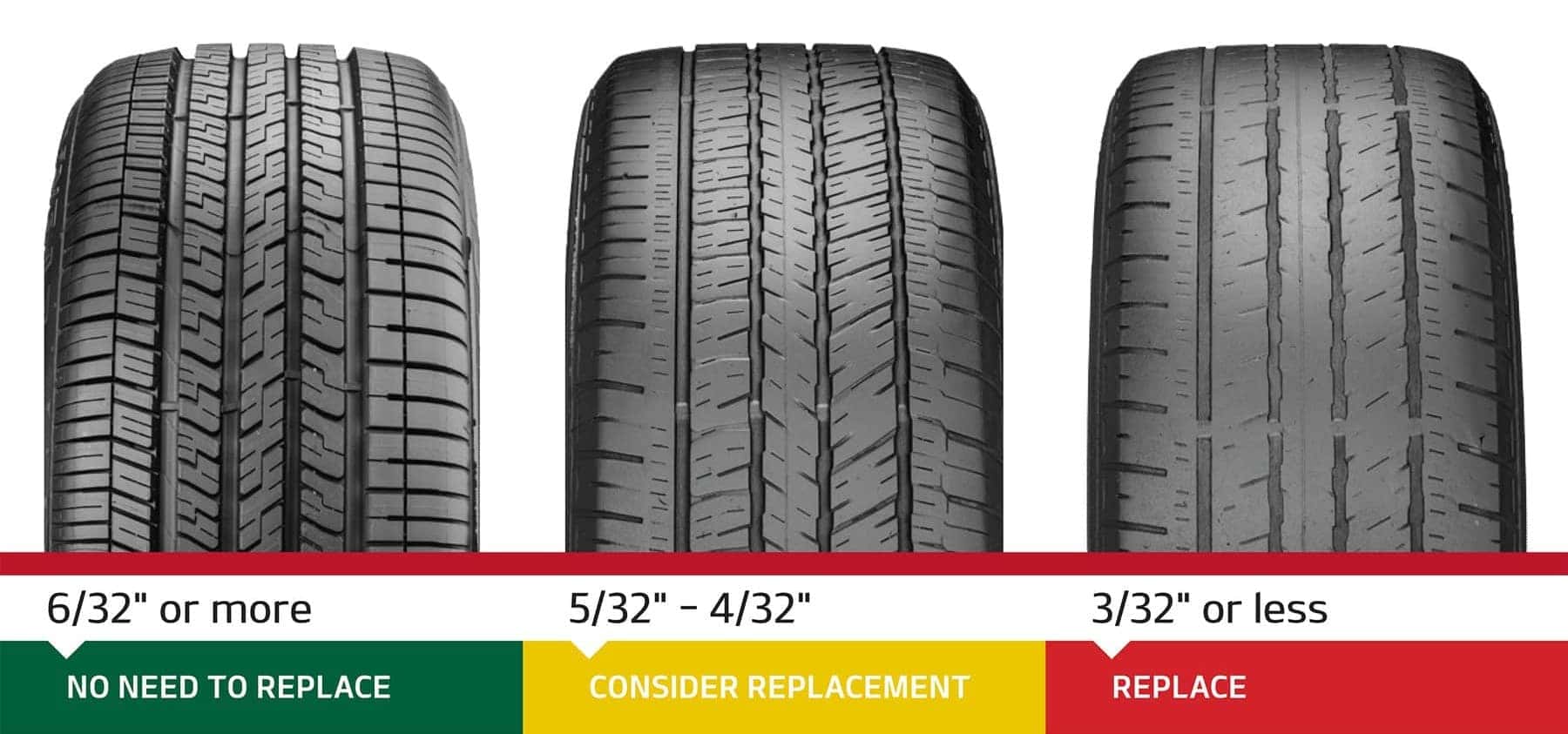
This is the most common and critical indicator. The legal minimum tread depth in California is 1/32 of an inch. However, safety significantly diminishes when tread depth falls below 4/32 of an inch, especially in wet conditions.
- The Penny Test: A simple way to check tread depth is the penny test. Insert a penny into the deepest part of the tread with Lincoln’s head facing down. If you can see the top of Lincoln’s head, your tread depth is likely below 2/32 of an inch, and it’s time for replacement.
- Tread Wear Indicators (TWIs): Most tires have small raised bars within the grooves of the tread. When the tread wears down to the level of these bars, the tire is considered worn out and needs replacement.
Visible Signs of Wear and Damage
- Cracks and Cuts: Inspect the sidewalls and tread for any cracks, cuts, or punctures. These can compromise the tire’s structural integrity and lead to blowouts. UV exposure in California can exacerbate sidewall cracking.
- Bulges or Blisters: Any bulging or blistering on the sidewall indicates internal damage and a dangerous condition that requires immediate tire replacement.
- Uneven Wear Patterns: As discussed earlier, uneven wear (e.g., worn edges, center wear, or cupping) often points to underlying issues with alignment, inflation, or balance. Even if the overall tread depth is sufficient, significant uneven wear can impact performance and safety.
Age of the Tire
Even with adequate tread, tires degrade over time due to oxidation and environmental factors. Most manufacturers recommend replacing tires that are 6 to 10 years old, regardless of tread depth.
- Production Date: You can find the tire’s age on the sidewall. Look for a four-digit number in an oval, part of the DOT (Department of Transportation) code. The first two digits represent the week of manufacture, and the last two represent the year. For example, “2319” means the tire was manufactured in the 23rd week of 2019.
General Recommendations for California Drivers
While there’s no single answer to “how often,” we can provide general guidelines for drivers in California.
Average Mileage Replacement
For a typical driver who performs regular maintenance and drives under mixed conditions, most tires will last between 30,000 and 70,000 miles.
- Low Mileage: If you drive primarily short distances in city traffic with frequent stops, you might be on the lower end of this spectrum.
- High Mileage: Long-distance commuters and those who primarily drive on highways may reach the higher end.
- Performance Tires: Expect to replace performance tires more frequently, potentially every 20,000 to 40,000 miles.
Age-Based Replacement
Regardless of mileage, consider replacing tires that are approaching or exceeding 6 years old. The California sun is relentless, and rubber doesn’t last forever. If your tires are 8-10 years old, replacement is strongly advised, even if they appear to have good tread.
Seasonal Considerations
While all-season tires are common and generally suitable for most of California, certain regions or specific driving needs might warrant a closer look.
- Mountainous Areas: For those who frequently drive in the Sierras during winter, such as near Lake Tahoe, dedicated winter tires can offer significantly improved traction and safety. However, these are typically swapped out for summer tires when the weather permits.
- Extreme Heat: If you’re frequently driving in desert areas during peak summer, ensure your tires are rated for high temperatures and that you monitor pressure closely.
Making an Informed Decision
The best approach is to be proactive. Regularly inspect your tires for wear and damage. Keep track of your mileage, and if you’re unsure, consult with a trusted tire professional. They can assess your tires’ condition and provide expert advice based on your specific driving patterns and the types of tires you have. Investing in quality tires and maintaining them properly is an investment in your safety and the overall performance of your vehicle as you explore the vast and beautiful state of California.
LifeOutOfTheBox is a participant in the Amazon Services LLC Associates Program, an affiliate advertising program designed to provide a means for sites to earn advertising fees by advertising and linking to Amazon.com. Amazon, the Amazon logo, AmazonSupply, and the AmazonSupply logo are trademarks of Amazon.com, Inc. or its affiliates. As an Amazon Associate we earn affiliate commissions from qualifying purchases.