
The mere thought of snow falling in Florida, the beloved Sunshine State, often elicits chuckles or incredulous stares. Famed for its pristine beaches, year-round warmth, and vibrant theme parks, Florida stands in stark contrast to the wintry landscapes typically associated with snowfall. Yet, against all odds and common perception, snow has, on rare occasions, graced its subtropical shores. For travelers planning a winter escape or residents accustomed to mild weather, the question “How often does it snow in Florida?” isn’t just a quirky query; it delves into the fascinating anomalies of climate, the historical quirks of nature, and the state’s remarkable resilience to uncharacteristic cold snaps.
This article delves into the historical records of Florida’s fleeting snowfall, explores the climatic conditions that make such events so rare, and ultimately celebrates the state’s true winter charm – a season defined not by snowflakes, but by abundant sunshine, thriving tourism, and a unique lifestyle that attracts millions.

The Rarity of a White Christmas in the Sunshine State
For most of the United States, winter brings with it the expectation of cold temperatures, frost, and, in many regions, the beautiful spectacle of snowfall. Florida, however, largely remains an anomaly. Its geographical position, stretching deep into the subtropical latitudes, positions it far from the typical paths of Arctic air masses that deliver snow to northern states. The popular image of Florida – sunbathers on sandy beaches, palm trees swaying gently, and lush, tropical vegetation – is antithetical to visions of snowdrifts and icy landscapes.
Indeed, the occurrence of snow in Florida is exceptionally rare, often limited to a light dusting or brief flurries that melt almost immediately upon contact with the warm ground. A true “white Christmas” is virtually unheard of, remaining a whimsical fantasy rather than a realistic expectation for residents and visitors alike. Even when temperatures plummet to near-freezing, the atmospheric conditions necessary for snow – a consistent column of freezing air from the clouds to the ground – are infrequently met. This unique climatic profile is precisely why Florida has cemented its reputation as a premier destination for those seeking to escape the harsh realities of winter elsewhere.
Understanding Florida’s Climate: A Tropical Paradise
To comprehend the infrequency of snow in Florida, one must first appreciate its distinctive climate. The state is primarily characterized by a humid subtropical climate in its northern and central regions and a tropical climate in its southern parts, including Miami and the Florida Keys. This warmth is largely attributed to its proximity to the equator, the moderating influence of the Atlantic Ocean and the Gulf of Mexico, and the warm currents of the Gulf Stream.
During winter months, while northern states shiver under blankets of snow, Florida often basks in pleasant temperatures ranging from the 60s to 70s Fahrenheit (15-25°C). Even when cold fronts do push south, they typically weaken considerably by the time they reach Florida’s peninsular expanse. For snow to form and stick, temperatures from the clouds to the ground must remain at or below freezing (32°F or 0°C). This delicate balance is rarely achieved for long enough in most of Florida, particularly in the southern half, making any snowfall a meteorological marvel.
A Glimpse into History: Florida’s Memorable Snowfall Events
Despite its reputation for endless summer, Florida does have a surprising, albeit sparse, history of recorded snowfall. These events are so unusual that they are often etched into the collective memory of the communities that experienced them, becoming anecdotal legends passed down through generations. These instances serve as powerful reminders of nature’s unpredictable artistry, even in the most unlikely of settings.
Northern Florida’s Fleeting Flurries
The northern regions of Florida, being closer to Georgia and Alabama and thus more exposed to cold fronts, naturally see snow more often than their southern counterparts. However, “more often” still means exceptionally rarely.
One of the earliest significant records dates back to January 19, 1774, when snow blanketed parts of Jacksonville. More recently, a widespread and memorable event occurred during The Great Blizzard of 1899, often considered the coldest weather event in Florida’s history. On February 13, 1899, temperatures plummeted, and snow fell across much of the state, including Tallahassee, Jacksonville, and even as far south as Fort Pierce. Some reports indicated snow depths of several inches in parts of North Florida, an astonishing sight.
The mid-20th century brought other scattered events. On February 12, 1958, Tallahassee received a notable amount of snow, with reports of up to 2-3 inches in some areas. This was significant enough to disrupt daily life, causing schools to close and creating unusual scenes of snow-covered Spanish moss.
However, perhaps the most talked-about snowfall in modern Florida history occurred on January 19, 1977. This remarkable day saw snow fall across virtually all of Florida, reaching as far south as Miami. While it was mostly a dusting in central and southern areas, North Florida cities like Jacksonville and Gainesville experienced a more substantial accumulation, with some areas reporting up to two inches. Children, many of whom had never seen snow, ventured out to witness the rare phenomenon. The Big Freeze of 1977 stands as a landmark weather event, dramatically impacting agriculture and temporarily transforming the subtropical landscape.
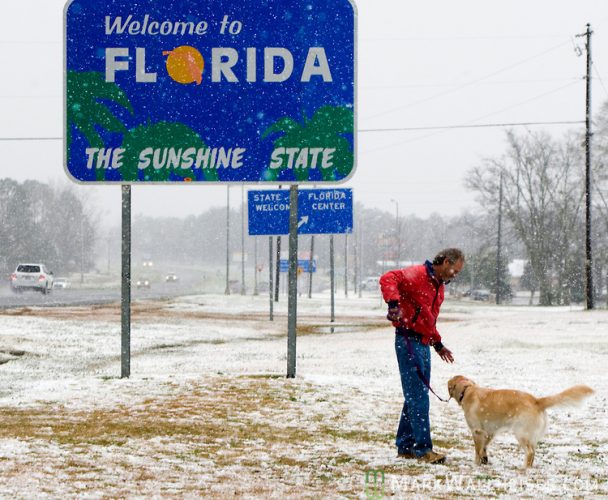
More recent significant snow events include December 22, 1989, when a rare pre-Christmas cold snap brought snow to parts of North Florida, including Jacksonville, where a light dusting accumulated. Fast forward to January 3, 2018, when much of North Florida experienced significant snowfall, particularly in Tallahassee and Jacksonville. Tallahassee received several inches, marking its first measurable snowfall in decades, leading to widespread awe and disruption.
Southern Florida’s Unprecedented Sightings
While North Florida occasionally experiences fleeting flurries, snow in South Florida is truly a once-in-a-lifetime event. The record-setting cold front on January 19, 1977, brought measurable snow to cities like Orlando, Tampa, and even light flurries to Fort Lauderdale and Miami. This was the first time in recorded history that snow was observed in Miami, causing widespread astonishment and excitement. People reportedly stopped their cars on highways to witness the phenomenon. While it didn’t accumulate, the mere sight of snowflakes drifting down in this tropical metropolis was historic.
Before that, sporadic reports of light flurries in South Florida were more anecdotal than officially recorded. For instance, some local historians mention a light dusting in Key West in 1852, though this remains largely unconfirmed by meteorological records. These extreme rarities underscore just how deeply embedded Florida is within a warm climatic zone, making any deviation from this norm truly remarkable.
Beyond the Flakes: The Broader Impact of Cold Snaps
While snow is rare, Florida is no stranger to significant cold snaps, even without precipitation. These events, characterized by temperatures dipping well below average, often into freezing or near-freezing ranges, have a profound impact on the state’s economy, ecology, and daily life. The term “cold snap” or “freeze event” is far more common in Florida’s meteorological vocabulary than “snowfall.”
Agricultural Concerns and Economic Shifts
Florida’s economy heavily relies on its agricultural sector, particularly citrus, winter vegetables, and ornamental nurseries. These crops are highly susceptible to frost and freezing temperatures. When a significant cold front arrives, farmers activate elaborate frost protection measures, including running irrigation systems to coat plants with ice, covering sensitive crops, and using wind machines to circulate warmer air.
Historical freezes, such as those in 1977, 1983, 1985, and 1989, devastated citrus groves and vegetable farms, leading to billions of dollars in losses and significantly impacting the state’s agricultural output for years. The memory of these events remains vivid, influencing agricultural practices and even prompting shifts in crop selection and growing regions, with some citrus production moving further south into areas like Lake Okeechobee and beyond. These cold snaps serve as a stark reminder of the delicate balance between Florida’s natural environment and its economic pillars.
Preparing for Unseasonal Chill: Local Measures and Visitor Awareness
For residents, preparing for a cold snap means protecting outdoor plants, checking pipes, and ensuring heating systems are functional – unfamiliar routines for many living in a perpetually warm climate. Schools might delay openings or close if temperatures are dangerously low, especially in rural areas.
For visitors, particularly “snowbirds” from colder climates, a Florida cold snap can be an unexpected inconvenience. While they escape the snow, they might still encounter temperatures that necessitate a jacket or even a winter coat, especially in the evenings. Hotels and resorts, accustomed to catering to warm-weather travelers, generally have adequate heating, but outdoor activities might be curtailed. Tourism boards and local businesses often issue advisories, emphasizing the importance of packing layers, even for a winter trip to the Sunshine State, just in case a cold front decides to make a rare appearance.
Embracing Florida’s True Winter Charm: Sun, Sand, and Seasonal Festivities
While the pursuit of snow in Florida is largely a historical curiosity, the state’s true winter appeal is undeniable and forms the backbone of its thriving tourism industry. For millions worldwide, Florida is the quintessential winter getaway, offering a vibrant tapestry of experiences that celebrate warmth, outdoor living, and festive cheer, completely devoid of snow shovels and icy roads.
The Allure of Florida for Winter Travelers
Winter is, paradoxically, Florida’s peak tourist season. The promise of consistent sunshine and pleasantly mild temperatures draws an enormous influx of “snowbirds” – visitors escaping the colder climates of North America and Europe for extended stays. The beaches of South Florida, Southwest Florida, and the Panhandle are particularly popular, offering opportunities for swimming, sunbathing, and watersports when other regions are bundled in layers.
Beyond the coastline, Florida’s world-renowned theme parks, such as Walt Disney World Resort, Universal Orlando Resort, Busch Gardens Tampa Bay, and SeaWorld Orlando, thrive during these months. Holiday decorations, special events, and festive parades transform these attractions into magical winter wonderlands, all without a single snowflake in sight. Outdoor activities like golfing, fishing, hiking in Everglades National Park, and exploring the diverse wildlife are also enjoyed comfortably. Cultural festivals, art shows, and outdoor concerts proliferate, taking advantage of the superb weather. This unique blend of attractions ensures that Florida’s winter lifestyle is rich, active, and endlessly appealing.

Finding Your Perfect Warm Retreat: Accommodation and Experiences
The robust winter tourism season means that Florida boasts an unparalleled array of accommodation options to suit every preference and budget. From luxurious beachfront resorts and boutique hotels in vibrant cities like Miami and Orlando, to cozy vacation rentals and family-friendly apartments along the Gulf Coast, travelers are spoilt for choice. Many establishments offer special seasonal packages, catering to everything from romantic getaways and adventurous family trips to extended business stays.
Visitors can choose between opulent suites with panoramic ocean views, private villas in exclusive communities, or budget-friendly hotels close to key landmarks and attractions. Amenities often include heated pools, world-class spas, gourmet dining, and direct beach access, ensuring a comfortable and memorable stay. Booking in advance is highly recommended during this peak season, as popular destinations and prime accommodation can fill up quickly. Whether it’s experiencing the local culture in St. Augustine, exploring the natural beauty of the Everglades, or simply relaxing by the pool with a refreshing drink, Florida’s winter offers an escape to a sun-drenched paradise, a world away from the frosty realities elsewhere.
In conclusion, while the idea of snow in Florida is a fascinating topic that occasionally turns into a fleeting reality, it remains an extreme rarity. The Sunshine State’s identity is firmly rooted in its warm climate, offering an irresistible haven for those seeking to bask in sunshine rather than shiver in snow. For any traveler looking to swap winter blues for vibrant hues, Florida unequivocally delivers a warm, welcoming, and unforgettable winter experience.
LifeOutOfTheBox is a participant in the Amazon Services LLC Associates Program, an affiliate advertising program designed to provide a means for sites to earn advertising fees by advertising and linking to Amazon.com. Amazon, the Amazon logo, AmazonSupply, and the AmazonSupply logo are trademarks of Amazon.com, Inc. or its affiliates. As an Amazon Associate we earn affiliate commissions from qualifying purchases.