
Living the California dream often involves sunny drives, scenic routes, and a deep appreciation for the state’s natural beauty. However, this vibrant lifestyle also comes with a responsibility to maintain the pristine environment that makes the Golden State so desirable. A critical component of this commitment is the vehicle emissions inspection program, more commonly known as the smog check. For residents, new transplants, or even those considering a long-term stay, understanding the intricacies of California’s smog check requirements is essential for smooth vehicle operation and compliance. It’s not just a bureaucratic hurdle; it’s a lifestyle obligation that contributes significantly to air quality and public health across iconic regions from the bustling streets of Los Angeles to the scenic routes of San Francisco and beyond. This comprehensive guide will delve into the frequency, process, and implications of smog checks, equipping you with the knowledge to navigate this crucial aspect of California life.
Understanding California’s Commitment to Clean Air
California has long been at the forefront of environmental protection, particularly concerning air quality. The state’s unique geography, with its sprawling urban centers nestled in valleys and basins, historically made it highly susceptible to air pollution. The term “smog” itself, a portmanteau of smoke and fog, became synonymous with the polluted skies over major cities, prompting decisive action.
The Environmental Rationale Behind Smog Checks
The primary purpose of the smog check program is straightforward: to reduce air pollution from motor vehicles. Vehicles are significant contributors to harmful emissions, including hydrocarbons, carbon monoxide, and nitrogen oxides, which can lead to respiratory illnesses, contribute to global warming, and create ground-level ozone (the main component of smog). By regularly inspecting vehicles, California ensures that they operate as cleanly as possible, identifying and mandating repairs for those that fail to meet emission standards. This proactive approach has tangible benefits, leading to cleaner air, fewer respiratory problems for residents, and a healthier environment for all. It’s a core tenet of the California lifestyle that balances individual convenience with collective well-being. The program’s rigor reflects the state’s recognition that clean air is not a luxury but a fundamental right and a necessity for its booming population and vibrant ecosystem.
Historical Context: Fighting Air Pollution in the Golden State
California’s journey to clean air began decades ago. The state established the California Air Resources Board (CARB) in 1967, long before the federal Clean Air Act, to tackle the severe air pollution issues plaguing its urban areas. The initial smog check program was introduced in the early 1980s, evolving significantly over the years to incorporate more sophisticated testing technologies and stricter standards. This continuous refinement reflects a deep-seated commitment to environmental stewardship. From early tailpipe tests to today’s advanced On-Board Diagnostic (OBD) inspections, the program has adapted to technological advancements in vehicles and our understanding of atmospheric chemistry. The smog check is thus more than just a regulatory hurdle; it’s a living testament to California’s enduring legacy as an environmental pioneer, shaping a cleaner, healthier future for its residents and setting an example for the rest of the world.
Navigating the Smog Check Frequency: What Every Californian Needs to Know
Understanding when and how often your vehicle needs a smog check is perhaps the most frequent question for California drivers. The rules are designed to be comprehensive but do include certain exemptions and specific scenarios.
Biennial Inspections: The Standard Rule
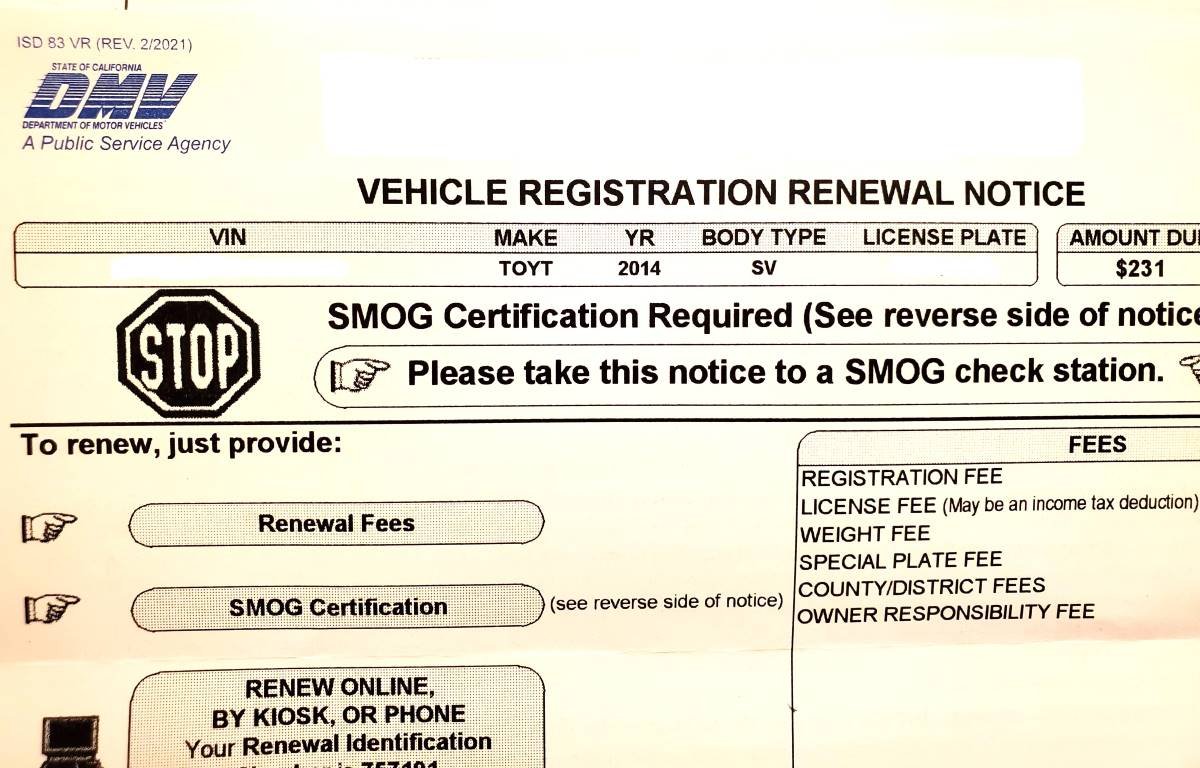
For most vehicles registered in California, a smog check is required every two years. This biennial inspection typically coincides with your vehicle’s registration renewal. When your renewal notice arrives from the Department of Motor Vehicles (DMV), it will clearly indicate whether a smog check is due. Failing to complete the smog check by the specified deadline will prevent you from renewing your vehicle registration, making it illegal to drive. This regular cadence ensures that emission control systems are consistently monitored, catching potential issues before they significantly contribute to air pollution. It becomes a routine part of vehicle ownership, much like oil changes or tire rotations, integrating seamlessly into the responsible California lifestyle.
Special Scenarios: Vehicle Sales and Out-of-State Registrations
Beyond the biennial requirement, there are specific situations that trigger a smog check:
- Change of Ownership: When a vehicle is sold in California, the seller is generally responsible for providing the buyer with a valid smog certification at the time of sale. This certification must have been issued within the last 90 days. This ensures that the new owner is purchasing a vehicle that meets current emission standards.
- Out-of-State Vehicle Registration: If you are moving to California and plan to register your vehicle in the state, you will need to obtain an initial smog check. This applies even if your vehicle recently passed an emissions test in another state, as California’s standards can be unique and more stringent.
- Gross Polluters: Vehicles identified as “gross polluters” (those with significantly high emissions) may be required to get smog checked more frequently until their emissions are brought into compliance.
These special scenarios underscore the program’s adaptive nature, ensuring compliance across various circumstances crucial for maintaining California’s air quality goals.
Newer Vehicles and Exemptions: A Welcome Reprieve
While the smog check program is extensive, certain vehicles are exempt from the requirement:
- Newer Vehicles: Generally, vehicles that are eight model years old or newer are exempt from the biennial smog check. Instead, their owners pay an annual “smog abatement fee” as part of their registration. However, these newer vehicles are not exempt from smog checks when being sold or when initially registered in California as an out-of-state vehicle.
- Older Vehicles: Vehicles manufactured before 1976 are entirely exempt from smog checks. This is largely due to the differing emission control technologies and standards of that era.
- Electric and Motorcycles: All-electric vehicles and motorcycles are also exempt, as they do not produce the type of tailpipe emissions targeted by the smog check program.
- Diesel Vehicles: Diesel vehicles manufactured before 1998 or with a Gross Vehicle Weight Rating (GVWR) of 14,000 pounds or more are exempt from the program. Newer diesel vehicles, however, are subject to smog checks, typically involving an opacity test and a visual inspection.
Understanding these exemptions can save vehicle owners time and effort, but it’s always best to check your specific vehicle’s status with the DMV or the Bureau of Automotive Repair (BAR) if you are unsure.
The Smog Check Process: What to Expect
Undergoing a smog check is a relatively straightforward process once you know what to expect. It’s designed to be efficient, but preparation can ensure a smooth experience.
Finding a Certified Smog Station
Smog checks must be performed at a station licensed by the Bureau of Automotive Repair (BAR). You’ll typically see “Smog Check” signs prominently displayed at these facilities. Some stations are designated “Smog Check Test Only” or “Smog Check Repair Only,” while others are “Smog Check Test & Repair.” For your standard biennial check, any licensed station can perform the test. If your renewal notice specifically indicates you need to go to a “STAR Station,” it means your vehicle has been identified as a high-polluter risk or that the state requires a portion of vehicles to be tested at these more stringent facilities. The BAR website offers a convenient locator tool to find certified stations near you, simplifying this step in your vehicle maintenance routine.
What the Inspection Entails
The specific components of a smog check can vary slightly depending on your vehicle’s model year:
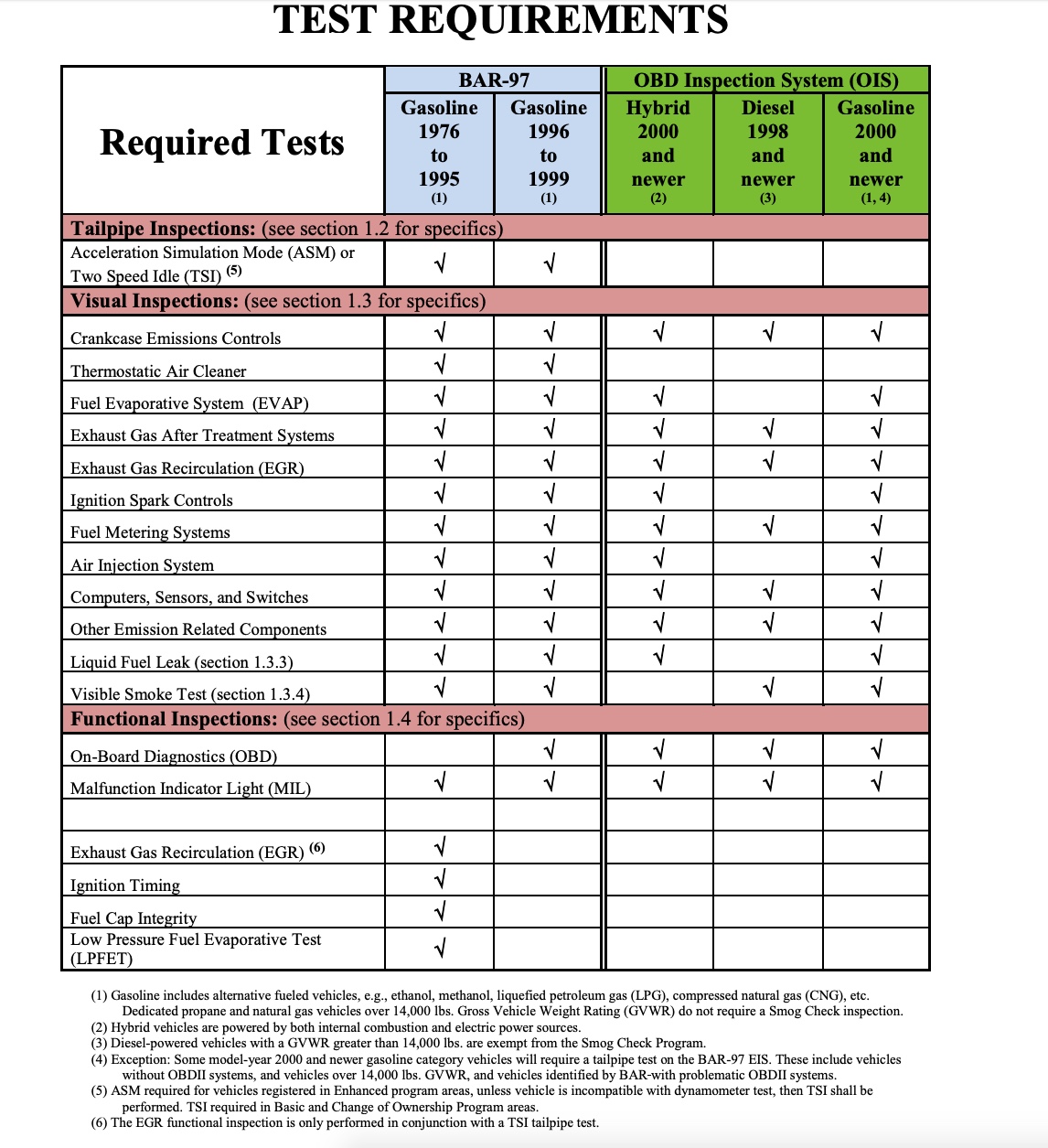
- On-Board Diagnostic (OBD) II Test: For most vehicles manufactured in 2000 and newer, the inspection primarily involves connecting to the vehicle’s OBD-II system. This computer system monitors the performance of major engine components, including those that affect emissions. The smog technician will check for any “Malfunction Indicator Light” (MIL), often called the “Check Engine” light, and retrieve diagnostic trouble codes (DTCs) that indicate emission-related issues.
- Visual Inspection: Regardless of model year, a visual inspection is performed to ensure all required emission control components are present, properly connected, and appear to be in good working order. This includes catalytic converters, exhaust gas recirculation (EGR) valves, and evaporative emission control (EVAP) systems.
- Functional Inspection: Technicians will also perform functional tests on various components, such as the ignition timing, exhaust gas recirculation (EGR) system, and fuel evaporative system.
- Tailpipe Emissions Test: Older vehicles (typically 1999 and older, depending on their GVWR) undergo a tailpipe emissions test, where a probe is inserted into the exhaust to measure the actual levels of pollutants emitted. This test usually involves driving the vehicle on a dynamometer (a treadmill for cars) to simulate driving conditions.
Before your test, it’s advisable to ensure your “Check Engine” light is off and that your vehicle has been driven sufficiently to complete all “readiness monitors” (internal self-tests of the emissions system). Your service provider can advise you on this.
Receiving Your Smog Certificate
If your vehicle passes the smog check, the station will electronically submit the certificate directly to the DMV. You’ll typically receive a printed receipt as proof of completion, though the official certificate is digital. This electronic submission is highly efficient, allowing you to proceed with your registration renewal without needing to mail any physical documents. It integrates seamlessly into the digital lifestyle of modern California living.
What Happens If Your Vehicle Fails the Smog Check?
A failed smog check can be a source of frustration, but it’s not the end of the road. The system is designed to help vehicle owners bring their vehicles into compliance, ensuring cleaner emissions.
Understanding a “Fail” Result
If your vehicle fails the smog check, the inspection report will detail the reasons for the failure, identifying which emission standards were not met or which components were found to be faulty. Common reasons for failure include a malfunctioning catalytic converter, an illuminated “Check Engine” light due to an emissions-related issue, or issues with oxygen sensors or the evaporative emissions system. It’s crucial to understand these details to guide the necessary repairs. The report is not just a notice of failure; it’s a diagnostic tool.
Repair Options and Financial Assistance
After a failed test, you have a few options:
- Repair: Take your vehicle to a qualified repair shop to address the issues identified in the smog check report. Many “Smog Check Test & Repair” stations can perform these services. It’s recommended to choose a reputable mechanic experienced in emission system diagnostics.
- Repair Assistance Program: California’s Consumer Assistance Program (CAP) offers financial assistance to eligible low-income motorists whose vehicles fail a smog check. This program can help with repair costs or even provide an incentive for vehicle retirement. This demonstrates the state’s commitment to supporting its residents in achieving compliance without undue financial burden, making the clean air initiative equitable.
- Waiver: In certain circumstances, after making a good-faith effort to repair your vehicle and spending a minimum amount on emissions-related repairs, you may be eligible for a waiver. This is typically granted only if your vehicle is older and further repairs are deemed impractical or exceedingly expensive, and it typically applies only to specific types of failures. Waivers are often granted for only one registration cycle.
The Importance of Retesting
Once repairs are completed, your vehicle must undergo a retest. If the repairs were performed at the same station where the initial test failed, the retest might be discounted or even free for certain components. If your vehicle passes the retest, the updated certificate will be sent to the DMV, and you can proceed with your registration renewal. The retesting process is fundamental to ensuring that identified pollution sources are effectively mitigated.
Smog Checks and Your California Lifestyle
Integrating smog checks into your vehicle ownership responsibilities is a relatively minor aspect of the California lifestyle, yet its impact on the state’s environment and public health is immense.
Integrating Smog Checks into Vehicle Maintenance
Rather than viewing smog checks as an annoying requirement, consider them a vital part of your vehicle’s routine maintenance. A vehicle that passes a smog check is often one that is running efficiently, which can also contribute to better fuel economy and overall vehicle longevity. Regular tune-ups and proactive maintenance can help prevent issues that lead to smog check failures, saving you time, money, and stress in the long run. By staying on top of your car’s health, you not only comply with state regulations but also contribute to a smoother, more cost-effective driving experience.
Implications for Moving to or Residing in California
For individuals moving to California, understanding the smog check requirements is crucial for a smooth transition. Factor the initial smog check into your moving budget and timeline. For long-term residents, it’s simply a biennial task to add to your calendar. The state’s commitment to air quality permeates daily life, from driving regulations to energy conservation, and embracing these aspects is part of fully immersing oneself in the California ethos. It’s about being a responsible citizen in a state that values its environment.
Contributing to a Healthier Golden State
Ultimately, the question of “how often smog check in California?” transcends mere regulation. It’s a recurring commitment by millions of drivers to collectively maintain and improve the air quality for everyone who lives, works, and enjoys the beauty of the Golden State. Every successful smog check contributes to cleaner air, reduced health risks, and the preservation of California’s iconic landscapes. By adhering to these requirements, you’re not just complying with the law; you’re actively participating in the ongoing effort to ensure a healthier, more sustainable California for generations to come. This proactive engagement is a testament to the lifestyle choices that define residency in this environmentally conscious state.
LifeOutOfTheBox is a participant in the Amazon Services LLC Associates Program, an affiliate advertising program designed to provide a means for sites to earn advertising fees by advertising and linking to Amazon.com. Amazon, the Amazon logo, AmazonSupply, and the AmazonSupply logo are trademarks of Amazon.com, Inc. or its affiliates. As an Amazon Associate we earn affiliate commissions from qualifying purchases.