
When people think of the tallest mountains on Earth, the mind almost reflexively drifts toward the snow-capped, jagged peaks of the Himalayas. For generations, Mount Everest has held the undisputed title of the highest point above sea level. However, when we adjust our perspective to measure from the true base of a geological structure rather than merely the surface of the ocean, the narrative changes entirely. The crown jewel of Hawaii is not just a breathtaking volcanic landscape; it is a record-breaking titan that defies conventional geographic measurement.
The Measured Reality of Mauna Kea
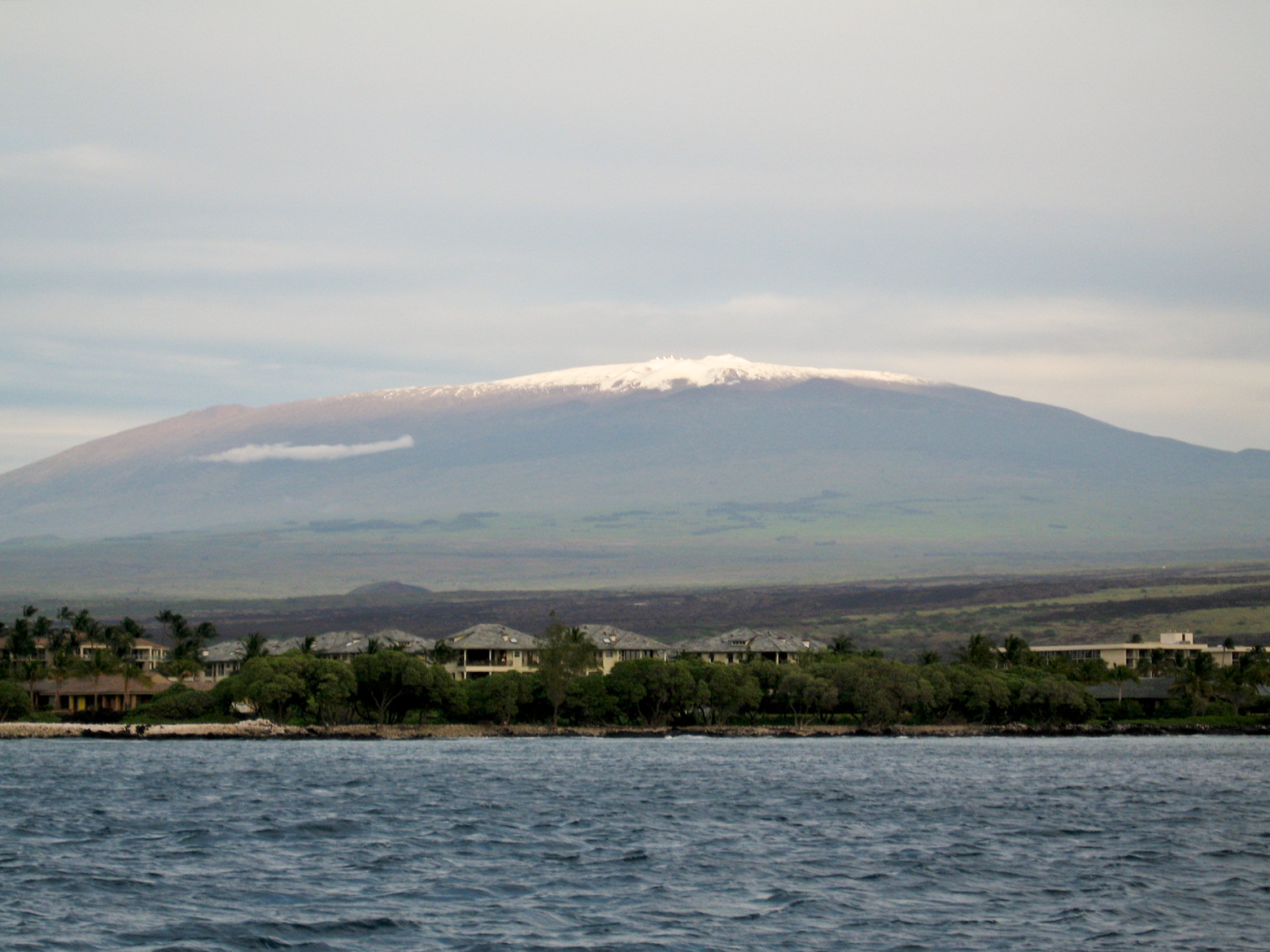
To understand the scale of Mauna Kea, one must look beneath the turquoise waves of the Pacific Ocean. While its summit sits at 13,803 feet (4,207 meters) above sea level—an impressive height that makes it the highest point in the state of Hawaii—this figure represents only a fraction of the mountain’s actual vertical rise.
Submerged Foundation
The base of Mauna Kea rests on the ocean floor at a depth of approximately 19,700 feet (6,000 meters). When you combine the portion submerged beneath the Pacific Ocean with the segment that rises above the clouds, the total height of the mountain reaches an astounding 33,500 feet (10,210 meters). By this metric, it stands significantly taller than the 29,032 feet (8,849 meters) of Mount Everest.
Volcanic Origins and Growth
As a dormant shield volcano, Mauna Kea is a product of the relentless volcanic activity that built the Hawaiian Islands. Its formation began roughly one million years ago, driven by the Hawaii hotspot, a plume of magma rising from deep within the Earth’s mantle. Over hundreds of thousands of years, layer upon layer of solidified lava flows expanded the volcano’s girth and height, eventually piercing the surface of the sea to become the majestic landmark we recognize today.
A Landscape of Extremes
The journey to the summit of Mauna Kea is a study in environmental transitions. Within a few hours, a traveler can ascend from the lush, tropical lowlands of the Big Island to an alpine desert that feels more akin to the surface of Mars than a tropical paradise.
Climate and Altitude Challenges
At the summit, the air is thin, containing about 40 percent less oxygen than at sea level. This high-altitude environment is stark, characterized by dramatic temperature shifts, intense ultraviolet radiation, and occasional winter snow—a phenomenon that often surprises those who associate Hawaii solely with warm, sandy beaches. Because of these conditions, visitors are strongly advised to acclimatize at the Visitor Information Station located at 9,200 feet before proceeding to the peak.

Cultural and Scientific Significance
Beyond its geological prowess, Mauna Kea holds profound cultural significance for Native Hawaiians, who consider the mountain a sacred site, the dwelling place of deities, and a spiritual portal connecting the heavens and the earth.
Simultaneously, the summit has become one of the world’s premier destinations for astronomical research. The Mauna Kea Observatory complex benefits from some of the clearest, darkest, and most stable skies on the planet. Due to the high altitude, the lack of light pollution, and the low humidity, the atmosphere acts as a near-perfect window into deep space, allowing astronomers to peer billions of light-years into the cosmos.
Comparing Giants: Mauna Kea vs. Mauna Loa
A common point of confusion for visitors to the Big Island involves the relationship between Mauna Kea and its massive neighbor, Mauna Loa. While Mauna Kea claims the title for height, Mauna Loa holds the record for volume.
Volume and Mass
Mauna Loa is often cited as the largest active volcano on Earth. Its massive, gentle slopes cover a significant portion of the Big Island, and its total volume is estimated at approximately 18,000 cubic miles. While it does not reach quite as high above sea level as its sister peak, it is a far more expansive structure in terms of total mass.
Geological Maturity
The two mountains exist in different stages of their life cycles. Mauna Kea is considered dormant; it has not erupted for approximately 4,000 to 6,000 years, and its volcanic activity is essentially considered complete. In contrast, Mauna Loa remains an active, shifting giant that continues to shape the physical geography of Hawaii through periodic lava flows.

Tips for Visiting the Summit
For those traveling to Hawaii, witnessing the sheer scale of Mauna Kea in person is a bucket-list experience. However, the ascent is not a casual excursion.
- Vehicle Requirements: A four-wheel-drive vehicle is strictly recommended (and often required by rental agreements) for traveling beyond the Visitor Information Station. The road to the summit is steep, unpaved in sections, and demands a capable machine.
- Safety and Health: Altitude sickness is a genuine risk. Travelers with heart or respiratory conditions should consult a physician before attempting to reach the summit. Drinking plenty of water and moving slowly are essential for safety.
- Respect the Environment: The summit area is a fragile ecosystem. Visitors should stay on designated paths and practice the “leave no trace” principle to preserve the sanctity of the landscape.
- Stargazing: Even if you do not travel to the very top, the areas surrounding the Visitor Information Station offer some of the best stargazing opportunities in the Northern Hemisphere. Many tourists find that the experience at this lower altitude is just as awe-inspiring as the peak itself.
By truly understanding the vertical extent of Mauna Kea, one gains a deeper appreciation for the immense geological forces that sculpted the Hawaiian Islands. It serves as a reminder that the world’s most significant landmarks are often hidden, requiring us to look beyond the surface to see the full majesty of nature. Whether you are an astronomy enthusiast, an avid hiker, or simply a traveler looking to stand atop the tallest mountain on Earth, the slopes of this sleeping giant offer an unparalleled perspective on our world.
LifeOutOfTheBox is a participant in the Amazon Services LLC Associates Program, an affiliate advertising program designed to provide a means for sites to earn advertising fees by advertising and linking to Amazon.com. Amazon, the Amazon logo, AmazonSupply, and the AmazonSupply logo are trademarks of Amazon.com, Inc. or its affiliates. As an Amazon Associate we earn affiliate commissions from qualifying purchases.