
When one looks across the shimmering horizon of the Mojave Desert, a single silhouette commands the skyline far above the neon glow of the Las Vegas Strip. This structure, an architectural marvel known formally as The STRAT Hotel, Casino & SkyPod, remains one of the most recognizable landmarks in the United States. More commonly referred to by its original name, The Stratosphere, this tower is not just a hotel or a casino; it is a monumental feat of engineering that defines the northern gateway of Las Vegas, Nevada.
The question of its height is a common one for visitors and architecture enthusiasts alike. Standing at a staggering 1,149 feet (350.2 meters), it holds the title of the tallest freestanding observation tower in the United States. Its presence is so dominant that it serves as a primary navigational point for both pilots landing at Harry Reid International Airport and tourists exploring the vast valley.

An Architectural Marvel: The Height and Construction of The Stratosphere
To understand the sheer scale of The Stratosphere, one must look at it through the lens of structural engineering and urban design. Reaching over 1,100 feet into the desert sky, the tower was designed to withstand the extreme environmental conditions of Southern Nevada, including high-velocity winds and the intense heat of the summer months.
Defining the Skyline of Las Vegas
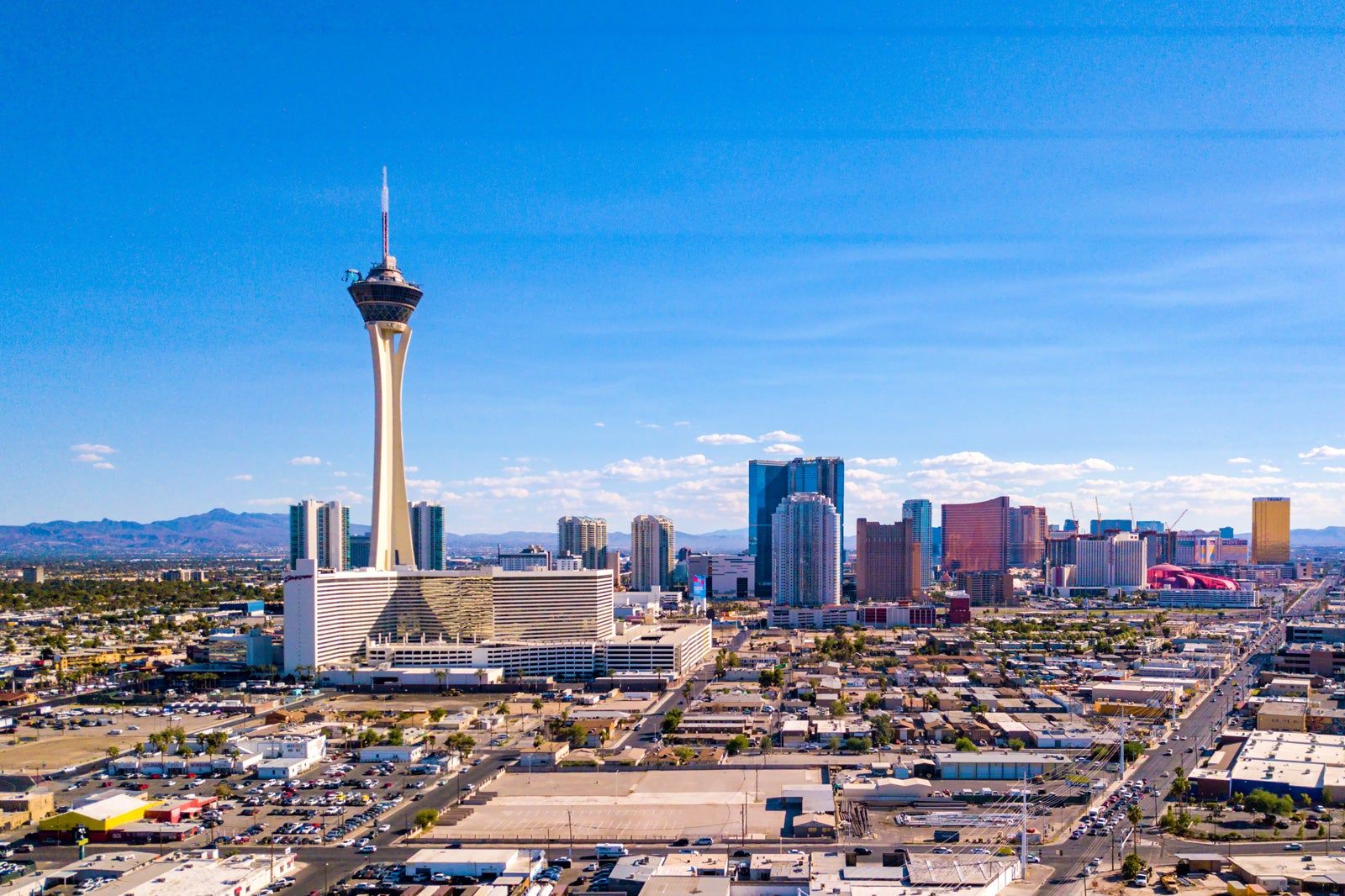
In a city characterized by rapid expansion and vertical competition, The Stratosphere remains unchallenged in terms of altitude. While many of the mega-resorts on The Strip, such as the Wynn Las Vegas or the Resorts World Las Vegas, boast impressive heights for traditional buildings, they are dwarfed by the tower’s needle-like spire. The tower is located at the intersection of Las Vegas Boulevard and Sahara Avenue, effectively marking the transition between the glitz of the resort corridor and the historic charm of Downtown Las Vegas.
The height of 1,149 feet was not an arbitrary choice. The developers intended to create a landmark that could be seen from anywhere in the Las Vegas Valley. Because of its elevation, the SkyPod—the multi-level observation area at the top—provides a 360-degree view that extends past the city limits to the Spring Mountains and the Red Rock Canyon National Conservation Area.
Engineering Feats and Structural Design
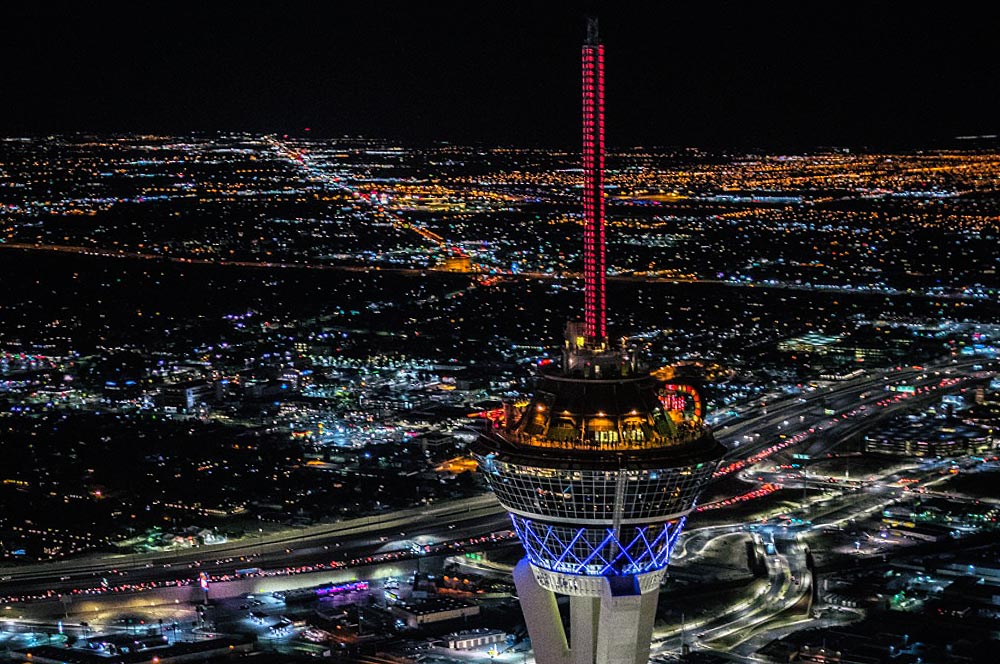
The construction of such a massive landmark required innovative techniques. The base of the tower is supported by three massive “legs” made of reinforced concrete, which provide the stability necessary for a structure of this height. These legs converge at a height of approximately 775 feet, supporting the “pod” which houses the observation decks, restaurants, and lounges.
One of the most impressive aspects of its engineering is the use of high-strength concrete and post-tensioned steel. During its construction in the mid-1990s, the project faced numerous hurdles, including a significant fire in 1993 that broke out on the upper levels while the tower was still a skeleton of steel. Despite this setback, the structural integrity remained intact, a testament to the robust design formulated by the architectural team. The tower’s center of gravity and aerodynamic shape allow it to sway slightly in heavy winds—a standard safety feature for skyscrapers and towers—ensuring that the structure remains flexible rather than brittle.
The Vision of Bob Stupak and the Birth of an Icon
The history of The Stratosphere is as dramatic as the building itself. The project was the brainchild of Bob Stupak, a legendary Las Vegas casino owner and visionary known for his eccentric marketing and bold gambles. Stupak originally envisioned a tower that would surpass the height of the CN Tower in Toronto, though those plans were eventually scaled back due to safety concerns and flight path regulations from the Federal Aviation Administration.
From Vegas World to a Global Landmark
Before the tower existed, the site was home to Vegas World, a space-themed hotel and casino that was famous for its quirky atmosphere. Bob Stupak wanted something that would put his property on the global map. He dreamed of an “Eiffel Tower” for Nevada, a structure so tall it would be impossible to ignore.
Construction began in the early 1990s, and the tower officially opened to the public on April 30, 1996. While the project faced financial difficulties and changed ownership over the years—eventually becoming part of the Golden Entertainment portfolio—its status as a premier landmark has never wavered. It transformed the “North Strip” from a quiet area into a destination that attracts millions of visitors annually.
Overcoming Construction Challenges
Building a 1,149-foot tower in a desert environment presents unique challenges. The foundation had to be exceptionally deep and secure to anchor the weight of the steel and concrete pod. Furthermore, lifting materials to such extreme heights required specialized cranes that were, at the time, some of the tallest in the world.
The aesthetic design was also a point of historical contention. The tower needed to look modern yet timeless. The resulting design—a flared tripod base with a circular pod and a crowning spire—has become a symbol of Las Vegas resilience. It survived economic downturns and the shifting landscape of the gaming industry to remain the tallest structure in the state.
Exploring the SkyPod: Beyond the Measurements
While the height of 1,149 feet is the headline figure, the experience of being at the top of The Stratosphere is what truly defines this landmark. The SkyPod serves as the crown jewel of the tower, offering multiple levels of entertainment and breathtaking vistas.
The Observation Decks and Panoramic Views
The tower features both indoor and outdoor observation decks. The indoor deck is climate-controlled and features floor-to-ceiling glass windows, allowing visitors to see the Fremont Street Experience to the north and the Bellagio Fountains to the south.
For those seeking a more immersive experience, the outdoor observation deck on the 109th floor offers an unobstructed view of the Nevada landscape. From this vantage point, the cars on the streets below look like mere toys, and the surrounding mountains, such as Mount Charleston, appear close enough to touch. This level of height provides a perspective on the Grand Canyon region’s scale that few other places can match.
Thrill Rides at the Peak
What sets The Stratosphere apart from other observation towers like the Seattle Space Needle is its collection of high-altitude thrill rides. These attractions utilize the tower’s height to provide a level of adrenaline found nowhere else on earth.
- Big Shot: This ride catapults passengers 160 feet straight up the tower’s spire, reaching a total height of 1,081 feet, before letting them free-fall back to the launch pad.
- Insanity: A massive robotic arm that extends 64 feet over the edge of the tower, spinning passengers at speeds that generate significant G-forces while they look directly down at the city 900 feet below.
- X-Scream: A teeter-totter-like track that propels riders over the edge of the SkyPod, dangling them momentarily over the abyss.
- SkyJump: For the truly brave, this is a controlled-descent power jump (similar to a vertical zip line) that allows participants to leap from the 108th floor and “fly” down toward the landing pad at the base of the tower.
Comparing The Stratosphere to Other Global Landmarks
To truly appreciate the height of this Las Vegas icon, it is helpful to compare it to other famous structures around the world. In the category of observation towers, it stands among the giants.
Dominance in the United States
Within the United States, The Stratosphere is the undisputed champion of height for freestanding towers. It is significantly taller than the Seattle Space Needle, which stands at 605 feet, and surpasses the Gateway Arch in St. Louis, which reaches 630 feet. Even when compared to skyscrapers like the Empire State Building in New York City, the tower holds its own, as the Empire State Building roof height is 1,250 feet—only slightly taller than the top of the Stratosphere spire.
Global Ranking Among Observation Towers
On a global scale, The Stratosphere is a member of the World Federation of Great Towers. While it is shorter than the Tokyo Skytree in Japan or the Canton Tower in China, it remains one of the most visited towers in the Western Hemisphere.
It is often compared to the CN Tower in Canada, which reaches 1,815 feet. However, within the context of North America, The Stratosphere remains a critical architectural landmark that showcases the ambition and “larger-than-life” spirit of Nevada.
The tower also serves as a cultural landmark, appearing in numerous films, television shows, and video games, often representing the peak of Las Vegas luxury and excitement. Whether you are dining at the revolving Top of the World restaurant or simply viewing it from a distance, the 1,149-foot structure remains a beacon of the desert, proving that in Las Vegas, the sky is truly the limit.
LifeOutOfTheBox is a participant in the Amazon Services LLC Associates Program, an affiliate advertising program designed to provide a means for sites to earn advertising fees by advertising and linking to Amazon.com. Amazon, the Amazon logo, AmazonSupply, and the AmazonSupply logo are trademarks of Amazon.com, Inc. or its affiliates. As an Amazon Associate we earn affiliate commissions from qualifying purchases.