
Domestic partnership in California offers a significant legal status for couples, providing many of the same rights, benefits, and responsibilities as marriage under state law. It’s a crucial option for many residents, particularly those who prefer not to marry but wish to formalize their commitment and gain legal protections. Understanding the application process and its implications is key for couples considering this important lifestyle decision.
Understanding Domestic Partnership in California
A domestic partnership in California is a legally recognized relationship between two adults that offers a broad range of protections and obligations. It’s a progressive legal framework designed to extend marital benefits to various types of relationships, including same-sex couples before marriage equality became nationwide, and now for all couples who meet specific criteria.
What is a Domestic Partnership?
At its core, a domestic partnership in California is a contractual relationship recognized by the state that grants partners specific rights and responsibilities. These typically mirror those of married spouses regarding state-level issues. It’s important to distinguish this from federal recognition; while California grants extensive rights, the federal government does not recognize domestic partnerships in the same way it does marriage, leading to some differences, particularly concerning federal taxes and benefits. However, for most day-to-day legal and financial aspects within the state, domestic partners are treated much like spouses.
Eligibility Requirements
To register a domestic partnership in California, couples must meet several specific criteria outlined in the state’s Family Code. These requirements ensure that the partnership is entered into with proper intent and understanding of its legal implications.
The primary eligibility requirements are:
- Age and Capacity: Both partners must be at least 18 years old and capable of consenting to the partnership. They cannot be currently married to someone else or in another domestic partnership.
- Relationship Status: The partners must not be related by blood in a way that would prevent them from marrying in California.
- Residency: At least one of the partners must be a resident of California or reside in a jurisdiction outside of California that does not provide for a domestic partnership.
- Same-Sex or Opposite-Sex: While initially created primarily for same-sex couples, California law now allows opposite-sex couples to register as domestic partners if one or both partners are 62 years of age or older and meet the Social Security Administration’s eligibility requirements for old-age insurance benefits. This particular provision offers a unique option for older couples who may wish to formalize their relationship without affecting specific benefits.
- Financial Interdependence: While not an explicit requirement for registration, partners generally consider this as a practical aspect of their shared life, often reflected in joint finances, shared property, and mutual support, similar to a marriage.
Meeting these criteria is the foundational step before proceeding with the application.
The Application Process: Step-by-Step
Navigating the application process for a domestic partnership in California is straightforward once you understand the necessary steps and documentation. It primarily involves completing a form and submitting it to the Secretary of State.
Gathering Necessary Documents
The primary document required is the “Declaration of Domestic Partnership” form. Beyond this form, there are generally no other extensive documents like birth certificates or proof of residency required for the application itself. However, you should have access to your personal identification (e.g., driver’s license, passport) for verification purposes if required, although it’s not submitted with the declaration.
For couples registering an opposite-sex domestic partnership where one or both partners are 62 years or older, additional documentation proving eligibility for Social Security old-age benefits might be required upon request, though it’s typically a self-attestation on the form.
Completing the Declaration of Domestic Partnership
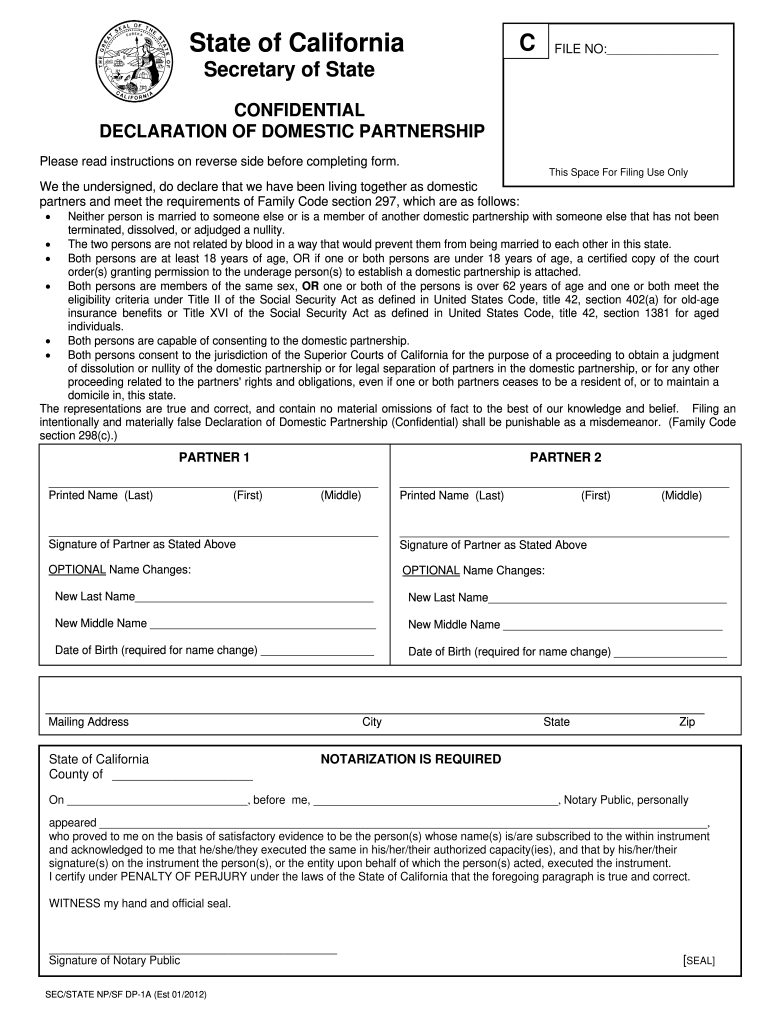
The “Declaration of Domestic Partnership” form (Form DP-1) is available on the California Secretary of State’s website. Both partners must complete and sign this form under penalty of perjury. The form requires basic personal information from each partner, including names, addresses, and affirmations that they meet all eligibility requirements.
Key sections of the form include:
- Partner Information: Full legal names, current addresses, and mailing addresses (if different).
- Eligibility Affirmations: Checkboxes confirming that both partners meet the age, relationship, and prior marriage/domestic partnership status requirements.
- Attestation for Older Opposite-Sex Couples: If applicable, this section requires a statement that one or both partners are 62 years or older and meet the Social Security eligibility criteria.
- Signature and Date: Both partners must sign and date the declaration. It is crucial that the signatures are authentic and that both individuals understand the legal ramifications of what they are signing.
While the form is relatively simple, reading it carefully and ensuring all information is accurate is vital to avoid delays or issues.
Filing the Declaration
Once the “Declaration of Domestic Partnership” form is completed and signed, it must be filed with the California Secretary of State. Unlike marriage licenses, which are typically processed at the county clerk’s office, domestic partnerships are registered at the state level.
You can file the declaration by mail or in person at the Secretary of State’s office in Sacramento. There is a filing fee associated with the registration, which is subject to change, so it’s always best to check the current fee schedule on the Secretary of State’s website.
Upon successful filing, the Secretary of State will register the domestic partnership and send a Certificate of Registration of Domestic Partnership to the partners. This certificate is the official proof of your legal status and should be kept in a secure place.
Confidential vs. Public Partnership
Similar to marriage, domestic partnerships in California can be registered as either public or confidential.
- Public Domestic Partnership: This is the standard registration. The certificate becomes a public record, accessible to anyone who requests it from the Secretary of State’s office.
- Confidential Domestic Partnership: To register a confidential domestic partnership, both partners must declare under penalty of perjury that they have been living together as spouses and meet the general eligibility requirements. The main advantage of a confidential partnership is that the record is not open to public inspection, though it can be accessed by the partners themselves or by court order. There is generally an additional fee for a confidential registration.
The choice between public and confidential depends on the couple’s preference for privacy regarding their relationship status.
Rights and Responsibilities of Domestic Partners
Registering a domestic partnership in California brings with it a comprehensive set of rights and responsibilities, largely aligning with those of married spouses. Understanding these implications is crucial for partners as they embark on this shared lifestyle journey.
Legal and Financial Implications
Domestic partners in California share many of the same state-level legal and financial responsibilities as married couples. These include:
- Community Property: Assets acquired and debts incurred during the domestic partnership are generally considered community property, meaning they are equally owned by both partners. This has significant implications for asset division upon separation or death.
- Spousal Support (Partner Support): In the event of dissolution, one partner may be ordered to pay support to the other, similar to spousal support in a divorce.
- Inheritance Rights: Domestic partners have intestacy rights, meaning they can inherit from each other if one partner dies without a will, similar to spouses.
- Healthcare Decisions: Partners have the legal authority to make healthcare decisions for an incapacitated partner.
- Taxation: While California treats domestic partners similarly to spouses for state income tax purposes, federal tax law does not recognize domestic partnerships, leading to complexities. Partners often have to file federal taxes as “single” or “head of household” and then adjust their state returns to reflect their domestic partnership status. Consulting a tax professional familiar with California domestic partnership law is highly recommended.
- Parental Rights: Domestic partners often have similar parental rights and responsibilities regarding children conceived or adopted during the partnership.
These significant legal and financial ties underscore the seriousness of entering into a domestic partnership.
Healthcare and Benefits
Many employers in California offer healthcare coverage and other benefits to domestic partners, mirroring those offered to spouses. This is a major reason many couples choose to register. However, it’s not universal, and policies can vary greatly depending on the employer. Partners should inquire directly with their employers about the availability of domestic partner benefits, including health insurance, retirement plans, and leave policies.
Federal benefits, as noted, are generally not extended to domestic partners in the same way they are to spouses. This includes Social Security survivor benefits, federal employee benefits, and certain immigration benefits.
Dissolving a Domestic Partnership
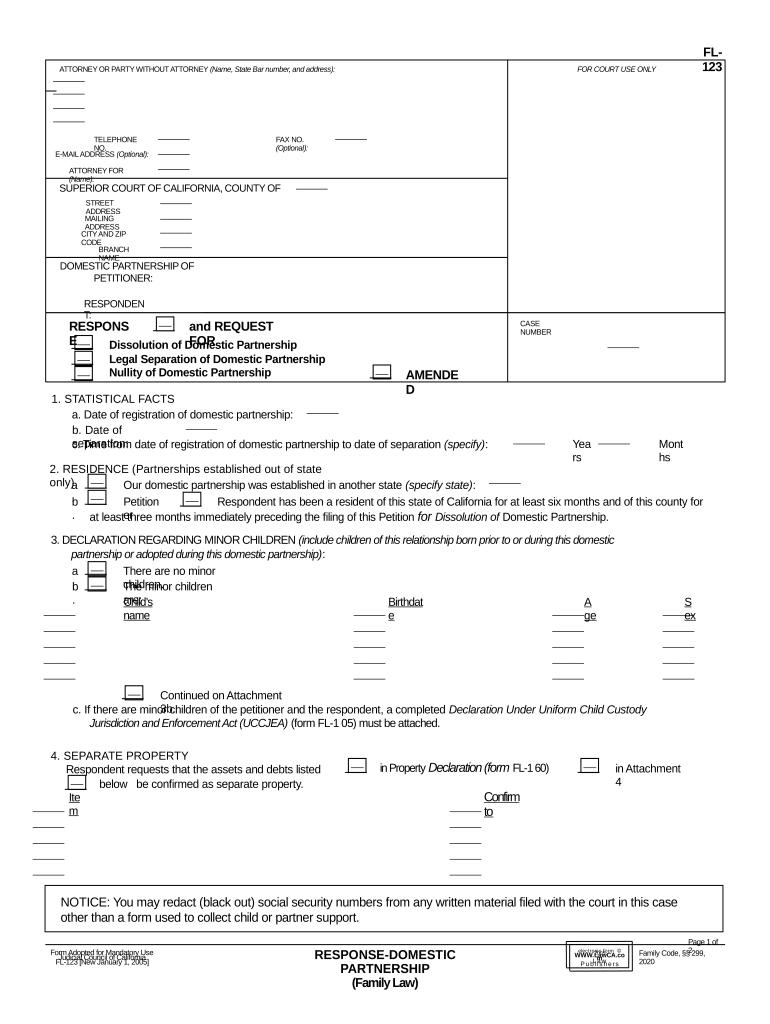
Just as marriage can be dissolved, a domestic partnership also has a formal legal process for termination. The method of dissolution depends on the circumstances of the partnership, particularly its duration and the absence or presence of shared assets or children.
- Summary Dissolution: This simplified process is available for domestic partnerships that meet specific criteria, such as a short duration (typically less than five years), no children, minimal community property and debt, and mutual agreement on all terms.
- Regular Dissolution (Petition for Dissolution): If the partnership does not qualify for summary dissolution, partners must go through a more formal process similar to a divorce. This involves filing a petition for dissolution with the superior court, potentially engaging in mediation or litigation to resolve issues related to property division, partner support, and child custody.
Understanding the dissolution process from the outset can help partners make informed decisions and plan for potential future scenarios, reflecting a mature approach to their lifestyle choices.
Comparing Domestic Partnership to Marriage
For many couples in California, the decision to enter into a domestic partnership versus marriage involves weighing the similarities and differences, especially concerning legal and financial implications. Both offer formal recognition of a relationship, but distinct nuances exist.
Similarities and Differences
On a state level, domestic partnership in California is remarkably similar to marriage. Both grant equivalent rights and responsibilities in areas like community property, inheritances, medical decision-making, and partner support. The legal processes for forming and dissolving both relationships are also parallel, with summary and regular dissolution options for partnerships mirroring those for divorce.
The most significant difference lies at the federal level. Marriage is federally recognized, which brings with it consistent federal tax filing options (married filing jointly/separately), federal benefits (Social Security, veteran’s benefits, immigration sponsorship), and consistent treatment across all states and federal agencies. Domestic partnerships, however, are not federally recognized. This means domestic partners must navigate a hybrid legal landscape, adhering to California state laws as married and federal laws as single. This creates complexities, particularly with income tax filing and benefit eligibility.
Considerations for Your Relationship
Choosing between domestic partnership and marriage is a deeply personal decision, often influenced by a couple’s values, financial situation, and long-term goals.
- Age and Benefits: For opposite-sex couples over 62, domestic partnership may offer a way to formalize a relationship without impacting specific Social Security or pension benefits that might be affected by marriage.
- Federal Tax Implications: Couples should be acutely aware of the federal tax complexities associated with domestic partnerships. This often requires additional tax planning and professional advice.
- Personal Beliefs: Some couples may choose domestic partnership due to personal beliefs or a desire to formalize their relationship without adopting the traditional institution of marriage.
- Ease of Dissolution: While both relationships require legal processes for dissolution, some perceive domestic partnerships as potentially less complex to unwind, though this largely depends on the specific circumstances and the willingness of both partners to agree.
Ultimately, both options provide robust legal frameworks for couples to build a life together in California. The best choice depends on a thorough understanding of the legal landscape and how it aligns with your specific lifestyle needs and aspirations.
Resources and Next Steps
For couples considering or applying for a domestic partnership in California, accessing reliable resources and seeking professional advice are crucial final steps.
Legal Counsel
While the application process for a domestic partnership is fairly straightforward, understanding the full legal implications—especially concerning property, finances, and estate planning—can be complex. Consulting with an attorney specializing in family law in California is highly recommended. A legal professional can provide tailored advice on community property laws, partner support, estate planning documents (like wills and trusts), and the distinctions between state and federal recognition. This is particularly important for couples with significant assets, existing children, or complex financial situations.

County Clerk’s Offices and the Secretary of State
Although the Declaration of Domestic Partnership is filed with the California Secretary of State, local county clerk’s offices can be a valuable resource for general information. While they primarily handle marriage licenses, some may offer guidance or direct you to relevant state resources. The official source for forms, current fees, and detailed instructions is always the California Secretary of State’s website. Regularly checking this site ensures you have the most up-to-date information regarding the application process, fees, and any changes in legislation affecting domestic partnerships. Taking these proactive steps ensures a smooth and informed transition into this significant lifestyle commitment.
LifeOutOfTheBox is a participant in the Amazon Services LLC Associates Program, an affiliate advertising program designed to provide a means for sites to earn advertising fees by advertising and linking to Amazon.com. Amazon, the Amazon logo, AmazonSupply, and the AmazonSupply logo are trademarks of Amazon.com, Inc. or its affiliates. As an Amazon Associate we earn affiliate commissions from qualifying purchases.