
Navigating the complexities of employment law can be a daunting task for any individual, especially when it concerns essential benefits like family and medical leave. In California, the process of applying for the Family and Medical Leave Act (FMLA) is governed by both federal and state regulations, offering eligible employees crucial job protection during times of significant personal or family health needs. Understanding this process is paramount to ensuring you can access the support you need without jeopardizing your employment. This guide aims to demystify the application process for FMLA in California, covering eligibility, the application steps, and important considerations to keep in mind.
Understanding FMLA Eligibility in California
Before delving into the application procedure, it’s vital to establish whether you qualify for FMLA leave. The FMLA is a federal law, but California also has its own family and medical leave law, the California Family Rights Act (CFRA), which often runs concurrently with FMLA but can offer broader protections in some instances. For the purposes of this guide, we will focus on the combined federal and state framework for FMLA applications.
Employer Coverage
The first hurdle to FMLA eligibility is employer coverage. To be covered by FMLA, an employer must:
- Have 50 or more employees within a 75-mile radius of the employee’s work site.
- This threshold applies to private employers, as well as state and local government agencies, and public schools.
There are nuances to this rule. For instance, employers with multiple locations that collectively employ 50 or more people but don’t have 50 employees within a 75-mile radius may still be covered. It’s always advisable to confirm with your HR department or consult with legal counsel if you are unsure about your employer’s coverage status.
Employee Eligibility
Beyond employer coverage, individual employees must meet specific criteria to be eligible for FMLA leave. These include:
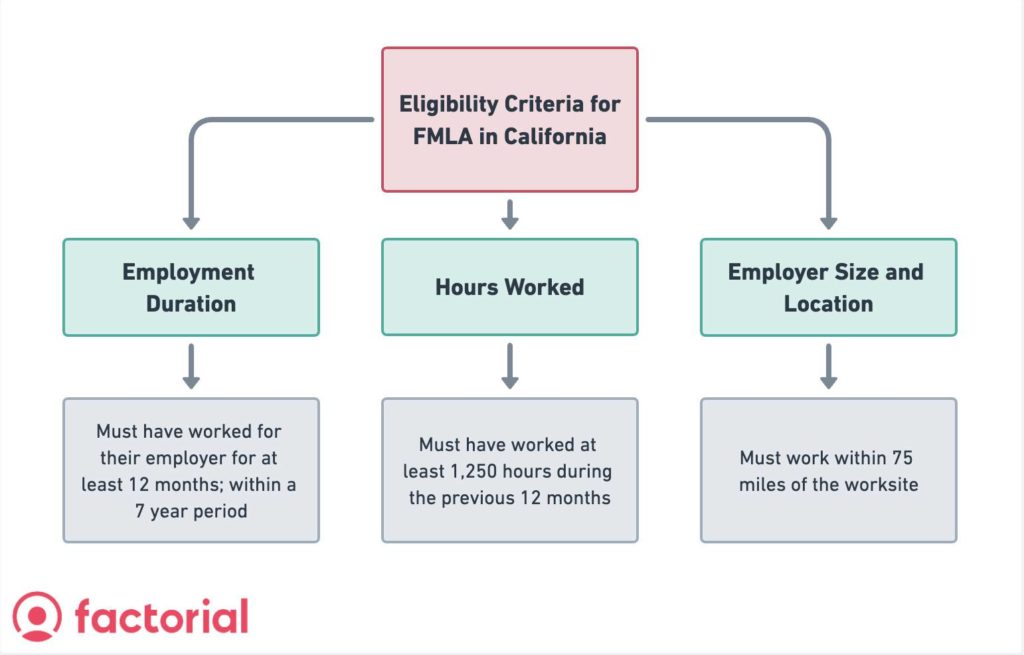
- Tenure: You must have worked for your employer for at least 12 months. These months do not need to be consecutive. For example, if you worked for a company for six months, left, and then returned and worked for another six months, you would meet this requirement.
- Hours of Service: You must have worked at least 1,250 hours during the 12 months immediately preceding the commencement of your FMLA leave. This includes hours actually worked, but generally not paid leave such as vacation or sick time.
- Work Location: You must work at a location where your employer has 50 or more employees within 75 miles. This is the crucial 75-mile radius rule that determines if your specific work site is covered.
It is important to note that intermittent or reduced leave schedules are permitted under FMLA, provided they are medically necessary. This means you may not need to take your entire leave consecutively.
The FMLA Application Process in California
Once you have confirmed your eligibility, the next step is to formally apply for FMLA leave. This process typically involves several key stages, from initial notification to submitting the necessary documentation.
Initial Notification
The first formal step is to notify your employer of your need for FMLA leave.
- Timing: Generally, you must provide your employer with 30 days’ advance notice if the need for leave is foreseeable. This typically applies to planned medical procedures, the birth or adoption of a child, or a planned family member’s surgery.
- Unforeseeable Leave: If the need for leave is unforeseeable, such as a sudden medical emergency or accident, you must provide notice as soon as practicable. This means as soon as you or a family member reasonably can.
- Form of Notice: While verbal notice is acceptable to initiate the conversation, it is highly recommended to follow up with a written request for FMLA leave. This provides a clear record of your intent and the date of your notification. Your written notice should include the reason for the leave and the expected duration.
Requesting and Completing FMLA Forms
Upon receiving your notification, your employer is obligated to provide you with the necessary FMLA paperwork. This typically includes:
- Designation Notice: This form informs you that your absence may be covered by FMLA (and CFRA, if applicable) and outlines the amount of leave you are entitled to. It also specifies the employer’s expectations regarding the use of paid leave (such as vacation or sick time) during your FMLA absence.
- Certification of Health Care Provider Form: This is the most critical document in your FMLA application. Your employer will likely require you to have this form completed by your healthcare provider to verify the medical necessity of your leave. This form typically requires detailed information about:
- The medical condition for which leave is needed.
- The date the condition began.
- The probable duration of the condition.
- Whether the condition warrants treatment by a healthcare provider.
- The employee’s ability to perform the essential functions of their job.
- For care of a family member, the form will also ask about the family member’s condition and the need for the employee’s care.
- Other Forms: Depending on the reason for your leave (e.g., military caregiver leave, bonding with a new child), there may be additional specific forms required.
It is crucial to return the completed forms to your employer within the specified timeframe, which is typically 15 calendar days from the date your employer provides them to you. Failure to do so may result in your employer denying your FMLA leave request.
Key Considerations for Your FMLA Application
Applying for FMLA leave involves more than just filling out forms. There are several important aspects to consider to ensure a smooth and successful process.
Interplay Between FMLA and CFRA
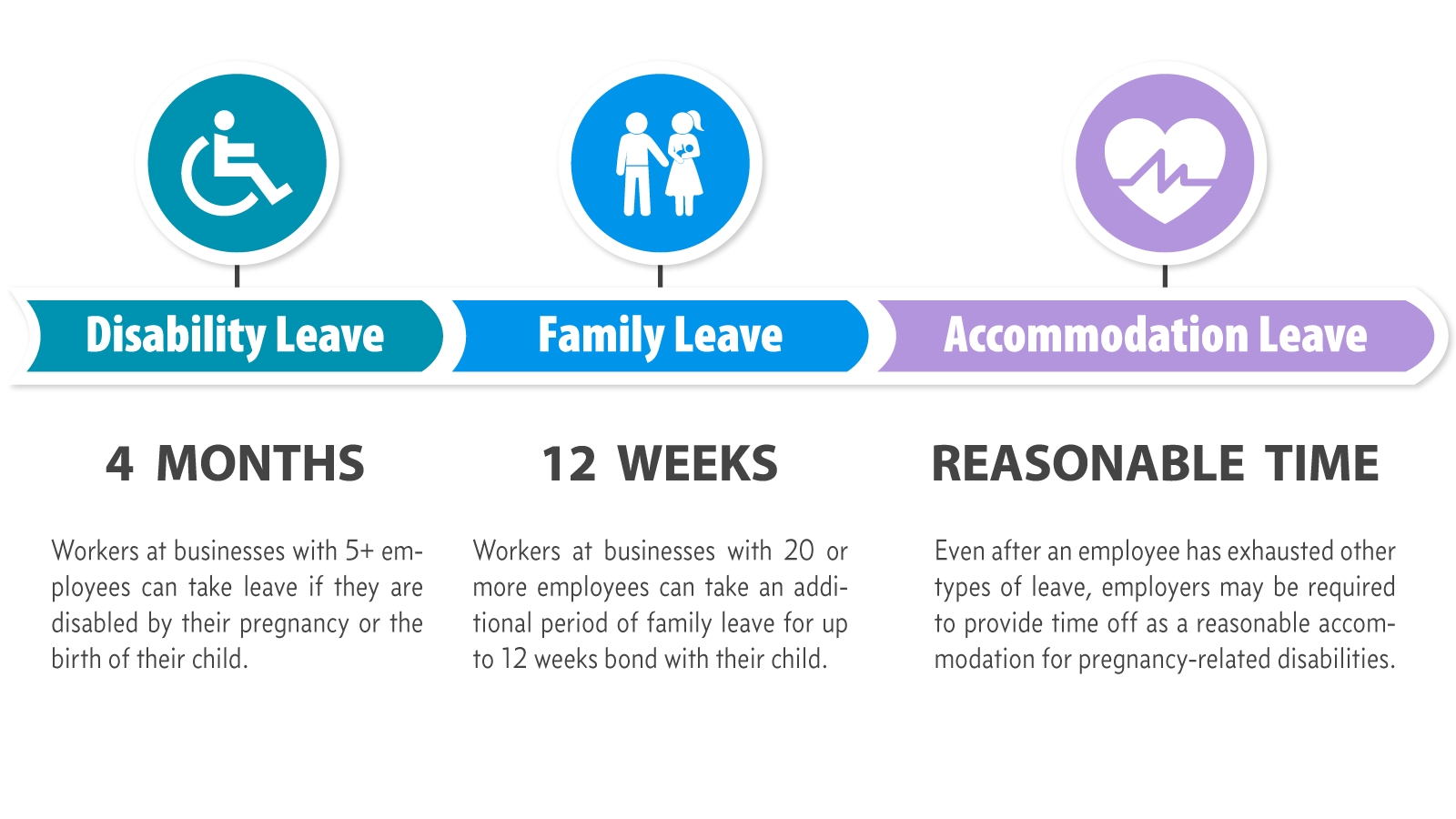
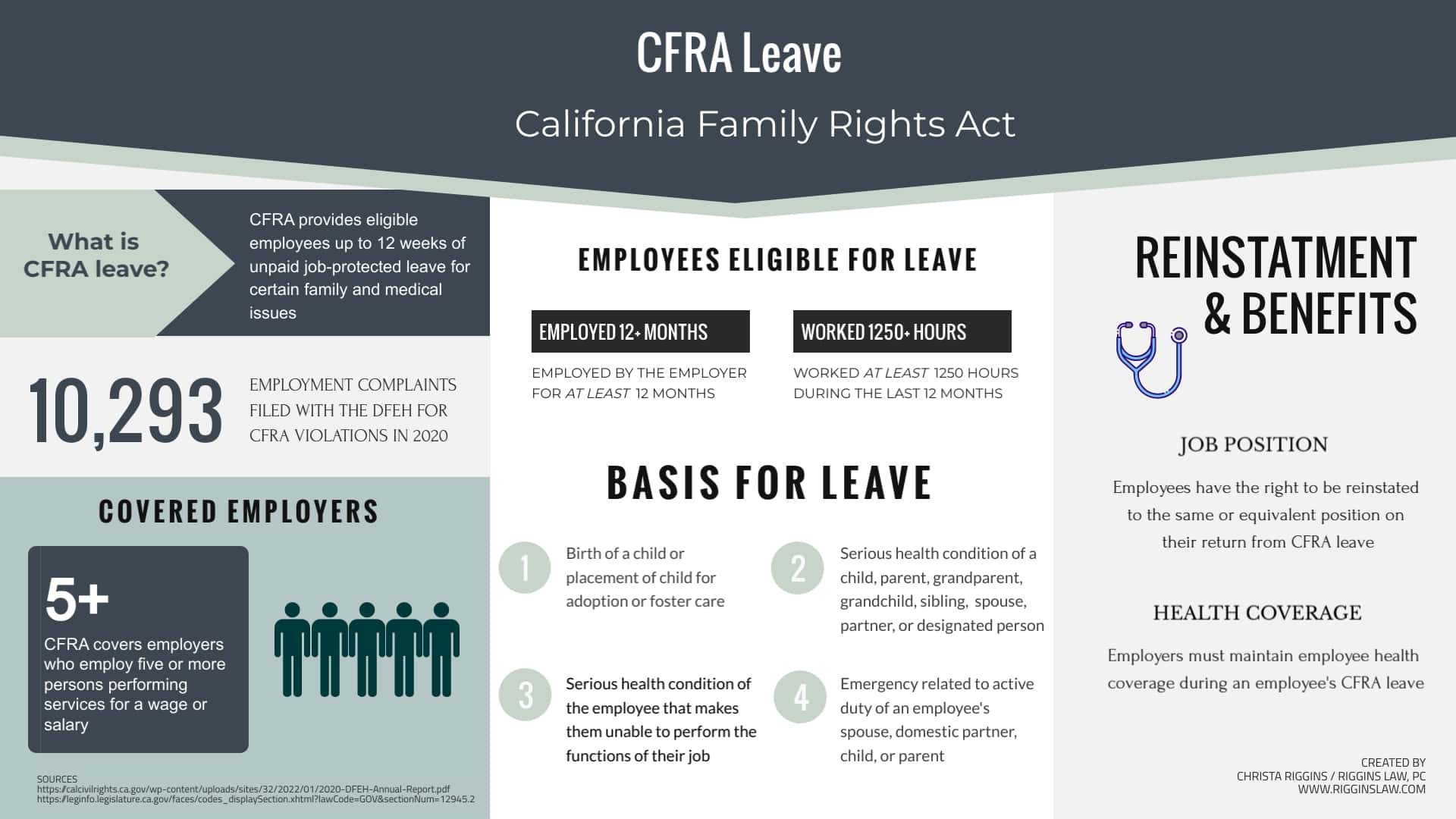
As mentioned, California has the CFRA, which often runs concurrently with FMLA but has some key differences. For example, CFRA generally covers smaller employers (those with 5 or more employees) and has broader protections regarding family members for whom care can be provided. It’s essential to understand if your employer is covered by CFRA and how its provisions might affect your leave. Often, employers will have you use FMLA and CFRA concurrently, meaning your leave counts towards both.
Use of Paid Leave
FMLA generally allows employers to require employees to use accrued paid leave (such as vacation days, paid time off PTO, or sick leave) during their FMLA absence. Your employer’s designation notice will clarify their policy on this. It’s important to discuss this with your employer to understand how your paid leave will be applied and what your pay situation will be during your leave.
Job Protection and Benefits
One of the primary benefits of FMLA is job protection. Upon returning from leave, you are generally entitled to be restored to your original job or an equivalent position with equivalent pay, benefits, and other terms and conditions of employment. Your employer must continue your group health benefits during your leave, under the same conditions as if you had continued to work.
Documentation and Record-Keeping
Thorough documentation is your best ally throughout the FMLA application process. Keep copies of all correspondence with your employer, including your initial request, any forms provided by your employer, and the completed certification forms you submit. Retain any medical records that support your need for leave. This meticulous record-keeping can be invaluable if any disputes arise.
Seeking Assistance
If you encounter any difficulties or uncertainties during the FMLA application process, don’t hesitate to seek assistance. Your employer’s Human Resources department is the primary resource for FMLA-related questions. If you believe your rights are being violated or you are facing challenges, consider consulting with an employment lawyer or contacting the California** Department of Fair Employment and Housing** (now known as the Civil Rights Department) or the *U.S. Department of Labor’s Wage and Hour Division*.
Applying for FMLA leave in California is a structured process designed to provide essential support to employees facing significant life events. By understanding eligibility requirements, diligently following the application steps, and staying informed about your rights and responsibilities, you can navigate this process with confidence and secure the leave you need for your health and your family’s well-being.
LifeOutOfTheBox is a participant in the Amazon Services LLC Associates Program, an affiliate advertising program designed to provide a means for sites to earn advertising fees by advertising and linking to Amazon.com. Amazon, the Amazon logo, AmazonSupply, and the AmazonSupply logo are trademarks of Amazon.com, Inc. or its affiliates. As an Amazon Associate we earn affiliate commissions from qualifying purchases.