
Navigating the application process for government assistance programs can often feel like traversing a complex labyrinth. For residents of Nebraska seeking health coverage through Medicaid, understanding the procedural steps, eligibility requirements, and necessary documentation is paramount. This comprehensive guide aims to demystify the application process, providing a clear roadmap for Nebraskans to secure vital healthcare services. While the core function of Medicaid is to provide health insurance to low-income individuals and families, the specifics of eligibility and application can vary by state. In Nebraska, the program is administered by the Nebraska Department of Health and Human Services (DHHS).
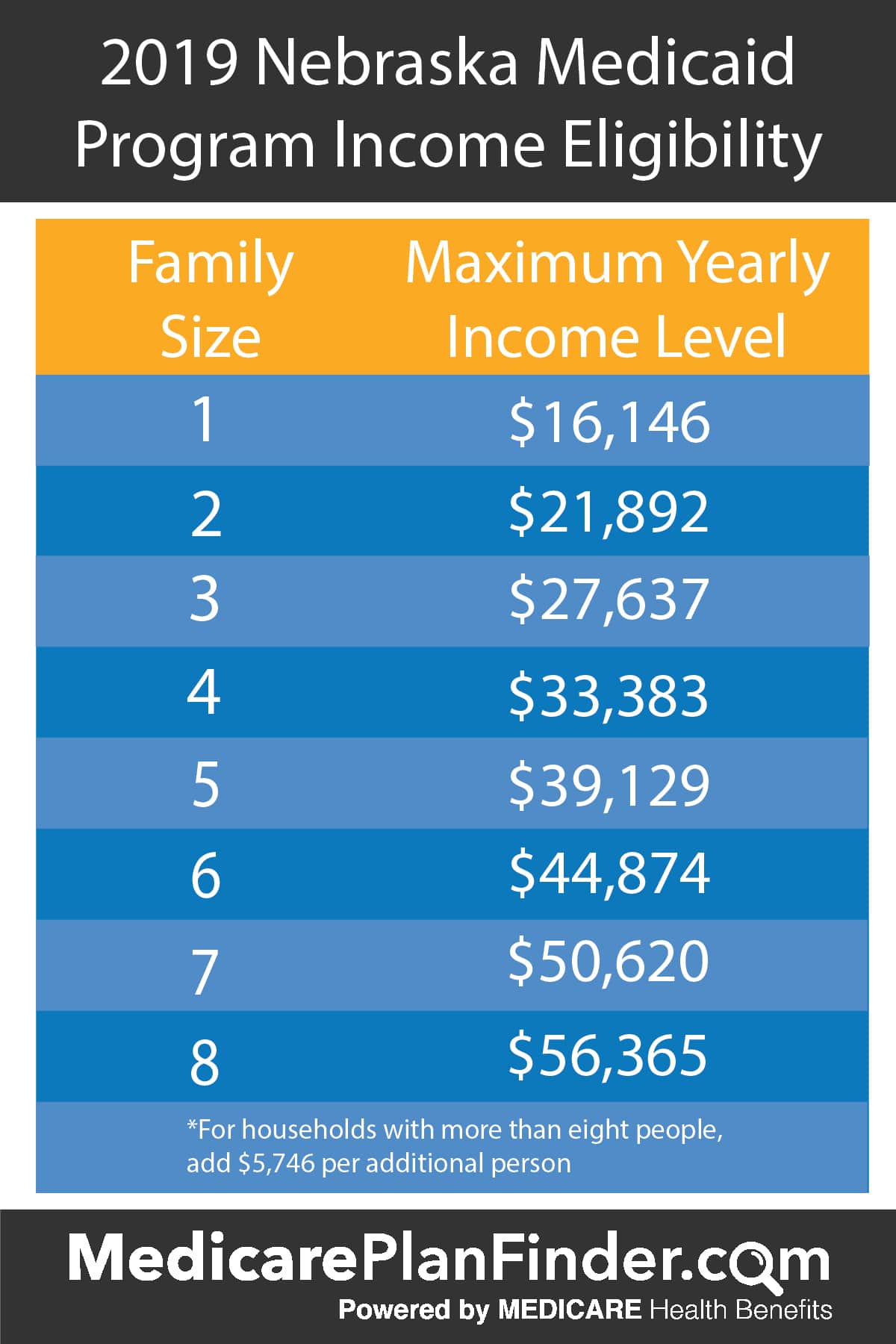
Understanding Nebraska Medicaid Eligibility
Before embarking on the application journey, it’s crucial to ascertain whether you meet the eligibility criteria for Nebraska Medicaid. The program serves a diverse population, including low-income families, children, pregnant women, elderly individuals, and people with disabilities. Eligibility is primarily based on income, household size, and specific categorical requirements.
Income and Household Size
The cornerstone of Medicaid eligibility is your household’s income relative to the Federal Poverty Level (FPL). Nebraska has specific income thresholds for different coverage groups. For instance, children typically have higher income limits than adults. It’s essential to calculate your Modified Adjusted Gross Income (MAGI) for the household, as this is the income standard used for most eligibility determinations. The DHHS website provides detailed charts and calculators to help you assess your potential eligibility based on your current income and family size. Families with significantly lower incomes are generally more likely to qualify.
Categorical Eligibility
Beyond income, individuals must also fall into one of the eligible categories. These typically include:
- Children: Children up to a certain age (often 18 or 19) whose families meet income requirements.
- Pregnant Women: Pregnant individuals, often with slightly expanded income eligibility during pregnancy and for a period postpartum.
- Parents/Caretakers: Adults who are the primary caretakers of dependent children may qualify if their income is below the established limit.
- Elderly Individuals (Aged 65 and Over): Seniors who meet income and asset limits may be eligible.
- Individuals with Disabilities: People with disabilities who meet certain criteria for disability and income can access Medicaid services. This often involves a determination of disability by the Social Security Administration or the state agency.
It’s important to note that Nebraska has an expanded Medicaid program, which allows more adults to qualify based on income, regardless of whether they have children. This expansion has significantly broadened access to health insurance for many working Nebraskans. You will need to determine which category you fall into and then cross-reference that with the income limits for that category.
Asset Limits (for specific categories)
While most Medicaid eligibility in Nebraska is based on income (MAGI), there are specific categories, particularly for the elderly and individuals with disabilities who are seeking long-term care services, where asset limits also apply. These limits are separate from income limits and consider the value of certain resources you own, such as bank accounts, stocks, and bonds. Specific types of assets, like your primary residence (under certain conditions) or a vehicle, may be exempt. If you are applying under one of these categories, you will need to provide detailed information about your assets.
The Application Process: Step-by-Step
Once you have determined that you likely meet the eligibility criteria, the next step is to formally apply. The Nebraska Department of Health and Human Services (DHHS) manages the application process, offering several convenient methods for submission.
Method 1: Online Application (ACCESSNebraska)
The most streamlined and often fastest way to apply is through the state’s online portal, ACCESSNebraska. This secure website is designed to guide you through the application step-by-step.
- Create an Account: You will likely need to create a username and password to access the system.
- Complete the Application Form: The online form will ask for detailed information about yourself and all household members applying for coverage. This includes personal identifying information (name, date of birth, Social Security number), income details (pay stubs, tax returns, unemployment benefits), household composition, citizenship or immigration status, and any existing health insurance.
- Upload Supporting Documents: The portal will prompt you to upload scanned copies or clear photos of necessary documents. Common requirements include proof of identity (driver’s license, state ID), proof of income (recent pay stubs, W-2 forms, benefit award letters), proof of residency in Nebraska, and documentation related to pregnancy, disability, or other categorical requirements.
- Review and Submit: Before submitting, carefully review all the information for accuracy. Once submitted, you will typically receive a confirmation or case number.
Method 2: Paper Application
For individuals who prefer not to apply online or lack internet access, paper applications are available.
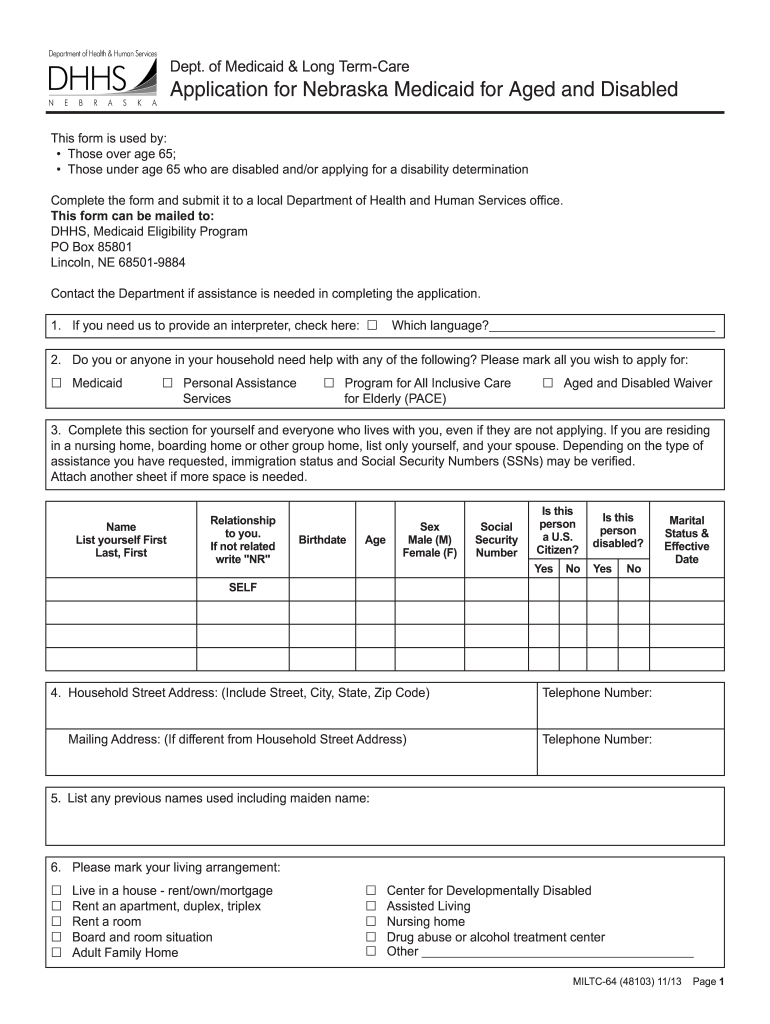
- Obtain the Application Form: You can download the application from the DHHS website or pick up a copy at a local DHHS office.
- Complete the Form: Fill out the application accurately and legibly in ink. Be sure to answer all questions thoroughly.
- Gather Supporting Documents: Collect all required supporting documents as listed in the application instructions.
- Submit the Application: You can mail the completed application and copies of your documents to the address provided on the form, or deliver them in person to a local DHHS office.
Method 3: In-Person Assistance
Nebraska DHHS offices are equipped to provide in-person assistance with applications.
- Locate Your Nearest Office: Visit the DHHS website to find the contact information and address for your local service center.
- Schedule an Appointment (Recommended): While walk-ins may be accommodated, scheduling an appointment can help minimize wait times.
- Bring All Necessary Documents: Be prepared to bring all the required documentation with you to the appointment. A caseworker will guide you through the application process and answer any questions you may have.
Required Documentation: What to Prepare
Having the necessary documents ready before you start your application will significantly expedite the process and reduce the likelihood of delays. The specific documents required may vary slightly depending on your circumstances, but generally, you should be prepared to provide:
Proof of Identity and Residency
- Photo Identification: A valid driver’s license, state-issued ID card, passport, or other government-issued photo ID.
- Proof of Nebraska Residency: Utility bills, lease agreements, or mail addressed to you at your Nebraska address.
Proof of Income
- Recent Pay Stubs: Typically, pay stubs from the last 30-60 days.
- W-2 Forms and Tax Returns: Recent federal income tax returns.
- Letters of Benefit Award: For unemployment benefits, Social Security benefits, Supplemental Security Income (SSI), or other public assistance.
- Bank Statements: Showing deposits from employment or other income sources.
- Self-Employment Income Documentation: If you are self-employed, this may include ledgers, invoices, and tax forms related to your business.
Household Information
- Social Security Numbers: For all household members applying for coverage.
- Birth Certificates: For all household members.
- Immigration Documents: If applicable, for non-citizens, including green cards or visa documentation.
Category-Specific Documentation
- For Pregnant Women: A doctor’s verification of pregnancy.
- For Individuals with Disabilities: Documentation of disability status, which could include a Social Security Administration award letter or a doctor’s statement confirming a disabling condition.
- For Children: Birth certificates and proof of school enrollment if applicable.
Asset Information (if applicable)
- Bank Account Statements: For checking, savings, and money market accounts.
- Investment Statements: For stocks, bonds, and mutual funds.
- Property Deeds: For any real estate owned, other than your primary residence if exempt.
After You Apply: What to Expect
Once your application is submitted, the Nebraska Department of Health and Human Services (DHHS) will review it to determine your eligibility.
Processing Time
The processing time can vary depending on the completeness of your application, the volume of applications being processed, and the complexity of your case. Generally, decisions are made within 30 to 45 days of receiving a complete application. If your case is complex or requires additional information, it may take longer.
Notification of Decision
You will be notified in writing of the decision regarding your Medicaid eligibility. If your application is approved, the notice will detail the services you are eligible for and when your coverage will begin. If your application is denied, the notice will explain the reason for the denial and provide information on your right to appeal the decision.
Maintaining Eligibility
Medicaid is not a one-time approval. You are required to report any changes in your circumstances that could affect your eligibility, such as changes in income, household size, or residency. Nebraska conducts periodic reviews to ensure that enrollees continue to meet the eligibility requirements. You will receive a renewal notice when it’s time to re-apply or update your information. It is critical to respond to these notices promptly to avoid a lapse in coverage.
Securing health insurance through Nebraska Medicaid is a vital step towards ensuring access to necessary medical care. By understanding the eligibility requirements and meticulously preparing your application, Nebraskans can navigate this process with greater confidence and secure the healthcare coverage they need. The Department of Health and Human Services is the primary resource for information and assistance throughout this journey.
LifeOutOfTheBox is a participant in the Amazon Services LLC Associates Program, an affiliate advertising program designed to provide a means for sites to earn advertising fees by advertising and linking to Amazon.com. Amazon, the Amazon logo, AmazonSupply, and the AmazonSupply logo are trademarks of Amazon.com, Inc. or its affiliates. As an Amazon Associate we earn affiliate commissions from qualifying purchases.