
Supplemental Security Income (SSI) is a vital federal program administered by the Social Security Administration (SSA) that provides monthly cash assistance to adults and children with disabilities or blindness, and adults aged 65 and older, who have limited income and resources. While SSI is a federal program, its application and administration in California have specific nuances that applicants need to understand. This guide aims to provide a comprehensive overview of how to navigate the SSI application process within the Golden State, ensuring you or your loved one can access this crucial support.
Understanding SSI Eligibility in California
Before embarking on the application journey, it’s essential to grasp the fundamental eligibility criteria for SSI. These are generally consistent across the United States, but understanding them within the Californian context is paramount. The SSA evaluates applicants based on three main factors: disability or age, income, and resources.
Disability or Age Requirements
To qualify for SSI based on disability, an individual must have a medically determinable physical or mental impairment that is expected to last for at least 12 continuous months or result in death, and which prevents them from engaging in substantial gainful activity (SGA). For children, the disability standard is different and focuses on functional limitations compared to their peers. Alternatively, individuals aged 65 or older can qualify for SSI based on age, regardless of disability status, provided they meet the income and resource limitations.
Income Limitations
SSI applicants must have very limited income. The SSA defines income broadly to include money you receive from various sources, such as wages, pensions, Social Security benefits, unemployment benefits, and even in-kind support and maintenance (like free food or shelter). There are specific rules for counting income, with certain types of income excluded. The federal benefit rate (FBR) is the maximum monthly amount an individual can receive, and your countable income is subtracted from this FBR to determine your actual payment. In California, the state supplements the federal SSI payment, meaning you may receive a higher total monthly amount than in other states. This state supplement is crucial to factor in when assessing your potential benefits.
Resource Limitations
In addition to income, SSI applicants must also have limited resources. Resources are assets that you own and can convert to cash to meet your basic needs. These include bank accounts, stocks, bonds, and other financial assets. The SSA has specific limits for what counts as a resource. For individuals, the resource limit is $2,000, and for couples, it is $3,000. Certain assets are excluded from this calculation, such as the home you live in, one vehicle, and household goods. Understanding which of your assets count and which do not is critical during the application process.
The Application Process in California
The SSI application process in California generally involves an initial application followed by a detailed review by the SSA and potentially the Disability Evaluation Division (DED) for disability claims.
Initial Application
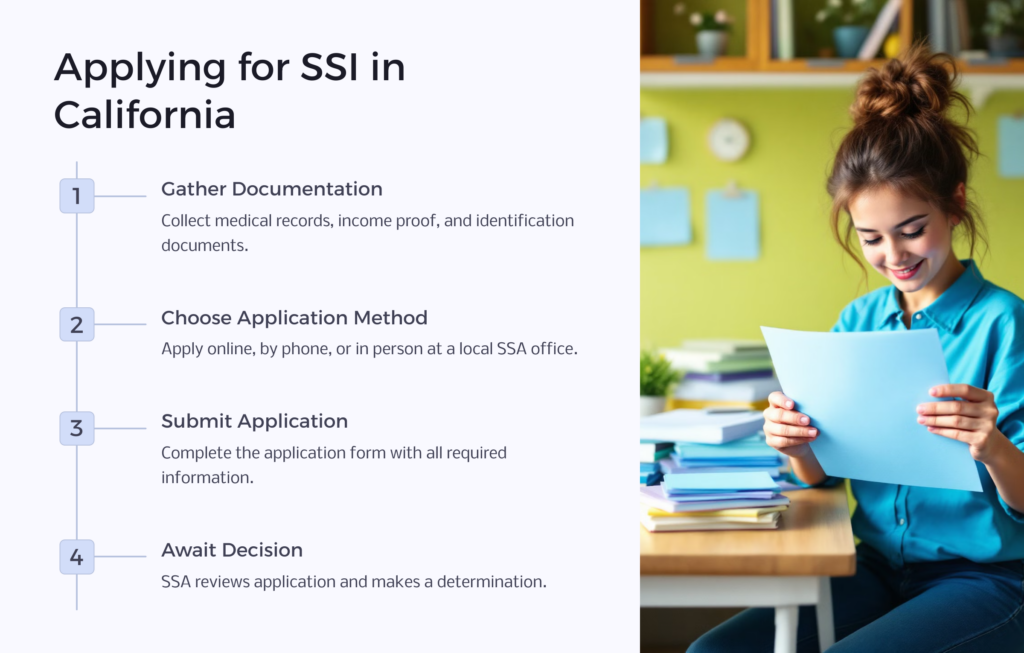
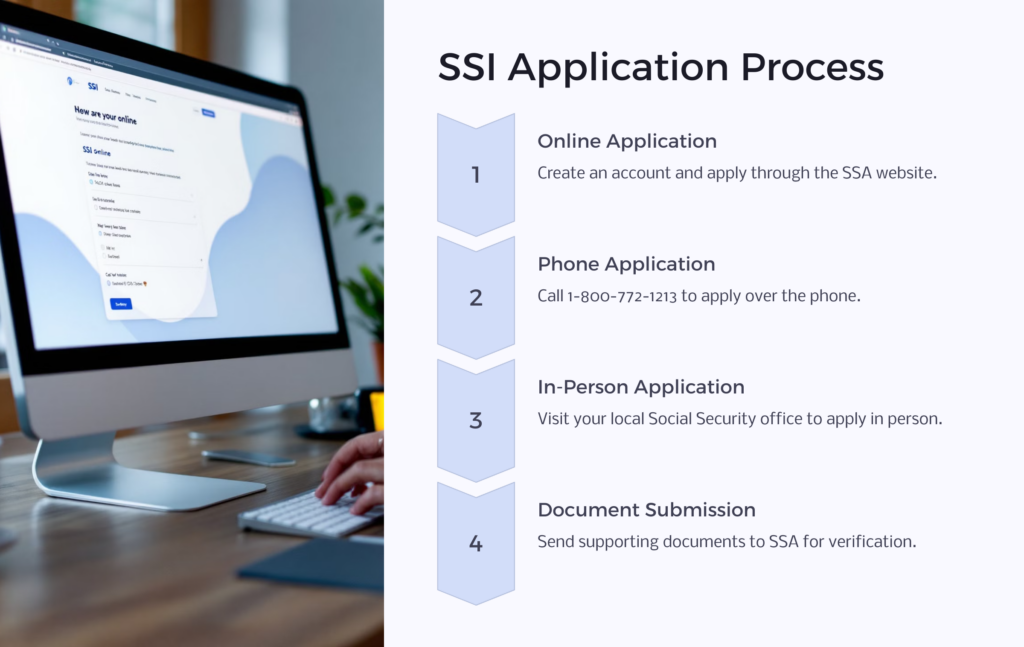
The first step is to file an application. This can be done in several ways:
- Online: The SSA offers an online disability application. While this is a convenient starting point, it is specifically for disability claims and does not cover all aspects of the SSI application. You will still need to contact the SSA to complete the full application.
- By Phone: You can call the SSA’s toll-free number, 1-800-772-1213, to schedule an appointment to complete the application over the phone.
- In Person: You can visit your local Social Security office to apply in person. It is highly recommended to call ahead and schedule an appointment to minimize your waiting time. You can find your nearest office using the SSA’s office locator tool on their website.
When you apply, you will need to provide a significant amount of information about yourself, your income, your resources, your medical conditions, and your work history. It is advisable to gather as much documentation as possible before you start the application. This includes:
- Birth certificate or other proof of age
- Social Security card
- Proof of citizenship or lawful alien status
- Medical records, doctor’s names and addresses, and names of hospitals or clinics you have visited
- Names and dates of prior employment
- Bank statements and other financial records
- Marriage certificate (if applicable)
- Discharge papers from military service (if applicable)
Disability Determination (for disability claims)
If you are applying for SSI based on disability, your claim will be sent to the Disability Evaluation Division (DED) for a medical review. This process can be lengthy and involves several stages:
- Medical Evidence Review: The DED will gather all the medical evidence you have provided, along with any additional records they can obtain from your doctors and other healthcare providers.
- Consultative Examinations (CEs): If the existing medical evidence is not sufficient, the SSA may schedule you for one or more consultative examinations (CEs) with doctors they select. These examinations are free to you and are intended to gather specific medical information about your condition. It is crucial to attend all scheduled CEs, as failure to do so can result in your claim being denied.
- Adjudication: A team of medical consultants and vocational experts at the DED will review all the evidence to determine if you meet the SSA’s definition of disability. They will consider the severity of your impairments, how they affect your ability to perform daily activities and work, and your age, education, and past work experience.
Income and Resource Verification
While the medical review is underway, the SSA will also be verifying your income and resource information. They may request bank statements, pay stubs, and other financial documents to ensure you meet the stringent income and resource limits. It’s essential to be truthful and accurate in reporting all your financial details. Any discrepancies can lead to delays or denial of your claim.
The Role of the State of California
While SSI is a federal program, the state of California plays a role in administering some aspects of the program. Specifically, California supplements the federal SSI benefit, meaning recipients receive an additional amount from the state each month. This state supplement is intended to help recipients meet higher living costs. The application process for this state supplement is typically integrated with the federal SSI application, but it’s important to be aware that California has its own specific rules and requirements that can affect your overall benefit amount.
Navigating Challenges and Appeals
The SSI application process can be complex and often involves significant delays. It is not uncommon for initial applications to be denied. If your application is denied, do not be discouraged. You have the right to appeal the decision.
Understanding the Appeal Process
The appeals process has several levels:
- Reconsideration: This is the first level of appeal. You request that the SSA review your claim again. A different claims examiner and medical consultant (for disability claims) will review your case, along with any new evidence you can provide.
- Hearing by an Administrative Law Judge (ALJ): If your claim is denied at the reconsideration level, you can request a hearing before an Administrative Law Judge (ALJ). This is a more formal process where you can present your case in person, with or without a representative, and provide testimony and additional evidence. Many successful appeals are won at this stage.
- Appeals Council Review: If the ALJ denies your claim, you can request a review by the SSA’s Appeals Council.
- Federal Court Review: The final level of appeal is to file a lawsuit in federal district court.
Tips for a Stronger Application and Appeal
- Be Thorough and Accurate: Provide complete and accurate information on all forms. Double-check all details before submitting.
- Gather All Evidence: Collect as much medical documentation as possible, including doctor’s notes, test results, treatment histories, and statements from your healthcare providers about your limitations.
- Be Honest About Your Limitations: Clearly articulate how your disability or age affects your daily activities and your ability to work.
- Seek Representation: Consider seeking assistance from an experienced SSI advocate or attorney. These professionals can help you navigate the complex application process, gather evidence, and represent you during appeals. Organizations like Disability Rights California may offer resources or assistance.
- Be Patient and Persistent: The SSI process can take a long time. Be prepared for delays and continue to follow up on your claim. Do not give up if your initial application is denied; the appeals process can be successful.
Life in California with SSI Benefits
Receiving SSI benefits in California can significantly improve the quality of life for individuals with disabilities or those who are elderly and have limited financial resources. The monthly payments can help cover essential needs such as housing, food, clothing, and medical care.
State Supplementation and Cost of Living
As mentioned, California offers a state supplement to the federal SSI benefit. This supplementation is particularly important given the generally higher cost of living in many parts of the state, from the bustling metropolises like Los Angeles and San Francisco to more suburban and rural areas. While the supplement aims to bridge this gap, it’s crucial for recipients to budget carefully to manage their expenses effectively.

Accessing Additional Resources
Beyond the SSI payments, individuals in California may be eligible for other supportive services and benefits. These can include:
- Medi-Cal: Most SSI recipients automatically qualify for Medi-Cal, California’s state-run health insurance program, which provides comprehensive healthcare coverage.
- CalFresh: This program, formerly known as food stamps, offers monthly cash benefits to help low-income individuals and families buy food.
- Housing Assistance: Various programs exist at the local and state levels to assist low-income individuals and families with housing costs.
- Vocational Rehabilitation Services: For individuals with disabilities who wish to work, California offers vocational rehabilitation services through the Department of Rehabilitation to help them prepare for, obtain, or maintain employment.
Navigating the application for SSI in California requires patience, thoroughness, and a clear understanding of the eligibility criteria and application process. By preparing diligently, gathering all necessary documentation, and seeking assistance when needed, applicants can significantly increase their chances of successfully obtaining this critical financial support. Remember, SSI is designed to provide a safety net for those who need it most, and understanding how to access it is the first step toward greater financial security and well-being.
LifeOutOfTheBox is a participant in the Amazon Services LLC Associates Program, an affiliate advertising program designed to provide a means for sites to earn advertising fees by advertising and linking to Amazon.com. Amazon, the Amazon logo, AmazonSupply, and the AmazonSupply logo are trademarks of Amazon.com, Inc. or its affiliates. As an Amazon Associate we earn affiliate commissions from qualifying purchases.