
Becoming a licensed real estate broker in Texas is a significant career step, offering greater autonomy, earning potential, and the ability to own and operate your own real estate firm. The path is structured and requires dedication to education, experience, and passing rigorous examinations. This guide outlines the essential steps and considerations for aspiring brokers in the Lone Star State, focusing on the professional development and regulatory requirements within the real estate industry.
Understanding the Broker Role and Requirements in Texas
In Texas, the Texas Real Estate Commission (TREC) governs real estate licensing. A broker’s license signifies a higher level of expertise and responsibility compared to a sales agent. Brokers can perform all the duties of a sales agent, but they can also supervise sales agents, manage real estate operations, and establish their own brokerage firms.
Eligibility Criteria
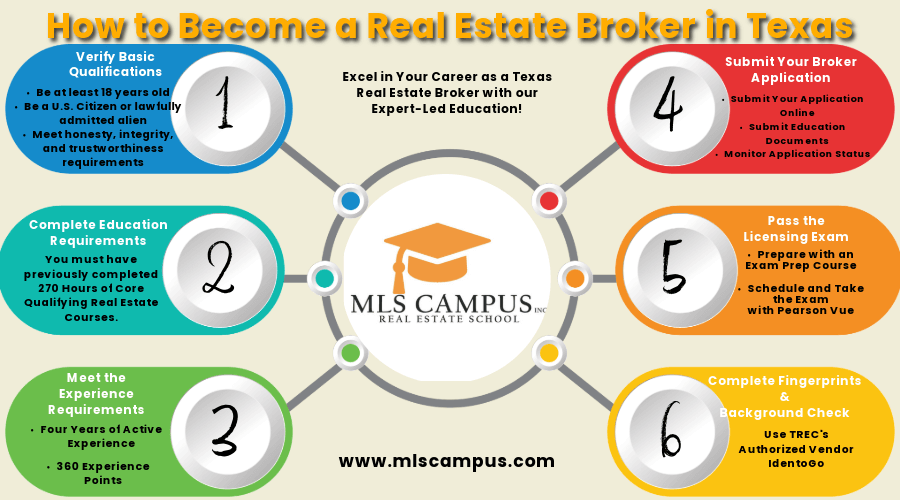
To be eligible for a broker license in Texas, candidates must meet several foundational requirements set by TREC:
- Age: Applicants must be at least 18 years old.
- Residency: Applicants must be legal residents of Texas or have a valid visa permitting them to work in the United States.
- Citizenship: Applicants must be U.S. citizens or lawfully admitted aliens.
- Honesty and Integrity: Applicants must demonstrate honesty, trustworthiness, and integrity. TREC conducts background checks, and any criminal history or previous license revocations will be carefully reviewed.
Educational Foundation
A strong educational background is paramount. Before even considering the broker exam, aspiring brokers must accumulate specific educational credit hours.
Pre-License Education
Texas mandates that all applicants for a broker license complete a minimum of 900 hours of qualifying real estate education. This education must include specific courses prescribed by TREC. These courses are designed to provide a comprehensive understanding of real estate principles, law, ethics, and business practices. The education can be obtained through accredited real estate schools approved by TREC.
The required coursework typically includes:
- Real Estate Principles and Practices: Covering the fundamental concepts of real estate.
- Real Estate Law: Focusing on property law, contracts, and agency relationships.
- Real Estate Finance: Exploring mortgage lending, financing instruments, and investment analysis.
- Real Estate Appraisal: Detailing methods for determining property values.
- Real Estate Marketing and Sales: Strategies for effectively selling properties.
- Real Estate Ethics and Professionalism: Emphasizing ethical conduct and client representation.
Candidates must pass an examination for each of these required courses.
Practical Experience
Beyond academic achievements, practical experience is a critical component of the broker licensing process. TREC requires all broker applicants to have a minimum of 4 years of active experience as a licensed real estate sales agent in Texas within the last 60 months.
Documenting Experience
It is crucial for aspiring brokers to meticulously document their experience. This typically involves providing proof of active licensed sales agent status and details of the transactions and activities undertaken. This might include:
- Copies of brokerage agreements and listing contracts.
- Documentation of sales and lease transactions.
- Records of client interactions and property management activities.
- Affidavits from sponsoring brokers confirming the nature and extent of the experience.
The experience must be gained while holding an active sales agent license in Texas. Experience gained while holding a broker license in another state, or while working under a corporate broker who was not actively licensed, may not always count towards the The Application and Examination Process
Once the educational and experiential requirements are met, the next crucial stage involves submitting a formal application to Submitting the Broker Application
The application for a broker license is submitted through TREC. This process includes: TREC will review the application for completeness and verify that all eligibility requirements have been met. Approval of the application is necessary before a candidate can schedule their licensing exam. The Texas Broker License Examination is a comprehensive test designed to assess an individual’s knowledge of real estate principles, practices, laws, and regulations at a broker level. The exam is administered by a third-party testing service, typically Exam Structure and Content
The exam is divided into two sections:
The Broker Licensing Examination
