
Becoming a licensed real estate agent, or realtor, in Oklahoma is a rewarding career path for those who are passionate about helping others navigate the complexities of buying and selling property. The Sooner State offers a dynamic real estate market, from the bustling urban centers of Oklahoma City and Tulsa to the charming small towns and scenic rural landscapes. This guide outlines the essential steps and requirements to embark on this exciting profession.
Understanding the Role of a Realtor
A realtor is a real estate professional who is a member of the National Association of REALTORS® (NAR). This membership signifies a commitment to a strict code of ethics. In Oklahoma, as in other states, licensed real estate agents are regulated by the Oklahoma Real Estate Commission (OREC). Realtors facilitate real estate transactions, acting as intermediaries between buyers and sellers. Their duties can include marketing properties, showing homes, negotiating offers, assisting with paperwork, and guiding clients through the closing process. The role requires strong communication skills, in-depth market knowledge, and a dedication to client service.

Key Responsibilities and Skills
The responsibilities of an Oklahoma realtor are diverse and demanding. They include:
- Property Marketing: Developing marketing strategies to attract potential buyers, which may involve professional photography, virtual tours, online listings, and open houses.
- Client Consultation: Understanding clients’ needs and preferences, whether they are seeking their dream home or looking to sell their property at the best possible price.
- Property Showings: Scheduling and conducting property showings, highlighting key features and answering prospective buyers’ questions.
- Negotiation: Mediating offers and counteroffers between buyers and sellers to reach a mutually agreeable price and terms.
- Contract Management: Preparing and reviewing purchase agreements, disclosures, and other legal documents.
- Market Analysis: Providing clients with accurate comparative market analyses (CMAs) to help them make informed decisions.
- Networking: Building relationships with other real estate professionals, lenders, inspectors, and appraisers.
Essential skills for a successful realtor include excellent interpersonal and communication abilities, strong negotiation tactics, problem-solving skills, attention to detail, time management, and a thorough understanding of real estate law and market trends.
The Path to Becoming a Licensed Real Estate Agent in Oklahoma
The journey to becoming a licensed real estate agent in Oklahoma involves meeting specific educational requirements, passing a licensing exam, and adhering to state regulations. The Oklahoma Real Estate Commission oversees the licensing process to ensure that all agents possess the necessary qualifications and adhere to professional standards.
Eligibility Requirements
To be eligible for a real estate salesperson license in Oklahoma, applicants must meet the following criteria:
- Age: Be at least 18 years of age.
- Citizenship/Residency: Be a U.S. citizen or legal resident.
- Education: Have a high school diploma or a GED equivalent.
- Criminal Background Check: Pass a criminal background check, which includes fingerprinting. The OREC will review any criminal history, and certain convictions may disqualify an applicant.
Pre-Licensing Education
Before you can apply for a license, you must complete a mandatory pre-licensing education course.
- Course Requirements: Aspiring real estate salespeople must complete 90 hours of approved pre-licensing education. This curriculum covers essential topics such as real estate principles, practices, law, ethics, financing, and contracts. The course must be taken from an OREC-approved real estate school.
- Course Content: The 90-hour curriculum is typically divided into two parts:
- Salesperson Pre-License Course (45 hours): This foundational course covers the fundamental principles of real estate, including property ownership, types of deeds, agency relationships, contracts, and financing.
- Oklahoma Real Estate Practice Course (45 hours): This course delves into the specific laws, regulations, and practices relevant to conducting real estate business in Oklahoma. It often includes information on the Oklahoma Real Estate Commission and its rules, disclosure requirements, fair housing laws, and ethical considerations unique to the state.
- Finding Approved Schools: The Oklahoma Real Estate Commission provides a list of approved pre-licensing education providers on its official website. It is crucial to choose a school from this list to ensure your coursework meets state requirements.
Applying for the License
Once you have successfully completed the pre-licensing education, you can begin the application process.
- Application Submission: You will need to submit a salesperson license application form to the Oklahoma Real Estate Commission. This application will require personal information, details about your education, and a declaration regarding any criminal history.
- Background Check and Fingerprinting: As part of the application, you will need to undergo a criminal background check, which involves submitting your fingerprints. The OREC will process these to ensure you meet the character and fitness requirements.
- Exam Scheduling: After your application is reviewed and approved, you will receive authorization to schedule your state licensing examination.
Passing the Oklahoma Real Estate Licensing Exam
The licensing exam is a critical step in the process and is designed to assess your knowledge of real estate principles and Oklahoma-specific laws and practices.
Exam Structure and Content
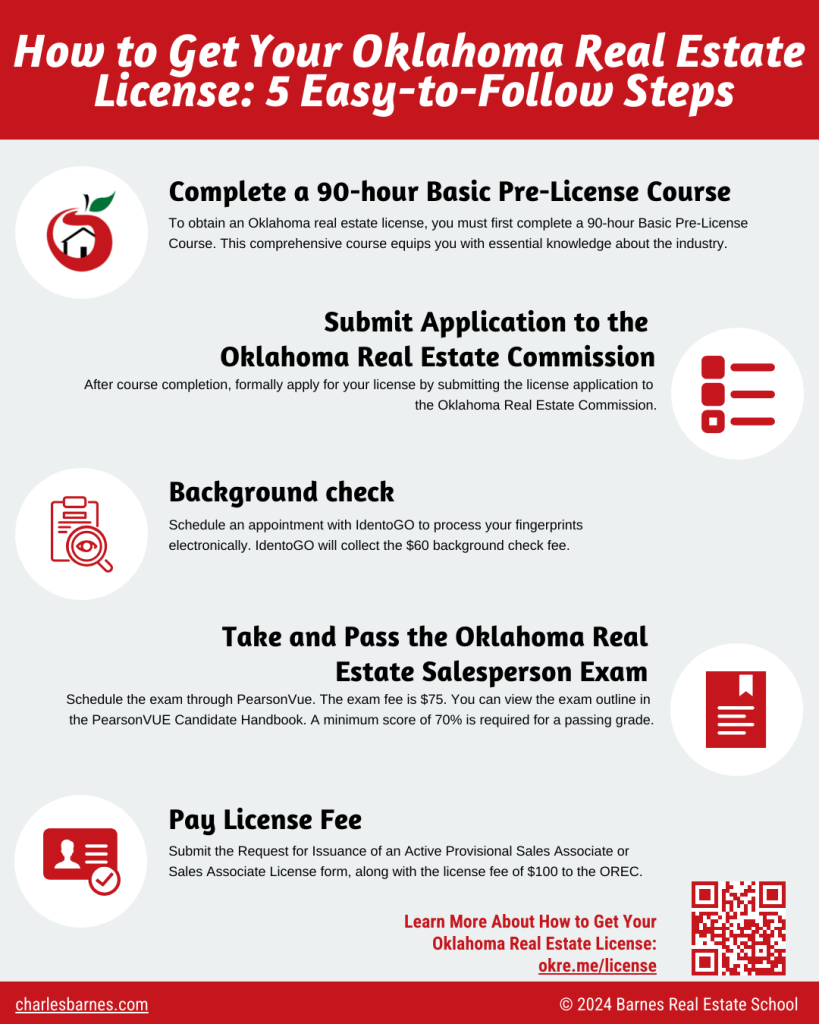
The Oklahoma real estate salesperson exam is administered by a third-party testing service, typically PSI Services LLC (or a similar provider as designated by the OREC). The exam is divided into two sections:
- National Section: This part covers general real estate principles and practices that are common across the United States. Topics include property ownership, deeds and titles, finance, market analysis, agency, contracts, and ethics.
- State Section: This section focuses specifically on the real estate laws, rules, and regulations of Oklahoma. It will test your understanding of OREC regulations, licensing requirements, disclosure obligations, and fair housing laws as they apply within the state.
Preparing for the Exam
Effective preparation is key to passing the licensing exam on your first attempt.
- Review Course Materials: Thoroughly review all the materials from your 90-hour pre-licensing course. Pay close attention to concepts that were particularly challenging.
- Utilize Practice Exams: Many pre-licensing schools offer practice exams. These are invaluable for familiarizing yourself with the format, question types, and time constraints of the actual exam. They also help identify areas where you need further study.
- Study Oklahoma-Specific Laws: Dedicate significant time to studying the state-specific portion of the exam. Familiarize yourself with the Oklahoma Real Estate License Code and the rules and regulations promulgated by the Oklahoma Real Estate Commission.
- Understand Key Terminology: Be sure you understand the meaning of essential real estate terms and concepts, both nationally and within Oklahoma.
- Time Management During the Exam: Practice managing your time during practice tests. On the actual exam, it’s important to pace yourself and not get stuck on any single question. If unsure, make your best guess and move on, then return if time permits.
Activating Your Real Estate License and Finding a Sponsoring Broker
Once you pass the licensing exam, your journey as a licensed real estate professional in Oklahoma is almost complete. The final steps involve activating your license and affiliating with a real estate broker.
Activating Your License
Upon passing the exam, you will need to submit a final license application and fee to the Oklahoma Real Estate Commission. Your license will typically be issued as an inactive license until you affiliate with a licensed real estate broker.
The Importance of a Sponsoring Broker
In Oklahoma, all real estate salespeople must work under the supervision of a licensed real estate broker. This broker is responsible for overseeing the salesperson’s activities, ensuring compliance with state laws and regulations, and providing guidance.
- Choosing a Brokerage: Selecting the right brokerage is a crucial decision that can significantly impact your career. Consider factors such as:
- Company Culture and Values: Does the brokerage align with your professional aspirations and work style?
- Training and Mentorship: Does the brokerage offer comprehensive training programs and opportunities for mentorship?
- Commission Splits and Fees: Understand the compensation structure, including commission splits, desk fees, and other potential charges.
- Support Services: What kind of administrative, marketing, and technological support does the brokerage provide?
- Reputation and Market Presence: A well-established brokerage with a strong reputation can offer valuable credibility and access to resources.
- Affiliation Process: Once you have chosen a brokerage, you will complete paperwork to affiliate your license with them. Your broker will then notify the Oklahoma Real Estate Commission of your affiliation, and your license will become active.
Continuing Your Real Estate Career in Oklahoma
Obtaining your real estate license is just the beginning. To maintain your license and grow your career, you must engage in continuous learning and adhere to ongoing requirements.
Post-Licensing Education and Continuing Education
- Post-Licensing Education: Currently, Oklahoma does not require post-licensing education for salespersons. However, many successful agents find value in additional training beyond the initial pre-licensing course.
- Continuing Education (CE): To renew your real estate license, you must complete a certain number of continuing education hours every two years. The Oklahoma Real Estate Commission mandates specific CE requirements, which typically include courses on topics such as contracts, disclosures, fair housing, and legal updates. It is essential to stay informed about the current CE requirements to ensure your license remains valid.
Joining the National Association of REALTORS® (NAR)
While not mandatory for all licensed agents, joining the National Association of REALTORS® (NAR) allows you to use the esteemed “REALTOR®” designation. This signifies your commitment to a higher ethical standard and provides access to a wealth of resources, professional development opportunities, and advocacy efforts. Local REALTOR® associations, such as the Oklahoma Association of REALTORS®, offer valuable networking events, continuing education, and industry updates.
Building Your Business
Success as a realtor in Oklahoma requires ongoing effort in building your brand and client base.
- Networking: Actively participate in local community events, join professional organizations, and build relationships with other industry professionals.
- Marketing and Branding: Develop a strong personal brand and utilize various marketing channels, including social media, email marketing, and professional websites, to reach potential clients.
- Client Relationship Management: Focus on providing exceptional service to your clients. Positive experiences often lead to repeat business and valuable referrals.
- Market Specialization: Consider specializing in a particular niche, such as luxury homes, first-time homebuyers, commercial properties, or a specific geographic area within Oklahoma, such as the Bricktown district in Oklahoma City or areas around Lake Texoma.
By diligently following these steps and committing to ongoing professional development, you can establish a successful and fulfilling career as a realtor in Oklahoma.
LifeOutOfTheBox is a participant in the Amazon Services LLC Associates Program, an affiliate advertising program designed to provide a means for sites to earn advertising fees by advertising and linking to Amazon.com. Amazon, the Amazon logo, AmazonSupply, and the AmazonSupply logo are trademarks of Amazon.com, Inc. or its affiliates. As an Amazon Associate we earn affiliate commissions from qualifying purchases.