
Becoming a Registered Nurse (RN) in California is a rewarding career path, offering stability, intellectual challenge, and the profound satisfaction of making a tangible difference in people’s lives. The Golden State boasts a robust healthcare system and a high demand for qualified nursing professionals, making it an attractive location for those seeking to enter this vital field. However, the journey requires dedication, adherence to specific educational and licensing requirements, and a thorough understanding of the state’s regulatory landscape. This guide will walk you through the essential steps involved in obtaining your Registered Nurse license in California, from selecting the right educational program to successfully navigating the licensure examination.

Understanding the Pathways to RN Licensure
The California Board of Registered Nursing (BRN) outlines clear pathways for aspiring RNs. Regardless of the specific route chosen, a foundational element is completing an approved nursing education program. These programs are designed to equip students with the theoretical knowledge and practical skills necessary to provide safe and effective patient care.
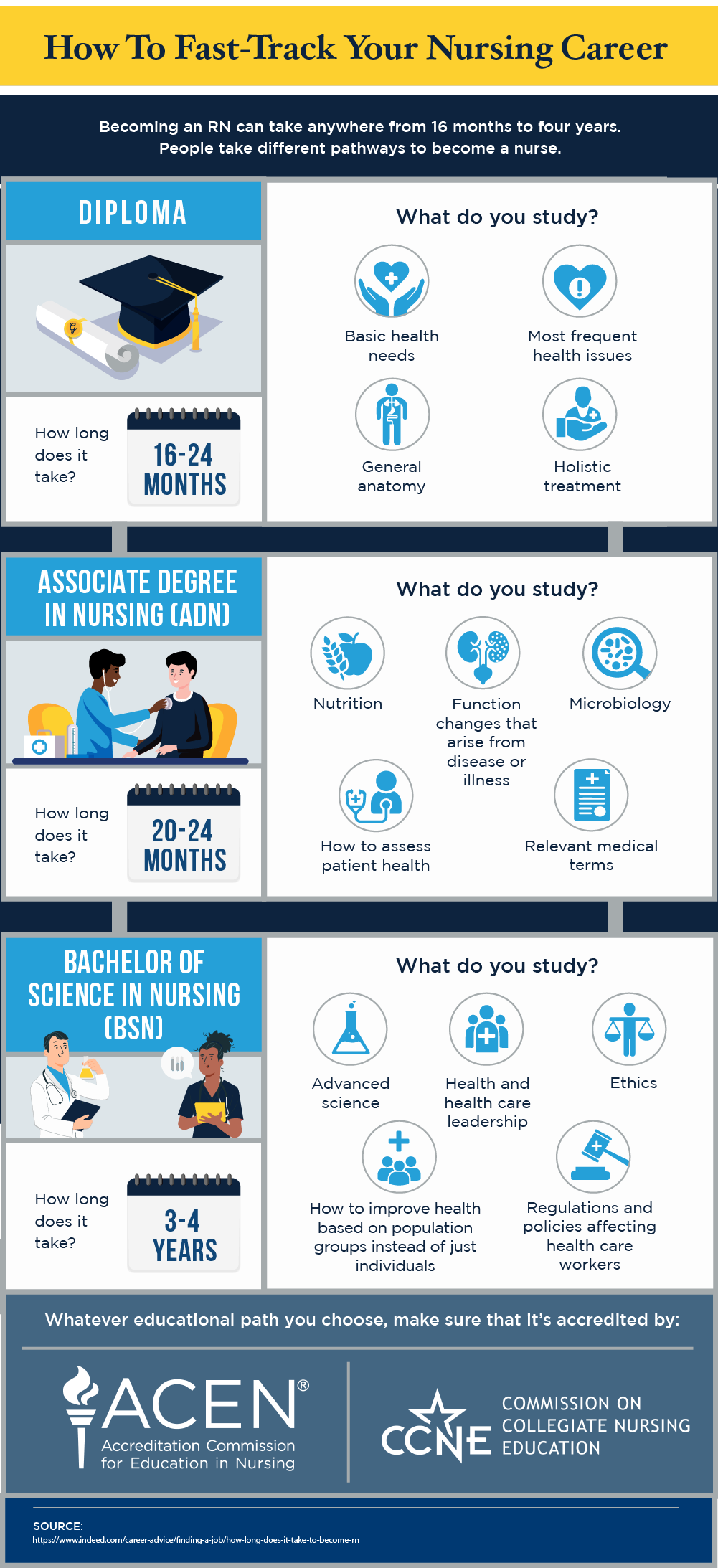
Educational Program Options
There are several accredited nursing education program options available in California, each with varying lengths and admission requirements:
Associate Degree in Nursing (ADN)
An ADN program is typically a two-year course of study offered by community colleges and some vocational schools. This is often the most direct route to becoming an RN and is a popular choice for many students. ADN programs provide a solid foundation in nursing theory and practice, preparing graduates for entry-level nursing positions. Graduates of ADN programs are well-prepared for roles in hospitals, long-term care facilities, and various community health settings.
Bachelor of Science in Nursing (BSN)
A BSN program is a four-year degree offered by universities and colleges. While it takes longer to complete, a BSN is increasingly preferred by many employers, particularly hospitals and larger healthcare systems, as it often includes advanced coursework in leadership, research, and community health. A BSN is also a common prerequisite for pursuing graduate-level nursing education or specialized nursing roles. Many RNs with ADN degrees also choose to complete a BSN through bridge programs, which can be completed part-time or online.
Diploma Programs
Historically, diploma programs, often affiliated with hospitals, were a common way to become a nurse. While less common now, some diploma programs still exist. These programs are typically hospital-based and focus heavily on clinical experience. Graduates of diploma programs are also eligible to sit for the NCLEX-RN examination.
Prerequisites and Admission
Before you can enroll in a nursing program, you will likely need to meet specific prerequisite requirements. These often include:
- High School Diploma or GED: A standard requirement for all post-secondary education.
- College-Level Science Courses: Anatomy, Physiology, Biology, Chemistry, and sometimes Microbiology are crucial. Many programs require a minimum grade in these courses, often a “C” or better, and some may require a GPA above a certain threshold.
- Entrance Examinations: Some nursing programs require students to pass an entrance exam, such as the Health Education Systems, Inc. (HESI) Admission Assessment (HESI A2) or the Test of Essential Academic Skills (TEAS). These exams assess reading comprehension, math skills, science knowledge, and critical thinking abilities.
- Background Checks and Health Screenings: Most programs require criminal background checks and specific health screenings, including immunizations and tuberculosis (TB) tests, to ensure patient safety.
The Licensing Process: From Education to Examination
Once you have successfully completed an approved nursing education program, the next critical steps involve applying for your RN license with the California Board of Registered Nursing and passing the national licensure examination.
Application for Licensure
The application process for an RN license in California is managed by the BRN. It is essential to meticulously follow their instructions and submit all required documentation accurately and on time.
Submitting Required Documentation
Typically, the application process involves:
- Completing the Application Form: This will require personal information, educational history, and disclosure of any past criminal convictions or disciplinary actions.
- Verification of Education: Your nursing program will be required to send official transcripts directly to the BRN, verifying your completion of an approved curriculum.
- Fingerprinting and Background Check: You will need to submit fingerprints for a criminal background check conducted by the California Department of Justice and the Federal Bureau of Investigation (FBI). Any convictions will be reviewed by the BRN to determine eligibility.
- Application Fee: A non-refundable fee is required to process your application.
Jurisprudence Examination
California requires all nursing license applicants to pass a Jurisprudence Examination. This examination assesses your knowledge of California-specific laws and regulations pertaining to nursing practice. It covers topics such as the Nurse Practice Act, scope of practice, disciplinary actions, and patient rights. Passing this exam demonstrates your understanding of the legal framework within which you will practice.
The NCLEX-RN Examination
The National Council Licensure Examination for Registered Nurses (NCLEX-RN) is the standardized exam required for licensure in all U.S. states, including California. Developed by the National Council of State Boards of Nursing (NCSBN), the NCLEX-RN is a comprehensive test designed to assess your competency as an entry-level registered nurse.
Eligibility to Test
After the BRN reviews your application and determines you meet the eligibility requirements, they will authorize you to test. You will then receive an Authorization to Test (ATT) from Pearson VUE, the testing vendor. The ATT provides instructions on how to schedule your exam.
Preparing for the NCLEX-RN
The NCLEX-RN is a computer-adaptive test (CAT). This means the difficulty of the questions adjusts based on your performance. If you answer a question correctly, the next question will be more challenging. If you answer incorrectly, the next question will be easier. The exam continues until the computer is 95% confident that it can determine whether you have met the passing standard.
Effective preparation is key to success on the NCLEX-RN. Strategies include:
- Review Core Nursing Content: Revisit foundational nursing concepts, pharmacology, medical-surgical nursing, pediatrics, obstetrics, and psychiatric nursing.
- Practice Questions: Utilize NCLEX-style practice questions from reputable review courses, textbooks, and online resources. This helps you become familiar with the question format and develop critical thinking skills.
- NCLEX Review Courses: Many students benefit from enrolling in comprehensive NCLEX review courses. These courses often provide structured study plans, in-depth content review, and extensive practice exams.
- Develop Test-Taking Strategies: Learn how to approach different question types, manage your time effectively during the exam, and understand the rationale behind correct answers.
Taking the Exam
On the day of your exam, ensure you arrive at the Pearson VUE testing center with valid identification. The exam can take up to five hours to complete, including breaks. The number of questions can range from 75 to 145, depending on your performance.
Receiving Your Results
Pearson VUE will send your results to the California BRN. Once the BRN has processed your exam results and all other licensing requirements have been met, you will be issued your Registered Nurse license.
Maintaining Your License and Continuing Your Career
Obtaining your RN license is a significant achievement, but it is also the beginning of a lifelong commitment to learning and professional development. To practice as an RN in California, you must maintain your license in good standing.
License Renewal
Registered Nurse licenses in California are typically renewed every two years. The renewal process involves submitting an application, paying a renewal fee, and demonstrating completion of continuing education requirements.
Continuing Education (CE) Requirements
The California BRN mandates that RNs complete a specific number of continuing education hours during each renewal period. These CE courses are designed to ensure that nurses stay current with advancements in healthcare, best practices, and evolving legal and ethical standards. Topics may include topics like infection control, pharmacology updates, pain management, and cultural competency. It is crucial to choose CE courses that are approved by the BRN.
Professional Development and Specialization
The nursing profession offers a wide array of opportunities for specialization and career advancement. After gaining experience as an entry-level RN, you may consider pursuing certifications in specific areas of practice, such as critical care, emergency nursing, oncology, or pediatrics. These certifications demonstrate a higher level of expertise and can enhance your career prospects.
Furthermore, many RNs choose to advance their education by pursuing a Master of Science in Nursing (MSN) or a Doctor of Nursing Practice (DNP) degree. These advanced degrees can lead to roles as Nurse Practitioners, Clinical Nurse Specialists, Nurse Educators, or Nurse Administrators, offering greater autonomy, responsibility, and earning potential.
Important Considerations for Aspiring RNs in California
Beyond the formal educational and licensing steps, there are several practical considerations that can contribute to a successful and fulfilling nursing career in California.
Choosing the Right Program
When selecting a nursing program, consider factors such as:
- Accreditation: Ensure the program is accredited by a recognized accrediting body. This is essential for licensure eligibility.
- Program Pass Rates: Investigate the NCLEX-RN pass rates for graduates of the programs you are considering. Higher pass rates generally indicate a strong educational foundation.
- Location and Schedule: Consider the program’s location, class schedules, and clinical rotation requirements, especially if you have other commitments.
- Faculty and Resources: Research the qualifications of the faculty and the availability of resources such as libraries, simulation labs, and student support services.
- Job Placement Assistance: Some programs offer career services and job placement assistance, which can be invaluable for new graduates.
Networking and Professional Organizations
Becoming involved with professional nursing organizations can provide invaluable networking opportunities, access to mentorship, and resources for ongoing professional development. Organizations like the California Association of Registered Nurses (CARN) or specialty nursing organizations can be beneficial.

Understanding the Healthcare Landscape in California
California has a diverse healthcare system, with opportunities ranging from large urban medical centers like those in Los Angeles and San Francisco to smaller community hospitals and rural clinics. Understanding the specific needs and trends within the state’s healthcare sector can help you identify promising career paths and geographic areas for employment. Factors such as an aging population, advancements in medical technology, and the ongoing demand for primary care services all shape the nursing job market.
Embarking on a career as a Registered Nurse in California is a journey that demands commitment and careful planning. By understanding the educational requirements, diligently preparing for the licensure examination, and embracing a commitment to lifelong learning, you can successfully navigate the path to becoming an RN and begin a profoundly impactful and rewarding career.
LifeOutOfTheBox is a participant in the Amazon Services LLC Associates Program, an affiliate advertising program designed to provide a means for sites to earn advertising fees by advertising and linking to Amazon.com. Amazon, the Amazon logo, AmazonSupply, and the AmazonSupply logo are trademarks of Amazon.com, Inc. or its affiliates. As an Amazon Associate we earn affiliate commissions from qualifying purchases.