
Alimony, often referred to as spousal support in California, is a complex issue that arises in divorce proceedings. It involves one spouse providing financial assistance to the other after the dissolution of marriage. The primary goal of alimony is to ensure that the supported spouse can maintain a reasonable standard of living, especially if they have sacrificed career opportunities during the marriage. California law aims for fairness and equity in determining spousal support, considering a multitude of factors to arrive at an appropriate amount and duration. This guide delves into the intricacies of how alimony is calculated in the Golden State, offering insights for those navigating this often emotionally charged aspect of divorce.
Understanding the Legal Framework for Spousal Support in California
California Family Code § 4320 outlines the key considerations that courts must take into account when determining spousal support. These factors are designed to promote equitable outcomes, acknowledging the diverse circumstances of divorcing couples. The legislature has provided a comprehensive list, and judges have discretion in weighing each element based on the specifics of the case.
Statutory Factors for Consideration
The court’s decision hinges on a thorough examination of the following statutory factors:
- Earning Capacity of Each Party: This is a cornerstone of alimony calculations. The court will assess the present income and earning capacity of both spouses, considering their education, skills, age, health, and work history. The goal is to ensure that both parties can achieve self-sufficiency to the extent possible.
- Needs of Each Spouse: The court will evaluate the actual financial needs of each party. This includes expenses related to housing, food, healthcare, transportation, and any other reasonable living costs. The standard of living established during the marriage is a significant consideration.
- Ability to Pay: The financial resources of the obligor spouse (the one paying support) are critically examined. This includes their income, assets, and any other financial obligations they may have.
- Duration of the Marriage: California law generally distinguishes between short-term and long-term marriages when it comes to alimony. For shorter marriages (typically under 10 years), spousal support is often temporary and for a duration equivalent to half the length of the marriage. For longer marriages, support may be rehabilitative or permanent, depending on the circumstances.
- Standard of Living During the Marriage: The court strives to allow the supported spouse to maintain a lifestyle comparable to the one enjoyed during the marriage, to the extent that the paying spouse can afford it.
- Age and Health of the Parties: The age and physical and emotional condition of each spouse can significantly impact their ability to earn income and their financial needs.
- Obligations and Assets of Each Party: This encompasses all assets and debts of both spouses. The court will consider how these are divided in the divorce and how they affect each party’s financial situation.
- Contribution to the Marriage: This includes contributions made by one spouse to the other’s education, training, or career advancement. For instance, if one spouse supported the other through medical school, this contribution will be weighed.
- Ability of the Supported Spouse to Engage in Gainful Employment: The court assesses the feasibility of the supported spouse re-entering the workforce or increasing their earnings.
- Domestic Violence: If domestic violence has occurred, it can influence the court’s decision regarding alimony.
- Tax Consequences: The court will consider the tax implications of spousal support payments for both parties.
- Balance of Hardships: The court aims to minimize the financial hardship on both parties as much as possible.
Types of Spousal Support in California
California recognizes two primary types of spousal support:
Temporary Spousal Support
This type of support is awarded during the pendency of a divorce case, from the date of separation until the divorce is finalized. The purpose of temporary spousal support is to maintain the status quo and ensure that both parties can meet their financial obligations while the divorce is being processed. Calculations for temporary support often rely on guideline formulas, which provide a starting point for judges.
- Guideline Formula for Temporary Support: While not explicitly mandated by statute, courts commonly use a guideline formula. A frequently used formula is 40% of the higher-earning spouse’s net monthly income minus 50% of the lower-earning spouse’s net monthly income. However, this is a guideline and can be adjusted based on various factors.
Long-Term Spousal Support (Post-Judgment Support)
This support is awarded after the divorce is finalized and is intended to provide ongoing financial assistance to a spouse who is unable to become self-supporting. The duration and amount of long-term spousal support are determined by a more comprehensive application of the § 4320 factors. It can be rehabilitative (designed to help a spouse become self-supporting) or indefinite (permanent).
- Rehabilitative Support: This is awarded to allow a spouse time and resources to acquire education, training, or experience necessary to become self-supporting.
- Indefinite Support: This may be ordered in cases of long marriages where one spouse has sacrificed their career for the family and is unlikely to become self-supporting.
Calculating Alimony: The Practical Application
While the law provides a framework, the actual calculation of alimony in California is not a simple plug-and-play formula, especially for long-term support. Judges have considerable discretion. However, there are methods and tools used to arrive at a determination.
Software and Guideline Calculators
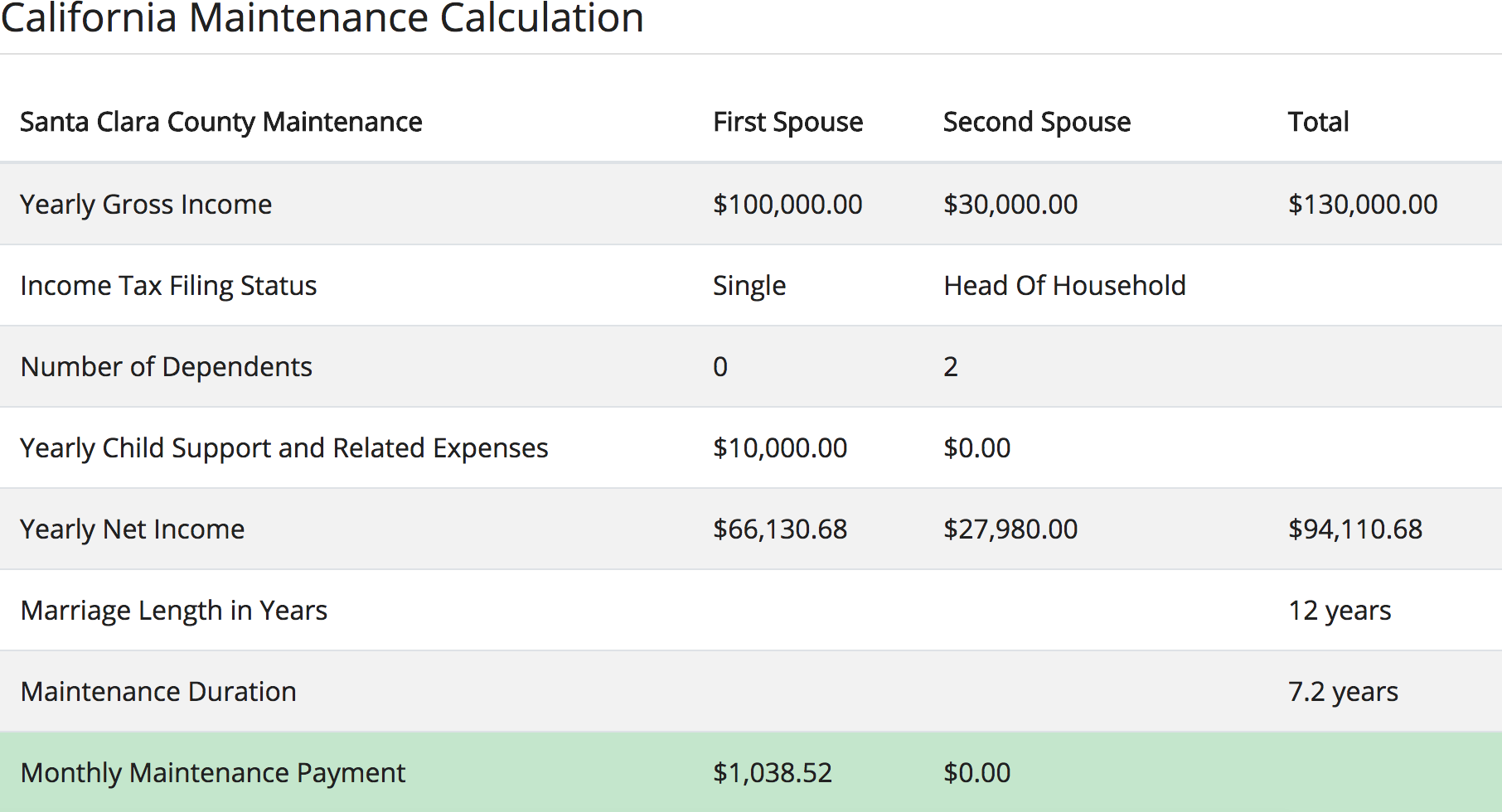
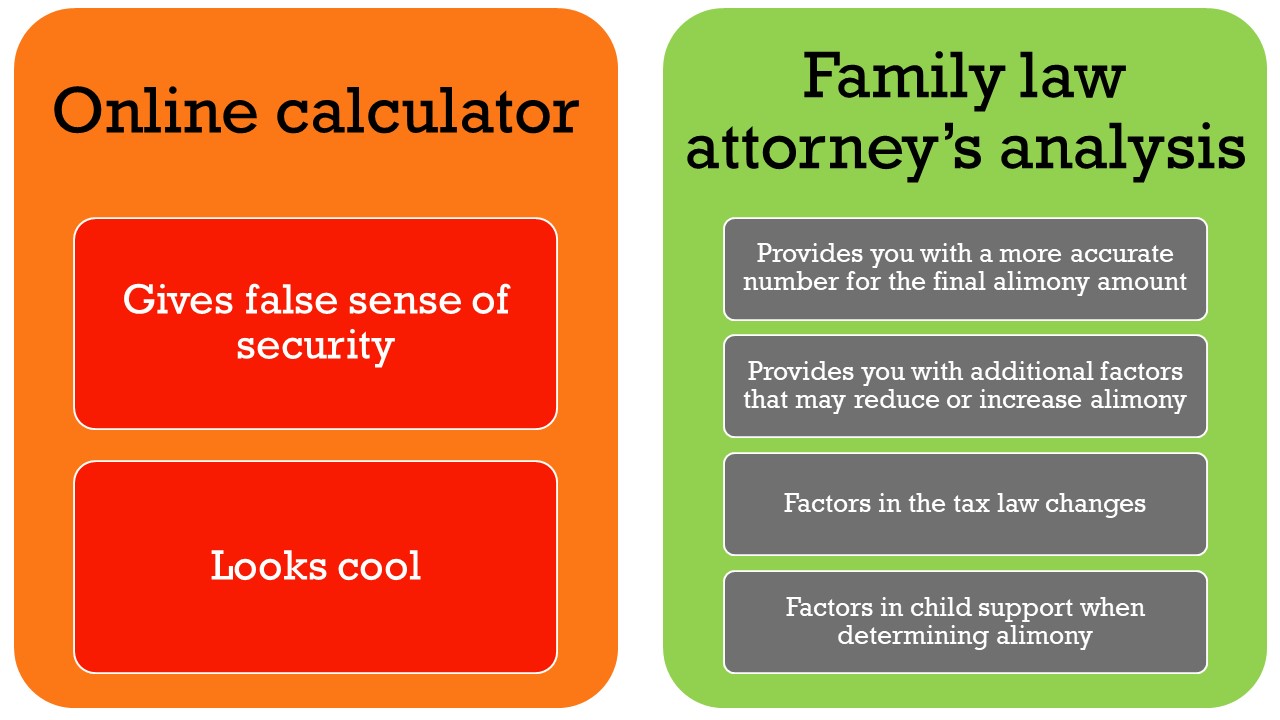
For temporary spousal support, attorneys and courts often utilize specialized software or online calculators that implement the common guideline formulas. These tools take into account factors like gross monthly income, deductions, and the length of the marriage to generate an initial support recommendation. It’s crucial to understand that these are starting points and do not override the court’s discretion.
The Role of Net vs. Gross Income
A critical distinction in alimony calculations is the use of net income versus gross income. While gross income is the starting point, deductions for taxes, mandatory union dues, and other specific expenses are typically subtracted to arrive at net disposable income, which is then used for calculations. This is particularly important for temporary support.

Factors Influencing the Amount and Duration
Beyond the basic calculation, several nuances can significantly impact the final alimony order:
- Marital Standard of Living: How lavishly or modestly the couple lived during their marriage is a key reference point. If the marital lifestyle was extravagant, the court may order higher support to approximate that standard, provided the paying spouse can afford it.
- Earning Capacity vs. Actual Income: A spouse cannot intentionally reduce their income to avoid alimony obligations. If a spouse is voluntarily unemployed or underemployed, the court may impute income based on their earning capacity.
- Health Issues: Chronic or severe health problems can reduce a spouse’s earning capacity and increase their needs, potentially leading to higher or longer-term support.
- Rehabilitative Efforts: The court expects the supported spouse to make reasonable efforts to become self-supporting. Failure to do so can result in a modification or termination of alimony.
- Pensions and Retirement Accounts: These assets, if accumulated during the marriage, are considered in the overall division of property and can indirectly influence spousal support.
- Stepparent Obligations: If a spouse has taken on significant financial responsibilities for children from a previous relationship or new relationship, this might be a factor in determining their ability to pay.
The “Kashoo” Formula and its Limitations
The “Kashoo” formula (named after a California case) is a commonly cited guideline for temporary spousal support:
Support Amount = (40% of Higher Earner's Net Monthly Income) - (50% of Lower Earner's Net Monthly Income)
However, this is a simplified illustration and doesn’t account for all potential scenarios or the full range of statutory factors. For instance, if the calculated support would leave the paying spouse with less than they need to meet their own basic needs, the court will adjust the amount.
Navigating the Process: Tips for Spouses
Dealing with alimony can be challenging. Here are some strategies to help navigate the process:
Full Financial Disclosure
Honesty and transparency are paramount. Both parties must provide complete and accurate financial information to the court. Hiding assets or misrepresenting income can have severe consequences.
Understanding Your Rights and Obligations
Educate yourself about California’s spousal support laws. Consult with a qualified family law attorney who can explain how the specific factors of your case might apply.
Seeking Legal Counsel
Given the complexity, professional legal advice is highly recommended. An experienced attorney can help you understand your rights, prepare your case, negotiate with the other party, and represent you in court. They can also help you understand the nuances of temporary versus long-term support and how different factors might shift the outcome.
Focusing on Self-Sufficiency
For the spouse seeking support, it’s essential to actively work towards financial independence. This might involve pursuing education, job training, or employment opportunities. For the spouse paying support, understanding the long-term implications and planning for those payments is crucial.
Mediation as an Alternative
In some cases, mediation can be a more constructive approach to resolving spousal support issues. A neutral mediator can facilitate discussions and help couples reach mutually agreeable solutions outside of a contentious court battle. This can sometimes lead to more creative solutions that address both parties’ needs.
The Future of Spousal Support
California courts are continually balancing the need for financial support with the goal of promoting self-sufficiency. While the statutory factors provide a robust framework, the application of these factors is highly fact-specific. As societal norms evolve and more individuals maintain dual-income households, the landscape of spousal support may continue to adapt. However, the core principles of fairness, equity, and the recognition of marital contributions are likely to remain central to the determination of alimony in California. Understanding these principles and the factors that influence them is the first step toward achieving a just resolution.
LifeOutOfTheBox is a participant in the Amazon Services LLC Associates Program, an affiliate advertising program designed to provide a means for sites to earn advertising fees by advertising and linking to Amazon.com. Amazon, the Amazon logo, AmazonSupply, and the AmazonSupply logo are trademarks of Amazon.com, Inc. or its affiliates. As an Amazon Associate we earn affiliate commissions from qualifying purchases.