
Embarking on a new chapter in life often involves significant personal milestones. For many in Florida, one such significant change is legally altering their last name. Whether it’s due to marriage, divorce, a personal preference for a fresh start, or simply adopting a name that feels more authentic, the process in the Sunshine State, while requiring careful attention to detail, is achievable. This guide will walk you through the essential steps and considerations for changing your last name in Florida, ensuring a smooth transition.
The decision to change your last name is deeply personal, and the legal procedures in Florida are designed to accommodate various reasons. Understanding the pathway forward can alleviate much of the stress associated with such a transformation. While the core process is straightforward, navigating the paperwork and legal requirements demands diligence. This article aims to demystify the legal procedures, offering a clear roadmap for residents looking to formally change their surname.

Understanding the Legal Framework for Name Changes in Florida
In Florida, the primary method for changing your last name outside of marriage or divorce is through a formal court order. This process involves petitioning a Florida circuit court and adhering to specific legal requirements. It’s a structured approach designed to ensure the legitimacy of the name change and protect against fraudulent intentions.
The Petition Process: Initiating Your Legal Name Change
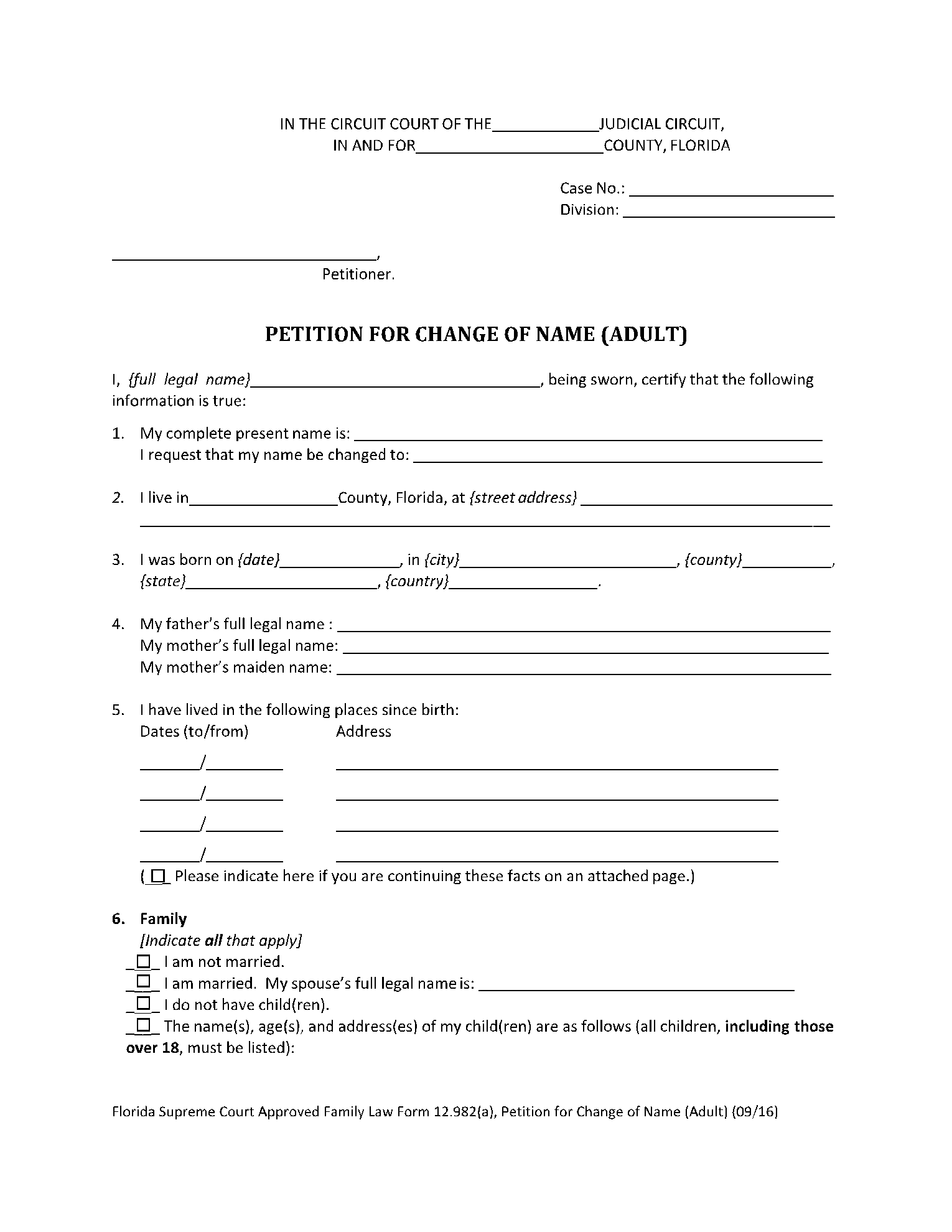
The journey begins with filing a “Petition for Change of Name” with the circuit court in the county where you reside. This document is the cornerstone of your legal request. It requires you to provide essential information about yourself, including your current legal name, date of birth, address, and the new name you wish to adopt.
Crucially, the petition must clearly state the reason for your desired name change. Common reasons include:
- Marriage: While a marriage certificate can facilitate a name change in many situations, a formal court order provides a more comprehensive legal record.
- Divorce: Similarly, a divorce decree often includes provisions for restoring a maiden name or a former surname. However, a separate petition may be necessary if the divorce decree did not address this.
- Personal Preference: Many individuals choose to change their name for personal reasons, such as adopting a name they feel better represents their identity, or for a fresh start after significant life events.
- Adoption: In cases of adoption, a new legal name is typically assigned as part of the adoption process.
- Dissatisfaction with Current Name: Some individuals simply wish to change their surname because they dislike their current one or find it difficult to pronounce or spell.
Your petition must be accurate and complete to avoid delays. You will need to gather all necessary supporting documents, which may include a birth certificate, proof of residency, and potentially any legal documents related to marriage or divorce.
Requirements for the Petition
When preparing your petition, pay close attention to the following:
- Jurisdiction: Ensure you are filing in the correct circuit court. This is typically the court serving your county of residence.
- Accuracy of Information: All details provided, from your current name to your date of birth, must be exact.
- Reason for Change: Clearly articulate your motivation. Be honest and straightforward.
- New Name: Specify the exact new name you wish to be legally recognized by.
- Statement of No Fraudulent Intent: You will need to affirm that the name change is not being sought for fraudulent purposes, such as evading debts, criminal prosecution, or other illegal activities. This is a critical part of the petition.
Once filed, the court will review your petition. It’s important to note that in Florida, there’s a requirement for a judge to review the petition and, in many cases, hold a hearing. This ensures due process and that the name change is legitimate.
The Court Hearing: Presenting Your Case
After filing your petition, the court will typically schedule a hearing. This is your opportunity to appear before a judge and formally request the name change. You will be sworn in and may be asked questions about your petition, your reasons for the name change, and to confirm that you are not seeking the change for any fraudulent purposes.
Preparing for the Hearing:
- Know Your Petition: Be intimately familiar with every detail you submitted in your petition.
- Understand the Judge’s Questions: Anticipate questions about your reasons and intentions.
- Bring Supporting Documents: Have all your original documents readily available, including proof of identity and residency.
- Dress Appropriately: Present yourself professionally, as you would for any formal legal proceeding.
While some jurisdictions might allow for a waiver of the hearing under specific circumstances (e.g., if all parties are in agreement and no objections are filed), it’s generally a mandatory step. The judge will assess your request based on the information presented and the law. If satisfied, the judge will sign an order granting your petition.
The Final Order: Your Legal Name Change Document
The culmination of the court process is the “Final Judgment or Order for Change of Name.” This is the official legal document that confirms your last name has been changed. It will state your former name and your new legal name. This document is of paramount importance, as it serves as proof of your legal name change and will be required for updating various identification documents and records.
Obtaining Certified Copies:
It is highly recommended that you obtain several certified copies of this order from the court clerk. You will need these for a multitude of administrative tasks. Think of it as your official new identity card from the state.
Navigating the Post-Order Administrative Landscape
Once you have your certified copy of the court order, the journey isn’t quite over. The real work now involves updating all your official records and informing relevant institutions of your new legal name. This administrative phase is crucial to ensure your new identity is recognized across all aspects of your life.
Updating Your Identification and Essential Documents
This is perhaps the most significant practical step following your name change. You’ll need to present your certified court order to various agencies to update your records.
Key Documents to Update:
- Social Security Card: This is typically the first and most critical document to update. Visit a local Social Security Administration office with your court order and proof of identity.
- Driver’s License/State ID: Head to the Florida Department of Highway Safety and Motor Vehicles (FLHSMV) to get a new driver’s license or state identification card reflecting your updated name.
- Passport: If you have a U.S. Passport, you’ll need to apply for a replacement. The process and required forms depend on when your current passport was issued.
- Bank Accounts and Financial Institutions: Inform your bank, credit card companies, and any other financial institutions of your name change. This includes updating account names, checks, and debit/credit cards.
- Employer Records: Notify your employer and ensure your payroll, benefits, and all other employment-related records are updated.
- Voter Registration: Update your voter registration to ensure your ballot is sent to the correct name and address.
- Insurance Policies: This includes health insurance, auto insurance, homeowner’s insurance, and life insurance.
- Educational Records: If you have attended or are currently attending any educational institutions, you’ll want to update your records.
- Medical Records: Inform your doctors and healthcare providers of your name change.
- Property Records: If you own property, you may need to update your name on deeds and titles.
- Professional Licenses: If you hold any professional licenses, contact the issuing board.
Tips for a Smooth Transition:
- Keep Certified Copies Handy: You will likely need to present a certified copy of your court order repeatedly.
- Be Patient: Some institutions may have longer processing times than others.
- Call Ahead: Before visiting an office, call to confirm the specific documents and procedures required for a name change. This can save you unnecessary trips.
- Be Consistent: Use your new legal name consistently across all platforms and communications.

Informing Important Parties and Institutions
Beyond official documents, there are other individuals and organizations you’ll want to inform. While not legally mandated, doing so ensures clarity and avoids confusion.
- Friends and Family: Let your loved ones know about your new name.
- Utilities and Service Providers: Update your name with providers for electricity, water, internet, and phone services.
- Subscriptions and Memberships: Inform any organizations where you hold memberships or subscriptions.
- Loyalty Programs: Update your name on frequent flyer programs, hotel loyalty programs (like those for Marriott Bonvoy or Hilton Honors), and retail store loyalty cards.
- Online Accounts: Update your profile on social media platforms, email accounts, and any other online services.
The process of changing your last name in Florida, while involving legal steps and administrative tasks, is a rewarding endeavor that signifies a new beginning. By understanding the petition process, preparing diligently for any court appearances, and systematically updating your records, you can confidently navigate this personal transformation and embrace your new legal identity. Whether you’re looking forward to exploring the vibrant landscapes of the Florida Keys or planning a relaxing stay at a resort in Orlando, your updated identification will ensure seamless experiences as you continue your adventures.
LifeOutOfTheBox is a participant in the Amazon Services LLC Associates Program, an affiliate advertising program designed to provide a means for sites to earn advertising fees by advertising and linking to Amazon.com. Amazon, the Amazon logo, AmazonSupply, and the AmazonSupply logo are trademarks of Amazon.com, Inc. or its affiliates. As an Amazon Associate we earn affiliate commissions from qualifying purchases.