
Embarking on a journey of personal transformation, whether driven by marriage, divorce, or a simple desire for a fresh start, often involves a significant legal and administrative step: changing your last name. For those residing in the Lone Star State, understanding the process of changing your last name in Texas is crucial. This guide aims to demystify the procedures, outline the requirements, and provide a clear roadmap to navigate this important life event, ensuring a smooth transition to your new identity. While the thought of legal paperwork and court dates might seem daunting, with the right information and preparation, changing your last name in Texas can be a manageable undertaking.
This process is not just about updating documents; it’s about reflecting a new chapter in your life, a new personal brand, or a return to a former name that resonates more deeply with your identity. Whether you are celebrating a union by taking your spouse’s surname, reclaiming your maiden name after a divorce, or choosing a name for personal reasons, the State of Texas has established procedures to facilitate this change. We will delve into the specifics, from the initial eligibility requirements to the final steps of updating your identification, ensuring you have all the knowledge needed to confidently move forward.
The decision to change one’s surname is deeply personal, and the legal framework in Texas aims to accommodate various valid reasons for such a modification. It’s important to approach this process with patience and attention to detail, as accuracy in documentation is paramount. This article will serve as your comprehensive resource, breaking down the steps into digestible sections, addressing common questions, and highlighting key considerations throughout your name change journey in Texas.
Understanding the Legal Framework for Name Changes in Texas
Before diving into the procedural aspects, it’s essential to understand the legal groundwork that governs name changes in Texas. The state’s laws are designed to allow individuals to change their names for legitimate purposes, while also safeguarding against fraudulent or deceptive practices. Generally, individuals seeking a legal name change must demonstrate a good and valid reason for the alteration. This typically includes reasons such as marriage, divorce, or a personal preference for a different name. The court will review the petition and ensure that the requested change is not for any unlawful or fraudulent intent.
Eligibility Requirements and Common Scenarios
To initiate a legal name change in Texas, certain eligibility criteria must be met. Applicants must be at least 18 years old and a resident of Texas. For individuals under 18, the process involves their parents or legal guardians petitioning the court on their behalf, with specific consent requirements.
The most common scenarios for name changes in Texas are:
- Marriage: This is perhaps the most frequent reason for a name change. Following a marriage ceremony, individuals can petition the court to adopt their spouse’s surname or a combination of both surnames. The marriage certificate often serves as a key document in this process, though a formal court order is still typically required for official government identification. This allows newlyweds to seamlessly integrate their new shared identity into their legal records.
- Divorce: After a divorce, an individual may wish to revert to their former surname, often their maiden name. This can be a significant step in emotionally and legally separating from a past marital relationship. The divorce decree itself may include provisions for a name change, or a separate petition might be necessary, depending on the specific circumstances and the judge’s ruling. This process helps individuals re-establish their pre-marital identity.
- Personal Preference: Texas law also permits individuals to change their name for personal reasons that are not tied to marriage or divorce. This could be due to disliking one’s current name, embracing a new cultural identity, or any other reason that does not involve fraud or illegal intent. This aspect of the law provides individuals with a degree of autonomy over their personal identity.
It is crucial to be aware that courts will scrutinize petitions to prevent individuals from changing their names to evade debts, escape criminal charges, or engage in other deceptive activities. Therefore, honesty and transparency in your petition are paramount. Ensuring you meet these basic eligibility requirements is the first step in a successful name change process.
The Step-by-Step Process for Changing Your Last Name
Navigating the legal maze of a name change can seem complex, but by breaking it down into manageable steps, the process becomes much clearer. The primary method for legally changing your last name in Texas, outside of the context of marriage or divorce decrees, involves petitioning the court. This is a formal legal procedure that requires careful attention to detail and adherence to specific state requirements.
Filing the Petition and Required Documentation
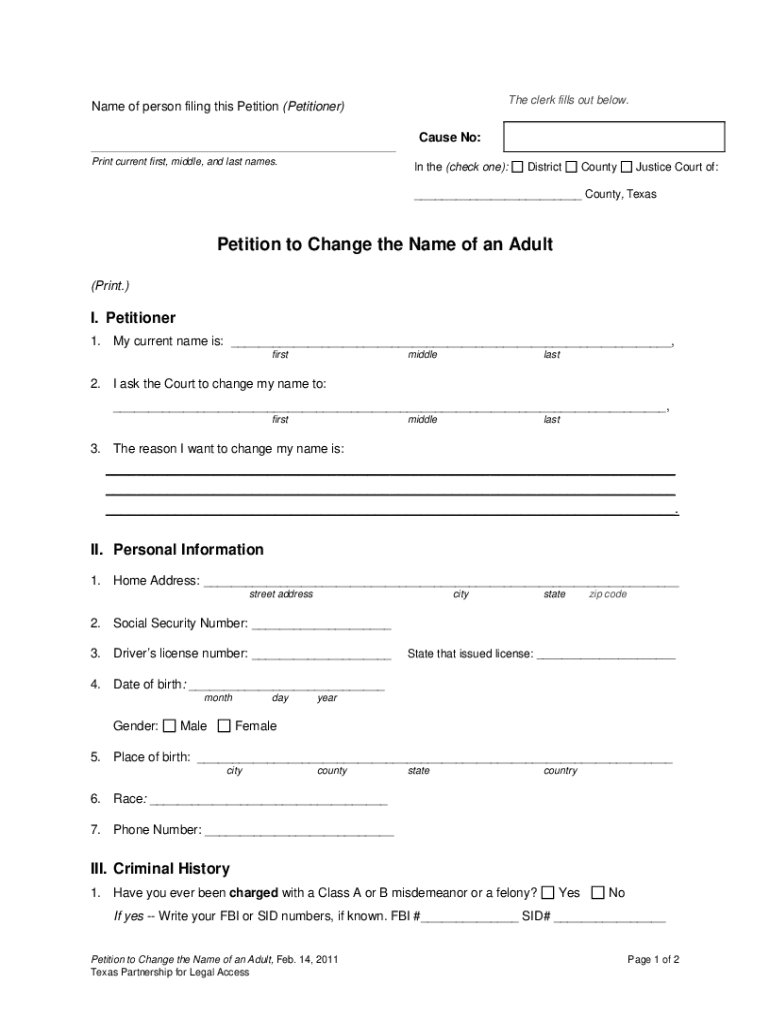
The initial step is to file a “Petition for Change of Name” with the district court in the county where you reside. This document formally requests the court’s permission to change your name. You will need to provide specific information, including your current legal name, your desired new name, and the reason for the change.
The exact forms and specific requirements can vary slightly by county, so it is advisable to check with the district clerk’s office in your county for the most accurate and up-to-date forms. Generally, the petition will require:
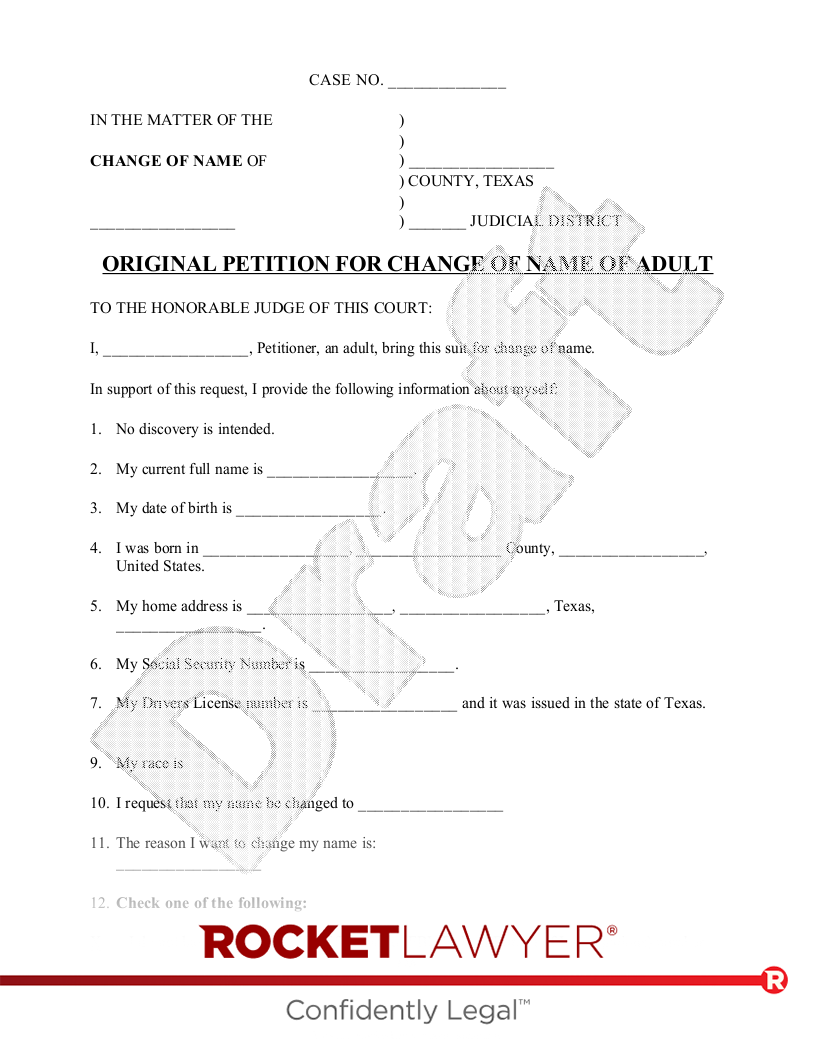
- Your current full legal name.
- Your date and place of birth.
- Your current address.
- The name you wish to adopt.
- The reason for the name change.
- A statement that the change is not sought for fraudulent or illegal purposes.
In addition to the petition itself, you will likely need to submit supporting documents. These may include:
- A certified copy of your birth certificate.
- **Proof of residency in **Texas, such as a utility bill or driver’s license.
- For marriage-related changes, a copy of your marriage certificate.
- For divorce-related changes, a copy of your divorce decree.
- If applicable, fingerprints for a criminal background check. Texas law mandates a criminal history background check to ensure the name change is not for illicit reasons. You will be provided with instructions on how to obtain and submit these.
There are also fees associated with filing the petition and other court processes. These vary by county, so be prepared to pay the filing fees. If you are unable to afford the fees, you may be able to petition the court for a fee waiver.
Publication of Notice and Court Hearing
Once your petition is filed, Texas law generally requires that you provide public notice of your intended name change. This is to inform any interested parties who might have a legal objection to your name change. The notice typically needs to be published in a newspaper of general circulation in the county where you are filing. The required publication period and format can vary, so consult with the court clerk or your legal counsel for specific instructions. This step ensures transparency and allows for due process.
After the publication period has passed and if no objections are filed, the court will schedule a hearing. During the hearing, the judge will review your petition and supporting documents. You may be required to appear in court to answer any questions the judge may have. If the judge is satisfied that you meet all the legal requirements and have a valid reason for the name change, they will issue a court order approving your new name.
This court order is the official legal document that validates your name change. It’s essential to obtain several certified copies of this order, as you will need them to update your identification and records with various agencies and institutions. This order is the cornerstone of your new legal identity and should be kept in a safe place.
Updating Your Identification and Records
Receiving your official court order approving your name change is a significant milestone, but the process isn’t complete until you update your identification and records. This is a crucial step to ensure that your new legal name is recognized across all official documents and databases. This phase involves contacting various government agencies and private institutions to reflect your new identity accurately.
Social Security Administration and Driver’s License
The first and arguably most important step is to update your name with the Social Security Administration (SSA). You will need to submit a form (usually SS-5, Application for a Social Security Card) along with your original or certified copy of the court order and proof of identity. It’s important to do this promptly, as your Social Security record is linked to many other identity verification processes. You will receive a new Social Security card with your updated name, though your number will remain the same.
Following the Social Security Administration, your next priority should be updating your driver’s license or state identification card. Visit your local Texas Department of Public Safety (DPS) office with your court order, your current driver’s license or ID, and any other required documentation. This is vital for proving your identity when traveling, voting, or engaging in other activities requiring official identification. The DPS will issue you a new license or ID card reflecting your new name.

Other Important Updates: Passport, Banking, and Beyond
Beyond federal and state identification, numerous other entities need to be notified of your name change. These include:
- Passport: If you have a U.S. Passport, you will need to apply for a new one with your updated name. The process and required documents will depend on whether your current passport is still valid and how recently it was issued. You will likely need your court order and your current passport.
- Banks and Financial Institutions: Notify all banks, credit card companies, and other financial institutions where you hold accounts. You will need to present your court order to update your account names. This includes updating checks, debit cards, and credit cards.
- Employer: Inform your employer to update your personnel records, payroll, and benefits information.
- Voter Registration: Update your voter registration to ensure your name matches your identification for voting purposes.
- Insurance Providers: Contact your auto, home, health, and life insurance providers to update your policies.
- Post Office: While not always strictly necessary, it’s a good idea to inform your local post office.
- Utility Companies: Update your name on utility bills, such as electricity, water, and internet.
- Professional Licenses and Certifications: If you hold any professional licenses or certifications, such as a real estate license or medical license, you will need to update these records with the issuing board.
- Educational Institutions: Update your records with any schools or universities you have attended.
- Medical Providers: Inform your doctors, dentists, and other healthcare providers.
Each of these entities may have its own specific procedures and required documentation. It is advisable to call ahead or check their websites for information on how to update your name. This comprehensive updating process ensures that your new legal identity is recognized consistently, avoiding potential confusion or complications in the future. Being systematic and patient during this phase will solidify your legal name change.
LifeOutOfTheBox is a participant in the Amazon Services LLC Associates Program, an affiliate advertising program designed to provide a means for sites to earn advertising fees by advertising and linking to Amazon.com. Amazon, the Amazon logo, AmazonSupply, and the AmazonSupply logo are trademarks of Amazon.com, Inc. or its affiliates. As an Amazon Associate we earn affiliate commissions from qualifying purchases.