
Changing one’s name is a significant personal decision, often prompted by life’s major milestones such as marriage or divorce, or simply a desire for a fresh start. Regardless of the reason, the process of legally changing your name in Arizona requires careful adherence to specific legal procedures to ensure the change is recognized across all official documents and records. Understanding these steps is crucial for a smooth transition, allowing individuals to confidently navigate administrative requirements and establish their new identity within the legal framework of the state.
Understanding the Types of Name Changes in Arizona
The path to changing your name in Arizona varies significantly depending on the circumstances surrounding the request. The state recognizes different avenues for name alteration, each with its own set of requirements and legal implications. It’s important to identify which category your desired name change falls under to proceed correctly.
Name Change Due to Marriage
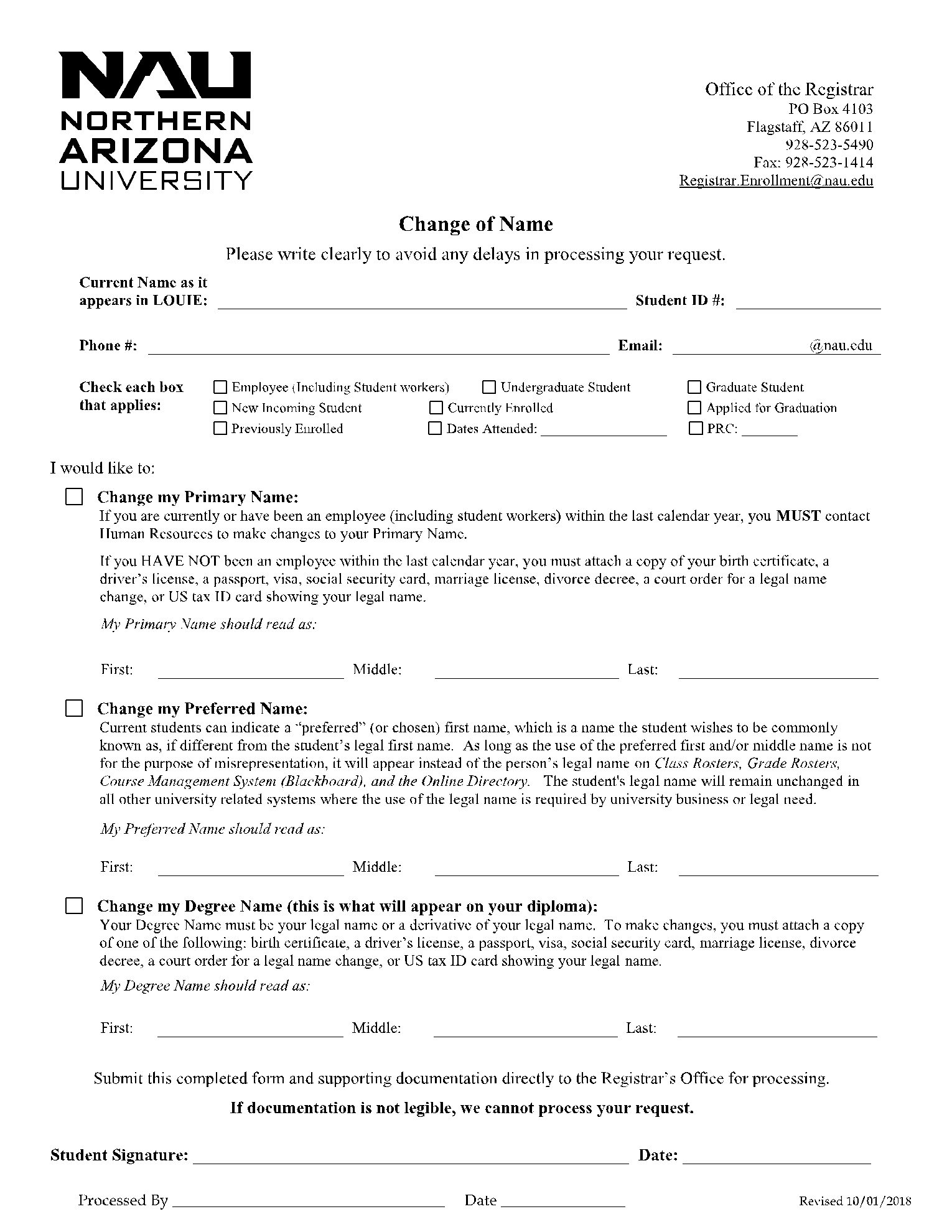
For many, a name change is a natural part of entering into marriage. In Arizona, this is typically the most straightforward method. Upon receiving a certified copy of your marriage certificate, which serves as legal proof of the union and often explicitly states the intent to change a surname, you can begin updating your identification and personal records. This process does not usually require a separate court petition. Instead, the marriage certificate itself is the primary document used to initiate updates with various government agencies and private institutions.
The first essential step is to update your name with the Social Security Administration (SSA). You will need to complete Form SS-5, Application for a Social Security Card, and submit it along with your marriage certificate and proof of identity. Once the Social Security Administration has updated your records and you receive a new Social Security card reflecting your married name, you can proceed to other agencies. Next, you’ll visit the Motor Vehicle Division (MVD) of the Arizona Department of Transportation to update your driver’s license or state identification card. For travel, updating your U.S. Passport is also critical. Beyond these government-issued IDs, you will need to notify banks, credit card companies, employers, insurance providers, and any other institution where your legal name is recorded. It is imperative that all these records eventually match your new legal name to prevent discrepancies and potential issues in the future.
Name Change Due to Divorce
Conversely, many individuals choose to revert to a prior surname, commonly their maiden name, following a divorce. In Arizona, this process can often be incorporated directly into the divorce decree. During the divorce proceedings, either party can request that the court officially restore their former name. If the judge grants this request, the divorce decree itself serves as the legal document authorizing the name change, much like a marriage certificate does for a married name change. This eliminates the need for a separate petition.
However, if the name change was not requested or granted during the divorce proceedings, or if a person wishes to adopt a name other than their maiden name, they must pursue a voluntary name change through a formal court petition. In such cases, the process becomes identical to that described for voluntary name changes, requiring a separate application to the Superior Court and adherence to all associated procedures, including publication requirements.
Voluntary Name Change (Petition to the Court)
Any other desired name change not directly tied to marriage or divorce, such as changing a first name, middle name, or simply adopting an entirely new surname for personal preference, requires a formal petition to the Superior Court in your county of residence. This is the most comprehensive method and involves multiple legal steps designed to ensure the change is legitimate and does not intend to defraud creditors or evade legal responsibilities. This process applies to adults seeking to change their own names and typically to parents seeking to change a minor child’s name, though the latter has additional stringent requirements. The court process ensures public notice and judicial review, safeguarding against fraudulent intentions and maintaining accurate public records.
The Voluntary Name Change Process: Step-by-Step
Undertaking a voluntary name change in Arizona involves a series of structured legal steps. This process ensures due diligence, public transparency, and judicial approval, affirming the legitimacy of your name alteration.
Step 1: Prepare Your Petition
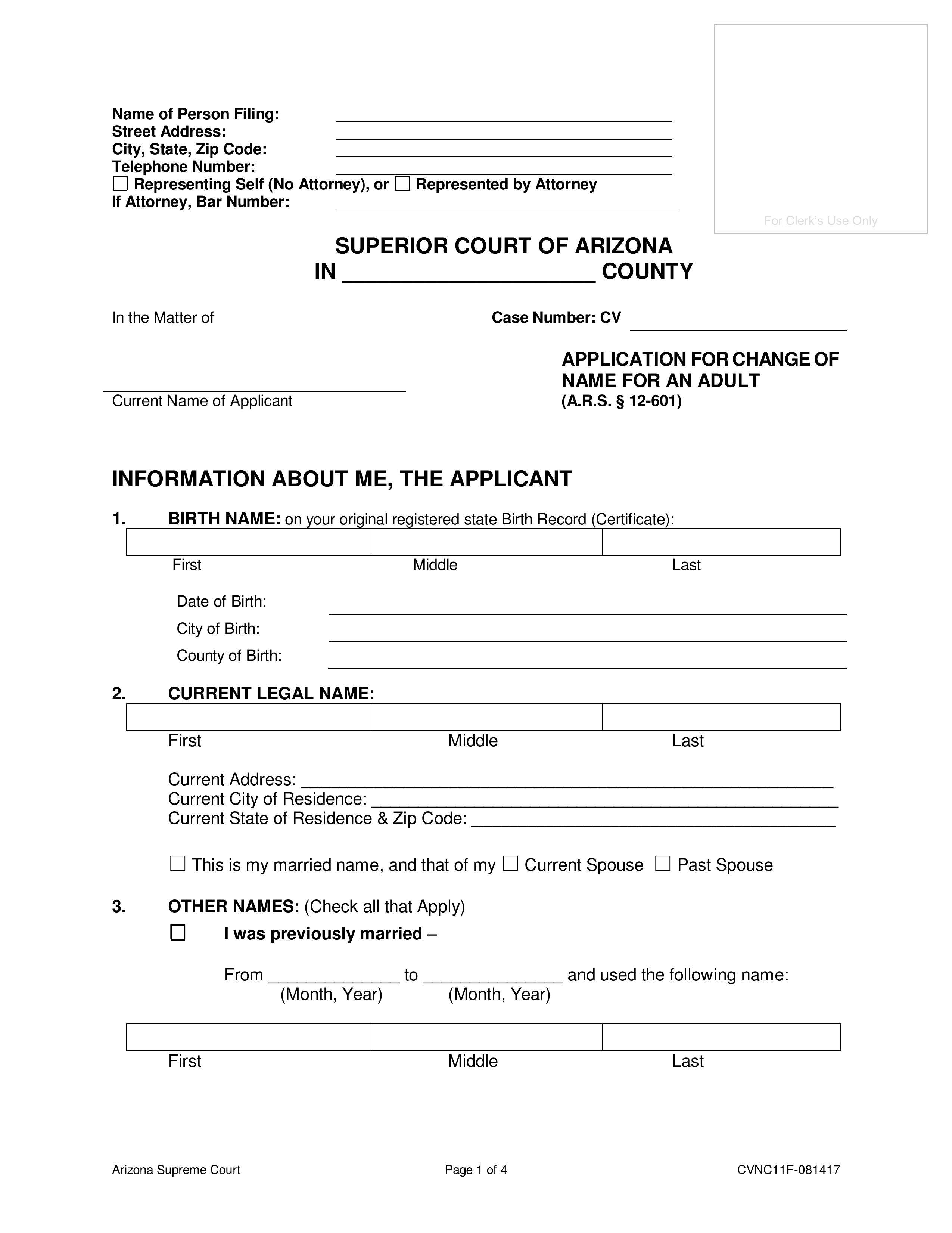
The initial phase involves accurately completing the required legal forms. You must file your petition with the Superior Court in the county where you reside. For instance, residents of Maricopa County will file with the Maricopa County Superior Court, while those in Pima County will use the Pima County Superior Court. The primary form is typically titled “Petition for Change of Name” (there are separate versions for adults and minors). Along with this, you will need an “Order for Change of Name,” which the judge will sign if your petition is approved.
These forms will require comprehensive personal information, including your current full legal name, the new full legal name you wish to adopt, your date and place of birth, and your current address. You will also need to clearly state the reason for your desired name change. Critically, the petition asks about your criminal history, any bankruptcy filings, and if you are attempting to evade creditors or legal obligations. Honesty is paramount, as any misrepresentation can lead to the denial of your petition. There are associated filing fees, which can vary by county. If you cannot afford these fees, you may be eligible to apply for a fee waiver, typically by filing an “Application for Deferral or Waiver of Fees.”
Step 2: File Your Petition
Once all forms are accurately completed and signed, you must submit them to the Clerk of the Superior Court in your county. At this point, you will pay the required filing fees or submit your fee waiver application. Upon successful filing, the Clerk will assign a case number to your petition and, in most cases, provide you with a hearing date. This date is when you will appear before a judge to present your request. Retain all copies of your filed documents and any instructions provided by the Clerk’s office.
Step 3: Public Notice Requirement
A crucial component of the voluntary name change process in Arizona is the public notice requirement. Unless you qualify for a specific exception (such as being a victim of domestic violence, in which case a confidential filing may be permitted), you are legally required to publish notice of your intent to change your name. This typically involves placing an advertisement in a newspaper of general circulation within your county of residence for three consecutive weeks. The purpose of this publication is to inform the public and provide an opportunity for any interested party to object to your name change.
After the required publication period, the newspaper will provide you with an “Affidavit of Publication” or “Proof of Publication.” This document confirms that the notice was published according to legal requirements and must be filed with the Clerk of the Superior Court before your scheduled court hearing. Failure to provide this proof will result in the delay or denial of your petition.
Step 4: The Court Hearing
On your assigned hearing date, you must appear before an Arizona Superior Court judge. This is your opportunity to formally present your petition and answer any questions the judge may have. The judge will review your submitted forms, including the Petition for Change of Name and the Affidavit of Publication. They will also consider the reasons you provided for wanting to change your name.
The court’s primary concern is to ensure the name change is not intended for fraudulent purposes, such as avoiding debt, evading criminal history, or concealing your identity for illegal activities. If the judge is satisfied that your reasons are legitimate and that all procedural requirements have been met, they will typically grant your request. For name changes involving minor children, the process is stricter, often requiring both parents’ consent or proof that the non-consenting parent was properly served notice, and the judge must determine the change is in the “best interest of the child.”
Step 5: Obtain Your Order
If the judge approves your petition, they will sign the “Order for Change of Name.” This signed order is the official legal document that formally changes your name. It is absolutely critical that you obtain several certified copies of this order from the Clerk of the Superior Court. These certified copies, bearing the court’s seal, are the only acceptable proof of your new legal name and will be required by almost every institution when you begin the process of updating your records. While standard copies are useful for your personal files, only certified copies are accepted by government agencies and financial institutions.
After the Name Change: Updating Your Records
Obtaining the court order for your name change is merely the first step. The true administrative work begins afterward, as you must systematically update your new legal name across all official records and personal identification documents. This ensures that your identity is consistent and recognized across all aspects of your life.
Social Security Administration (SSA)
The very first agency you should contact is the Social Security Administration (SSA). Changing your name with the SSA is paramount because virtually every other government agency and many private institutions rely on your Social Security record for identity verification. To update your name, you will need to complete Form SS-5 (Application for a Social Security Card), along with your certified court order for name change and proof of identity (such as your old driver’s license or passport). After processing, you will receive a new Social Security card reflecting your updated name. Your Social Security number itself will remain the same.
Department of Motor Vehicles (DMV) / Motor Vehicle Division (MVD)
Once your name is updated with the Social Security Administration, your next stop is the Arizona Motor Vehicle Division (MVD) to update your driver’s license or state identification card. You will need to present your certified court order for name change, your existing driver’s license or ID, and potentially your new Social Security card. The MVD will issue you a new card reflecting your updated name. This is a critical document for daily life and travel within the country.
U.S. Passport
If you have a U.S. Passport, updating it is essential, especially if you plan to travel internationally. The specific application form (DS-82 for renewal, DS-11 for new passport application) will depend on how recently your current passport was issued and whether your name change was due to marriage/divorce (within a year of issuance) or a court order. You will generally need your certified name change document, your current passport, new passport photos, and the applicable fees. Processing times can vary, so plan accordingly if international travel is on your horizon.
Financial Institutions
Notify all financial institutions, including banks, credit card companies, and investment firms, of your name change. You will typically need to present a certified copy of your court order. It’s advisable to do this in person at your bank branch initially to ensure all accounts are correctly updated. Update your checks, debit cards, and credit cards to reflect your new name. Failing to do so can lead to issues with transactions and credit reporting.
Other Important Records
The list of other records to update is extensive and includes, but is not limited to:
- Employer Records: Inform your human resources department and update payroll, health insurance, and retirement accounts.
- Health Insurance Providers: Ensure your medical records and insurance cards reflect your new name.
- Voter Registration: Contact your county recorder’s office to update your voter registration.
- Utility Companies: Update your name on accounts for electricity, gas, water, internet, and phone.
- Property Deeds and Titles: If you own property or vehicles, you may need to record the name change with the county recorder’s office or MVD.
- Professional Licenses: If you hold any professional licenses (e.g., medical, legal, real estate), contact the issuing board to update your credentials.
- Educational Institutions: Request updated diplomas or transcripts from schools and universities.
- Wills, Trusts, and Estate Planning Documents: Review and amend these documents to reflect your new legal name.
Key Considerations and Potential Pitfalls
While the name change process in Arizona is generally straightforward for legitimate requests, several factors warrant careful consideration to ensure a successful outcome and to avoid potential complications.
Minors’ Name Changes
Changing a minor child’s name is subject to stricter scrutiny by the Superior Court. The court’s paramount consideration is always the “best interest of the child.” Generally, both parents must consent to the name change. If one parent does not consent, the petitioning parent must typically prove that the non-consenting parent was properly served notice of the proposed change and explain why the change is in the child’s best interest. Factors considered by the court may include the child’s preference (if old enough to express one), the child’s existing relationship with both parents, potential impact on the child’s identity, and any history of abuse or neglect. This often makes minor name changes more complex and potentially contentious.
Costs and Timeframe
The cost of a voluntary name change in Arizona typically involves court filing fees (which can vary by county but are generally a few hundred dollars) and the cost of newspaper publication (also variable, potentially several hundred dollars). As mentioned, fee waivers are available for eligible individuals. The entire process, from filing the petition to receiving the signed court order, can take anywhere from several weeks to a few months, depending on the court’s schedule, the efficiency of newspaper publication, and whether any objections are raised. Planning ahead and initiating the process well in advance of any critical deadlines is advisable.
Fraud and Legitimate Reasons
The Arizona Superior Court will meticulously review your stated reasons for seeking a name change. The court will deny any petition if it suspects the change is intended to defraud creditors, evade criminal prosecution, avoid child support obligations, or engage in any other fraudulent or illegal activity. Your reasons must be legitimate, clear, and demonstrate good faith. Examples of legitimate reasons include personal preference, aligning with gender identity, changing to a family name, or simply disliking one’s current name. Complete transparency with the court about your past and your intentions is essential.

Legal Assistance
While it is possible to navigate the name change process in Arizona without an attorney, especially for straightforward adult name changes based on personal preference, certain situations warrant professional legal assistance. These include:
- Complex Cases: If you have a criminal history, significant debt, or a bankruptcy filing.
- Minor Children: If the name change involves a minor and one parent does not consent or is difficult to locate.
- Potential Objections: If you anticipate that someone might object to your name change.
- Confusion or Uncertainty: If you find the legal forms and procedures confusing or are unsure about any step.
Resources like Arizona Law Help or county self-help centers can offer guidance, forms, and sometimes limited legal advice. However, for personalized support and representation, consulting with a qualified attorney specializing in family law or civil litigation is recommended. Their expertise can help ensure all requirements are met, potential pitfalls are avoided, and your petition has the best chance of success.
LifeOutOfTheBox is a participant in the Amazon Services LLC Associates Program, an affiliate advertising program designed to provide a means for sites to earn advertising fees by advertising and linking to Amazon.com. Amazon, the Amazon logo, AmazonSupply, and the AmazonSupply logo are trademarks of Amazon.com, Inc. or its affiliates. As an Amazon Associate we earn affiliate commissions from qualifying purchases.